
The City — History & Facts
A riot of geometric color and sharp-edged forms, The City by Fernand Léger feels less like a window onto a street and more like the compressed memory of a metropolis, pulsing with energy and noise. The eye is swept up in a rush of verticals and diagonals, as if the very architecture is jostling for space. Amid the tangle of shapes, a staircase tumbles downward, and a solitary figure—almost hidden—anchors the chaos, suggesting a human scale within the mechanical spectacle.
The palette is bold: reds, yellows, and blacks clash and converse, while the interlocking planes evoke the fragmented sensation of walking through a city that is always in motion. Painted in 1919, at the close of World War I, this work stands at the crossroads of Cubism and the modern industrial age. Léger’s forms echo the machinery and scaffolding that were transforming urban life, yet his city is not cold or alienating—it is alive with rhythm, almost musical in its repetitions and contrasts. The poster-like blue figure on the right hints at advertising, while the concentric circles and mechanical motifs recall the new visual language of industry.
Unlike the melancholy cityscapes of Giorgio de Chirico, Léger’s metropolis is a celebration of collective energy, where even the abstracted fragments seem to pulse with life. Every angle and color block invites the viewer to lose themselves in the city’s relentless invention.
More Artworks by Fernand Léger

The Tugboat Bridge
Fernand Léger
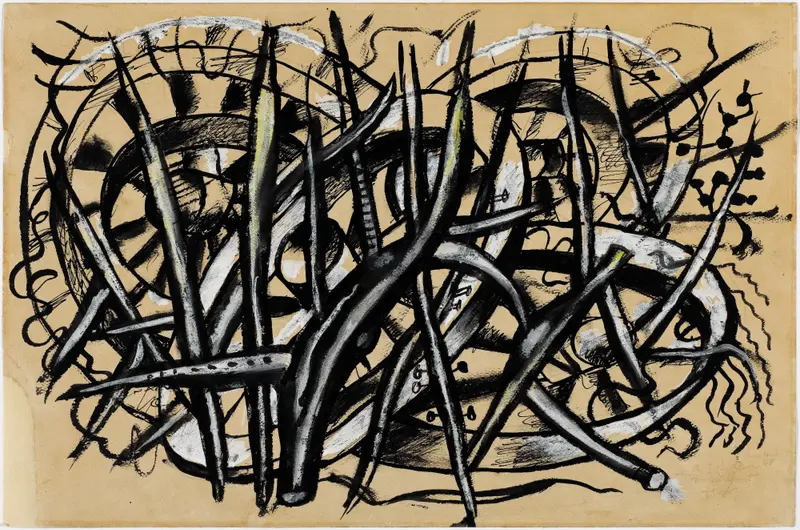
The Wheels
Fernand Léger

Le Cirque Médrano
Fernand Léger
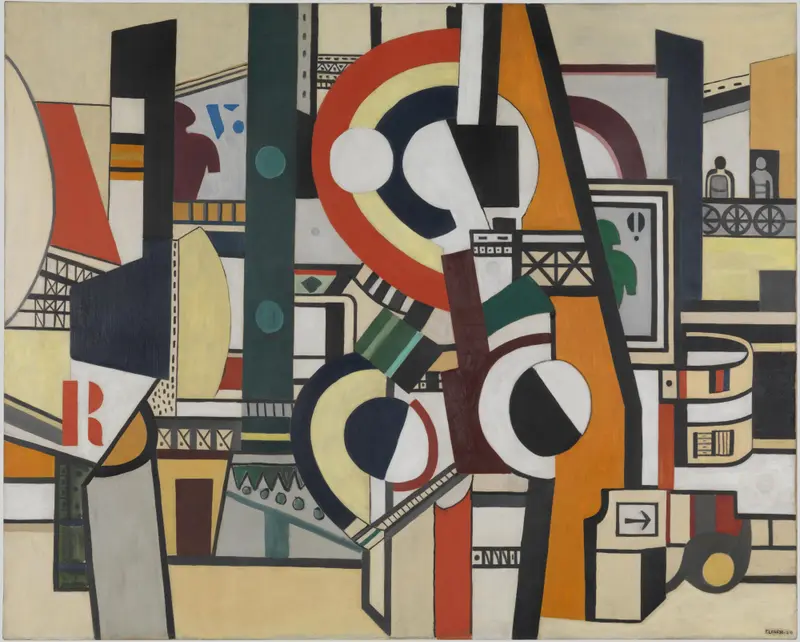
The Disks in the City
Fernand Léger
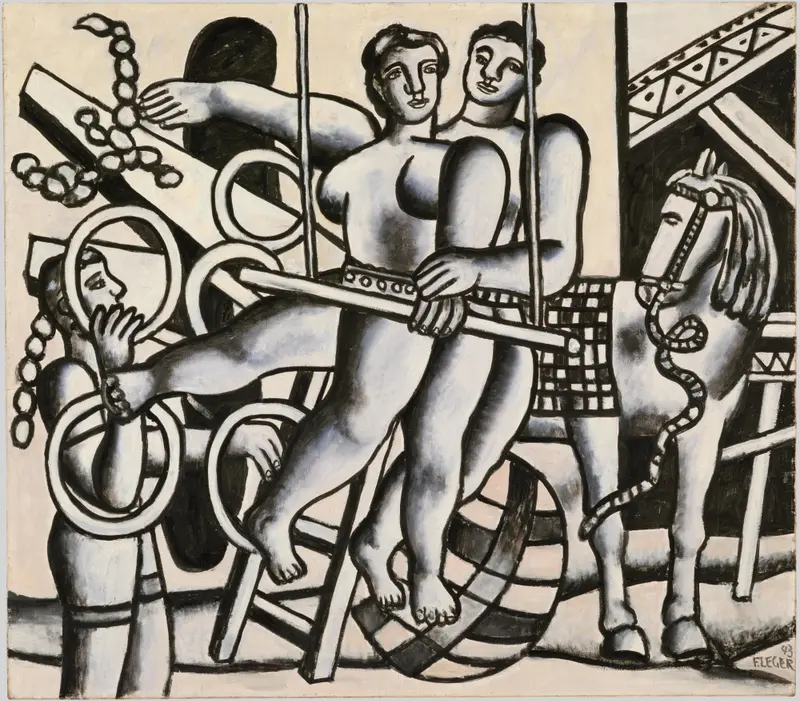
Le Jongleur et les acrobates
Fernand Léger
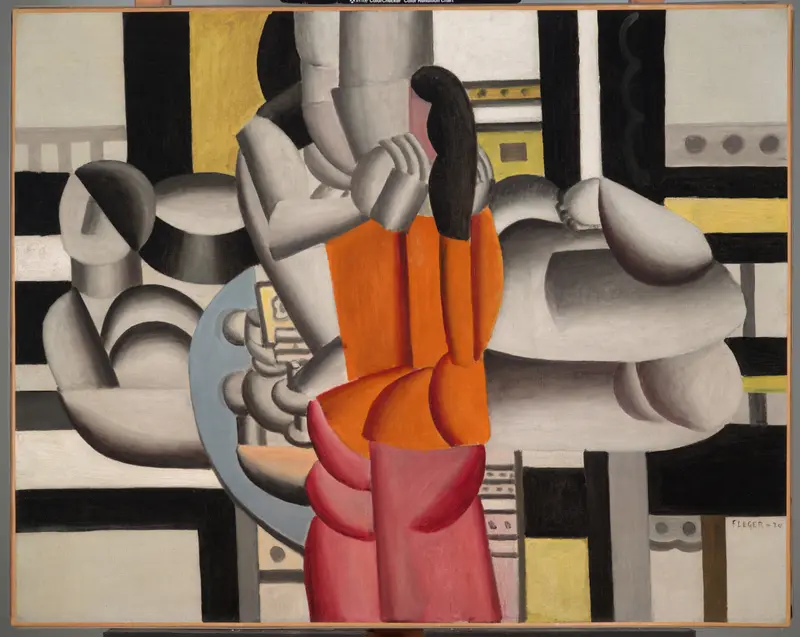
Three Women and Still Life (Déjeuner)
Fernand Léger
Reading
Fernand Léger
Femme couchée
Fernand Léger
Woman holding flowers
Fernand Léger
The Tug
Fernand Léger





