
The Coast at Trouville — History & Facts
In the stillness of a moment, grief lingers like fog on the horizon, inviting both solace and reflection. The gentle whisper of the waves merges with the unspoken thoughts of those who gaze upon the shore, revealing the quiet weight of loss that often lies beneath the surface of beauty. Look to the left at the soft, muted colors that grace the sky — a palette of greys and blues, subtly intertwined to evoke a sense of melancholy. The delicate brushstrokes flow effortlessly, capturing the way the light dances upon the water, while the figures dotting the beach feel small and contemplative against the vastness of the sea.
Notice the way the horizon blurs, creating a seamless connection between earth and sky, as if to suggest an endless journey toward healing. The painting speaks volumes in its contrasts; the serene beauty of the coast juxtaposed with the weight of unexpressed emotions. Each figure appears immersed in their own world, lost in thought or reflection, yet their proximity suggests a shared experience of grief. The soft waves, so inviting, stand in stark contrast to the emotional distance felt by the onlookers, encapsulating the complex dynamics of longing and remembrance. In the period around 1865-1900, Eugène Boudin found himself drawn to the coastal landscapes of France, particularly in Trouville.
His embrace of plein air techniques marked a pivotal moment in his career, as he sought to capture the fleeting moments of light and atmosphere that shaped his surroundings. During this time, the art world was shifting toward Impressionism, and Boudin was among the first to explore how the natural environment inspired deeper emotional connections, forever changing the course of landscape painting.
More Artworks by Eugène Boudin
Browse all →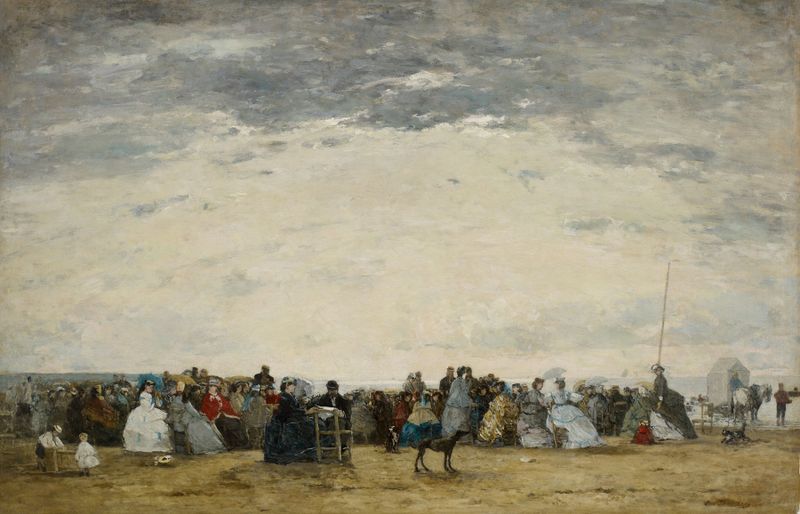
Vacationers on the Beach at Trouville
Eugène Boudin

Washerwoman near Trouville
Eugène Boudin
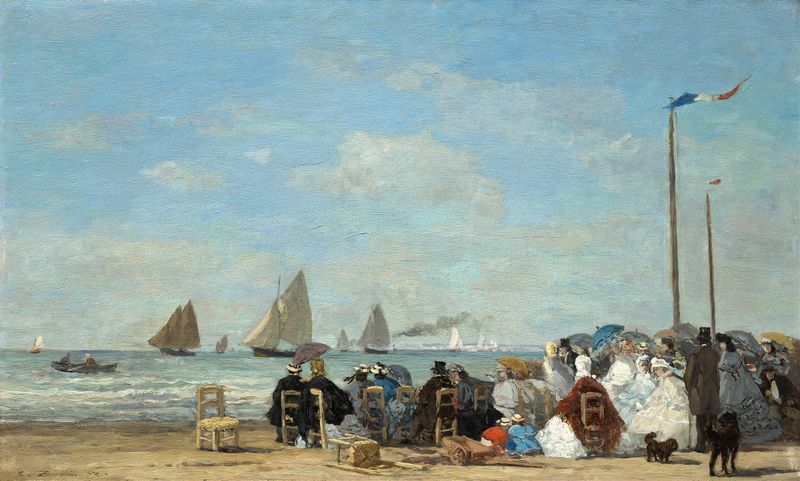
Beach Scene at Trouville
Eugène Boudin

Port aux environs d’Honfleur
Eugène Boudin

Le Faou, un coin du village
Eugène Boudin
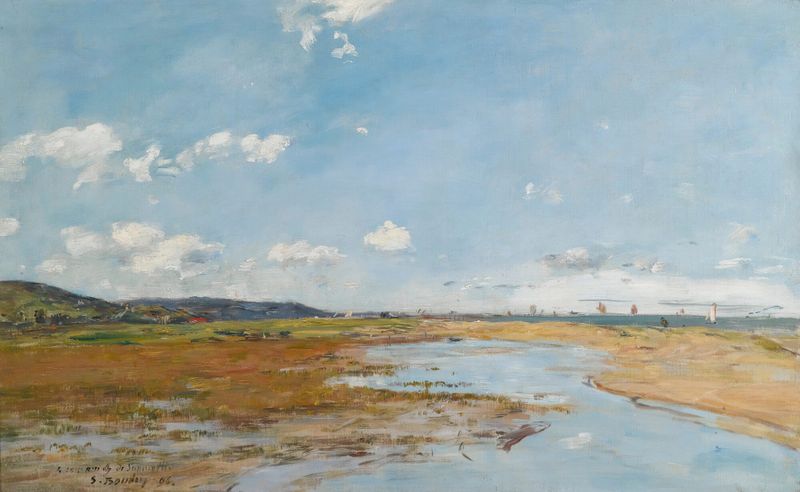
Deauville. Le Rivage
Eugène Boudin
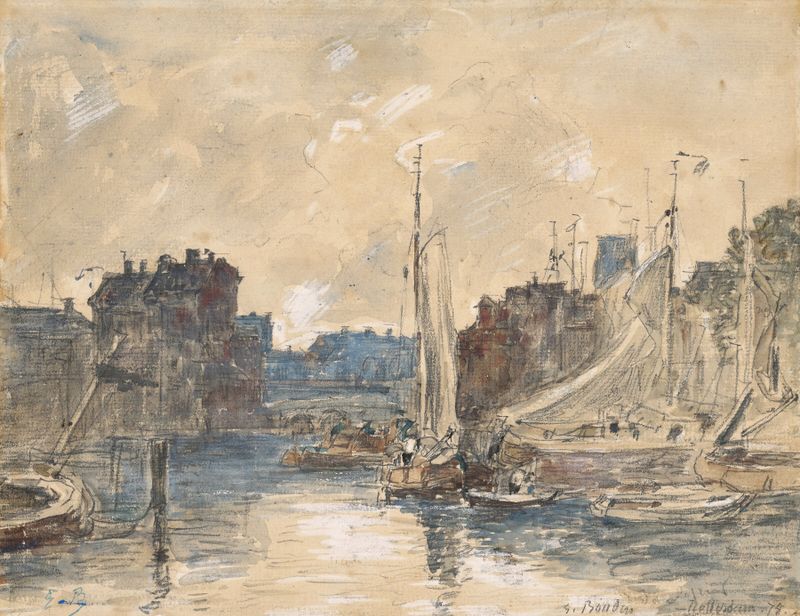
Port de Rotterdam
Eugène Boudin

View of Bordeaux, from the Quai des Chartrons
Eugène Boudin

Trouville, Scène De Plage
Eugène Boudin

Trouville, Le Port
Eugène Boudin





