
The Cottage Dooryard — History & Facts
What first holds the eye in The Cottage Dooryard is the gentle choreography of daily life, caught in a moment that feels both ordinary and quietly absorbing. A shaft of sunlight glances off the brick wall, guiding us to the heart of the scene: a grandmother, intent on her task, peels vegetables while children tumble and play nearby. The dog, eager and alert, joins the game, its energy mirrored by the boy’s outstretched hand.
Laundry flutters above, and a scatter of household tools and baskets speak to the rhythms of work and rest. Every detail — from the weathered wood to the climbing vines — invites us to linger, to notice how each figure’s gesture builds a sense of warmth and continuity. Works like this, painted in the late seventeenth-century Dutch Republic, were cherished for their celebration of rural domesticity and the virtues of ordinary folk. Artists such as Adriaen van Ostade specialized in these genre scenes, which found eager buyers among the burgeoning middle class, proud of their own industriousness and family life.
In a world reshaped by trade, urbanization, and religious change, such paintings offered a vision of stability and honest labor. This particular example, now housed in the National Gallery of Art in Washington, D.C., stands as a testament to the enduring appeal of these quiet dramas. Pause before it, and you may find yourself drawn into the world it so patiently observes.
More Artworks by Adriaen van Ostade

Dans in de herberg
Adriaen van Ostade
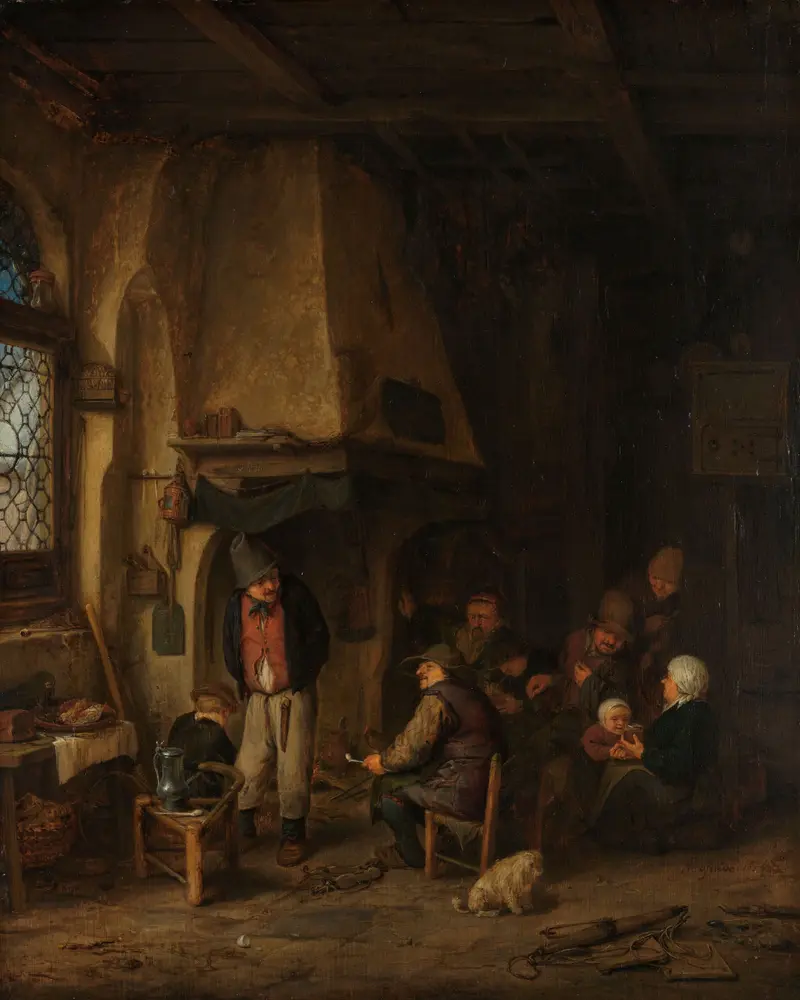
‘The Skaters’: Peasants in an Interior
Adriaen van Ostade
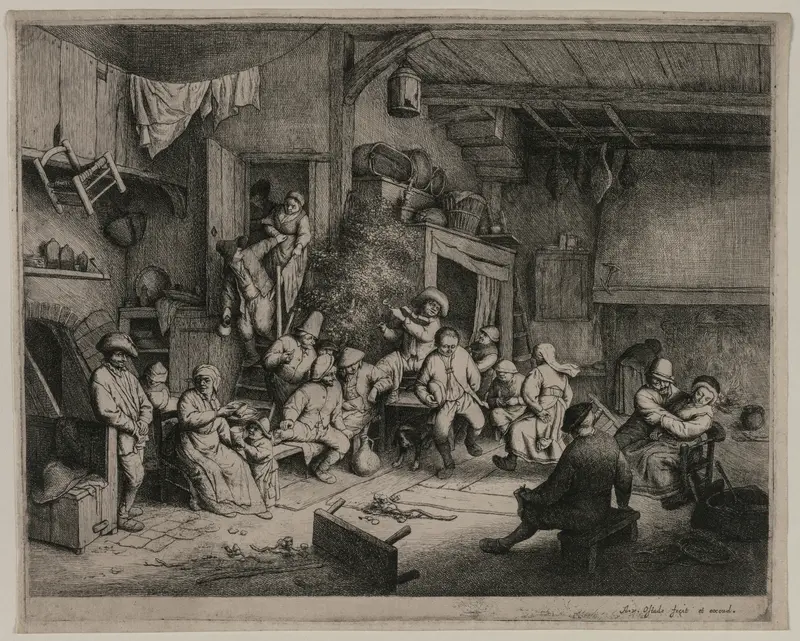
Dance at the Inn
Adriaen van Ostade
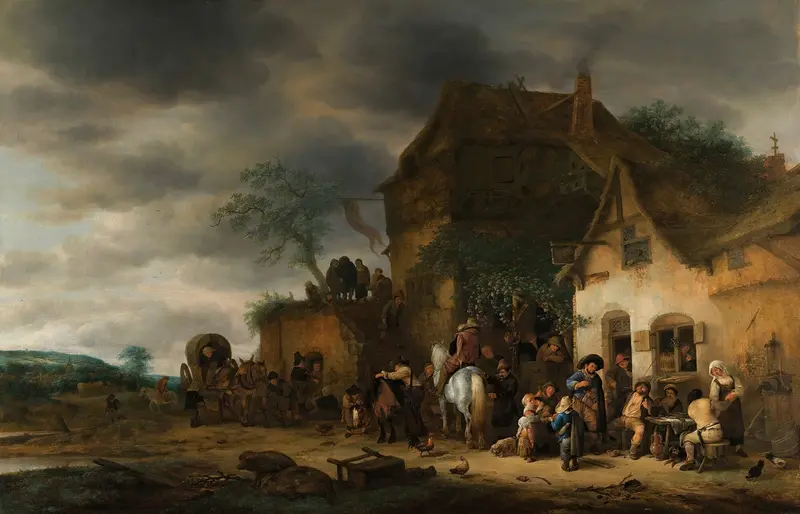
Travellers Halted At A Country Inn
Adriaen van Ostade
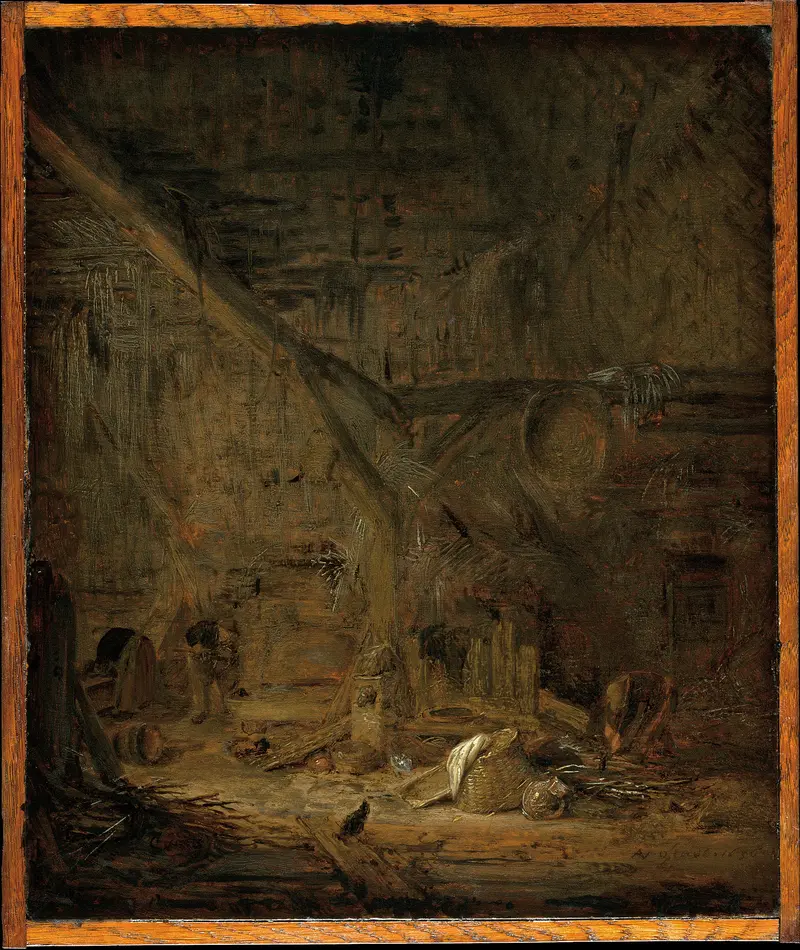
Interior of a Barn
Adriaen van Ostade
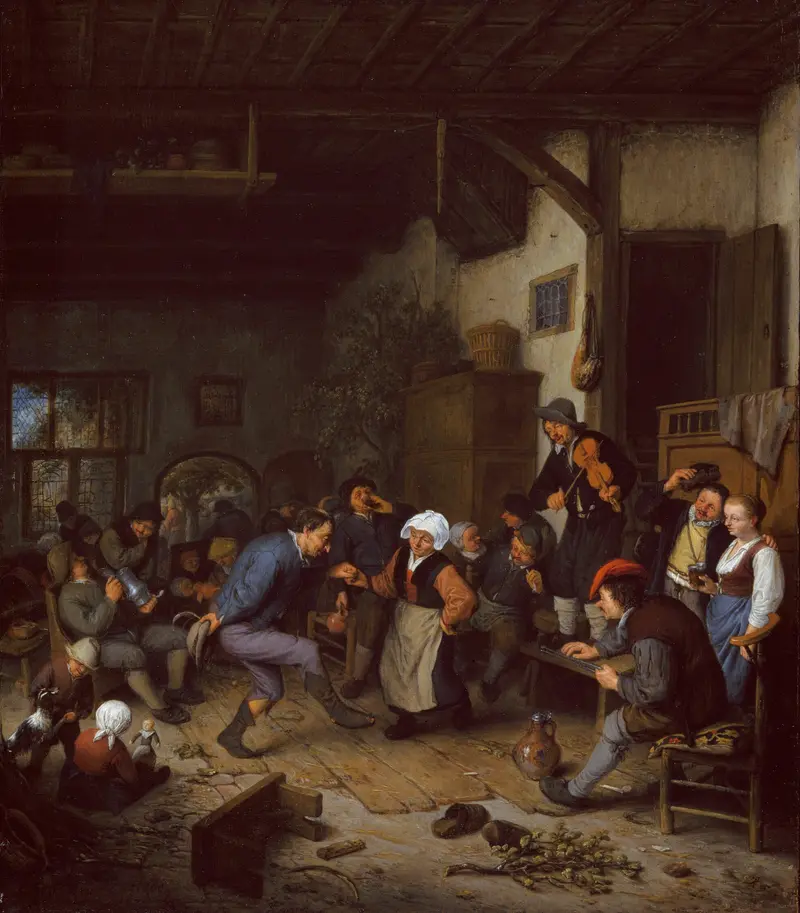
Merrymakers in an Inn
Adriaen van Ostade
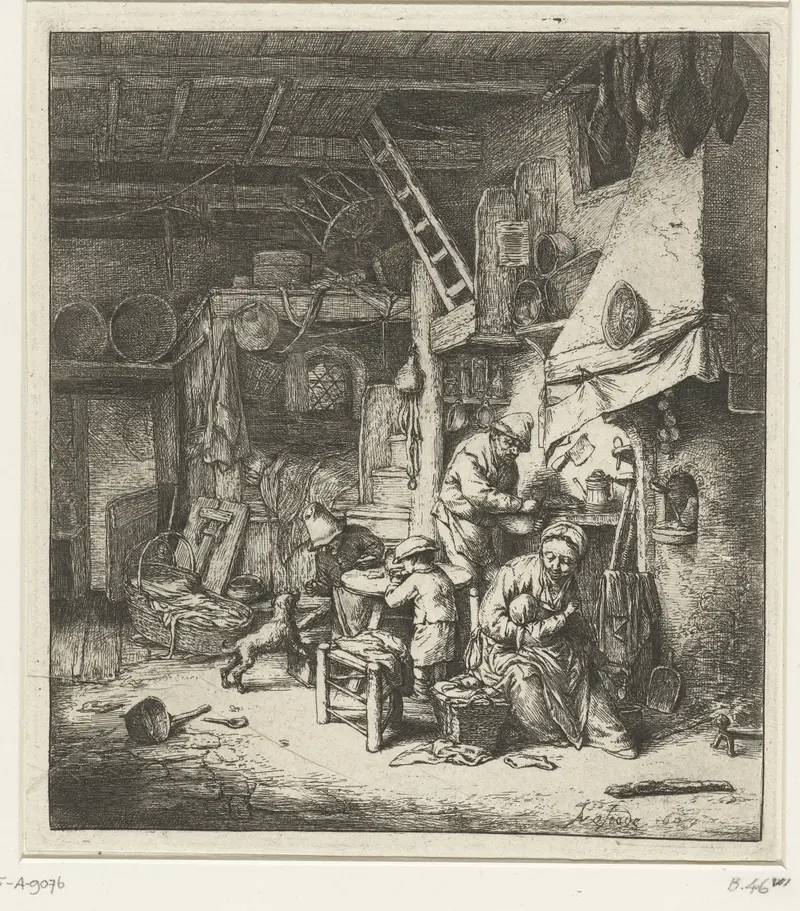
Boerengezin in interieur
Adriaen van Ostade
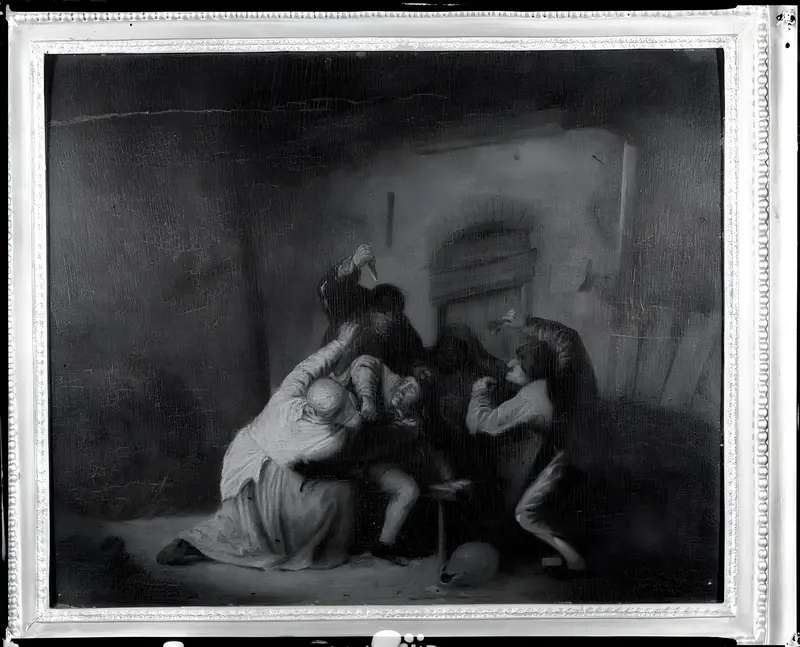
Peasants Brawling in a Tavern
Adriaen van Ostade
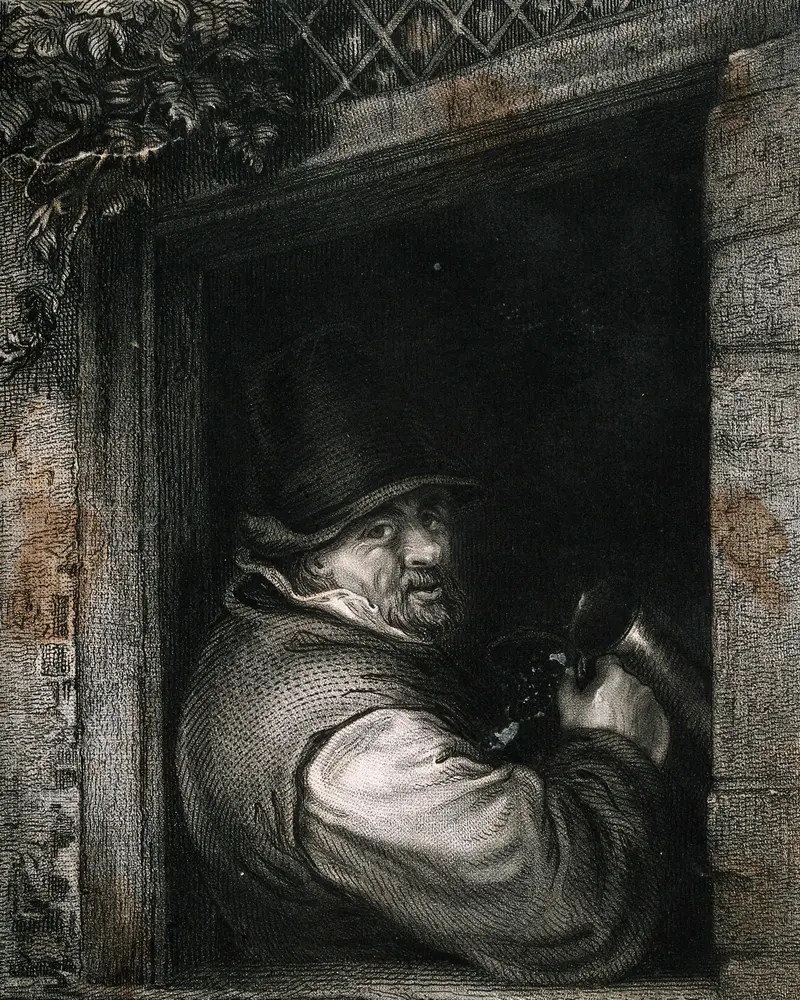
Man with a Tankard at a Window
Adriaen van Ostade
Dans in de herberg
Adriaen van Ostade
More Genre Scene Art

Banquet of the Officers of the St George Civic Guard
Frans Hals

Rembrandt and Saskia in the Scene of the Prodigal Son
Rembrandt van Rijn

Bal du moulin de la Galette
Pierre-Auguste Renoir

Quadrille at the Moulin Rouge
Henri de Toulouse-Lautrec

A Burial at Ornans
Gustave Courbet

When Will You Marry?
Paul Gauguin