The Creation of Eve — History & Facts
In The Creation of Eve, transcendence is not simply an act of creation; it is a moment suspended in the infinite possibilities of existence. Each brushstroke invites us to ponder the complex interplay between humanity and divinity, evoking deep reflections on our place in the world. Look to the central figure, where the gentle curve of Eve’s body leads the gaze upward, drawing attention to the ethereal light that bathes her face. The color palette, soft yet vivid, juxtaposes the earthy tones of her surroundings with the luminescent glow that surrounds her, suggesting a divine origin.
The delicate craftsmanship in the flowing drapery enhances her form, creating a sense of movement that breathes life into the composition. Within this tranquility lies tension. The background hints at the chaos of creation, with swirling, abstract forms that contrast Eve’s stillness. The delicate balance between the two figures—Eve and the divine—suggests an eternal dialogue: creation's dream against the backdrop of cosmic uncertainty.
This moment captures the essence of femininity as both a nurturing force and a profound mystery, symbolizing the complexities of existence that resonate through time. In the mid-1860s to late 1890s, Watts was exploring themes of symbolism and transcendence. Working in London during a period of artistic upheaval, he sought to elevate art beyond mere representation, drawing influences from the Pre-Raphaelite movement and the broader Symbolist tradition. His fascination with spiritual themes reflects the Victorian era's tension between science and faith, striving to express the sublime in the human experience.
More Artworks by George Frederic Watts
Browse all →
Sir Galahad
George Frederic Watts

Violet Lindsay
George Frederic Watts

The Genius of Greek Poetry
George Frederic Watts

Ariadne
George Frederic Watts
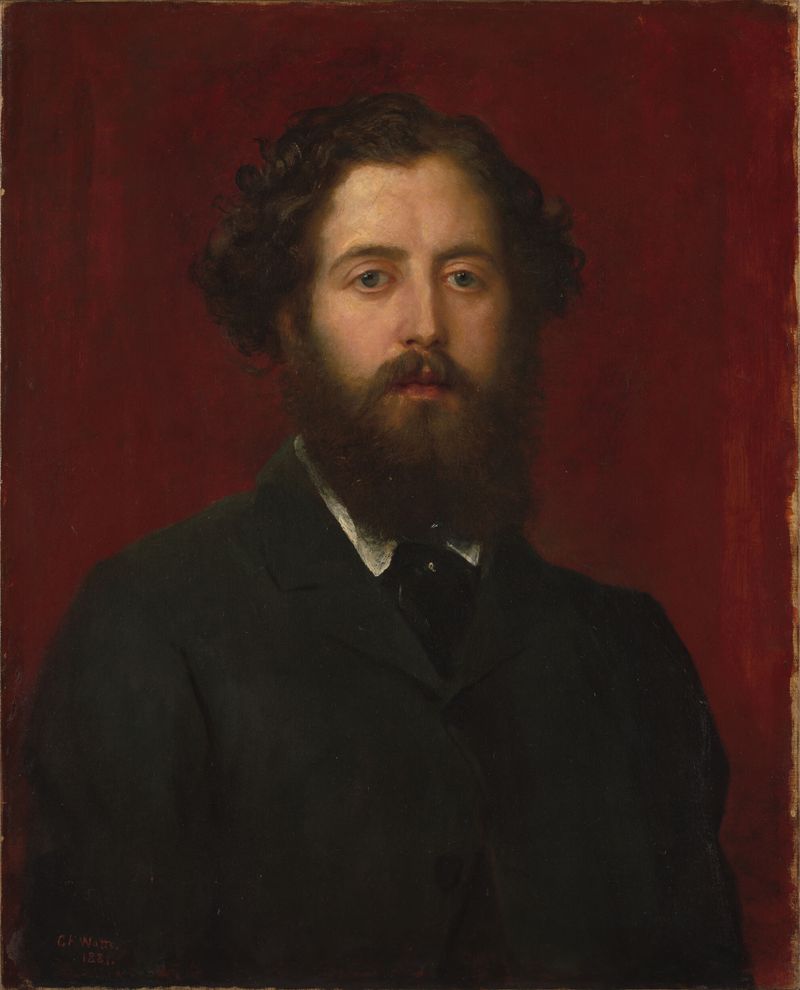
Portrait of a Man
George Frederic Watts

A Bacchanal
George Frederic Watts

Escaped
George Frederic Watts
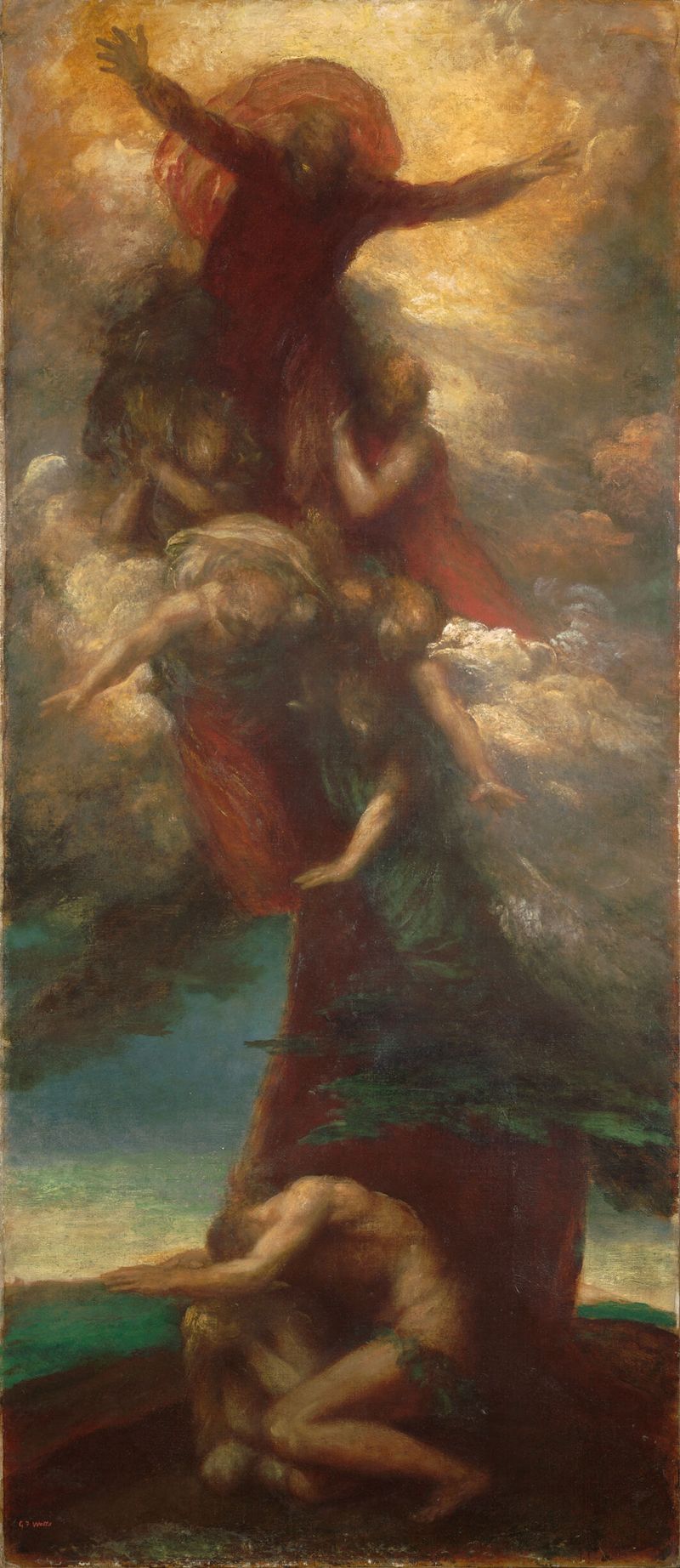
The Denunciation of Adam and Eve
George Frederic Watts

A Bacchante
George Frederic Watts

Orpheus and Eurydice
George Frederic Watts