
Portrait of a Man — History & Facts
In this moment of transformation, the essence of humanity is distilled, revealing both the struggle and the beauty of the individual spirit. Look to the center of the canvas, where the enigmatic figure stands, exuding a quiet strength. The artist’s masterful use of chiaroscuro bathes the man’s face in soft light, highlighting the contours and folds that tell a story of experience and resilience. Notice the deep, rich colors—the earthy browns and muted greens that create a harmonious background, enabling the subject to emerge as the focal point of the composition.
The textures of his clothing and the subtle play of shadow enhance the three-dimensionality, drawing you into the very essence of his character. The tension in this portrait lies in the contrast between the man’s calm demeanor and the palpable weight of unspoken emotion. The subtle downward gaze suggests introspection, while the slight tilt of his head signifies an openness to the world around him. Each brushstroke seems to echo a moment of vulnerability, inviting the viewer to ponder the untold stories hidden behind his eyes, as though he embodies the shared struggles of humanity. George Frederic Watts painted this remarkable piece in 1881, during a period of personal and artistic evolution.
By this time, he had already secured his place in the Victorian art scene, yet he was evolving his focus toward deeper psychological exploration in portraiture. This period also marked a growing interest in the symbolism surrounding the human condition, reflecting the broader artistic movements of the late 19th century that sought to transcend mere representation to capture the underlying essence of the self.
More Artworks by George Frederic Watts
Browse all →
Sir Galahad
George Frederic Watts

Violet Lindsay
George Frederic Watts

The Genius of Greek Poetry
George Frederic Watts

Ariadne
George Frederic Watts

A Bacchanal
George Frederic Watts

The Creation of Eve
George Frederic Watts

Escaped
George Frederic Watts
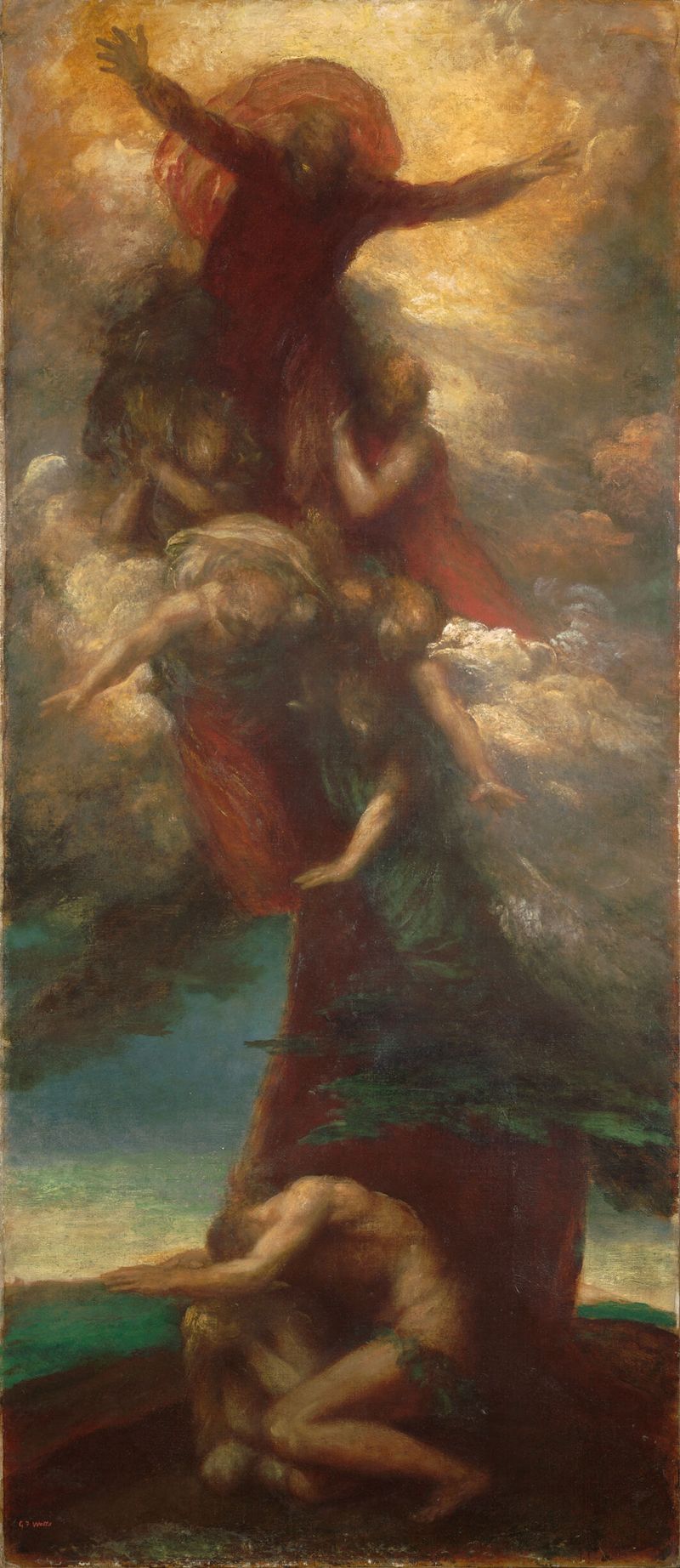
The Denunciation of Adam and Eve
George Frederic Watts

A Bacchante
George Frederic Watts

Orpheus and Eurydice
George Frederic Watts
More Portrait Art
Browse all →
Las meninas
Diego Velázquez

Self-portrait with a Bandaged Ear and Pipe
Unidentified artist

Girl with a Pearl Earring
Johannes Vermeer

The Sampling Officials of the Amsterdam Drapers’ Guild, Known as ‘The Syndics’
Rembrandt van Rijn

The Hundred Guilder Print: the man seen on the back in the lower left corner
Rembrandt van Rijn

Portrait of Dr Gachet
Vincent van Gogh