
The Devil's Reel — History & Facts
A single lantern’s glow slices through the cellar’s darkness, catching the startled face of a man frozen mid-motion beside a barrel. His gaze is riveted upward, where a shadowy figure—horned, wild-eyed, and wielding a fiddle—emerges from the gloom. The painter’s hand guides your eye from the man’s white shirt, rendered almost luminous against the black, to the monstrous fiddler, whose twisted features and raised bow conjure a sense of sudden, supernatural intrusion.
The ladder leading up and out hints at escape, but the man’s posture—half-risen, half-cowering—suggests he is caught between flight and fascination. Every object, from the sturdy beer stein to the rough-hewn barrels, grounds the scene in rustic reality, making the apparition all the more jarring. Painted in 1853, The Devil's Reel by Adolph Tidemand belongs to a time when artists across Europe were fascinated by folklore and the supernatural, drawing on centuries-old tales to animate the everyday. In the mid-19th century, such works were often created for a growing middle class eager for images that mingled local tradition with a thrill of the unknown.
Tidemand, known for his interest in Norwegian rural life, here channels the Romantic era’s appetite for the uncanny, using dramatic light and shadow to blur the boundary between myth and reality. Little is recorded about the journey of this particular painting, now in the gwpa collection, but its subject and style speak to a world where the devil might still be lurking in the shadows of a country cellar—ready to play his tune for any who dare to listen.
More Artworks by Adolph Tidemand

Bridal Procession on the Hardangerfjord
Adolph Tidemand
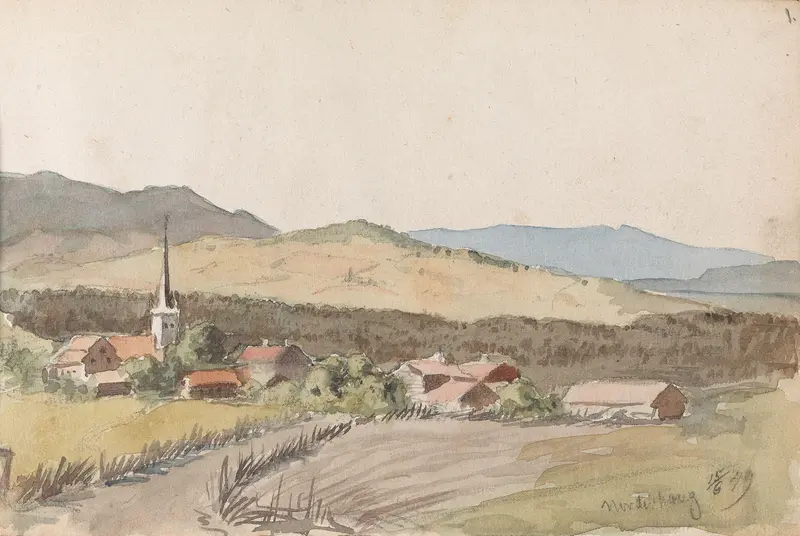
Fra Haugsbygd
Adolph Tidemand
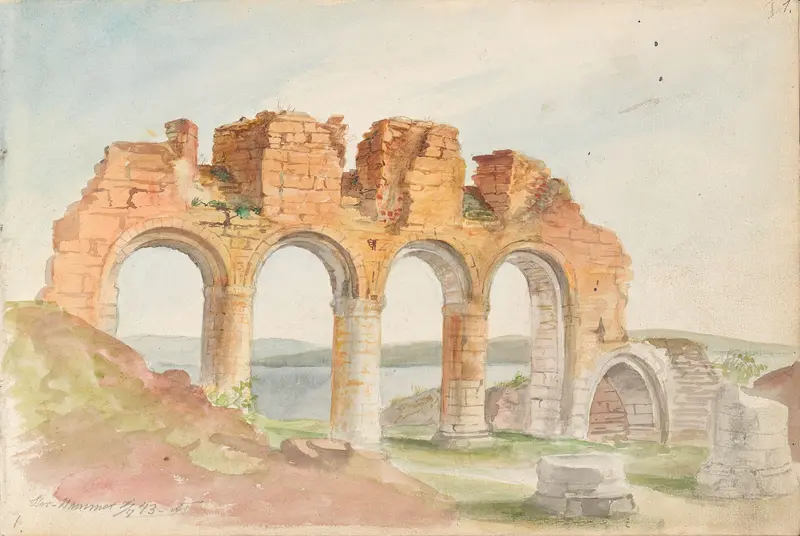
Domkirkeruinen, Hamar
Adolph Tidemand
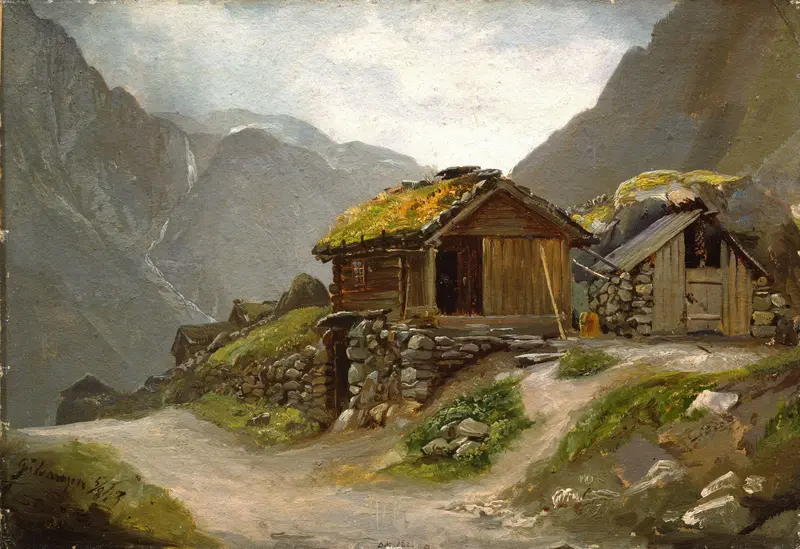
View from Gudvangen
Adolph Tidemand
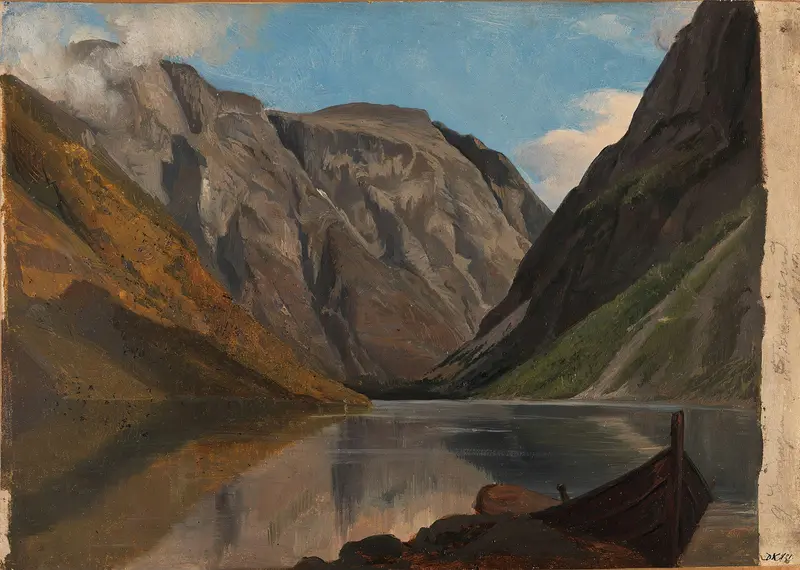
View of Gudvangen
Adolph Tidemand
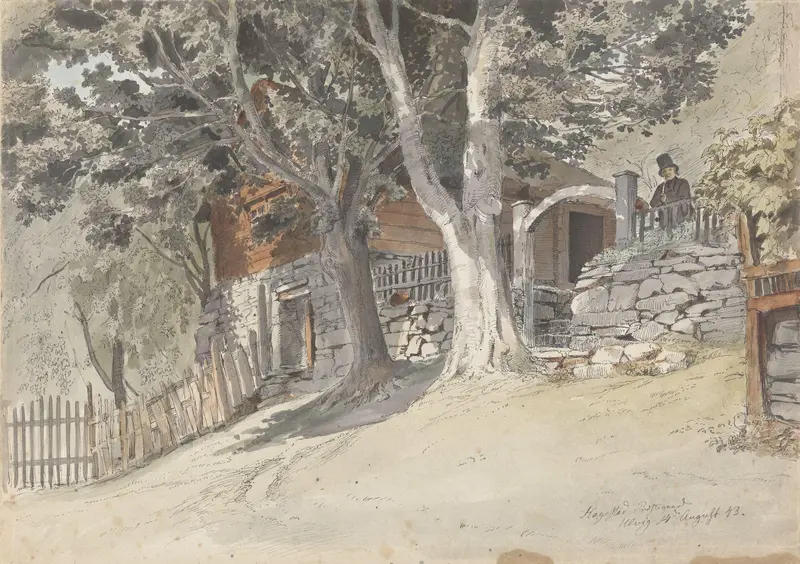
Hagestad prestegård, Ulvik i Hardanger
Adolph Tidemand
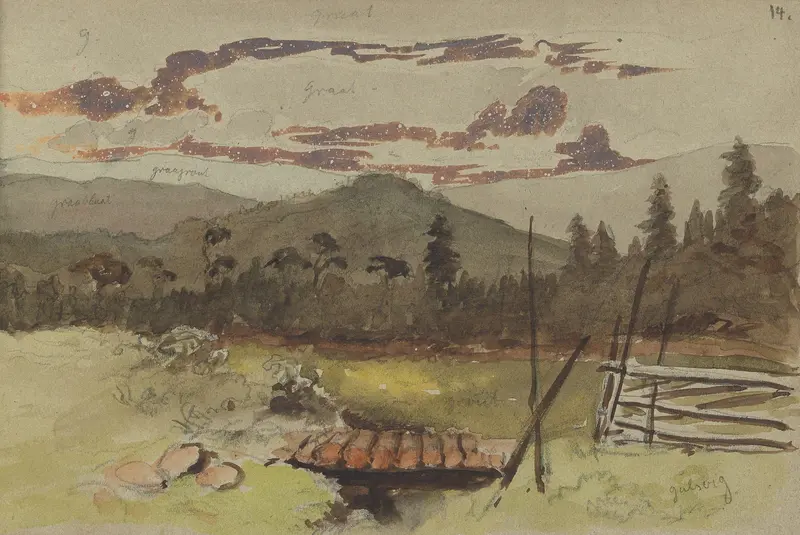
Fra Gulsvik
Adolph Tidemand
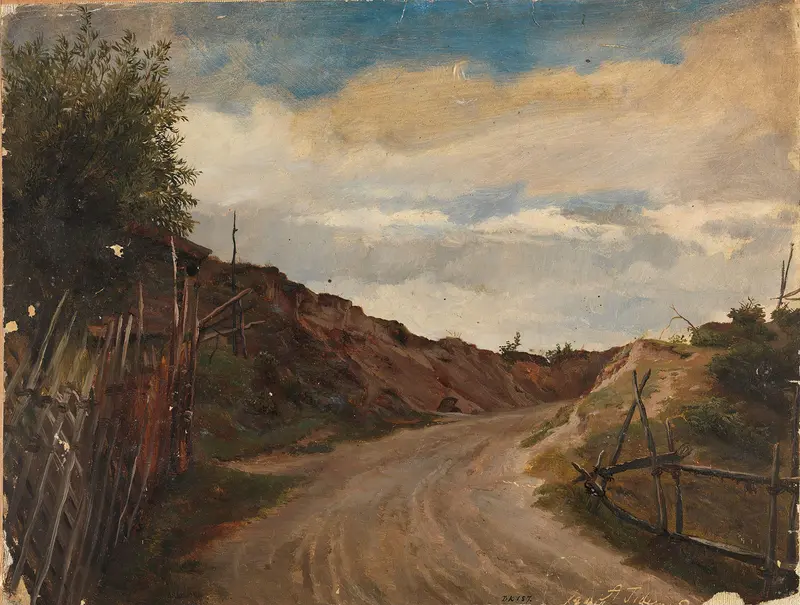
Country Road
Adolph Tidemand
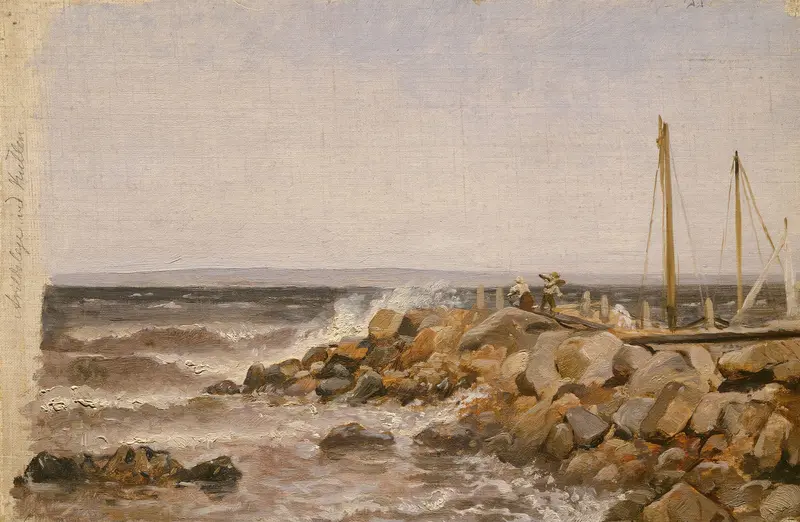
From Kullen in Sweden
Adolph Tidemand
Untitled
Adolph Tidemand
More Genre Scene Art

Banquet of the Officers of the St George Civic Guard
Frans Hals

Rembrandt and Saskia in the Scene of the Prodigal Son
Rembrandt van Rijn

Bal du moulin de la Galette
Pierre-Auguste Renoir

Quadrille at the Moulin Rouge
Henri de Toulouse-Lautrec

A Burial at Ornans
Gustave Courbet

When Will You Marry?
Paul Gauguin