
The Dock of Deauville — History & Facts
When did color learn to lie? In a world governed by the divine play of light and shadow, the truth of nature's beauty is often masked by the hues of our perception. Look to the left at the vibrant blues swirling in the sky, mingling with strokes of yellow and white that suggest the day’s gentle awakening. The dock, a muted brown, anchors the scene, grounding the viewer amidst the soft chaos of the sea. Notice how the brushwork, fluid and spontaneous, captures the lively movement of boats bobbing gently with the rhythm of the waves, their hulls reflecting the shimmering light.
The palette conveys both serenity and energy, drawing the eye to the horizon where sky kisses sea, an infinite dance of divinity. Yet, within this idyllic portrayal lies a tension between human endeavor and nature’s vastness. The figures, small and seemingly insignificant against the backdrop of expansive water, evoke a sense of contemplation about our place in the world. Each brushstroke pulsates with life, yet hints at transience, as if to remind us that these moments, like the colors, are fleeting.
Consider the planes of color where warm tones fight against cooler shades—each playing a role in weaving a narrative of connection to the divine. In 1891, Eugène Boudin painted this piece in Deauville, a bustling seaside resort in France. At this time, Boudin was gaining recognition for his ability to capture the interplay of light and atmosphere. He was deeply influenced by the Impressionist movement, focusing on the ephemeral qualities of nature, reflecting a broader cultural shift towards appreciation of the natural world in art.
More Artworks by Eugène Boudin
Browse all →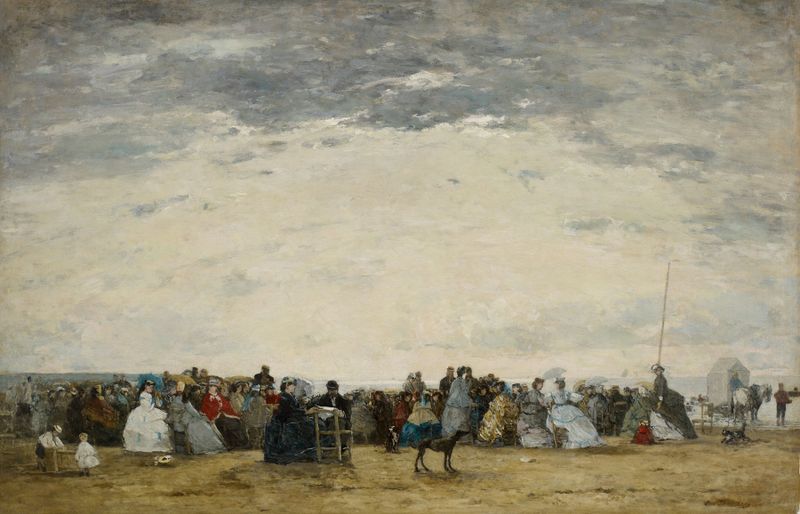
Vacationers on the Beach at Trouville
Eugène Boudin

Washerwoman near Trouville
Eugène Boudin
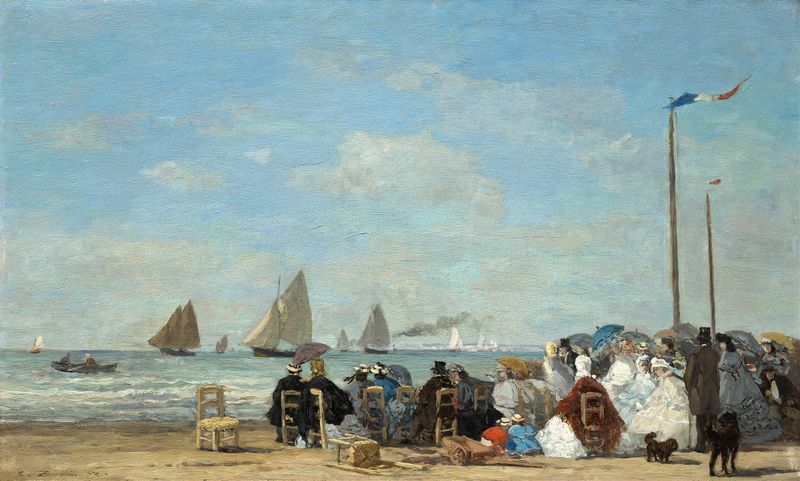
Beach Scene at Trouville
Eugène Boudin

Port aux environs d’Honfleur
Eugène Boudin

Le Faou, un coin du village
Eugène Boudin
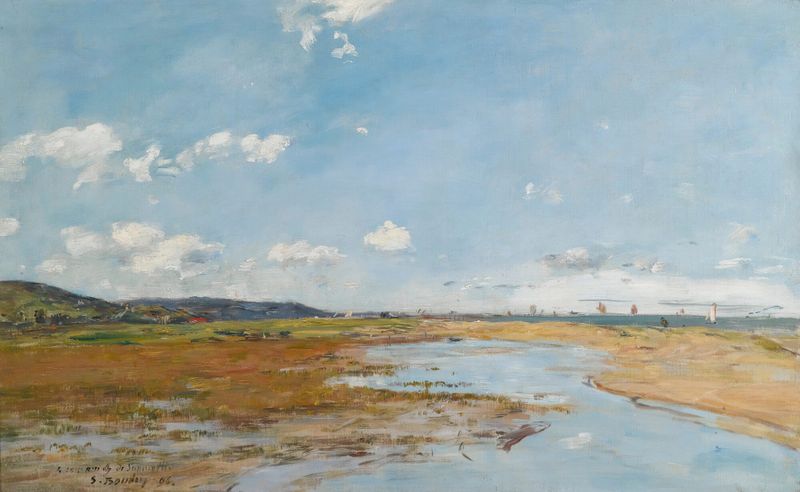
Deauville. Le Rivage
Eugène Boudin
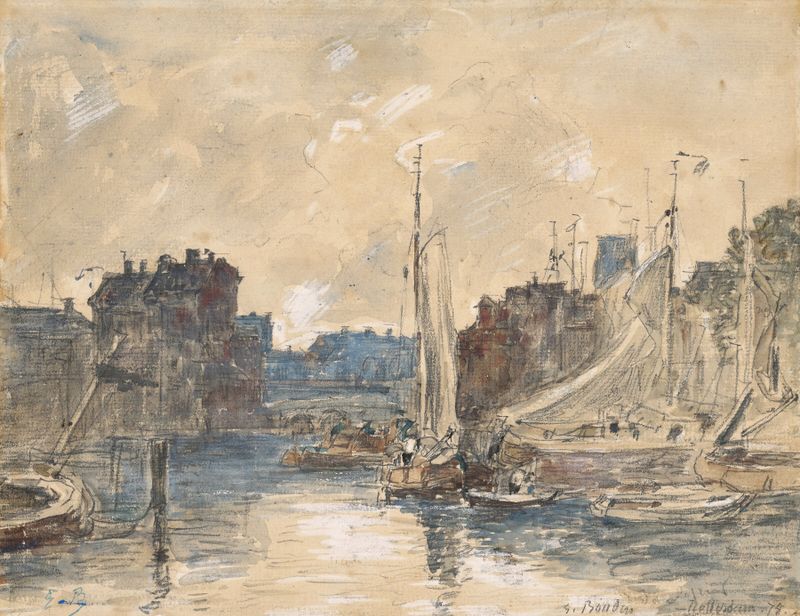
Port de Rotterdam
Eugène Boudin

View of Bordeaux, from the Quai des Chartrons
Eugène Boudin

Trouville, Scène De Plage
Eugène Boudin

Trouville, Le Port
Eugène Boudin





