
The Edge of a Wood — History & Facts
A hush falls over the edge of the forest, where the last rays of sunlight slip through the dense canopy and spill onto a quiet clearing. In The Edge of a Wood, Adriaen van de Velde draws the viewer into a world balanced between shadow and light, where a cluster of sheep graze and rest in the gentle glow, their wool catching the sun’s warmth. The artist’s eye lingers on the subtle drama of transition: the forest’s dark mass presses forward, yet the open sky and sunlit grass invite you to linger.
Every brushstroke is measured, guiding your gaze from the luminous patch in the lower right—where the sheep gather—upward into the vastness of the sky, where clouds drift and a few birds wheel above the treetops. Painted in 1658, this work belongs to a moment in Dutch art when landscape painting was coming into its own, celebrated not just for its beauty but for its quiet observation of daily life and nature’s rhythms. Artists like van de Velde were prized for capturing the Dutch countryside with a sense of intimacy and truth, often for a clientele of prosperous city dwellers longing for reminders of the land. The balance of light and shade, the careful placement of animals, and the serenity of the scene all speak to the era’s fascination with the ordinary made extraordinary.
History has kept few traces of this particular painting’s journey, but its calm presence and subtle storytelling still invite us to pause and look closer—just as its first viewers must have done.
More Artworks by Adriaen van de Velde

Staande stier
Adriaen van de Velde
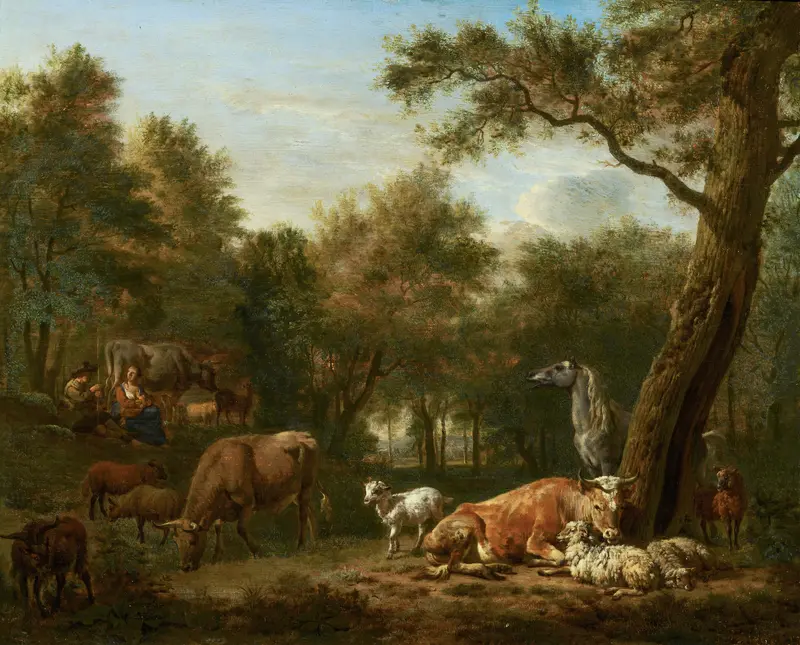
Wooded Landscape with Cattle
Adriaen van de Velde
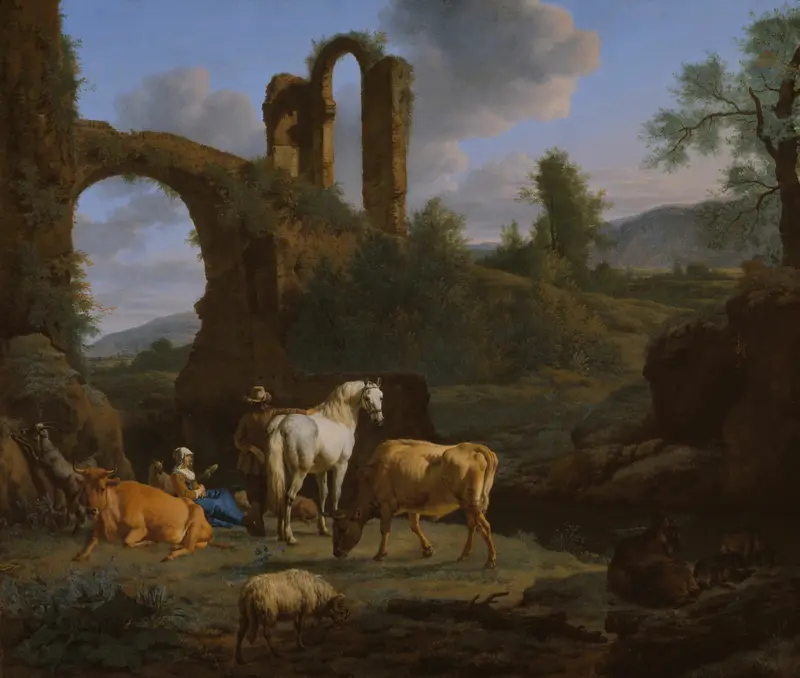
Pastoral Landscape with Ruins
Adriaen van de Velde
Pastoral Landscape with Ruins
Adriaen van de Velde
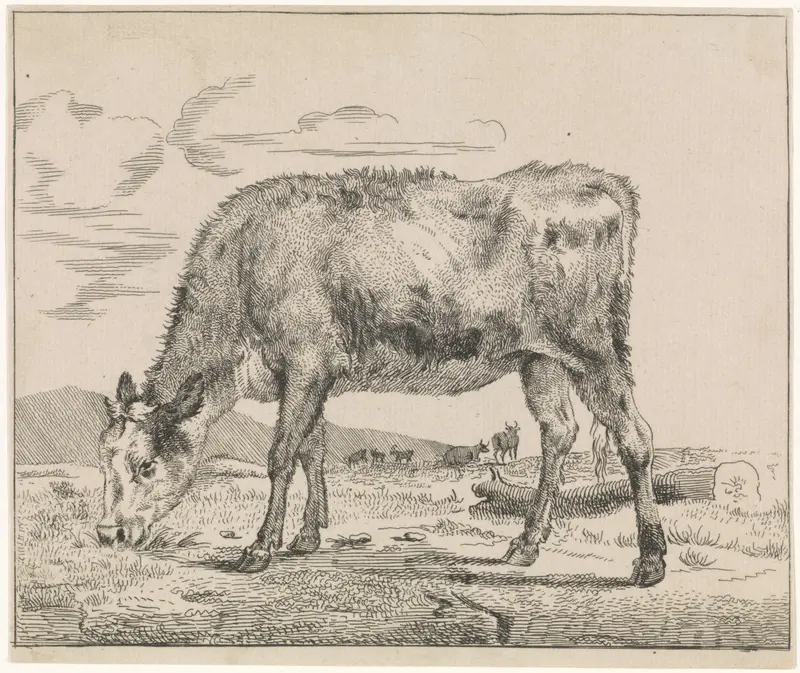
Grazend kalf
Adriaen van de Velde
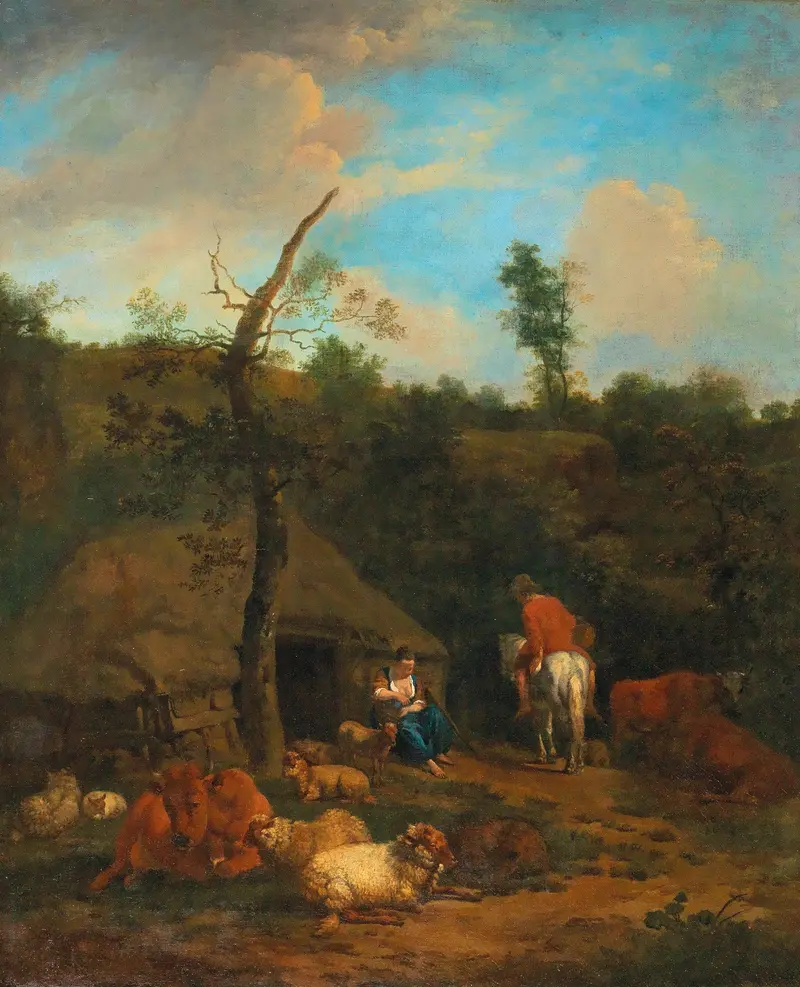
A herdsman and a shepherdess in front of a wooden farmhouse
Adriaen van de Velde
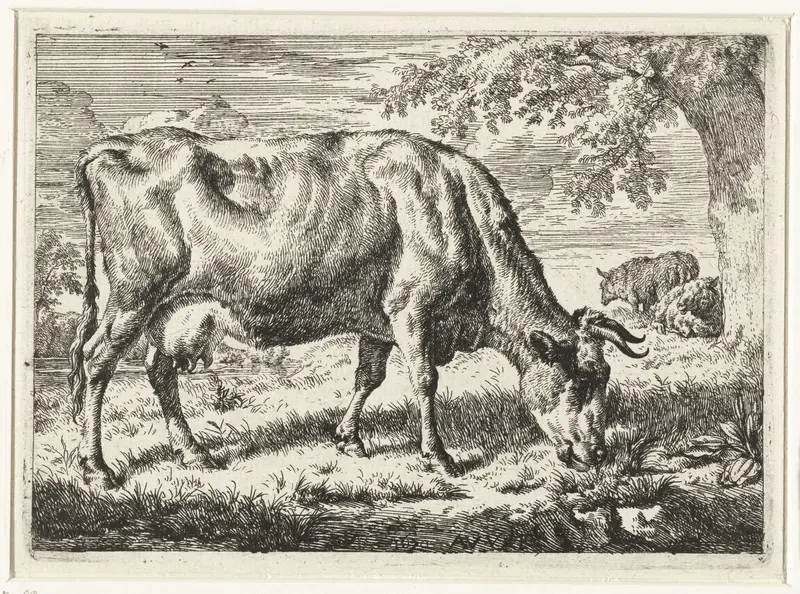
Grazende koe en twee schapen
Adriaen van de Velde
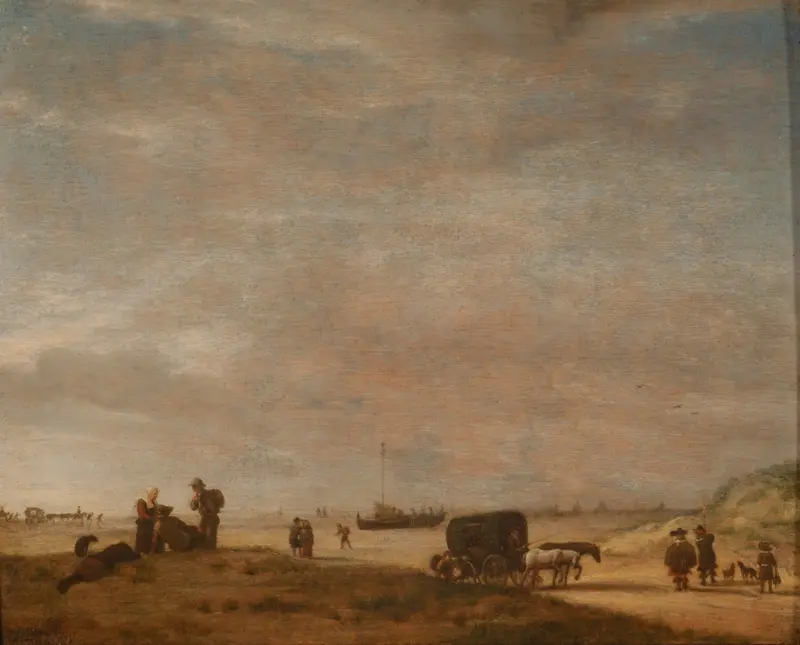
Scheveningen Beach
Adriaen van de Velde
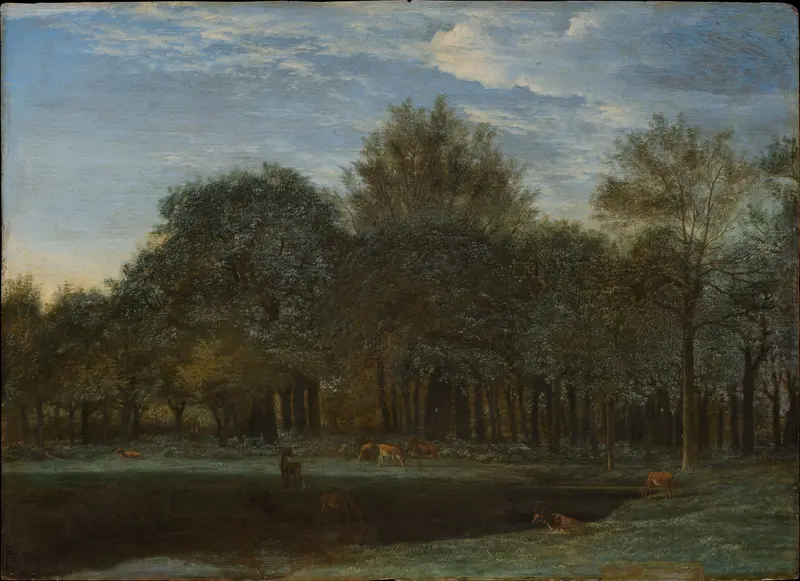
Forest Clearing with Grazing Deer
Adriaen van de Velde
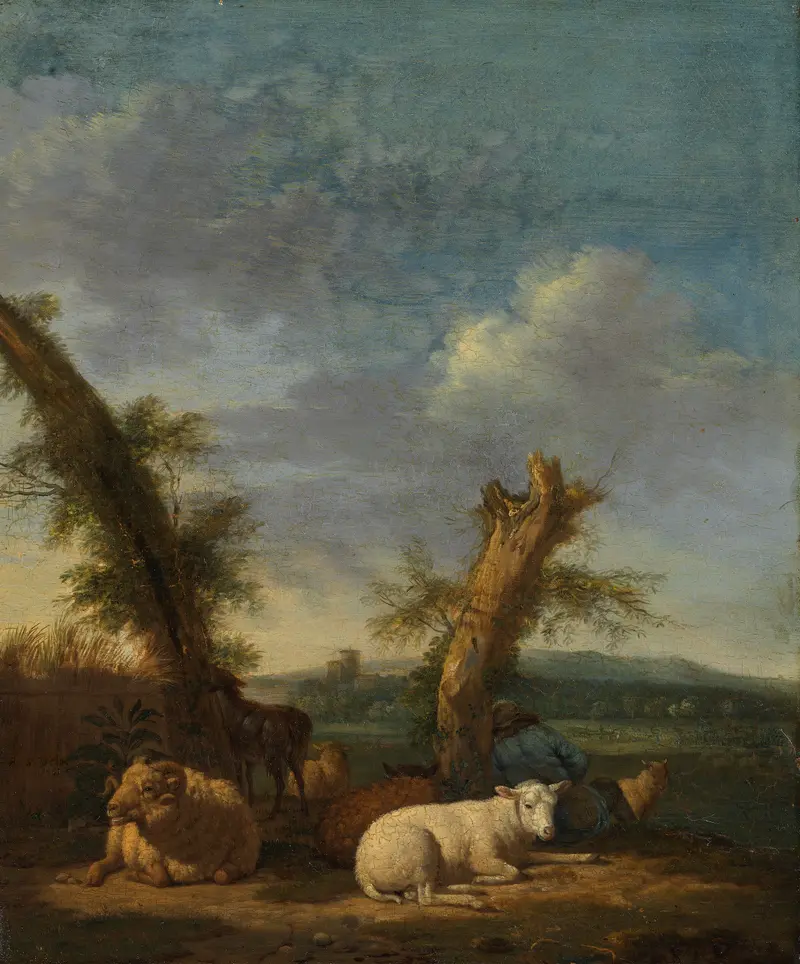
Landscape with Sheep and a Sleeping Shepherd
Adriaen van de Velde
More Landscape Art

The Starry Night
Vincent van Gogh

View of Delft
Johannes Vermeer

Water Lilies
Claude Monet

The Grand Canal, Venice, looking north-west from the Ca' Corner to the Ca' Contarini degli Scrigni, with the campanile of Santa Maria della Carità
Canaletto

Windsor Castle
Canaletto

The Grand Canal looking North-East from the Palazzo Dolfin-Manin to the Rialto Bridge
Canaletto