
The Farm — History & Facts
A hush settles over the farmyard, broken only by the gentle movement of cattle and the quiet routines of rural life. The eye is drawn first to the sturdy figures of cows, their bodies rendered with a patient, attentive line, grazing and resting beneath the wide, sheltering branches of an old tree. Two figures—perhaps farmers or milkmaids—move with practiced ease among the animals, one pausing at the threshold of a thatched barn, the other guiding a cow toward the shade.
The play of light across the scene, from the open sky to the shadowed eaves, guides us through a world where human and animal lives are closely entwined, each detail—hooves in the mud, a dog curled in the straw—carefully observed and quietly celebrated. Works like The Farm by Adriaen van de Velde, dated here to 1770, belong to a tradition that flourished in the Dutch Golden Age and lingered into later centuries: the rural landscape, both as a record of agricultural life and as a vision of order and harmony. Such scenes were prized by collectors who sought reminders of the countryside’s rhythms or who wished to display their own connection to the land, even from the city. Though little is recorded about this particular sheet, now preserved in an online collection, its careful balance of observation and artistry places it firmly within a lineage of pastoral prints that shaped European tastes for generations.
The longer one looks, the more the quiet dignity of this everyday world reveals itself.
More Artworks by Adriaen van de Velde

Staande stier
Adriaen van de Velde
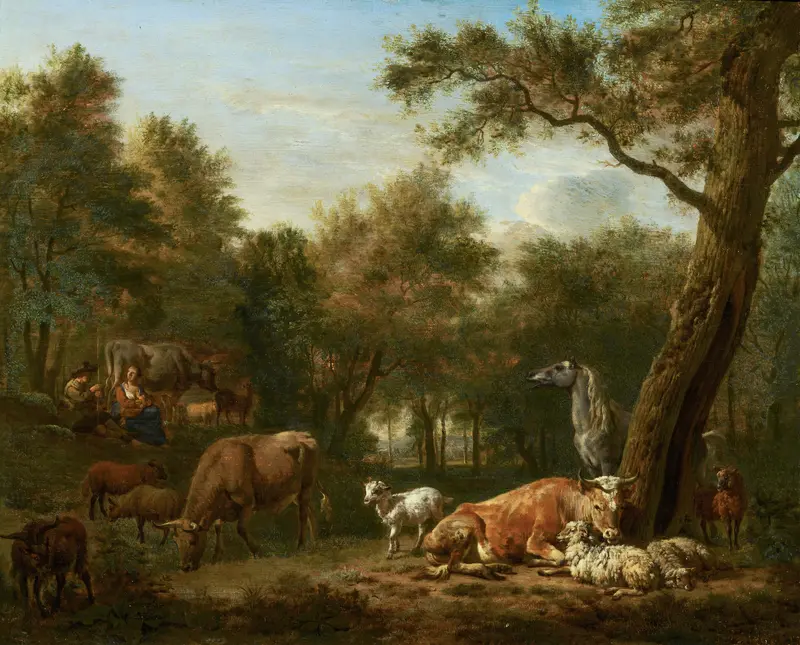
Wooded Landscape with Cattle
Adriaen van de Velde
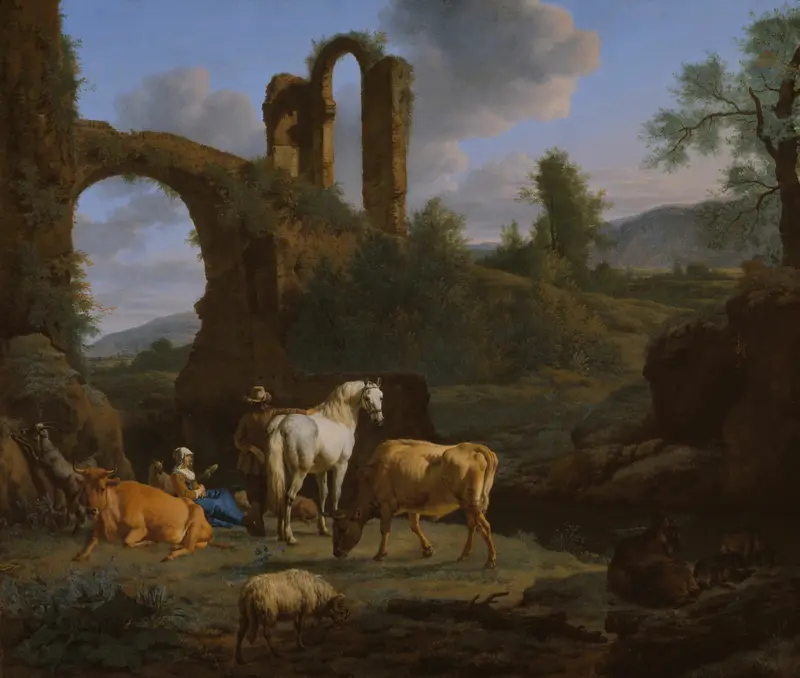
Pastoral Landscape with Ruins
Adriaen van de Velde
Pastoral Landscape with Ruins
Adriaen van de Velde
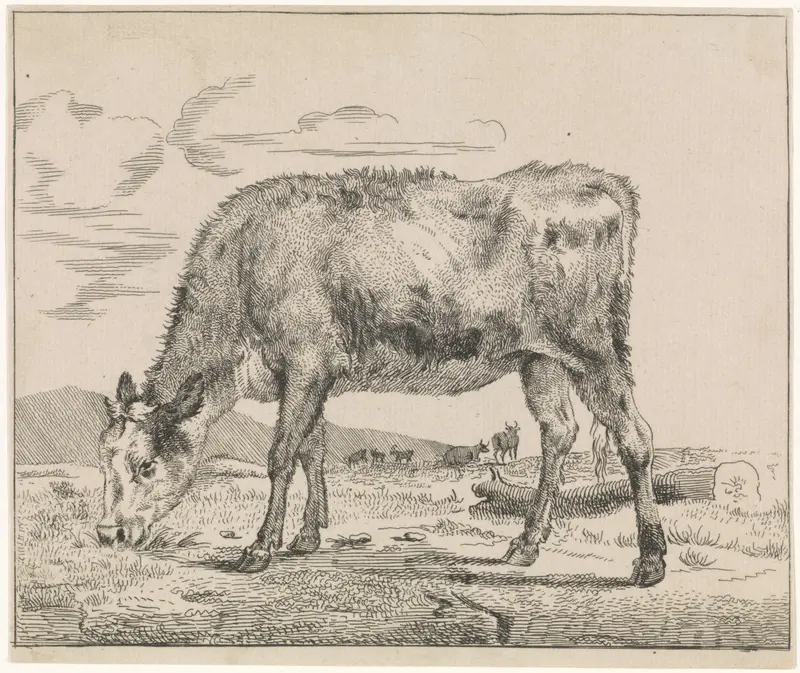
Grazend kalf
Adriaen van de Velde
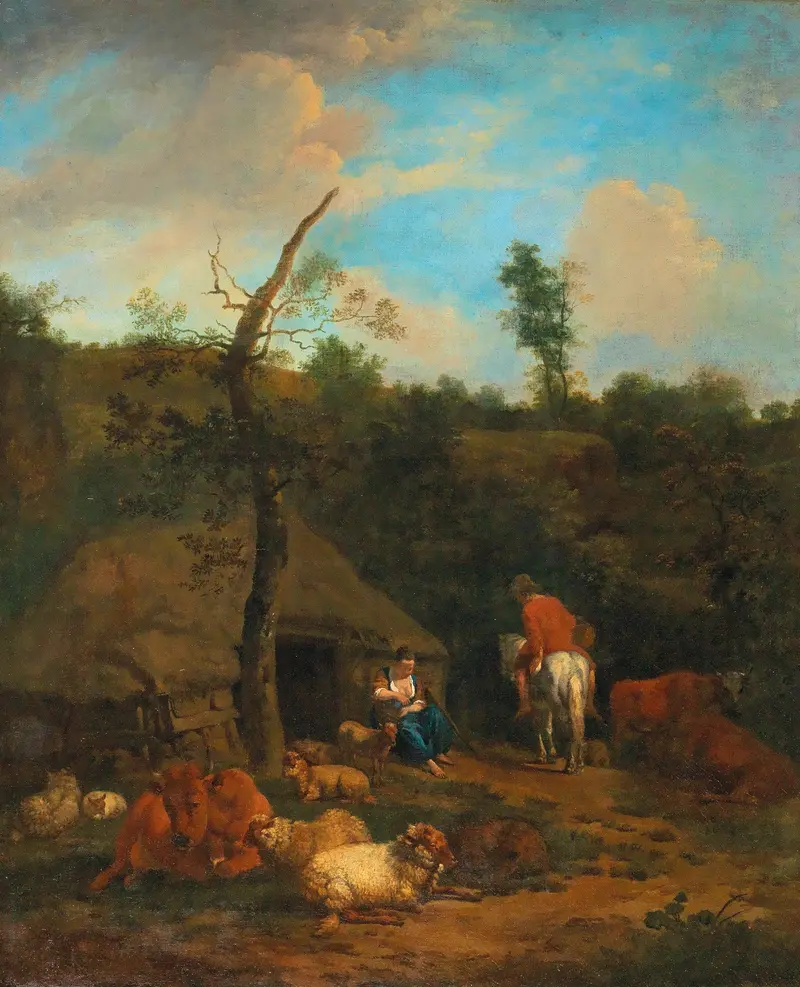
A herdsman and a shepherdess in front of a wooden farmhouse
Adriaen van de Velde
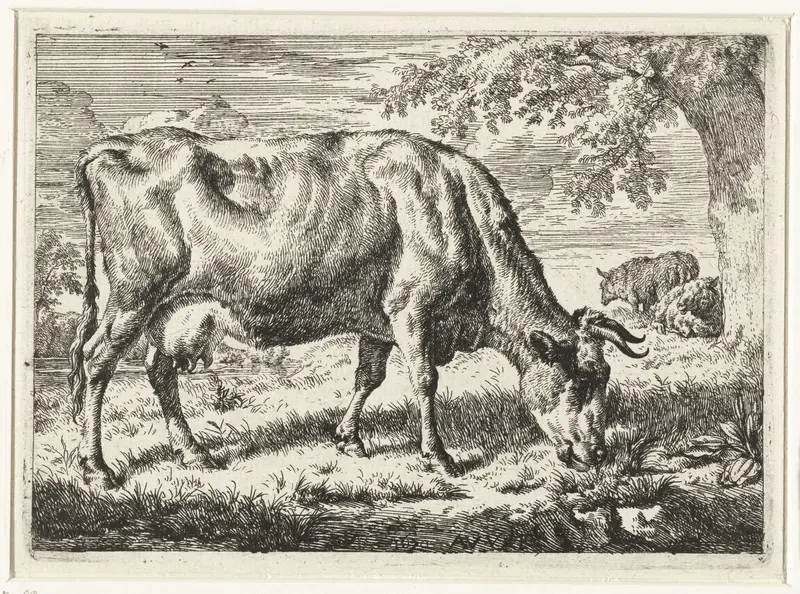
Grazende koe en twee schapen
Adriaen van de Velde
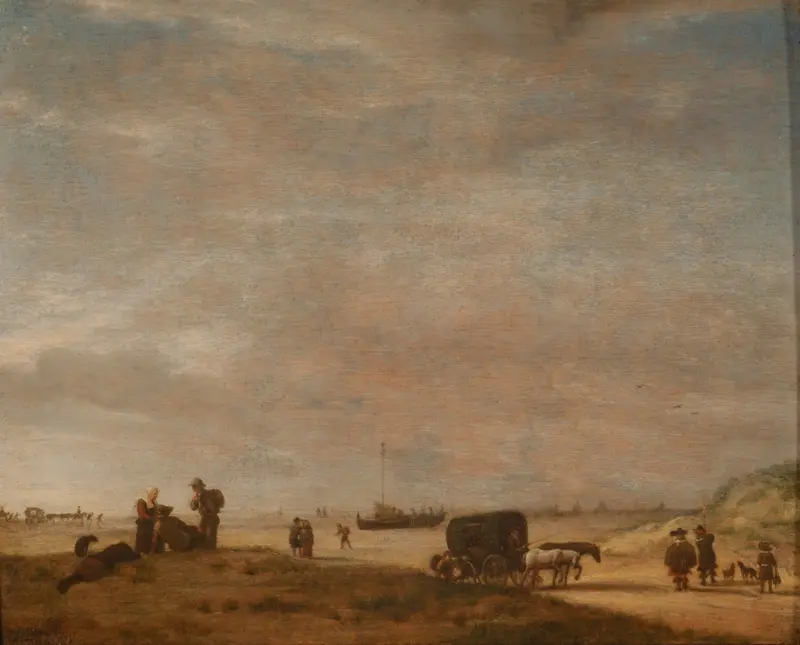
Scheveningen Beach
Adriaen van de Velde
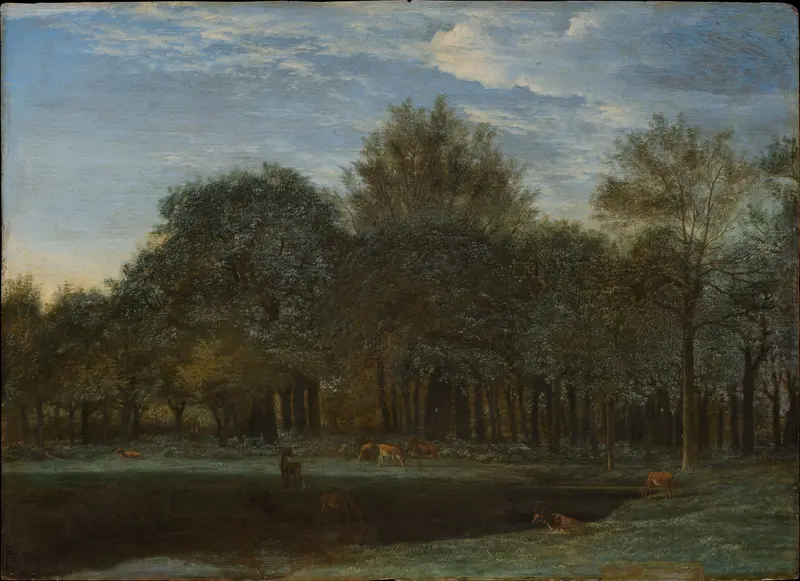
Forest Clearing with Grazing Deer
Adriaen van de Velde
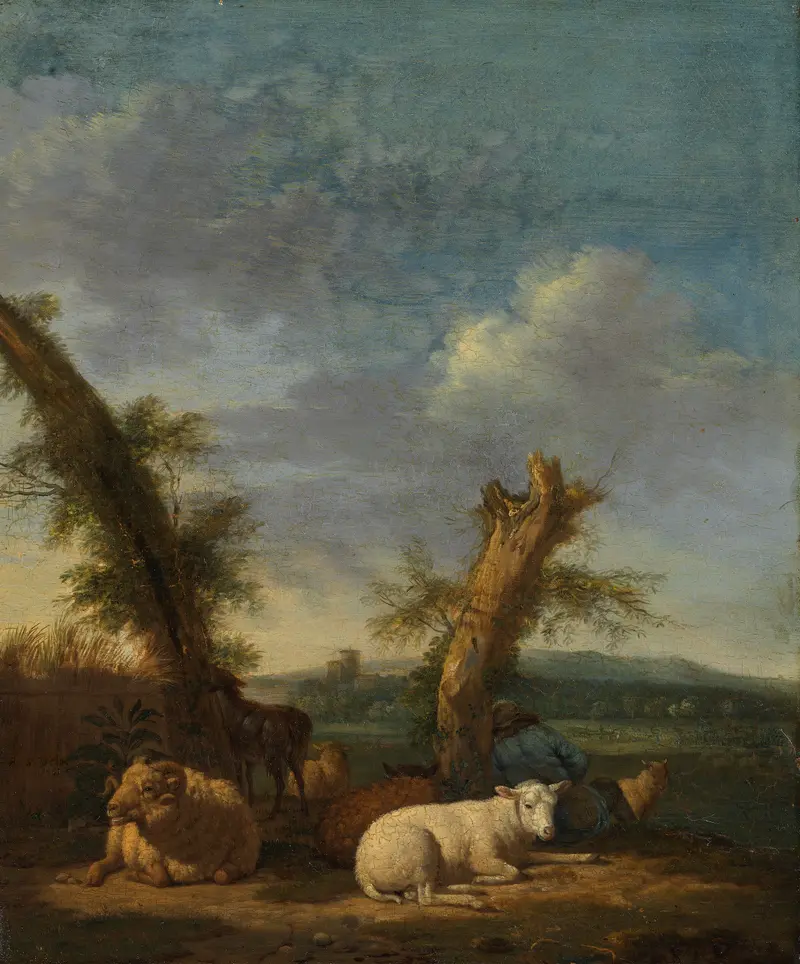
Landscape with Sheep and a Sleeping Shepherd
Adriaen van de Velde
More Landscape Art

The Starry Night
Vincent van Gogh

View of Delft
Johannes Vermeer

Water Lilies
Claude Monet

The Grand Canal, Venice, looking north-west from the Ca' Corner to the Ca' Contarini degli Scrigni, with the campanile of Santa Maria della Carità
Canaletto

Windsor Castle
Canaletto

The Grand Canal looking North-East from the Palazzo Dolfin-Manin to the Rialto Bridge
Canaletto