
The Fiddler — History & Facts
No one in this scene can resist the music. A fiddler stands at the edge of a lively gathering, bow poised mid-tune, as if the next note might tumble out into the courtyard at any moment. The real story unfolds in the faces and gestures of the listeners: a man with a tankard laughs, a woman leans from the doorway to catch the melody, and even the children and dog seem caught up in the spell.
The light draws your eye from the shaded fiddler to the warmly lit faces, then down to the playful children and the attentive dog, as if the music itself is weaving them together. Every detail — the creeping vines, the battered shutters, the scattered leaves — roots this moment in the everyday, yet the mood is one of shared delight. Works like The Fiddler by Adriaen van Ostade, painted in 1673, belong to a world where scenes of rural merrymaking were both familiar and fashionable. In the Dutch Republic, such images were collected by townspeople eager to see reflections of their own lives, or perhaps a touch of gentle satire.
Van Ostade was renowned for his ability to animate these rustic gatherings, capturing the humor and humanity of village life. The painting now belongs to the Mauritshuis collection, a reminder that history has kept few traces of the actual people here — but their laughter and music remain, ready for the viewer to rediscover.
More Artworks by Adriaen van Ostade

Dans in de herberg
Adriaen van Ostade
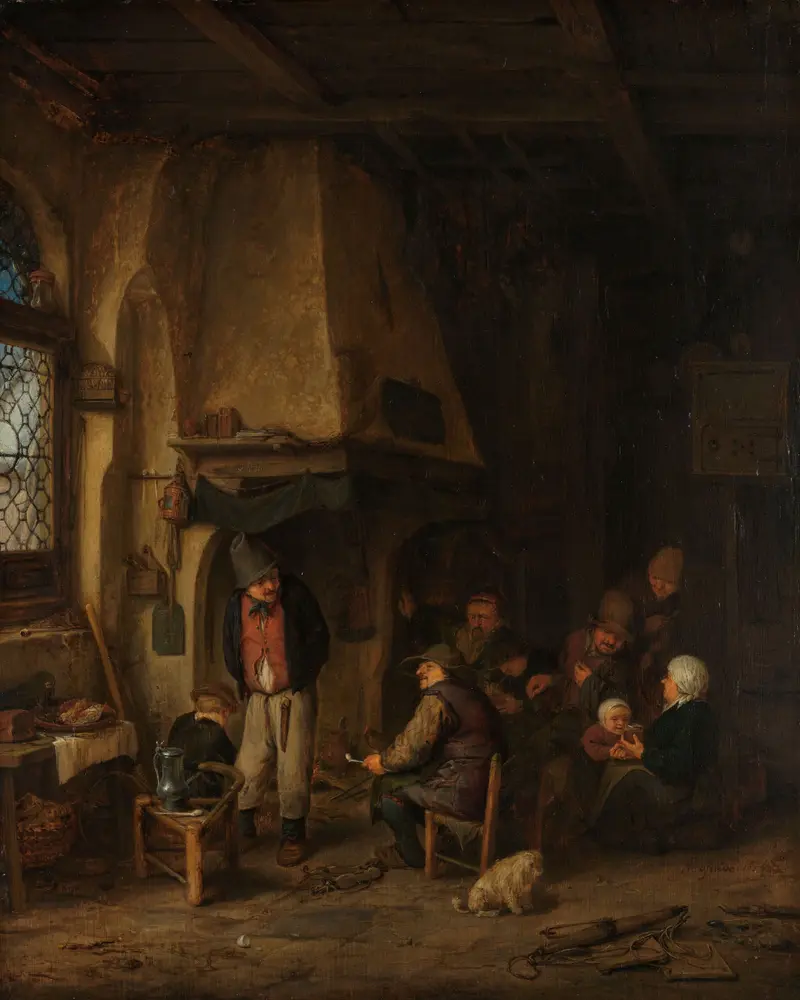
‘The Skaters’: Peasants in an Interior
Adriaen van Ostade
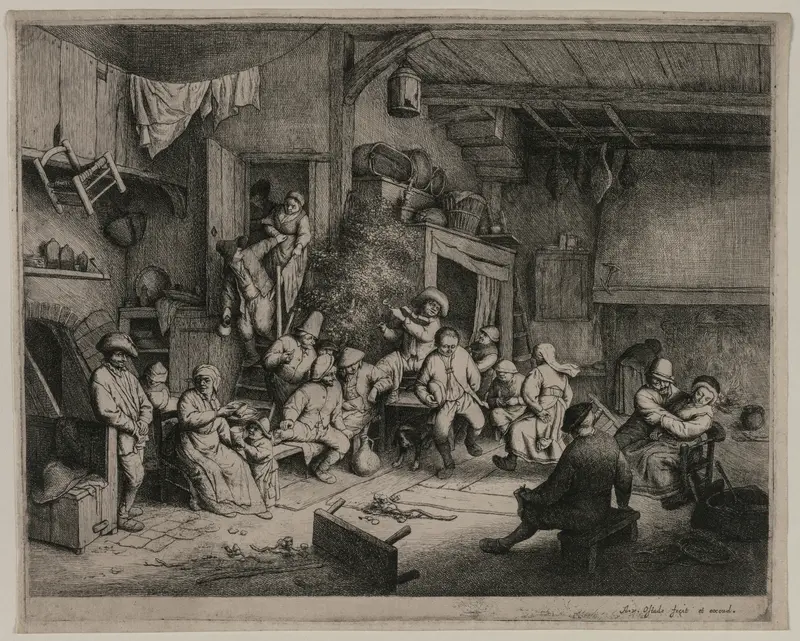
Dance at the Inn
Adriaen van Ostade
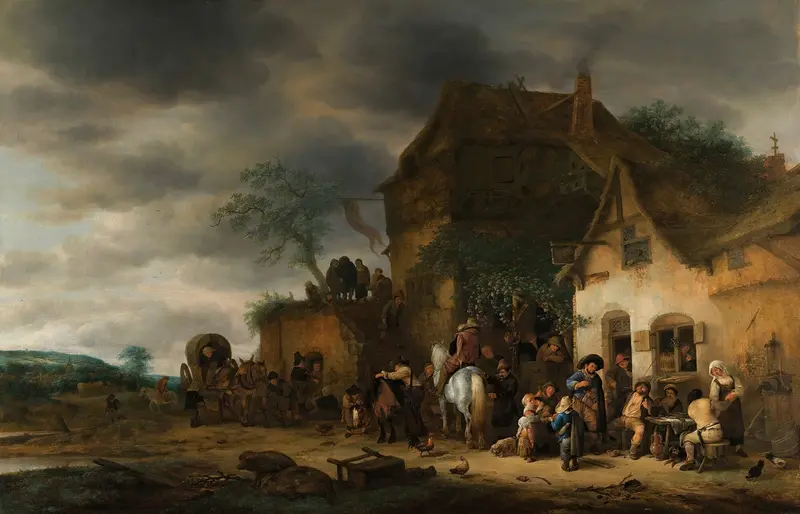
Travellers Halted At A Country Inn
Adriaen van Ostade
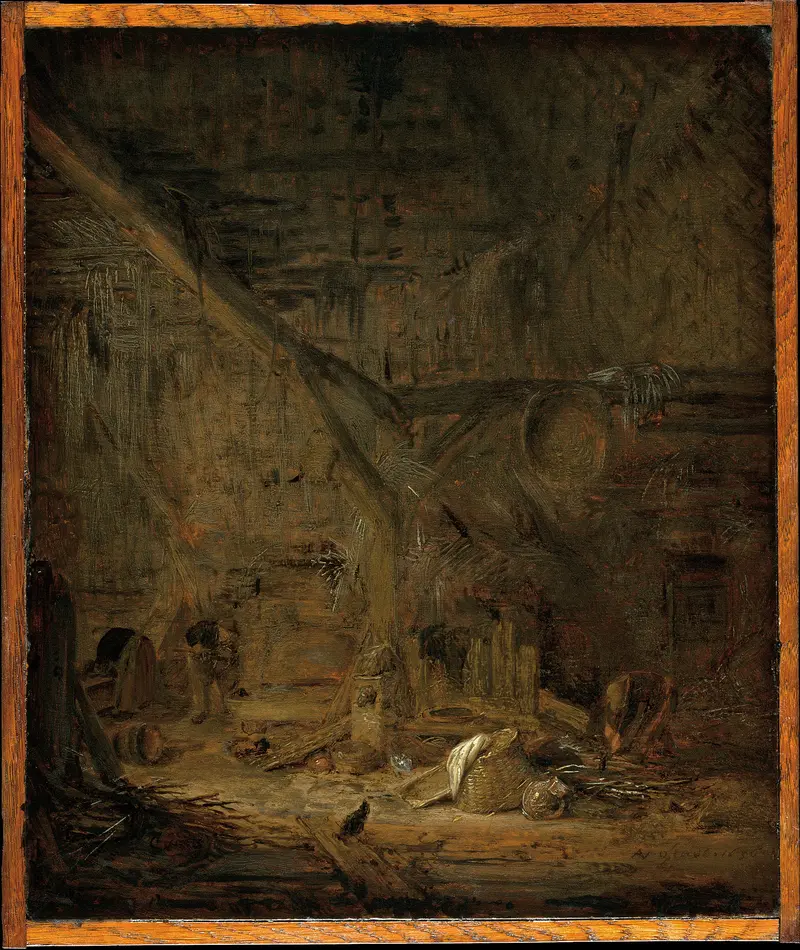
Interior of a Barn
Adriaen van Ostade
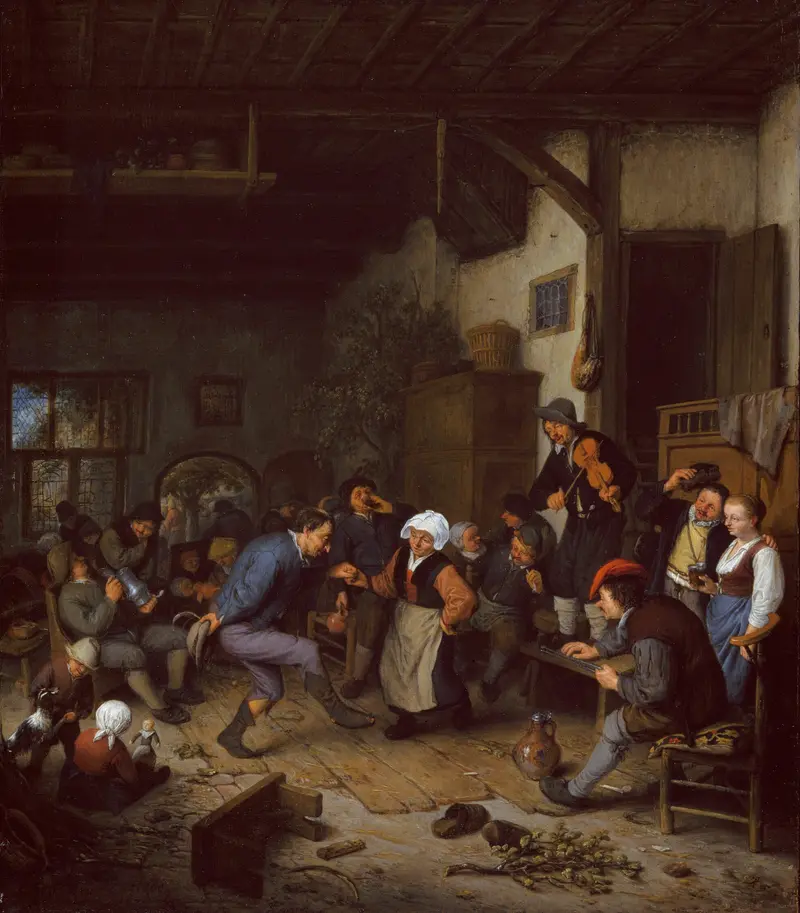
Merrymakers in an Inn
Adriaen van Ostade
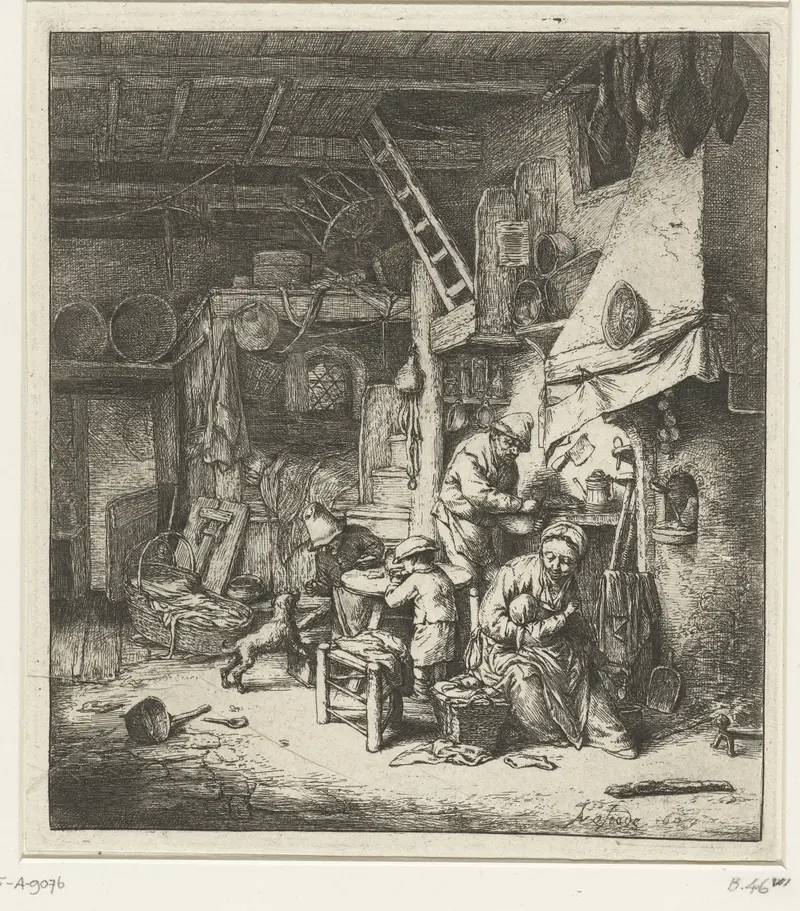
Boerengezin in interieur
Adriaen van Ostade
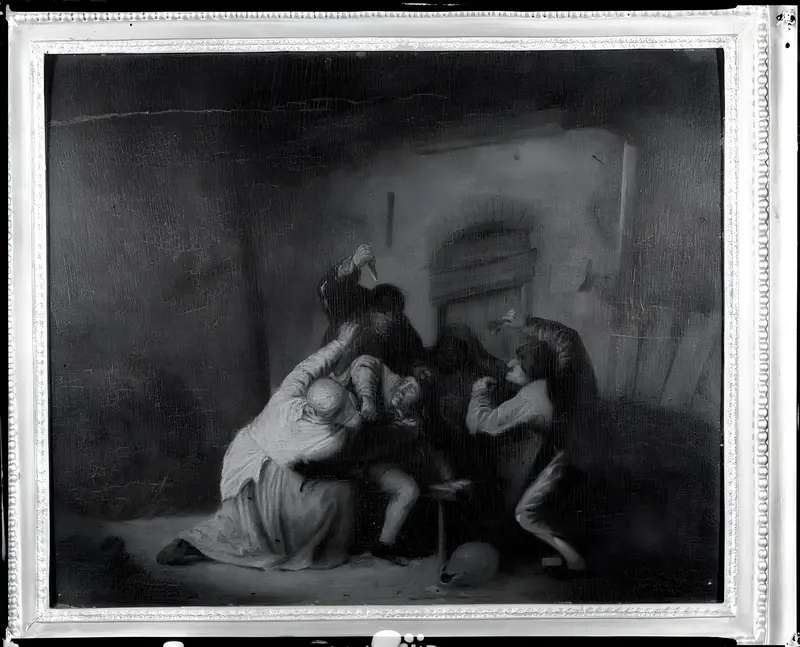
Peasants Brawling in a Tavern
Adriaen van Ostade
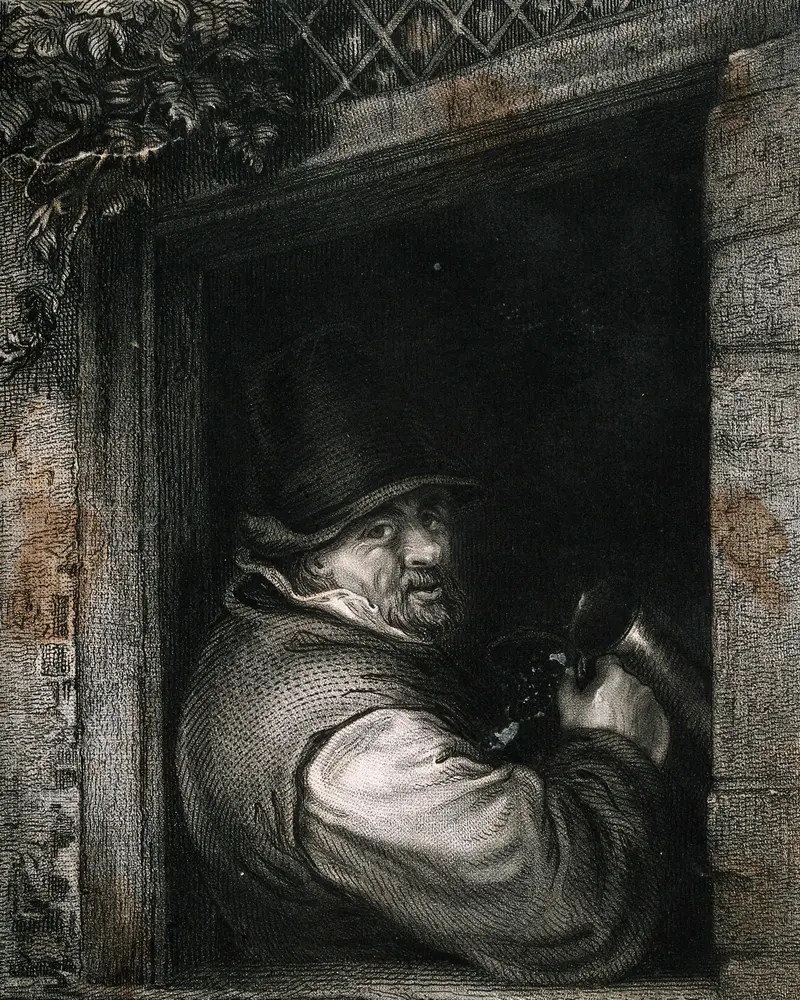
Man with a Tankard at a Window
Adriaen van Ostade
Dans in de herberg
Adriaen van Ostade
More Genre Scene Art

Banquet of the Officers of the St George Civic Guard
Frans Hals

Rembrandt and Saskia in the Scene of the Prodigal Son
Rembrandt van Rijn

Bal du moulin de la Galette
Pierre-Auguste Renoir

Quadrille at the Moulin Rouge
Henri de Toulouse-Lautrec

A Burial at Ornans
Gustave Courbet

When Will You Marry?
Paul Gauguin