
The Fisher Boy — History & Facts
Few paintings from the Dutch Golden Age have sparked as much discussion over their subject’s identity as The Fisher Boy by Frans Hals. For centuries, viewers have wondered whether this cheerful youth, painted around 1630, was a real Haarlem fisherman, a model from Hals’s circle, or simply an idealized type. The boy’s infectious grin and direct gaze were so striking that, according to an 18th-century inventory, the work was once misattributed to Jan Lievens—a testament to its immediate, lifelike presence. At the heart of the painting is a moment of candid ease: a boy, sleeves rolled, basket slung over his shoulder, grins out at the viewer as if sharing a private joke.
His tousled hair and sun-browned skin mark him as a child of the working docks, while the basket hints at the day’s catch. Hals’s loose, rapid brushwork gives the boy’s features a sense of movement, as though he might shift or laugh aloud at any moment. Unlike the more formal, moralizing genre scenes of Jan Steen, here there is no overt lesson—only the exuberance of youth and the dignity of honest labor, rendered with Hals’s characteristic immediacy. Little is known about the early history of The Fisher Boy, including its original patron or intended setting, which is typical for many of Hals’s genre portraits.
The painting has changed hands numerous times, passing through private collections before finding its way into public view in the 19th century. Today, it is recognized as a prime example of Frans Hals’s ability to capture fleeting expressions and the vitality of everyday life, sitting alongside his more formal portraits in major museum collections. Its enduring appeal lies in Hals’s gift for turning a simple street scene into a lively encounter across the centuries.
More Artworks by Frans Hals

Banquet of the Officers of the St George Civic Guard
Frans Hals

Portrait of Jacob Pietersz Olycan (1596-1638)
Frans Hals

Laughing Cavalier
Frans Hals

Militia Company of District XI under the Command of Captain Reynier Reael, Known as ‘The Meagre Company’
Frans Hals

Regentesses of the Old Men's Alms House
Frans Hals
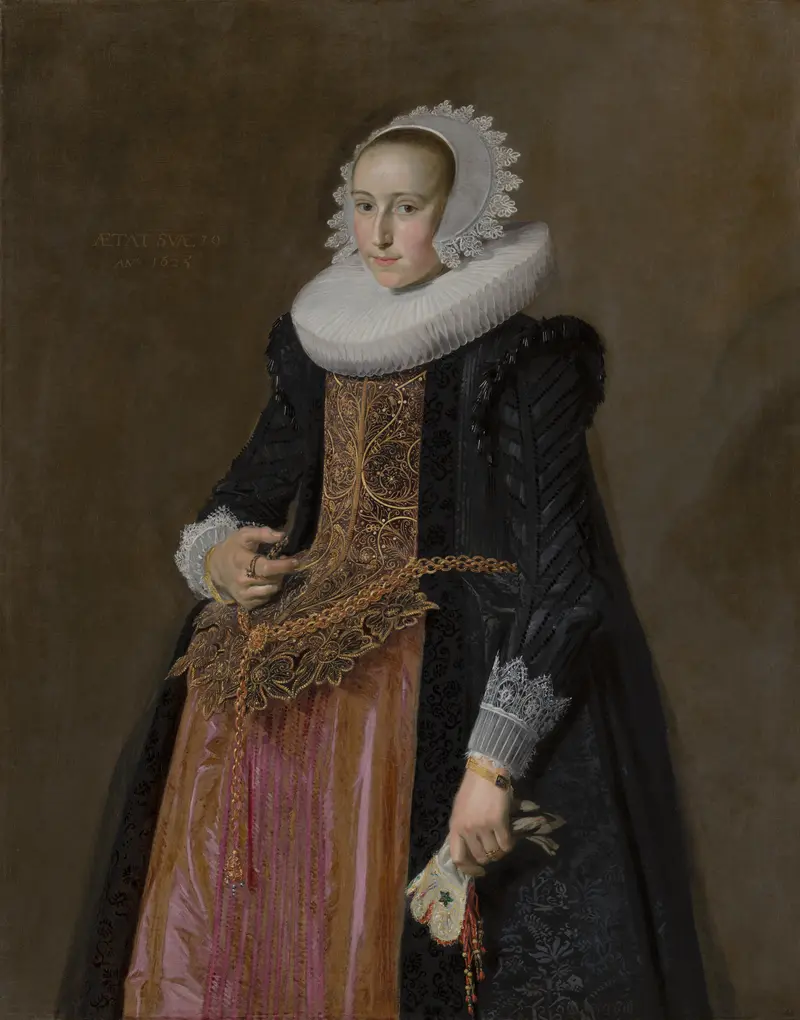
Portrait of Aletta Hanemans (1606–1653)
Frans Hals

Portrait of a Married Couple, Likely Isaac Abrahamsz Massa and Beatrix van der Laen
Frans Hals
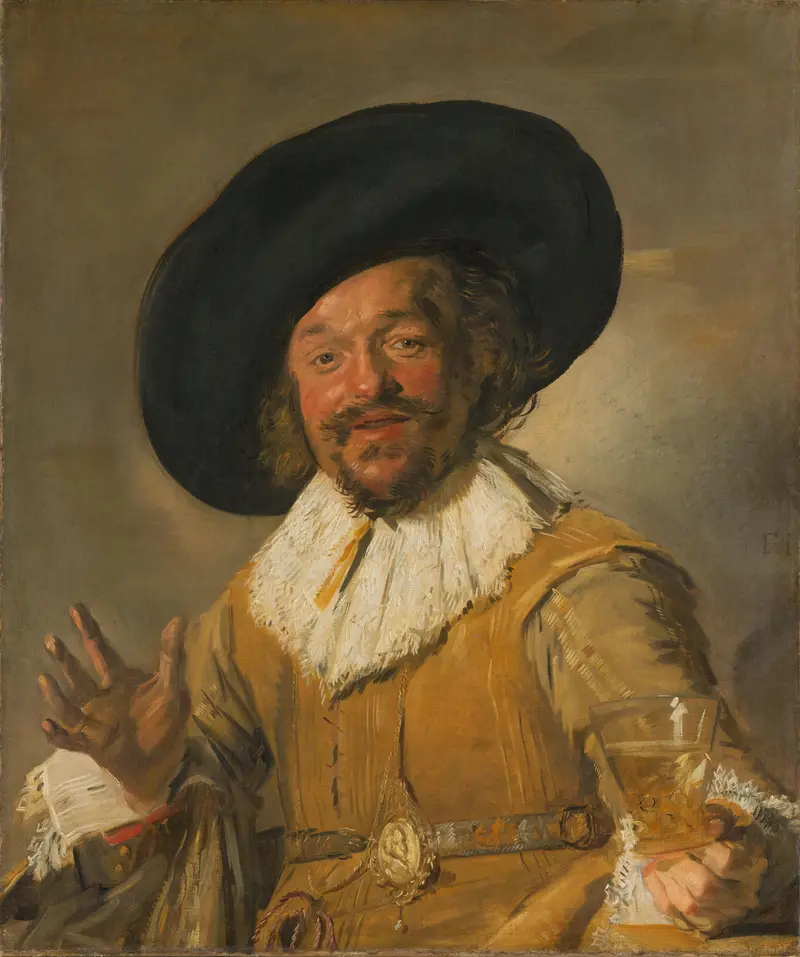
The Merry Drinker
Frans Hals

Portrait of Paulus Verschuur
Frans Hals

Portrait of Pieter van den Broecke
Frans Hals
More Genre Scene Art
Banquet of the Officers of the St George Civic Guard
Frans Hals

Rembrandt and Saskia in the Scene of the Prodigal Son
Rembrandt van Rijn

Bal du moulin de la Galette
Pierre-Auguste Renoir

Quadrille at the Moulin Rouge
Henri de Toulouse-Lautrec

A Burial at Ornans
Gustave Courbet

When Will You Marry?
Paul Gauguin