
The Footbridge (La Passerelle) — History & Facts
What secret hides in the quiet of the canvas? In The Footbridge, a moment of stillness invites the viewer to explore the depths of creation and contemplation. Look to the bottom left, where a narrow, worn footbridge stretches invitingly across a gentle stream. The chiaroscuro technique captures the soft light filtering through the overhanging foliage, casting a delicate shimmer on the water’s surface. Notice how the muted palette of greens and browns suggests the encroaching embrace of nature, while the solitary figure on the bridge adds a poignant sense of solitude, guiding your gaze along the path of introspection. As you delve deeper, consider the juxtaposition of man against nature—the sturdy bridge, a symbol of human ingenuity, stands resilient amidst the fluidity of the water below.
The lone figure, possibly lost in thought, seems to embody the tension between the external world and the internal landscape of emotion. This quiet moment resonates with the viewer, prompting reflections on isolation, connection, and the passage of time. During the late 19th century, Alphonse Legros painted The Footbridge in France, where he was a prominent figure in the realist movement. At this time, he was exploring themes of modern life and the natural world, influenced by his experiences as an artist and teacher.
The painting encapsulates a transitional period in his work, as he sought to blend the serene beauty of landscapes with the human condition, creating a dialogue that transcends the canvas.
More Artworks by Alphonse Legros
Browse all →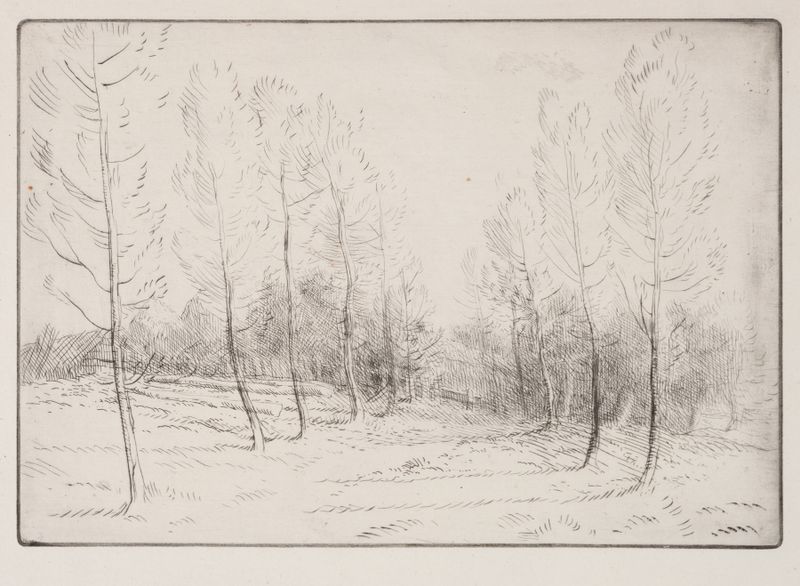
Avenue of Poplars
Alphonse Legros
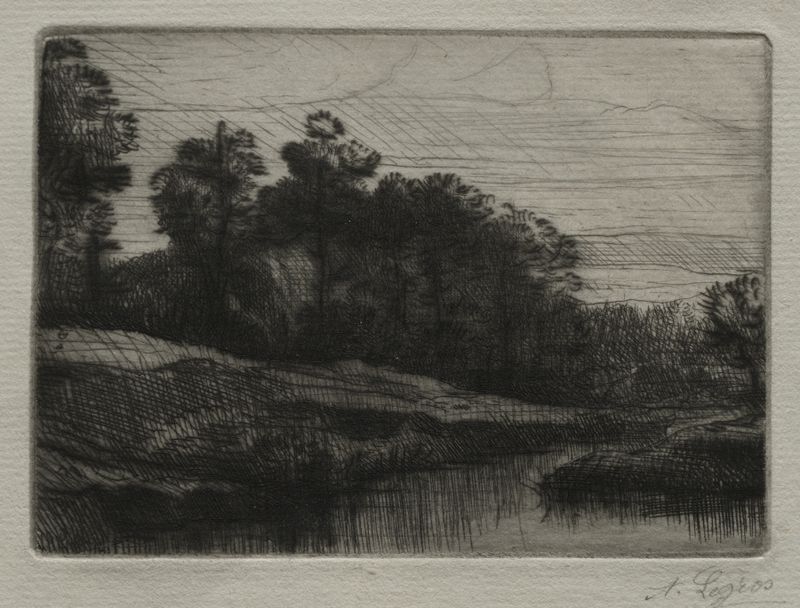
Evening
Alphonse Legros

The Fish in the Hoop Net
Alphonse Legros

The Little Beggar
Alphonse Legros
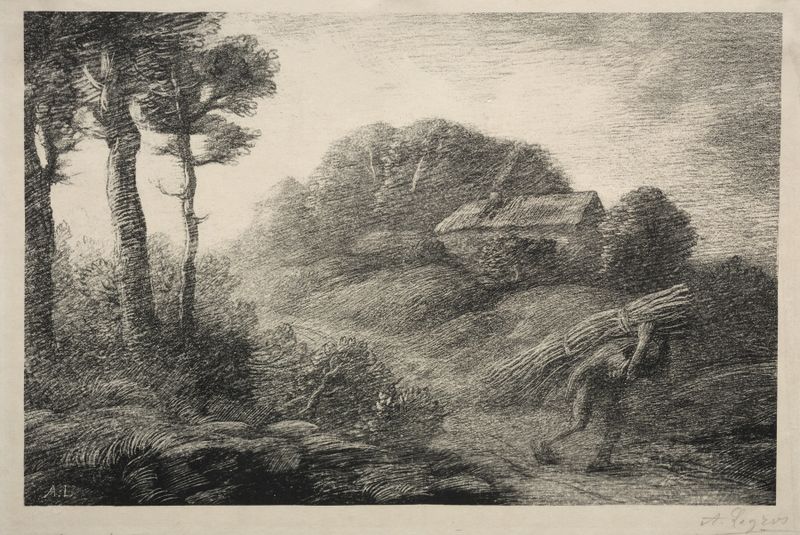
The Return of the Fagot Gatherer
Alphonse Legros

Storm
Alphonse Legros
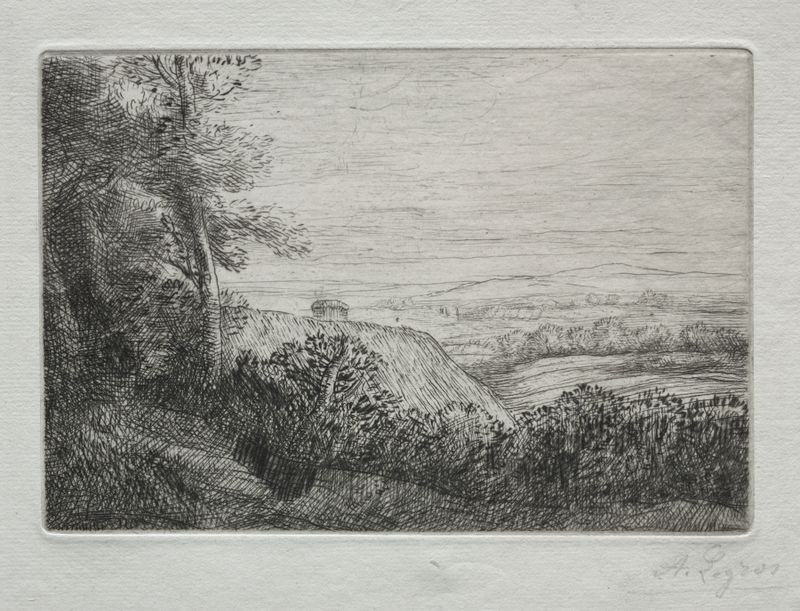
Les dernière Rayons de Soleil
Alphonse Legros
The Traveler Stretched out on the Grass
Alphonse Legros
Guard House
Alphonse Legros

Death of a Vagabond
Alphonse Legros





