
The Forest in Winter — History & Facts
What first catches the eye in The Forest in Winter is the hush—an animal pause, as if the forest itself is holding its breath. A narrow path, dappled with the season’s first snow, winds through towering trunks and leads the gaze to a clearing where a doe stands alert, her head turned as if she has just sensed the viewer’s presence. The snow clings unevenly to rocks and the bases of trees, its cold brightness set against the lingering warmth of autumn leaves, which burn in rusty reds and ochres.
The composition draws you in: the diagonal of the path, the sheltering boulder on the right, and the subtle play of light that seems to promise both shelter and exposure. Every detail—the alertness of the deer, the heavy quiet of the woods—signals a moment of fragile balance between seasons, life, and stillness. Painted in 1860 by Gustave Courbet, this work belongs to a moment when artists began to look at nature not as a backdrop for human drama, but as a living world worthy of close observation. In mid-19th century France, the Realist movement, with Courbet at its heart, challenged academic traditions by insisting on painting the world as it is—mud, snow, and all.
Such forest scenes were rarely grand commissions; they were often painted for a new, urban middle class hungry for images of a vanishing countryside. The painting now resides in the Cincinnati Art Museum, a quiet testament to Courbet’s conviction that even the most humble corners of the earth deserve our full attention. Look again at the wary deer, and you may sense the artist’s own presence—watching, waiting, refusing to turn away.
More Artworks by Gustave Courbet
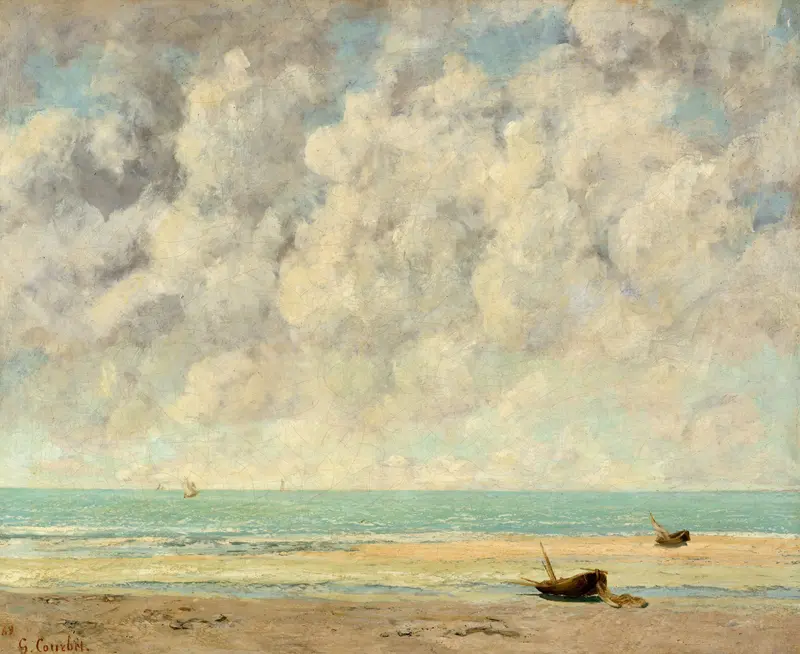
The Calm Sea
Gustave Courbet

A Burial at Ornans
Gustave Courbet
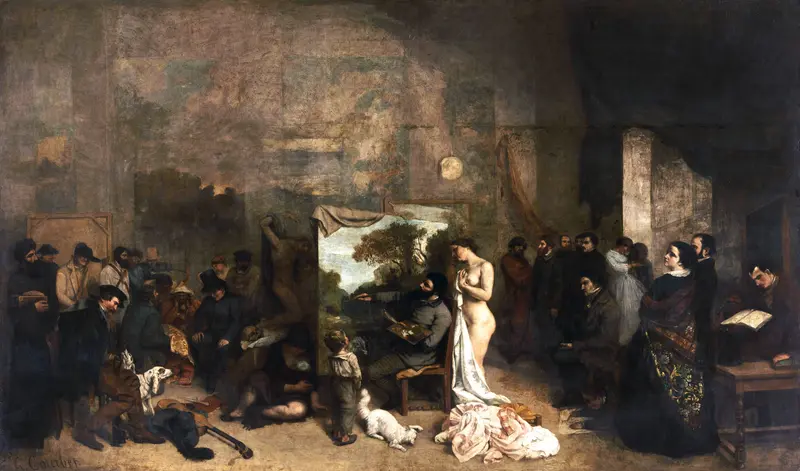
The Painter's Studio
Gustave Courbet
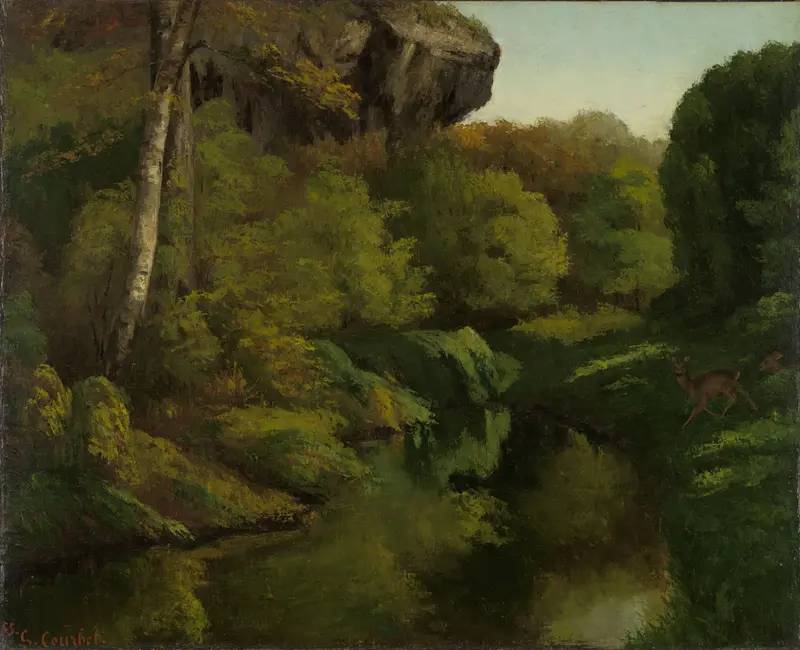
View in the Forest of Fontainebleau
Gustave Courbet
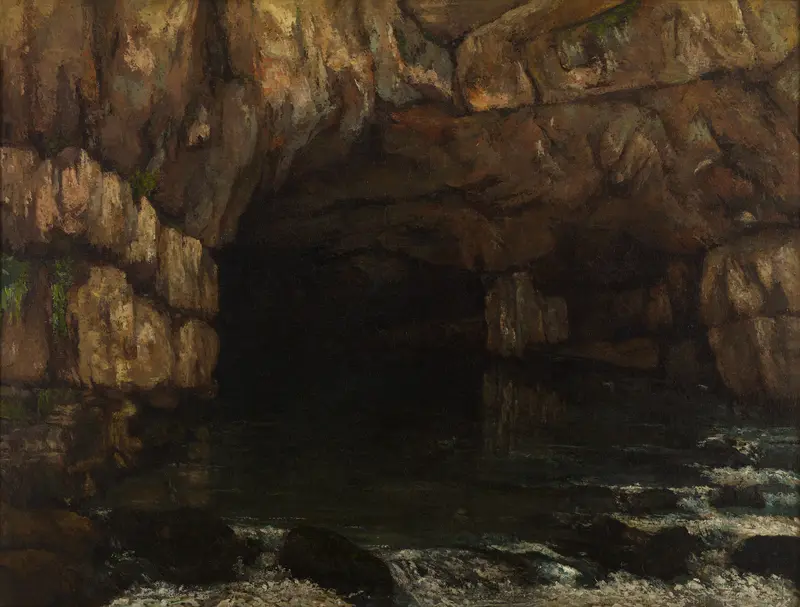
La source de la Loue (The Source of the Loue)
Gustave Courbet
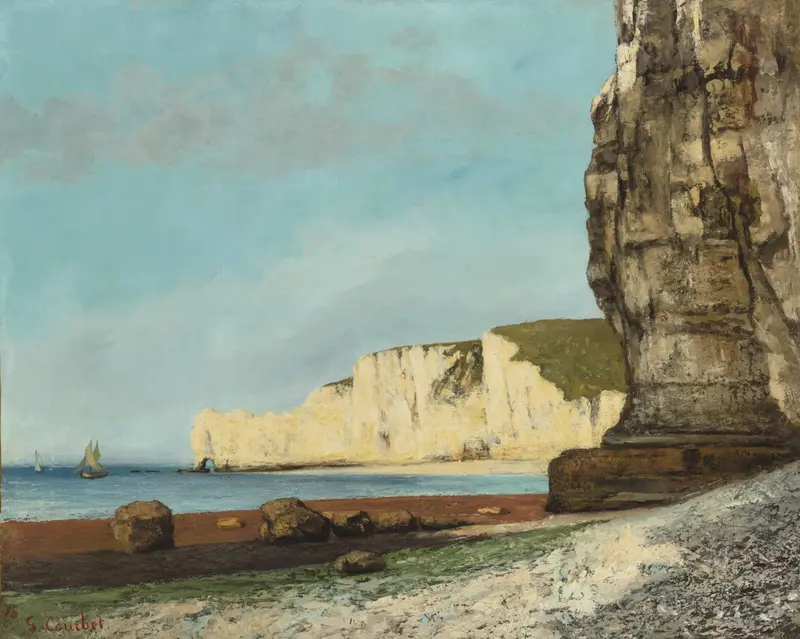
Étretat; Les Falaises
Gustave Courbet
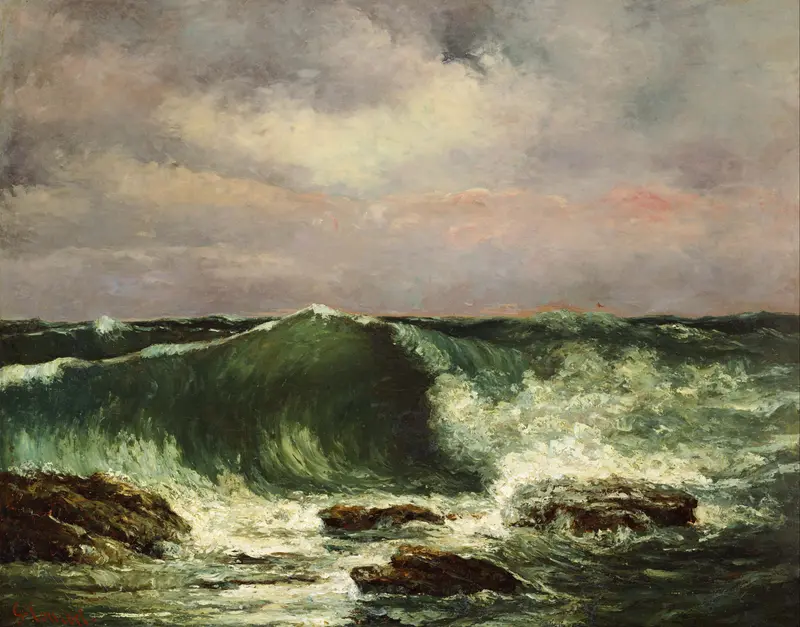
Waves
Gustave Courbet
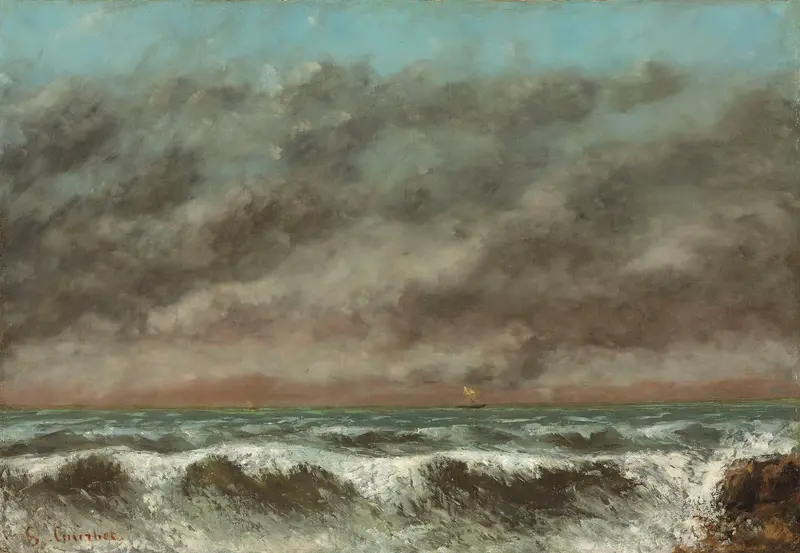
Marine
Gustave Courbet
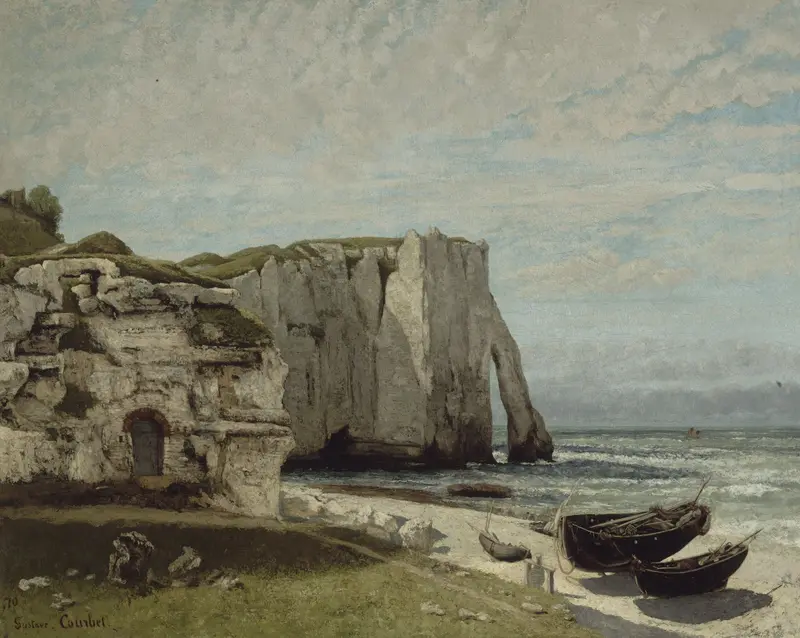
The Etretat Cliffs after the Storm
Gustave Courbet
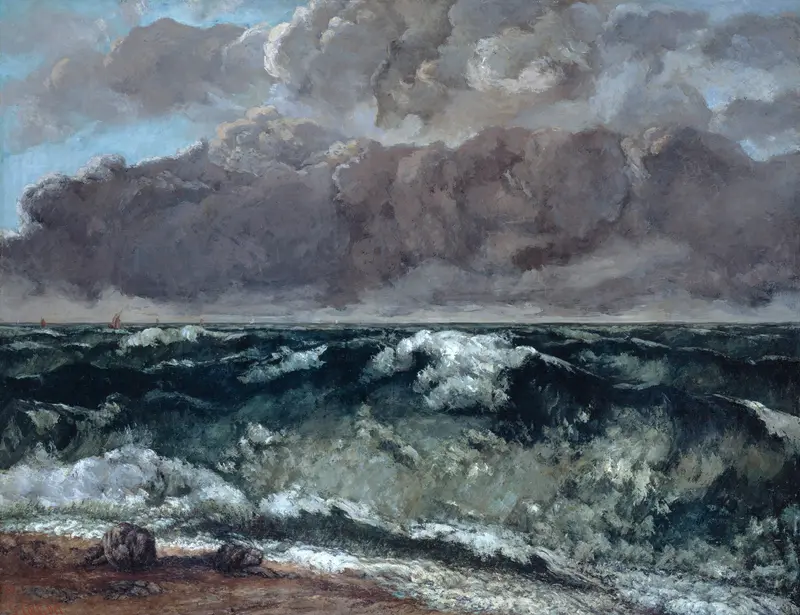
The Wave
Gustave Courbet
More Landscape Art

The Starry Night
Vincent van Gogh

View of Delft
Johannes Vermeer

Water Lilies
Claude Monet

The Grand Canal, Venice, looking north-west from the Ca' Corner to the Ca' Contarini degli Scrigni, with the campanile of Santa Maria della Carità
Canaletto

Windsor Castle
Canaletto

The Grand Canal looking North-East from the Palazzo Dolfin-Manin to the Rialto Bridge
Canaletto