
The Gleaners — History & Facts
Three women bend low over a field, their hands reaching for stray stalks of wheat left after the harvest, while haystacks and carts fill the distant background under a pale sky. The Gleaners shows the act of gleaning, in which the poorest rural workers collect leftover grain, a subject associated with poverty and the lowest ranks of rural society. When The Gleaners was exhibited at the Salon of 1857, its focus on laborers and its large scale unsettled the French upper classes, who saw it as a stark depiction of rural poverty and social inequality.
Unlike earlier biblical scenes of gleaning, The Gleaners presents no sense of community or compassion, instead contrasting the hardship of the women in the foreground with the abundant harvest in the distance. The critical response was hostile at first, but after Jean-François Millet’s death, appreciation of his work broadened, and the painting changed hands for increasingly high sums.
More Artworks by Jean-François Millet
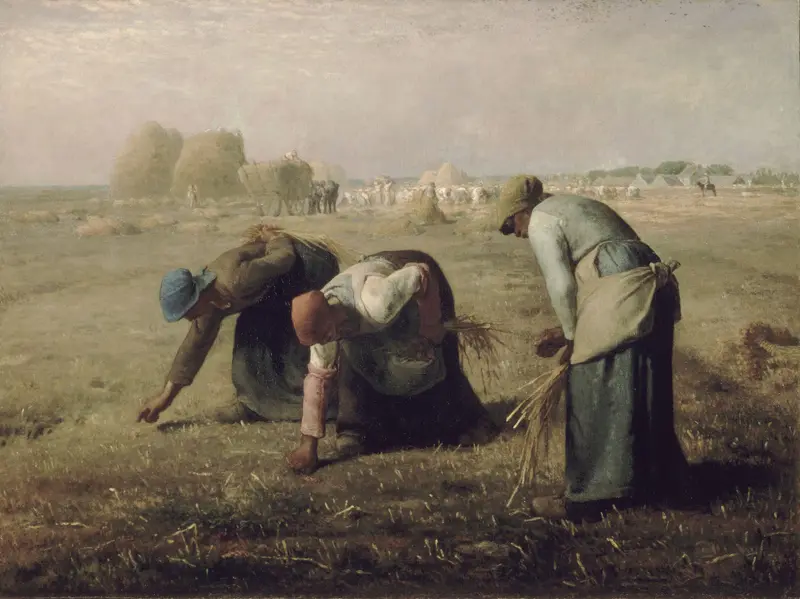
Gleaners
Jean-François Millet

Starry Night
Jean-François Millet
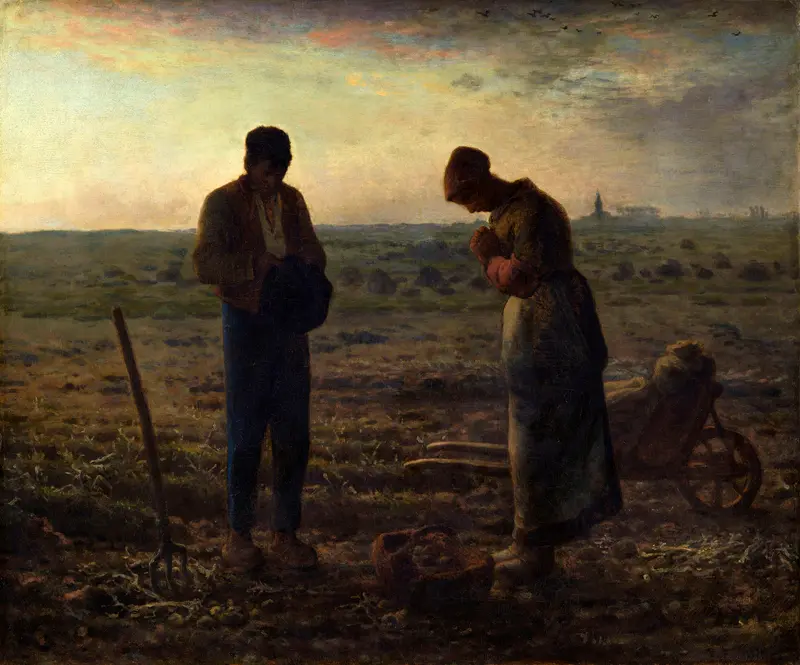
The Angelus
Jean-François Millet
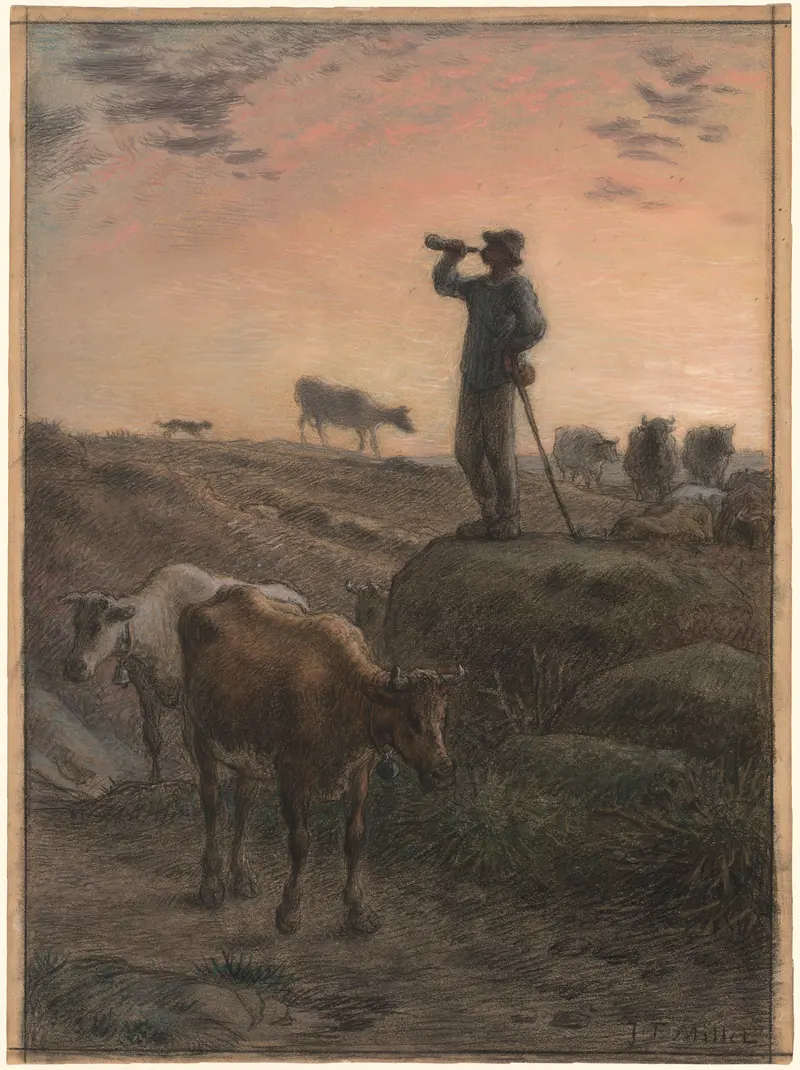
Calling Home the Cows
Jean-François Millet

Watermill at the Foot of a Mountain, Allier
Jean-François Millet
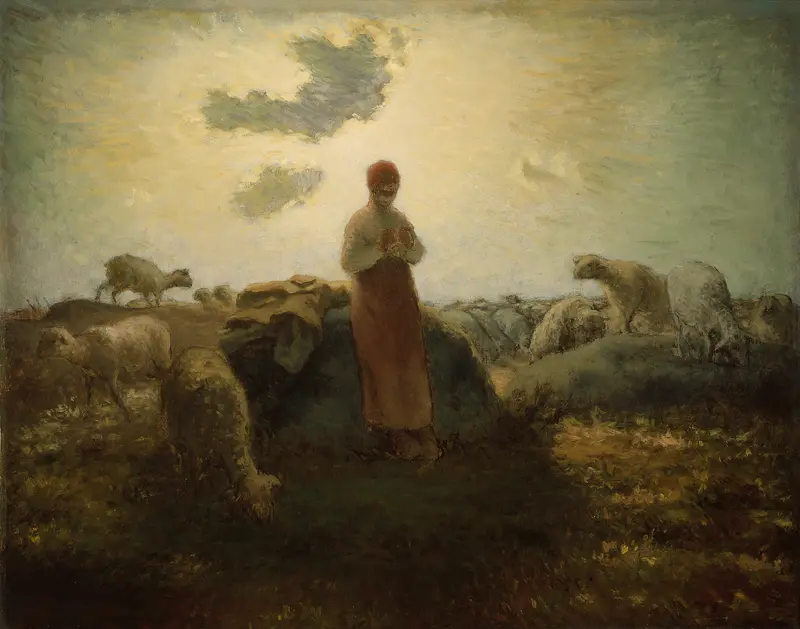
The Keeper of the Flock
Jean-François Millet
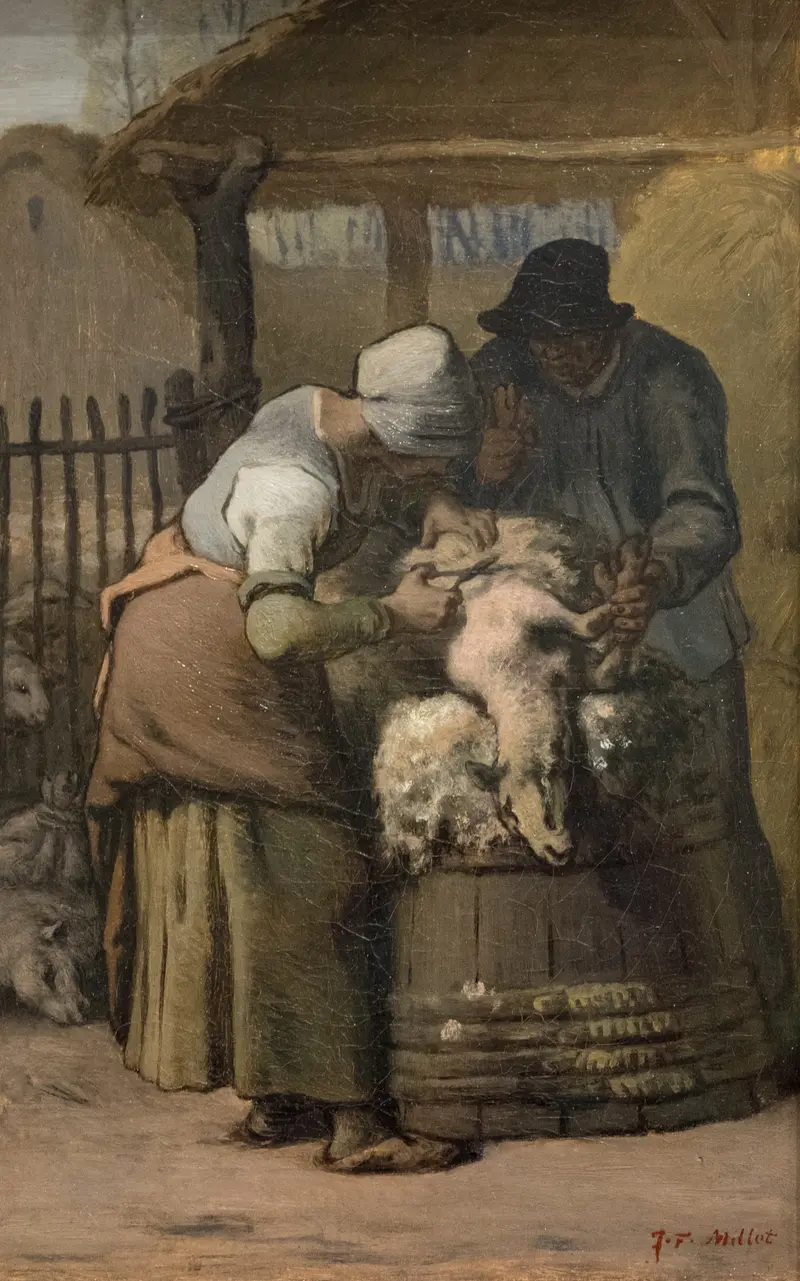
The Sheepshearers
Jean-François Millet
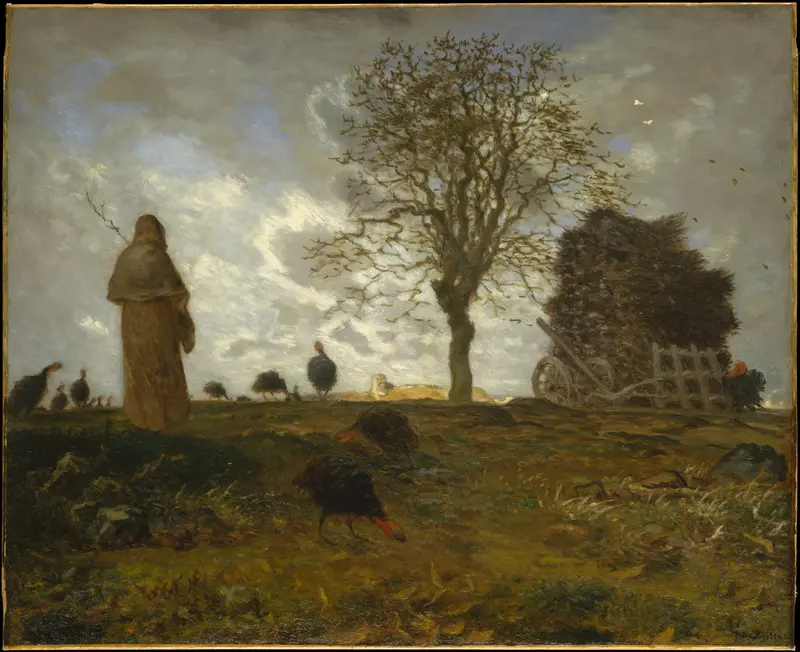
Autumn Landscape with a Flock of Turkeys
Jean-François Millet
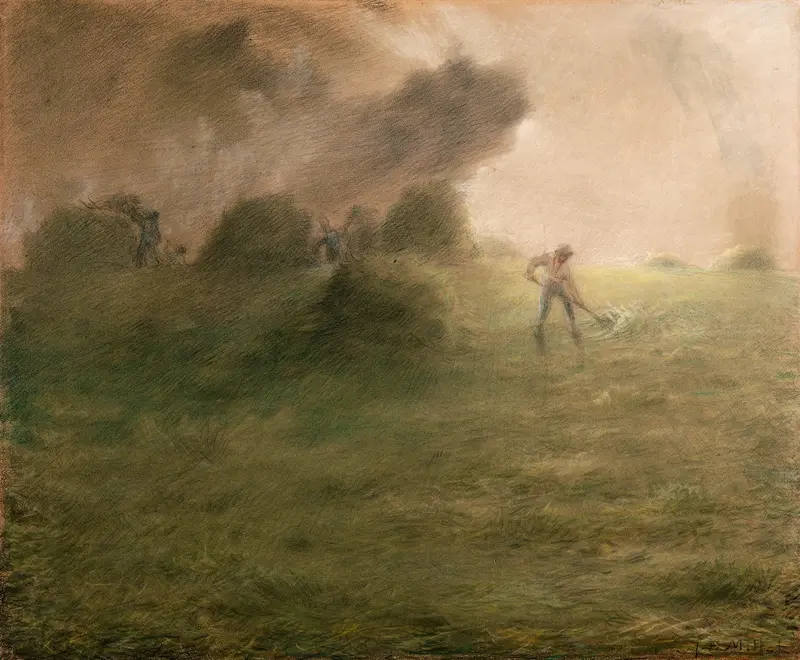
A Storm during Haymaking
Jean-François Millet
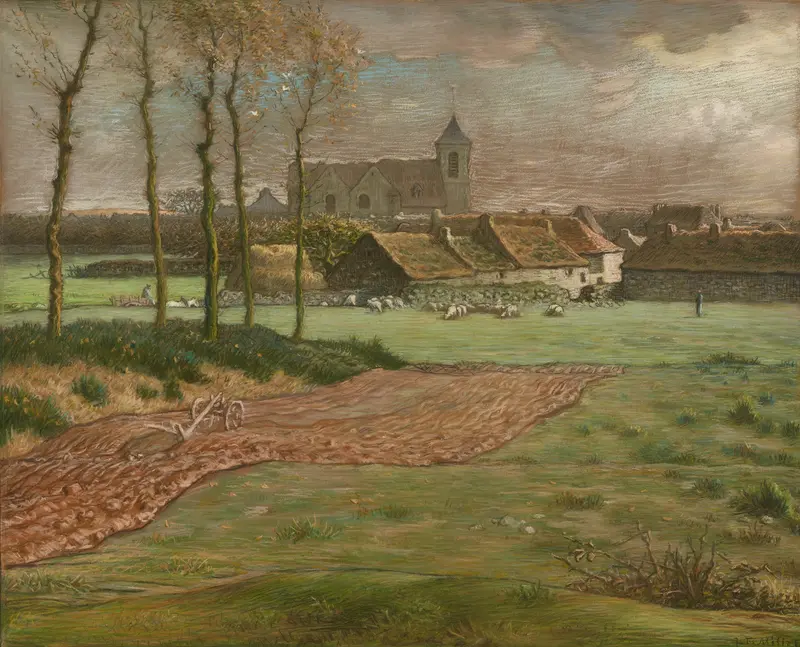
The Church at Chailly
Jean-François Millet
More Genre Scene Art

Banquet of the Officers of the St George Civic Guard
Frans Hals

Rembrandt and Saskia in the Scene of the Prodigal Son
Rembrandt van Rijn

Bal du moulin de la Galette
Pierre-Auguste Renoir

Quadrille at the Moulin Rouge
Henri de Toulouse-Lautrec

A Burial at Ornans
Gustave Courbet

When Will You Marry?
Paul Gauguin