The Gleaners: analysis and meaning
At the Paris Salon of 1857 the critics split into two camps: some read a plea for the poor, others a threat to the social order. The picture behind the quarrel was The Gleaners (in French Des glaneuses or Les glaneuses), painted that year by Jean-François Millet (1814–1875), a figure of Realism. Three poor women stoop for the ears of wheat the reapers left behind. The canvas belongs to the Musée d’Orsay in Paris.
- In the field: an older woman and two younger ones stoop for ears of wheat in a field just reaped. Far behind them the farmer on horseback and his men load carts and build stacks.
- Light and mood: Edmond About found calm and grandeur in the picture, its drawing faultless and its colour restrained, under a summer sun he called “a serious star that ripens the wheat”. Sensier praised the golden, harmonious light and the figures, so firm they seem sculpted.
- Studies and doubts: Millet worked up the motif in drawings: a pen sketch of one woman stooping for an ear of wheat, a study of two women with a loaded wagon behind them, then a drawing of the three final figures, whose older member he reworked many times. While finishing the canvas he told his friend Théodore Rousseau that on some days it seemed to mean nothing.
- Exhibition record: signed J. F. Millet at lower right, it was shown at the Salon of 1857 (no. 1936), at the 1867 Exposition universelle in Paris (no. 474) and at the Centennale of the 1889 Exposition universelle (no. 518).
- Medium, size and owners: oil on canvas, 83.5 × 110 cm. The first buyer was a merchant named Binder; the painting later belonged to Paul Tesse, Ferdinand Bischoffsheim and, from 1889, Madame Pommery, who gave it to the State in 1890 and kept the use of it for life. It stayed at the Louvre until 1986, then went to the Musée d’Orsay (RF 592).
Sources: Musée d’Orsay: collection record (RF 592) · POP / Joconde (French Ministry of Culture): record 000PE002031 · Sensier, La vie et l’œuvre de J.-F. Millet (1881), ch. XVIII, pp. 178–181 · Edmond About, Nos artistes au Salon de 1857 (1858), pp. 104–107 · Cartwright, Jean François Millet: His Life and Letters (1902 ed.), pp. 175–178 · Wikidata Q1368055 · Wikidata Q148458 (died 20 January 1875)
Questions and answers about the painting
What is the meaning of The Gleaners?
The painting shows the poorest villagers at the edge of the harvest, and critics argued over what it meant from the first day. Three women pick up the ears the reapers left, “the alms of chance” that, as Edmond About noted, the law guaranteed them, while the farm’s full carts and stacks stand behind. Some read a protest against misery, others a menace to society. About saw neither, only women who “glean their bread crumb by crumb” with the active resignation of peasants. Sensier, Millet’s friend, said the painter was neither a socialist nor an ideologue but felt pity for the poor.
Source: Sensier, La vie et l’œuvre de J.-F. Millet (1881), ch. XVIII, pp. 178–181 · Edmond About, Nos artistes au Salon de 1857 (1858), pp. 104–107
Where is Millet’s painting kept, and is it in the Louvre?
The Musée d’Orsay in Paris owns Millet’s canvas, not the Louvre. The Gleaners is inventory number RF 592 and French state property: Madame Pommery gave it in 1890, and it stayed at the Louvre until 1986, the year Wikidata records its move to the Orsay. Display rooms change, so check the museum’s website before a visit.
Source: Musée d’Orsay: collection record (RF 592) · POP / Joconde (French Ministry of Culture): record 000PE002031 · Wikidata Q1368055
How did critics react to Millet’s painting at the 1857 Salon?
They were sharply divided. Paul de Saint-Victor wrote that the three women “pose like the three Fates of pauperism” and called them scarecrows of rags planted in a field, while Edmond About found the picture so calm and grand that it “almost announces itself as a religious painting”. Artists admired it, Sensier says, but collectors held back: it found a buyer only after the painter Jules Dupré encouraged a merchant, Binder, to take it.
Source: Sensier, La vie et l’œuvre de J.-F. Millet (1881), ch. XVIII, pp. 178–181 · Edmond About, Nos artistes au Salon de 1857 (1858), pp. 104–107 · Cartwright, Jean François Millet: His Life and Letters (1902 ed.), pp. 175–178
How much was Millet’s painting worth?
Millet’s first buyer paid 2,000 francs, and in 1889 Madame Pommery paid 300,000 francs for the picture. The merchant Binder of L’Isle-Adam bought it after the 1857 Salon, when few collectors wanted it, at the urging of Jules Dupré. Since Pommery’s gift in 1890 it has been state property and is not for sale, so it has no market price today.
Source: Sensier, La vie et l’œuvre de J.-F. Millet (1881), ch. XVIII, pp. 178–181 · Cartwright, Jean François Millet: His Life and Letters (1902 ed.), pp. 175–178 · POP / Joconde (French Ministry of Culture): record 000PE002031
Who painted the canvas, and when?
The Gleaners was painted in 1857 by Jean-François Millet, who was born at Gruchy (Manche) in 1814 and died at Barbizon in 1875. He signed it J. F. Millet at lower right and sent it to the Salon of 1857, where it was no. 1936. It is oil on canvas, 83.5 × 110 cm, or 116 × 143.5 cm with its frame.
Source: Musée d’Orsay: collection record (RF 592) · POP / Joconde (French Ministry of Culture): record 000PE002031
Is Millet’s painting in the public domain?
Yes. Millet died in 1875, so his paintings are free of copyright everywhere. A faithful photograph of a public-domain painting adds no new copyright in the United States or the European Union, so you can download this image and use it in personal or commercial projects. Public Domain Images for Commercial Use explains how.
More Artworks by Jean-François Millet
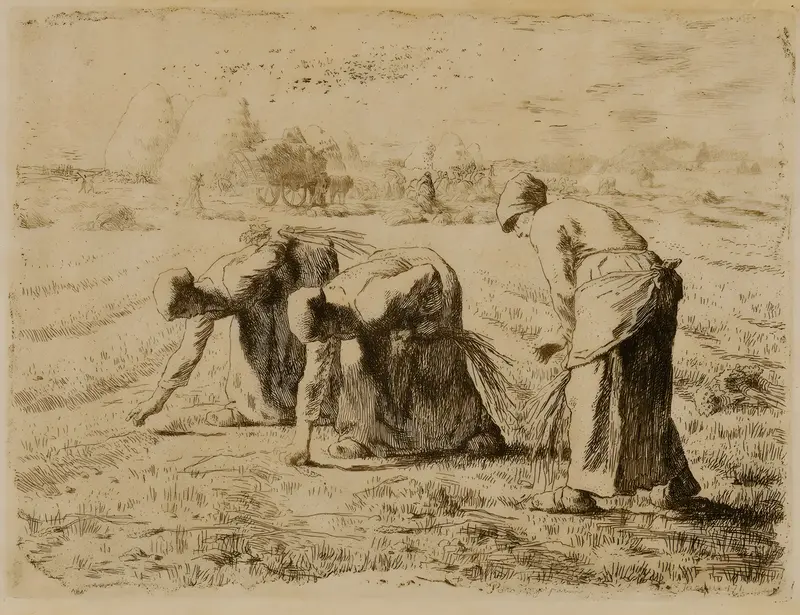
The Gleaners
Jean-François Millet

Starry Night
Jean-François Millet
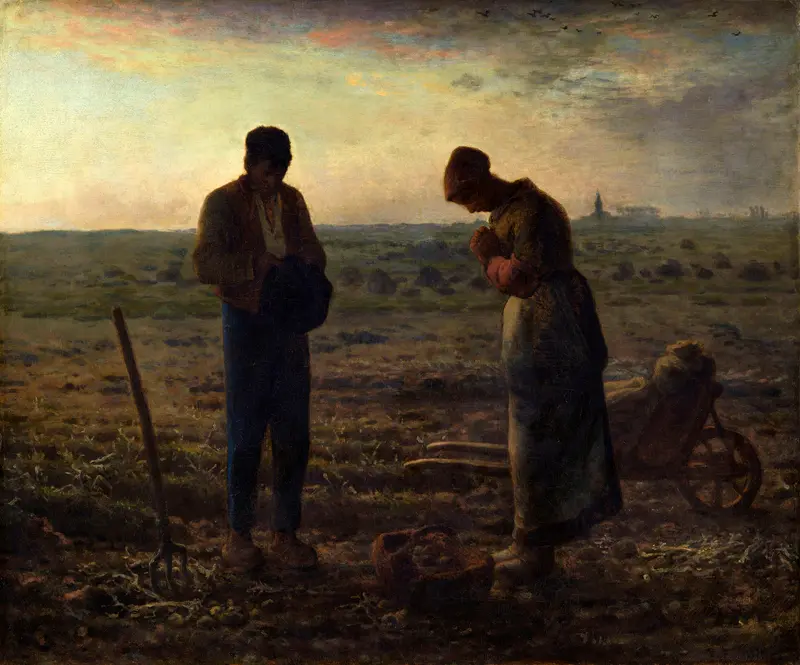
The Angelus
Jean-François Millet
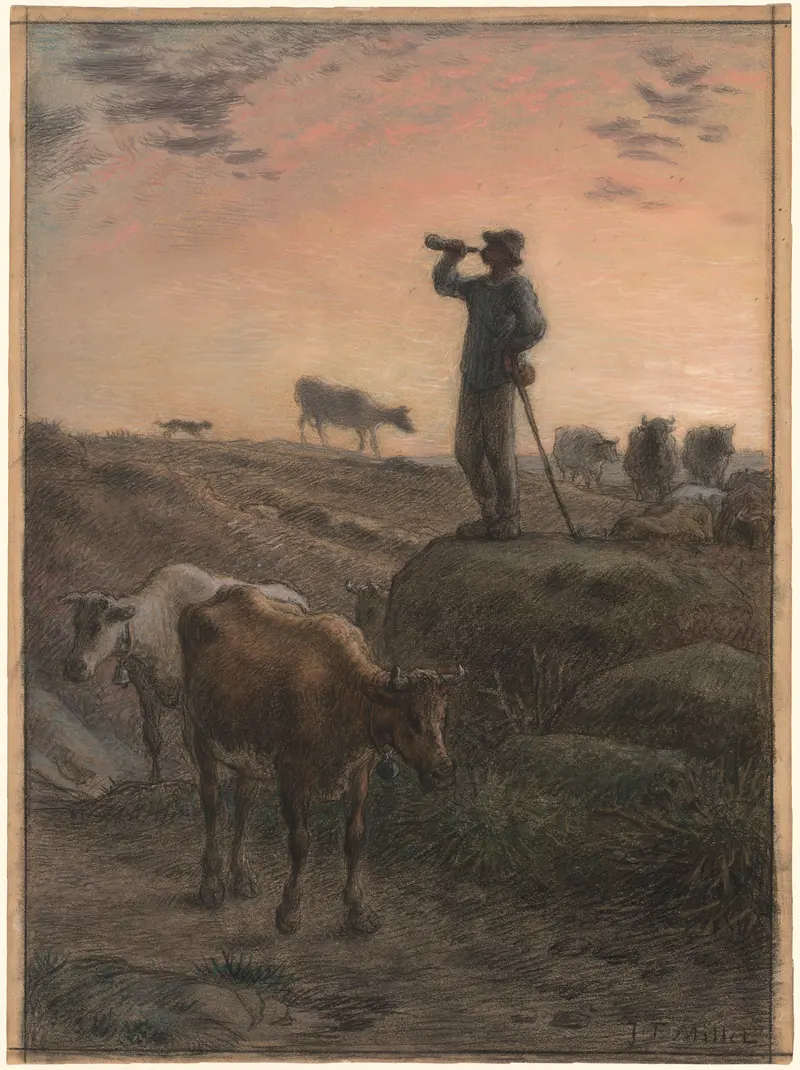
Calling Home the Cows
Jean-François Millet

Watermill at the Foot of a Mountain, Allier
Jean-François Millet
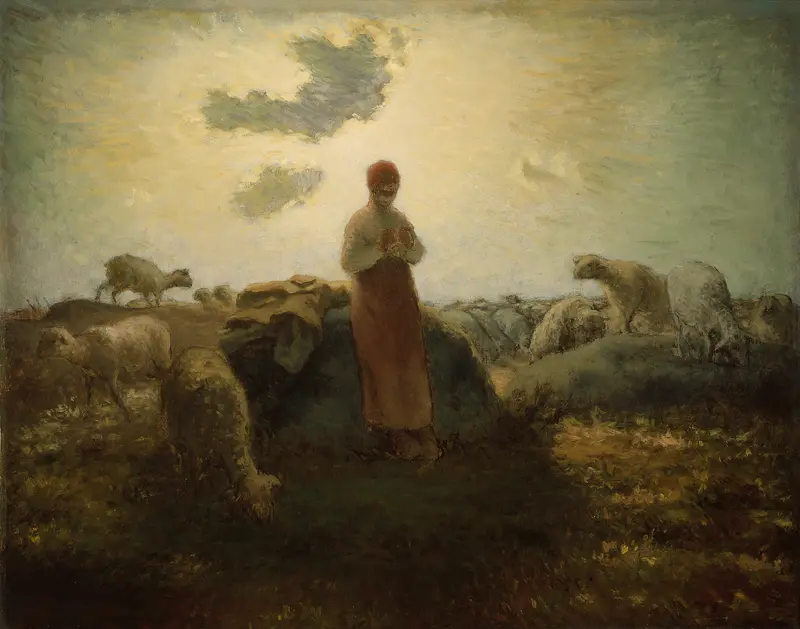
The Keeper of the Flock
Jean-François Millet
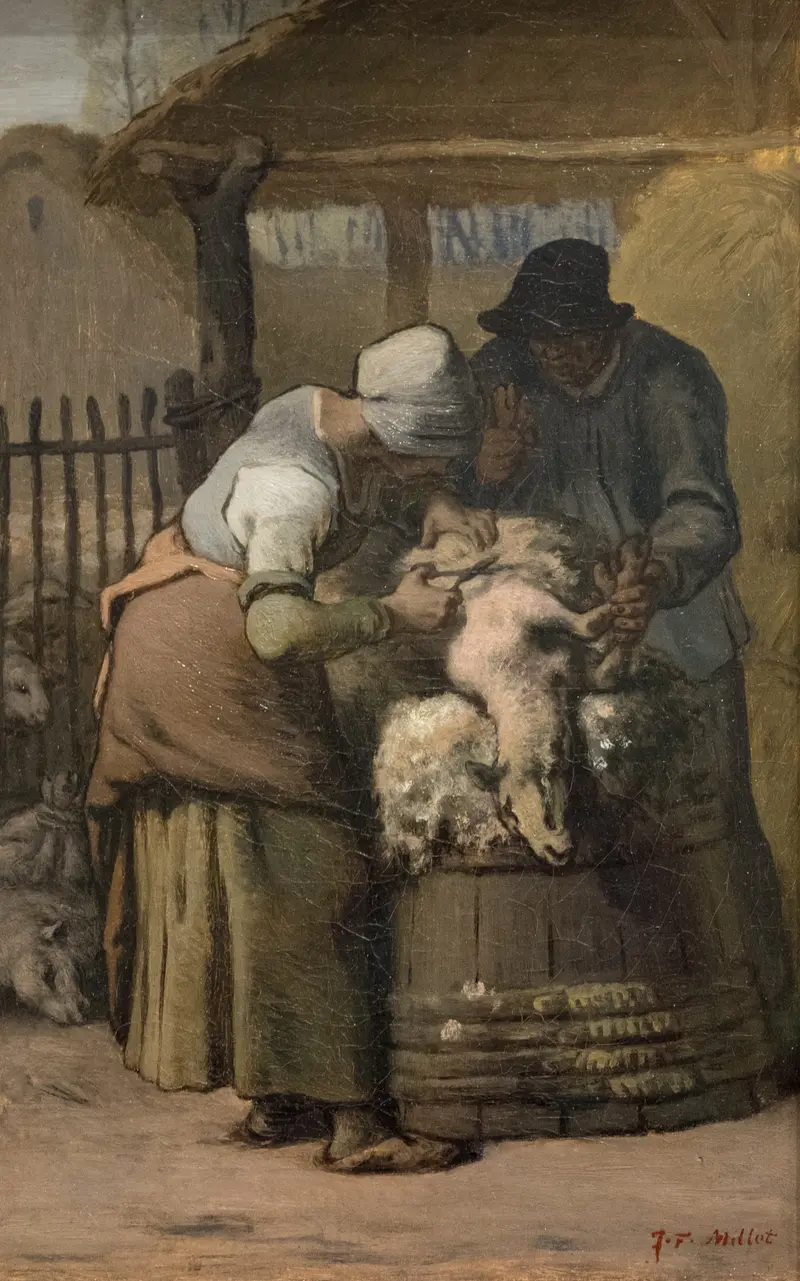
The Sheepshearers
Jean-François Millet
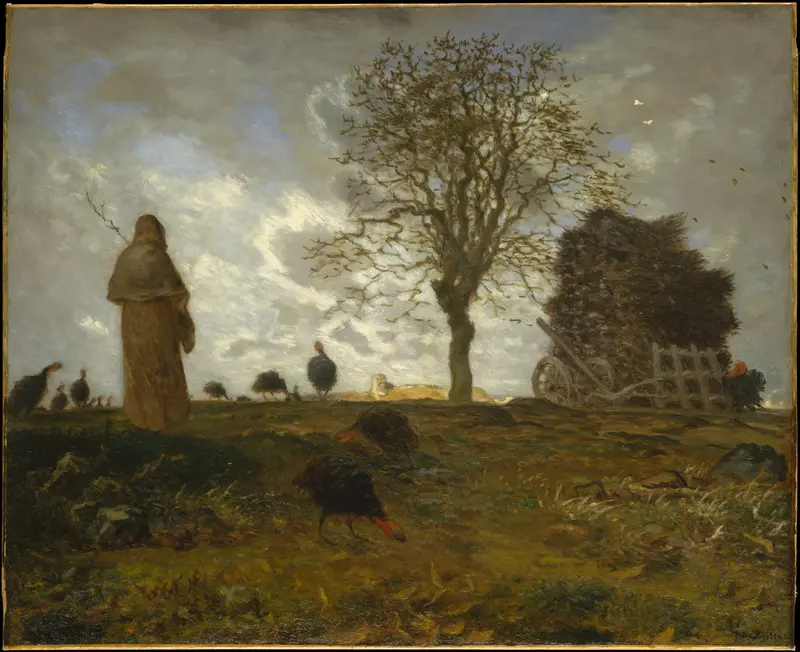
Autumn Landscape with a Flock of Turkeys
Jean-François Millet
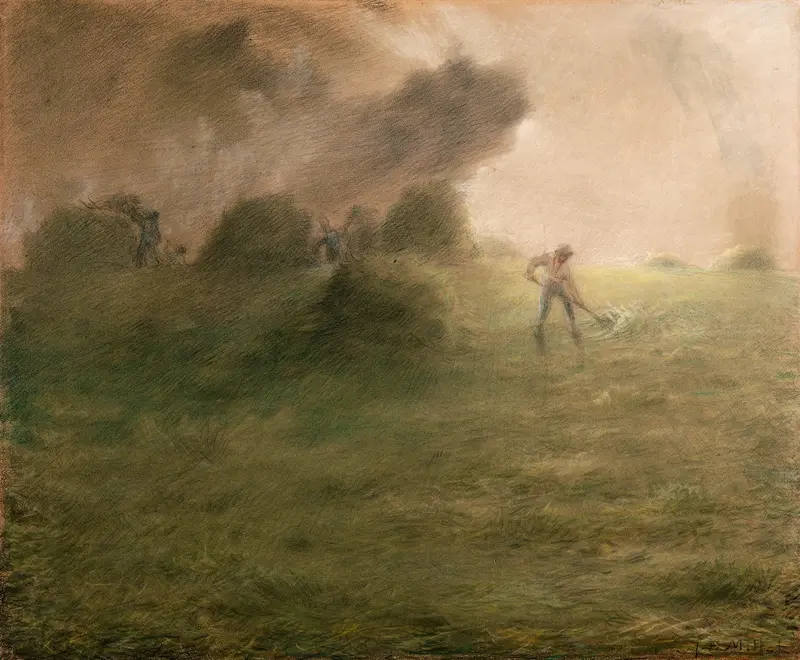
A Storm during Haymaking
Jean-François Millet
The Church at Chailly
Jean-François Millet