
The Grandfather’s Tabacco Box — History & Facts
Few paintings have caused as much gentle speculation among 19th-century genre scenes as The Grandfather’s Tabacco Box by Felix Schlesinger. The work’s date and original patron remain unknown, and no period records mention its commission, yet it has quietly charmed viewers and collectors alike for generations. Its popularity has led to frequent confusion with similarly themed domestic scenes by Schlesinger’s contemporaries, but the intimate, affectionate mood of this painting is distinctively his.
The painting is sometimes cited in auction records under alternate German titles, reflecting its enduring appeal in the market for sentimental family interiors. At the heart of The Grandfather’s Tabacco Box is a moment of intergenerational exchange: a grandfather, seated in a humble interior, offers his ornate tobacco box to a curious child. The box itself, rendered with careful detail, becomes a symbol of tradition and familial continuity, while the child’s tentative gesture suggests both fascination and respect. Warm light draws the viewer’s eye to the faces—one wrinkled with age, the other round with youth—emphasizing the contrast and connection between them.
The clutter of everyday objects, from a pipe to scattered toys, roots the scene in the lived reality of a 19th-century German home. Unlike the more moralizing tone of Johann Georg Meyer von Bremen’s family scenes, Schlesinger’s approach is gentle and observational, inviting empathy rather than instruction. The physical history of The Grandfather’s Tabacco Box is as elusive as its date. While the painting has appeared in several private collections, no definitive record of its early provenance survives, and its medium is not always consistently reported.
It is generally accepted as a characteristic work of Felix Schlesinger, who specialized in warm, anecdotal scenes of childhood and domestic life in the later 19th century. Today, the painting is often reproduced in books and online galleries as an exemplar of German genre painting, though its original exhibition history is unclear. Its enduring charm lies in the universal theme of family, rendered with Schlesinger’s attentive brush and subtle humor.
More Artworks by Felix Schlesinger

Fleißige Helfer in der Küche
Felix Schlesinger

Die Zeitungslektüre
Felix Schlesinger
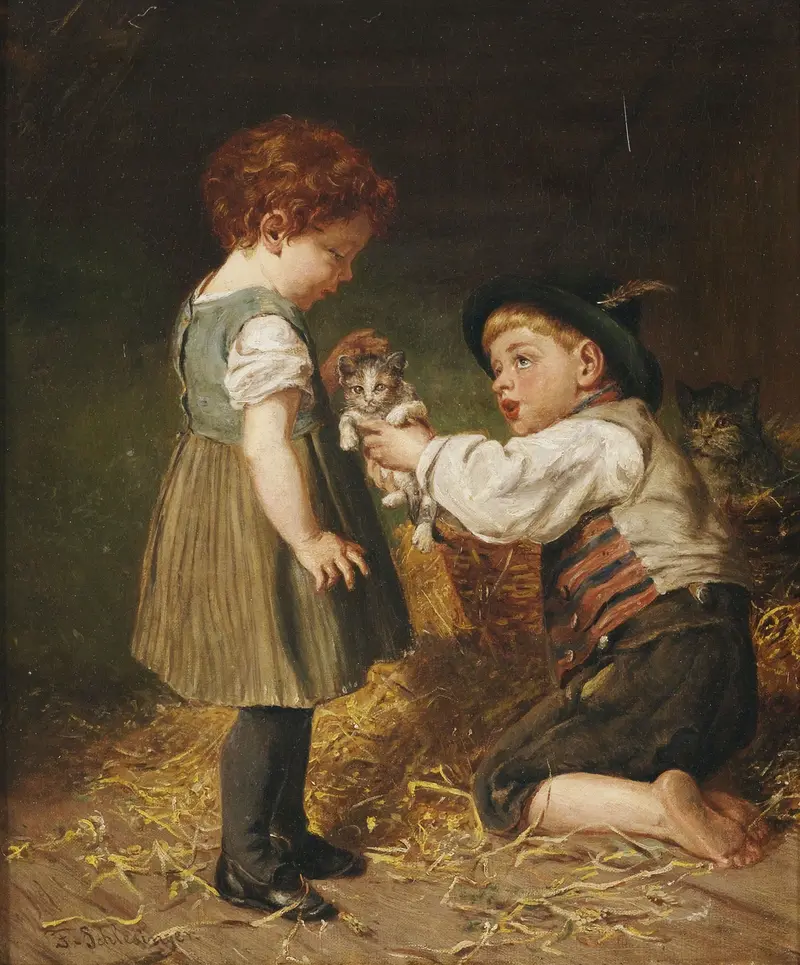
Zwei Kinder mit Kätzchen im Stall
Felix Schlesinger
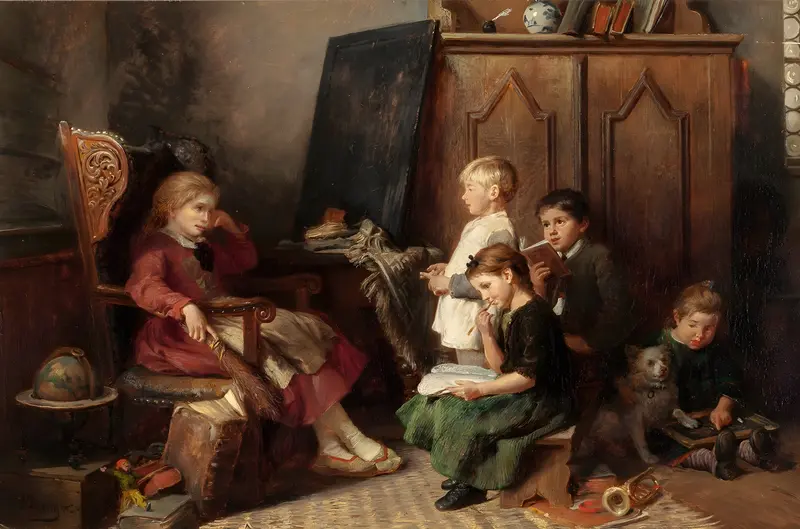
Children Reading
Felix Schlesinger
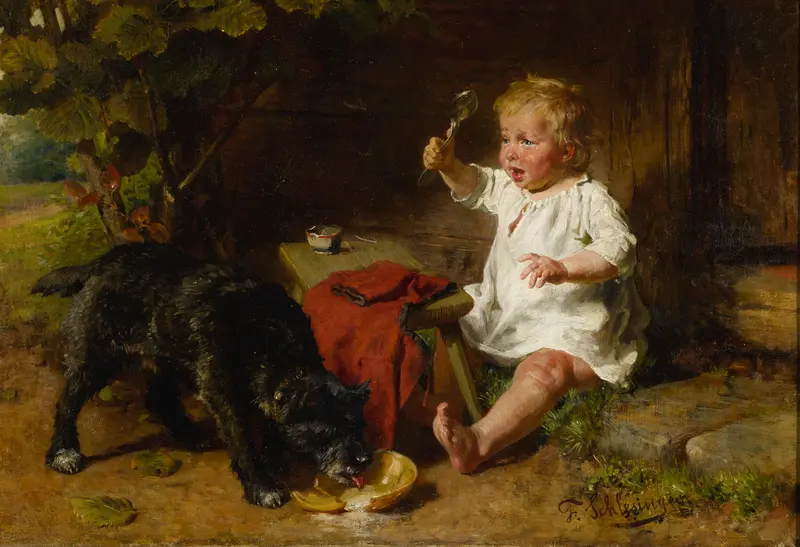
A Shared Meal
Felix Schlesinger
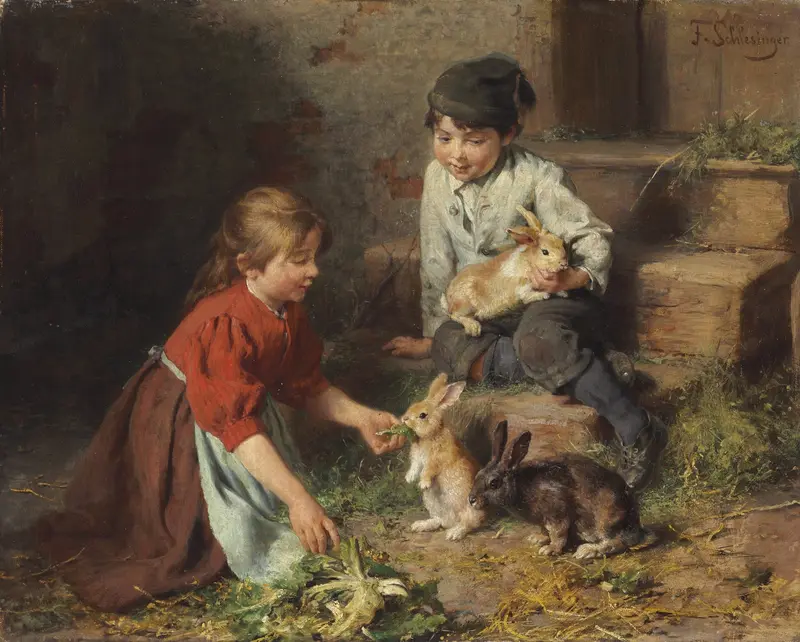
Fütterung Der Kaninchen
Felix Schlesinger
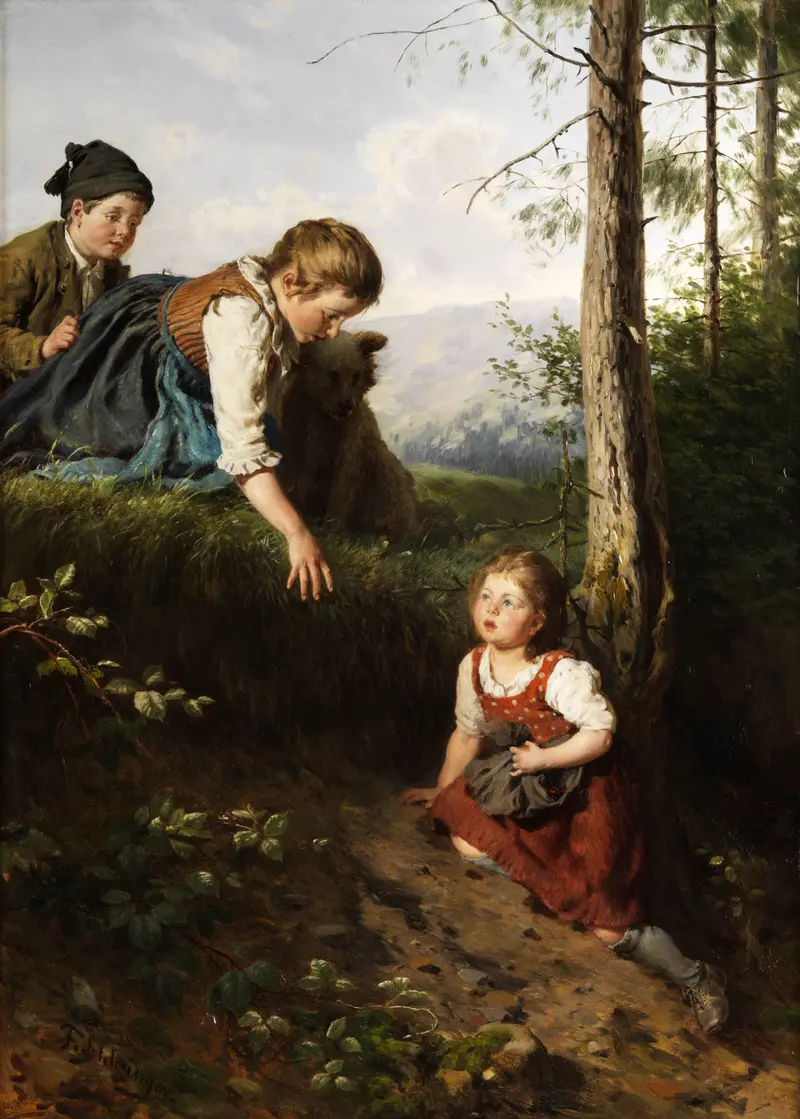
Drei Kinder im Wald beim Beerenpflücken
Felix Schlesinger
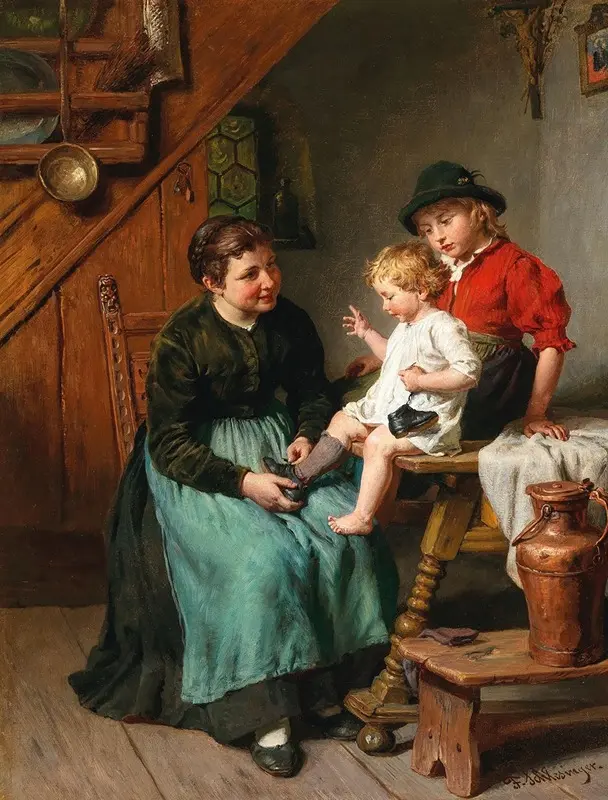
The First Shoe
Felix Schlesinger
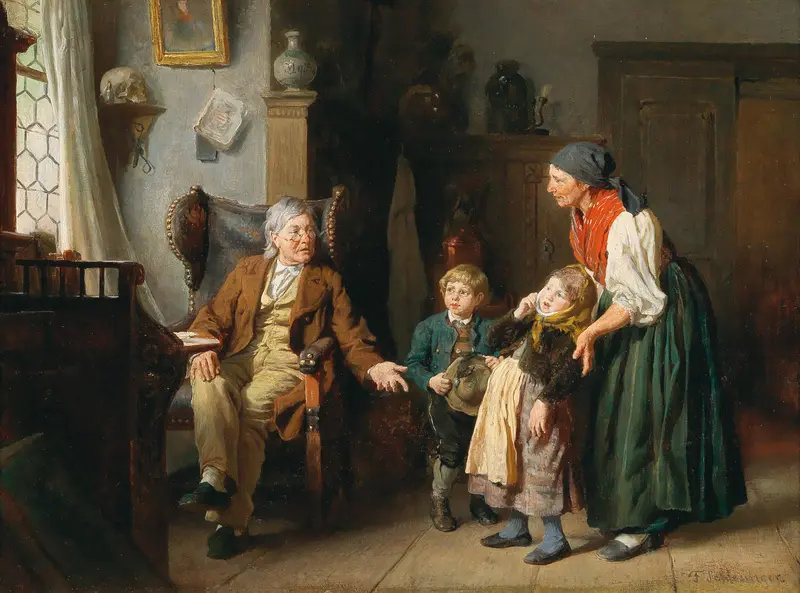
The village doctor
Felix Schlesinger
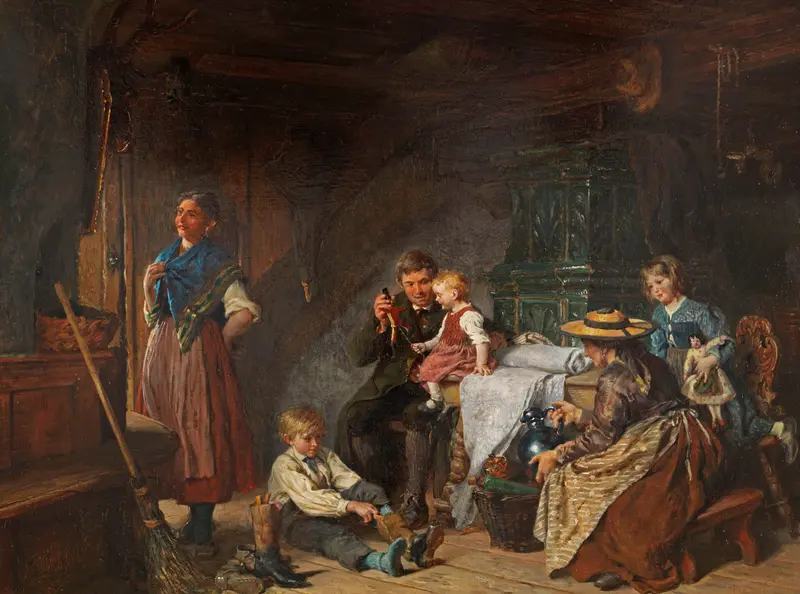
Familienszene
Felix Schlesinger
More Genre Scene Art

Banquet of the Officers of the St George Civic Guard
Frans Hals

Rembrandt and Saskia in the Scene of the Prodigal Son
Rembrandt van Rijn

Bal du moulin de la Galette
Pierre-Auguste Renoir

Quadrille at the Moulin Rouge
Henri de Toulouse-Lautrec

A Burial at Ornans
Gustave Courbet

When Will You Marry?
Paul Gauguin