
The Holy Family with Saints Anne, Elizabeth and John the Baptist — History & Facts
When Nicolas Poussin painted The Holy Family with Saints Anne, Elizabeth and John the Baptist in 1649, he was living in Rome, far from his native France, and at the height of his powers. This work stands out as a rare example of Poussin returning to the subject of the Holy Family late in his career, drawing together several generations from the New Testament in a single, harmonious scene. Scholars have long noted that Poussin produced multiple versions of this theme, but this particular composition is remarkable for its calm order and the way it unites both maternal and prophetic figures.
The painting’s provenance before the 19th century remains uncertain, adding a layer of intrigue to its history. At the heart of the scene, the infant Christ sits on the lap of the Virgin Mary, reaching out toward his cousin, the young John the Baptist, who offers him a reed cross—a symbol of Christ’s future Passion. Saint Anne and Saint Elizabeth, mothers to Mary and John respectively, flank the central figures, their gestures drawing the viewer’s eye in a gentle circle that binds the family together. The composition is bathed in a soft, golden light, emphasizing the serenity and gravity of the moment.
Poussin’s careful arrangement recalls the balance and clarity of Raphael’s Holy Family paintings, but with a distinctly Roman classicism: every gesture is measured, every gaze deliberate. The inclusion of both grandmothers is unusual, underscoring the theme of familial continuity and divine destiny. The painting’s early history is obscure, but by the 19th century it had entered the collection of the Museo del Prado, where it remains today. Its attribution to Poussin has never been seriously challenged, and it is considered a prime example of his mature religious work.
While the original patron is unknown, the painting reflects the taste for learned, meditative religious scenes among Poussin’s Roman circle. Over time, it has become a touchstone for understanding how Poussin synthesized classical restraint with Christian narrative, and it continues to invite viewers into its quiet, contemplative world.
More Artworks by Nicolas Poussin

Spring
Nicolas Poussin
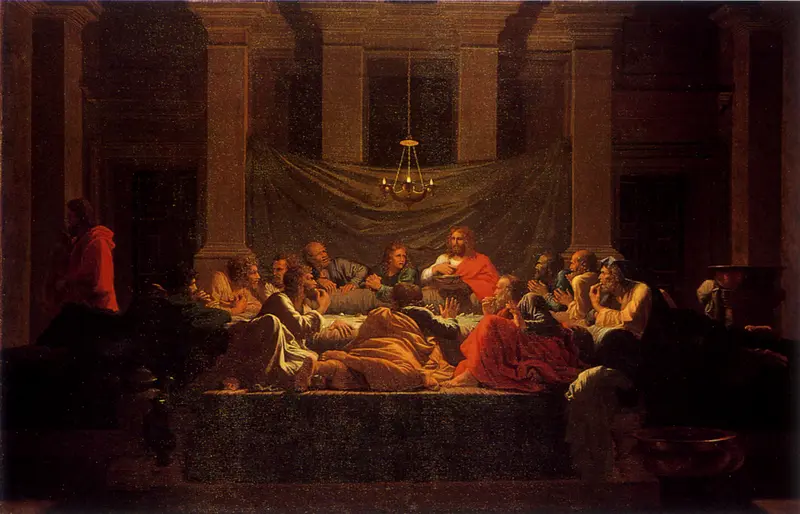
The Sacrament of the Holy Eucharist
Nicolas Poussin
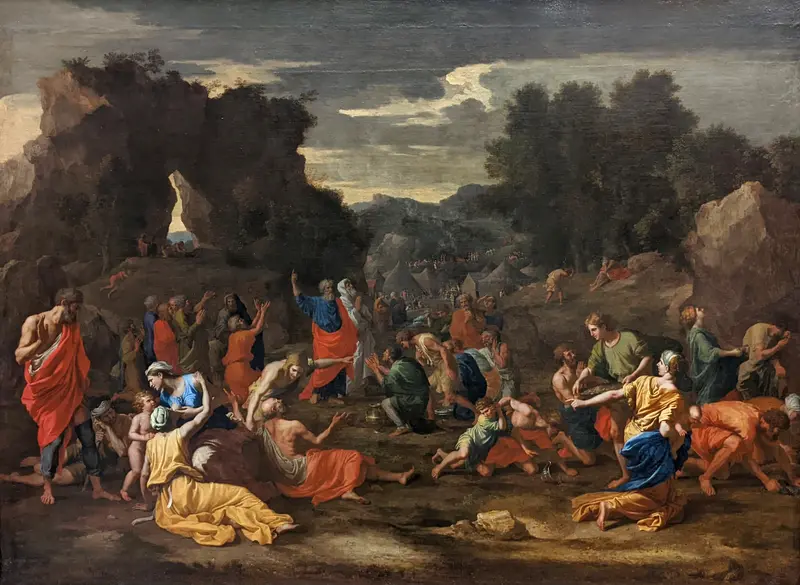
The Israelites gathering Manna in the Desert
Nicolas Poussin
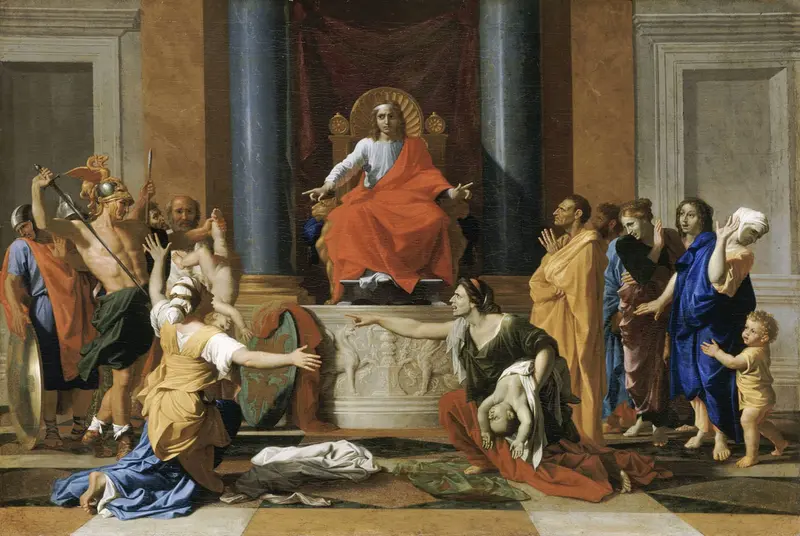
The Judgment of Solomon
Nicolas Poussin
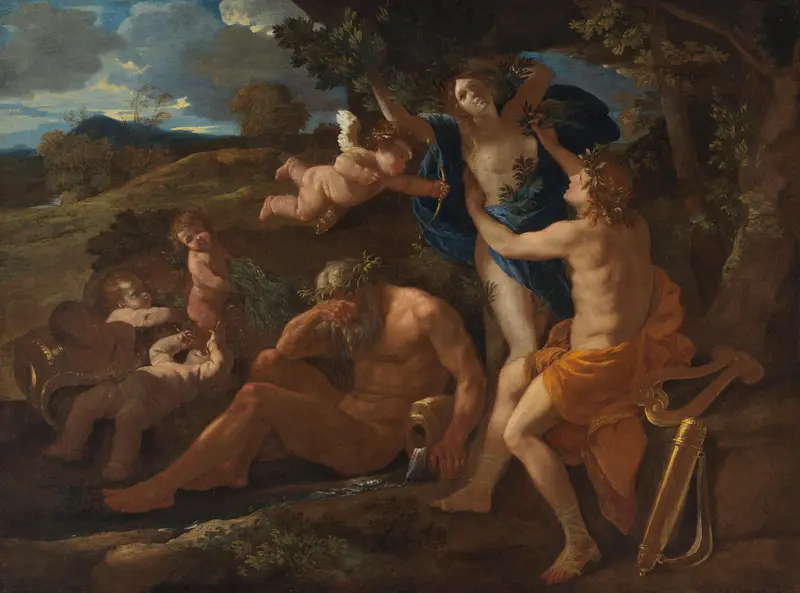
Apollo and Daphne
Nicolas Poussin

The Nurture of Jupiter
Nicolas Poussin

Ordination
Nicolas Poussin
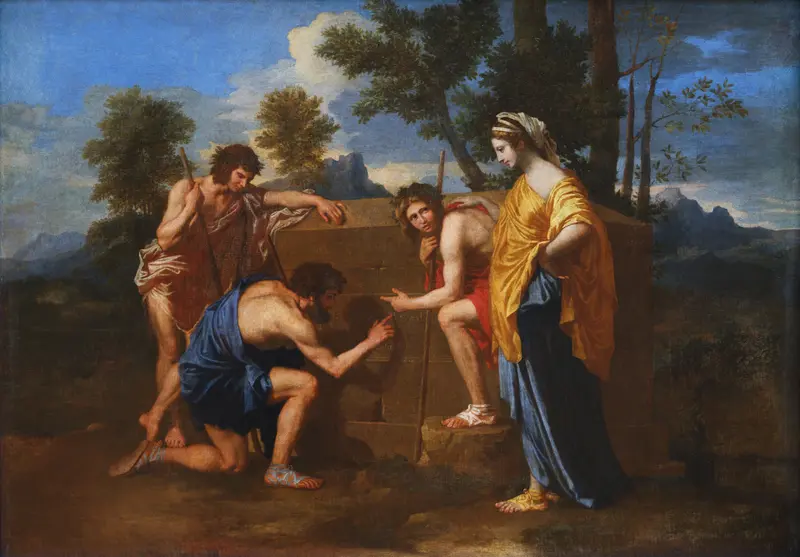
Et in Arcadia ego
Nicolas Poussin
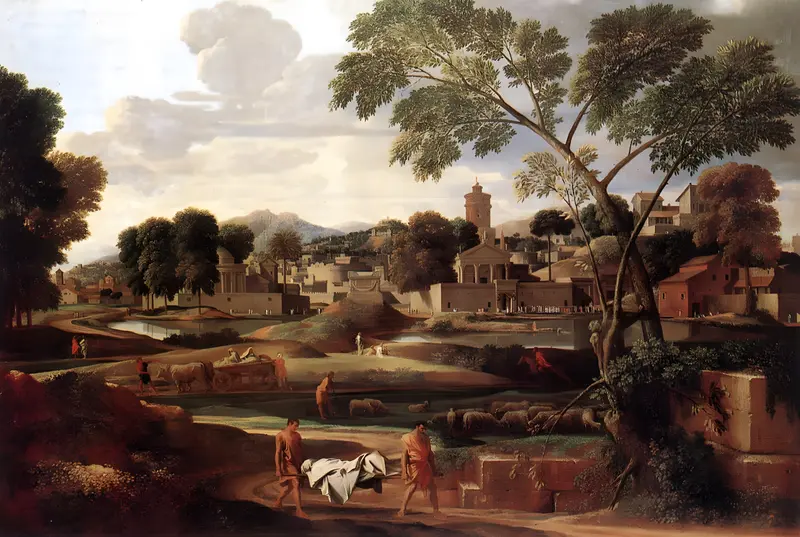
The Funeral of Phocion
Nicolas Poussin
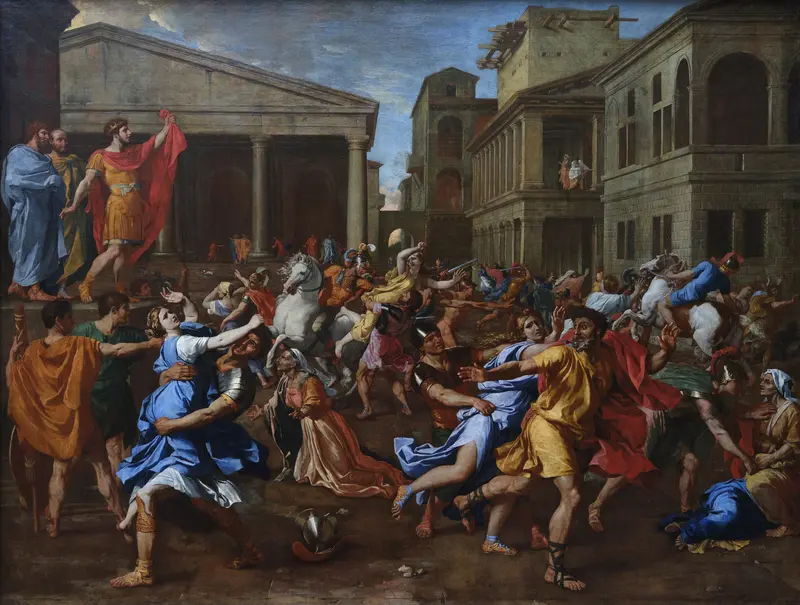
The Rape of the Sabine Women
Nicolas Poussin





