
The Interior of a Peasant's Cottage — History & Facts
What first draws the eye in The Interior of a Peasant's Cottage is the way sunlight slips through the leaded window, pooling across the uneven floor and catching on the simple objects of daily life—a jug, a loaf, a basket tipped on its side. The painter, Adriaen van Ostade, invites us into this world not as distant observers but as guests, close enough to see the crumbs on the table and the playful dog stretching toward a child's bowl. The warmth of the palette, with its honeyed browns and soft reds, sets a mood of quiet industry and modest comfort.
Every detail is a clue: the child's red cap, the woman's careful attention to her sewing, the man paused over his meal—each gesture signals a rhythm of life shaped by necessity and affection. This kind of scene belongs to the Dutch Golden Age, when artists like van Ostade found beauty and meaning in the everyday. In the mid-seventeenth century, such paintings were prized by a new class of urban collectors—merchants and burghers eager to see their own values and surroundings reflected in art. Genre scenes like this, painted in 1668 and now held in the Royal Collection, offered a window onto rural life, blending gentle humor with sharp observation.
History has kept few traces of this particular cottage or its inhabitants, but the world it conjures—a world of work, family, and fleeting sunlight—remains vivid for anyone who lingers before the canvas.
More Artworks by Adriaen van Ostade

Dans in de herberg
Adriaen van Ostade
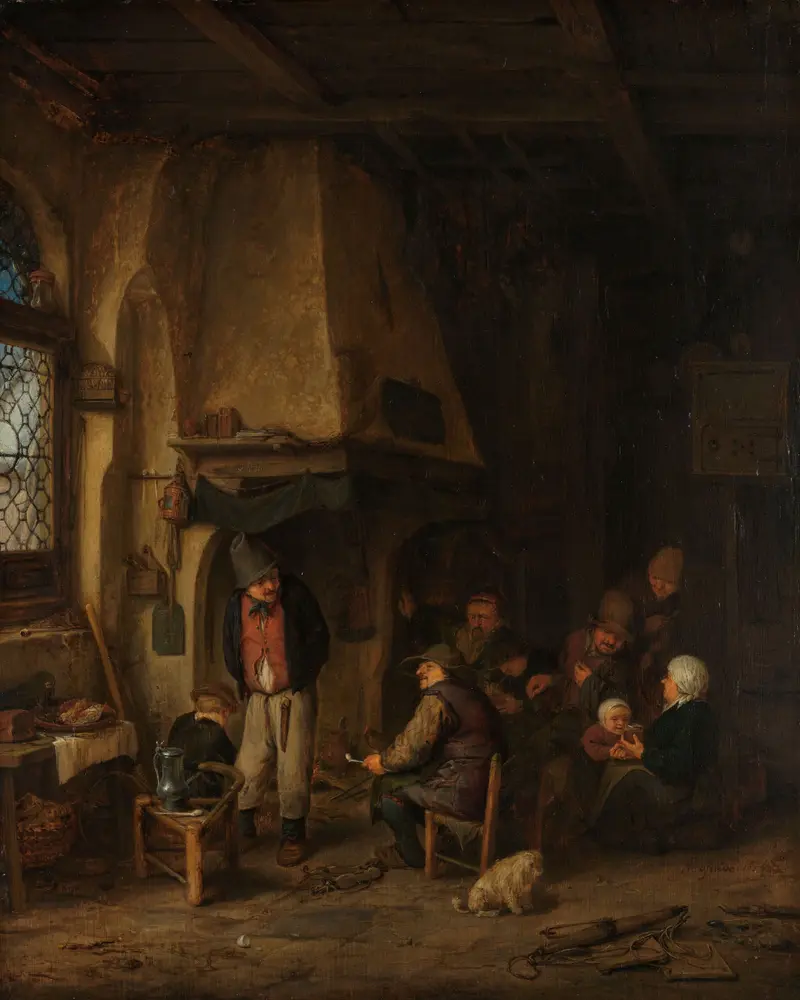
‘The Skaters’: Peasants in an Interior
Adriaen van Ostade
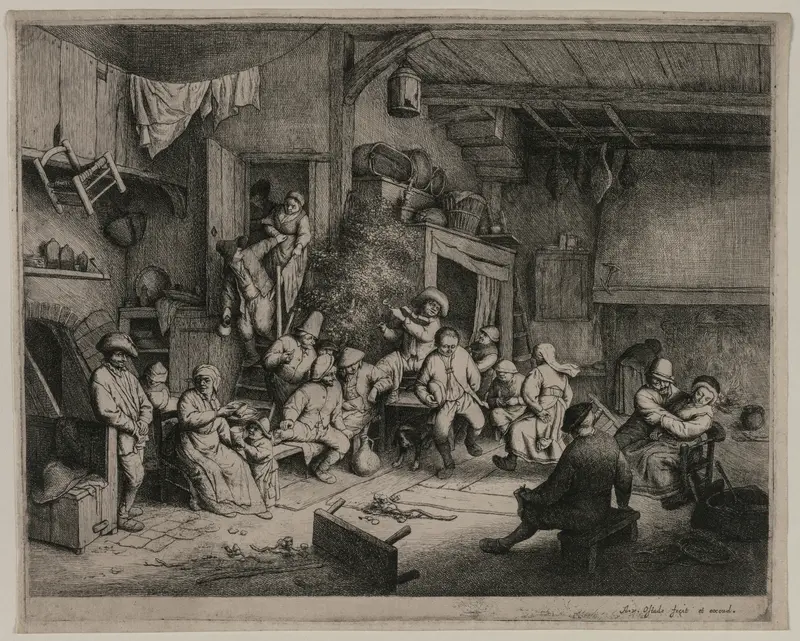
Dance at the Inn
Adriaen van Ostade
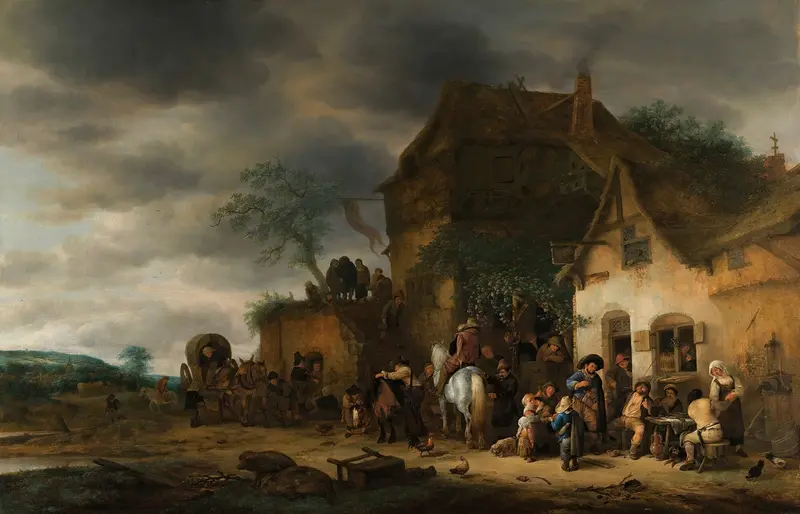
Travellers Halted At A Country Inn
Adriaen van Ostade
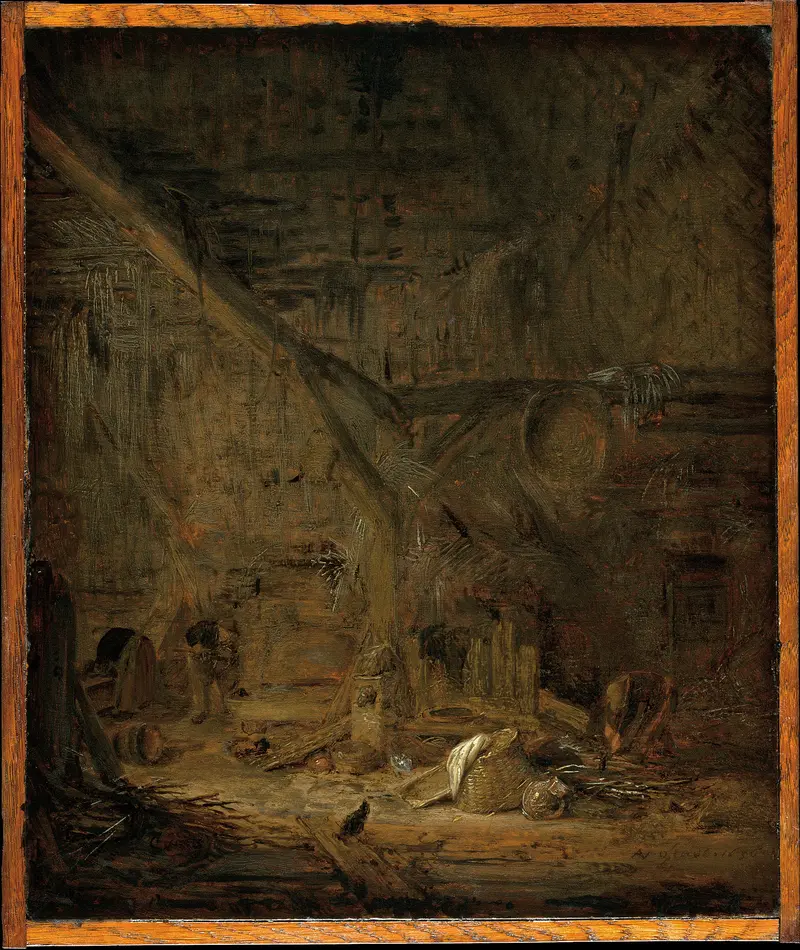
Interior of a Barn
Adriaen van Ostade
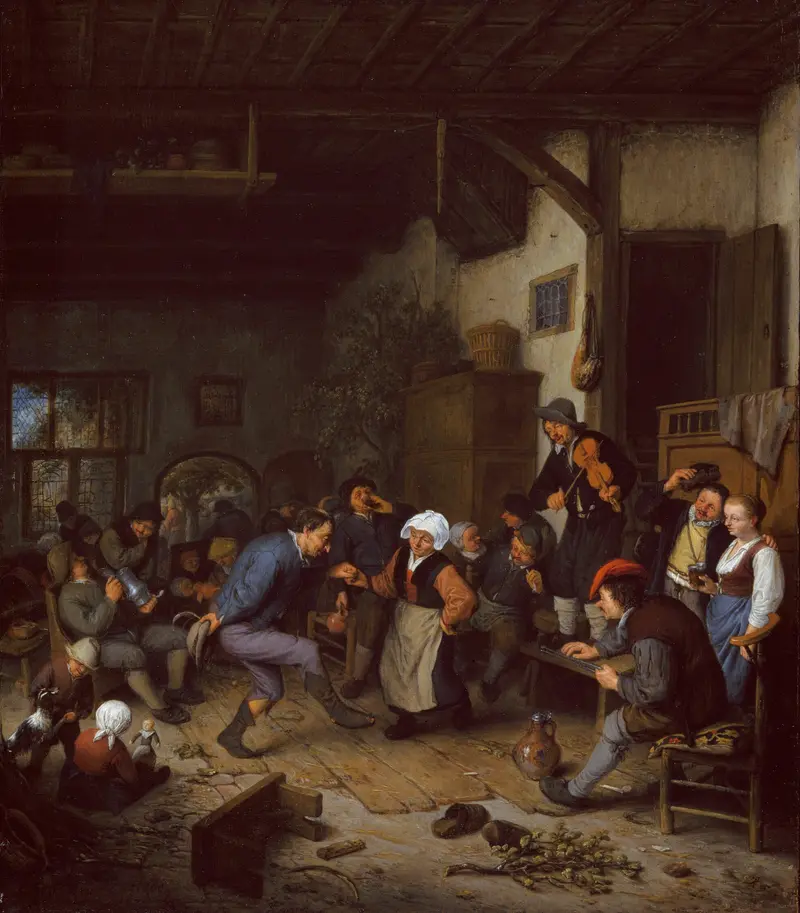
Merrymakers in an Inn
Adriaen van Ostade
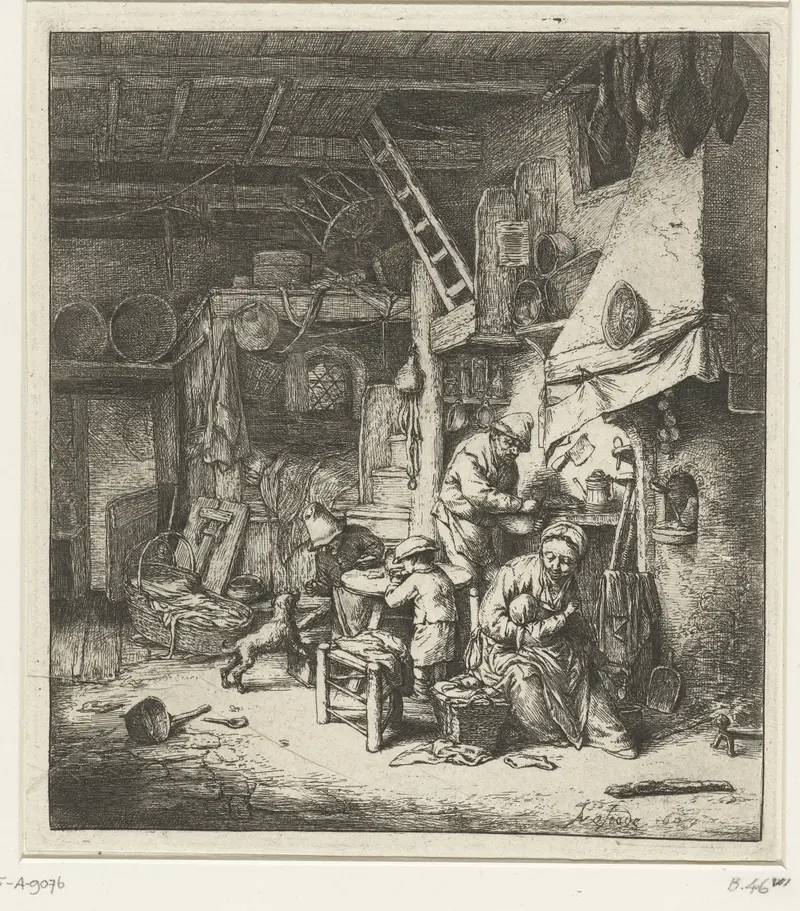
Boerengezin in interieur
Adriaen van Ostade
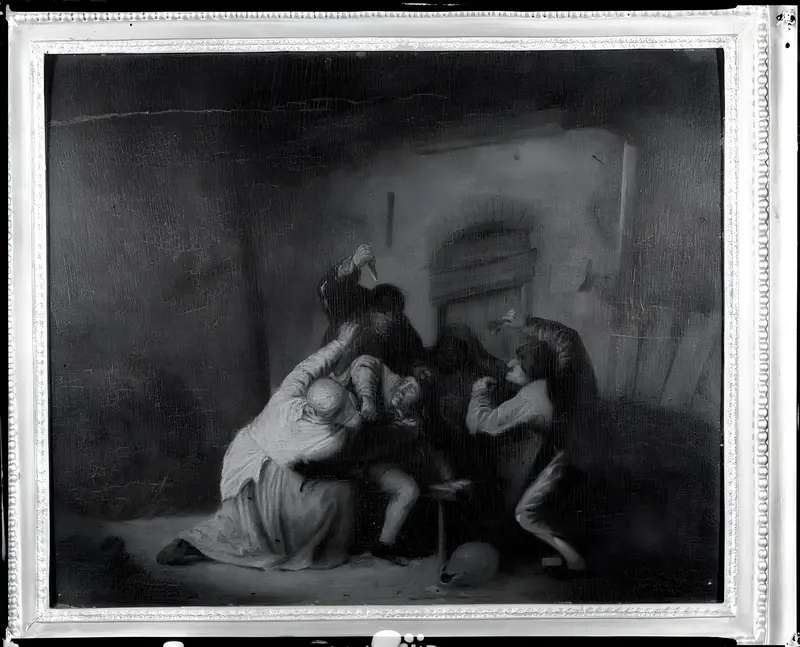
Peasants Brawling in a Tavern
Adriaen van Ostade
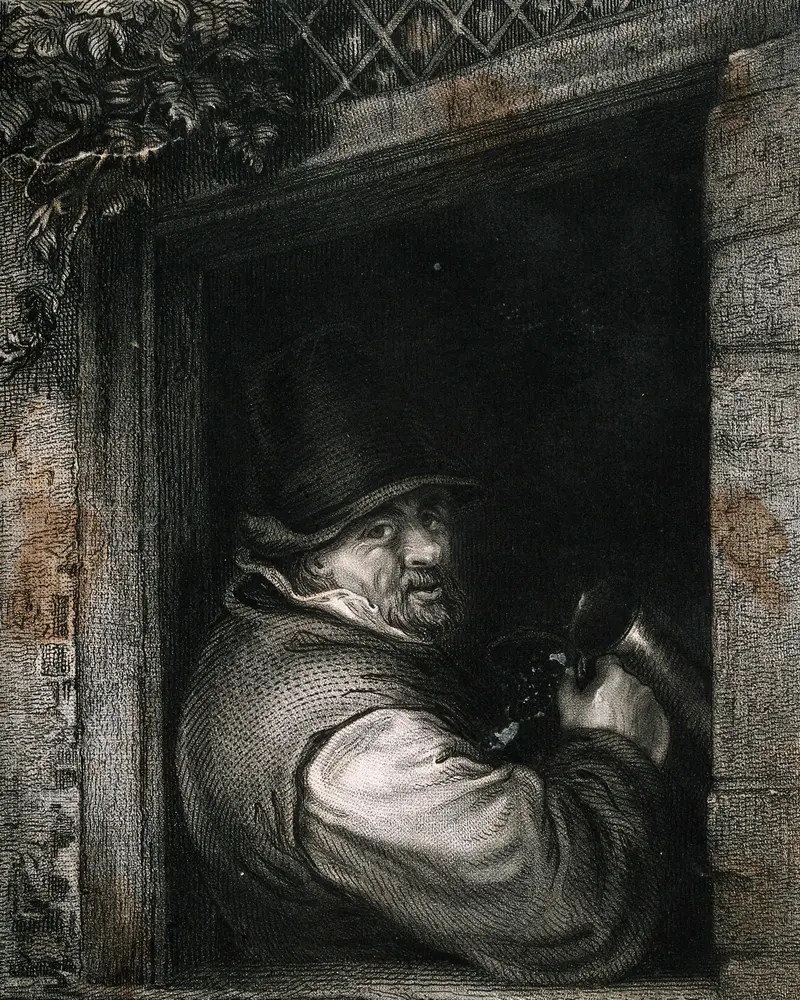
Man with a Tankard at a Window
Adriaen van Ostade
Dans in de herberg
Adriaen van Ostade
More Genre Scene Art

Banquet of the Officers of the St George Civic Guard
Frans Hals

Rembrandt and Saskia in the Scene of the Prodigal Son
Rembrandt van Rijn

Bal du moulin de la Galette
Pierre-Auguste Renoir

Quadrille at the Moulin Rouge
Henri de Toulouse-Lautrec

A Burial at Ornans
Gustave Courbet

When Will You Marry?
Paul Gauguin