
The Little Helper — History & Facts
Few images of 19th-century German painting are as warmly familiar as The Little Helper by Felix Schlesinger. This work has become a beloved example of the Biedermeier era’s fascination with domestic intimacy, though the exact date and circumstances of its creation remain uncertain. Its popularity is attested by the number of reproductions and prints that circulated in the late 19th and early 20th centuries, making it a touchstone for sentimental genre scenes.
The painting’s enduring charm lies in its universal theme: the gentle rituals of family life, rendered with a sincerity that resonated with middle-class audiences across Europe. At the heart of The Little Helper is a scene that feels both specific and universal. A young child, sleeves rolled up and brow furrowed in concentration, assists an adult—often interpreted as the mother—in a simple household task, perhaps baking or cleaning. The child’s earnestness is matched by the adult’s patient encouragement, their gestures forming a quiet dialogue of care and learning.
Sunlight pours through a window, illuminating flour-dusted hands and casting a golden glow across the humble kitchen. Schlesinger’s attention to detail—the scattered utensils, the soft textures of clothing—invites comparison with Johann Georg Meyer von Bremen, another artist celebrated for his depictions of childhood innocence. Yet where Meyer von Bremen often staged his scenes with a touch of theatricality, Schlesinger’s approach is more understated, emphasizing the authenticity of daily life. The precise provenance of The Little Helper is unclear, as is often the case with genre paintings that were widely reproduced and sold to private collectors.
Felix Schlesinger built his reputation on such scenes, becoming known for his sensitive portrayals of children and domestic interiors. While the original painting’s current location is not definitively documented, it is frequently referenced in surveys of 19th-century German art and appears in several illustrated catalogues from the period. The work stands as a testament to Schlesinger’s skill in capturing the small, shared moments that define family life, and it continues to be cherished for its gentle humanity.
More Artworks by Felix Schlesinger

Fleißige Helfer in der Küche
Felix Schlesinger

Die Zeitungslektüre
Felix Schlesinger
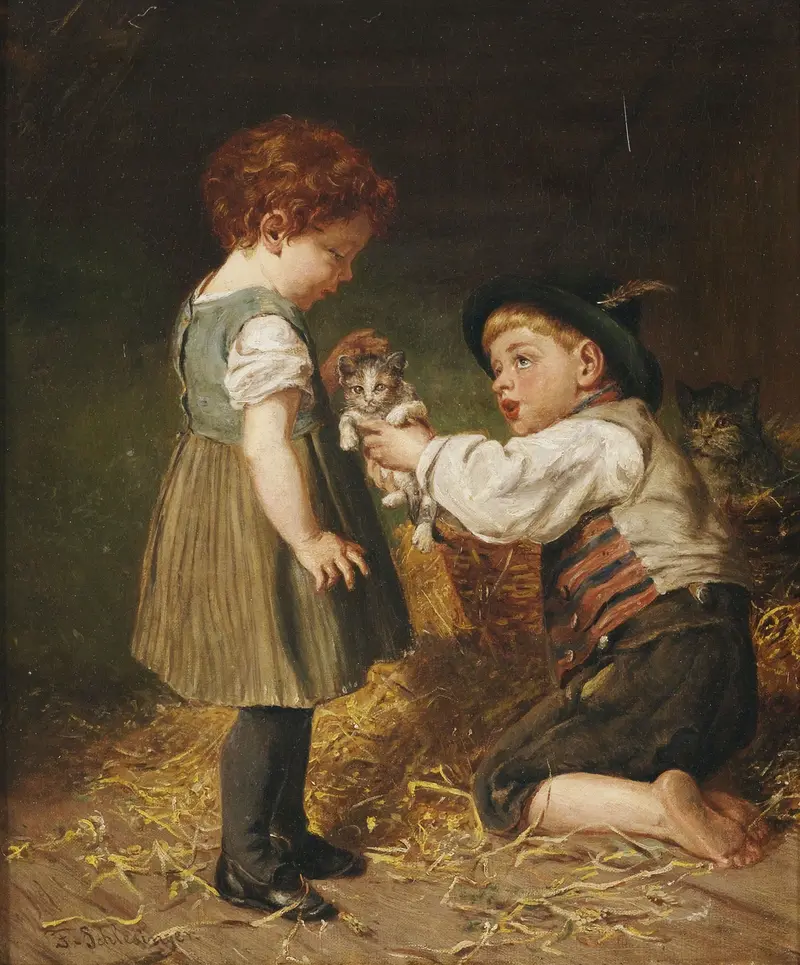
Zwei Kinder mit Kätzchen im Stall
Felix Schlesinger
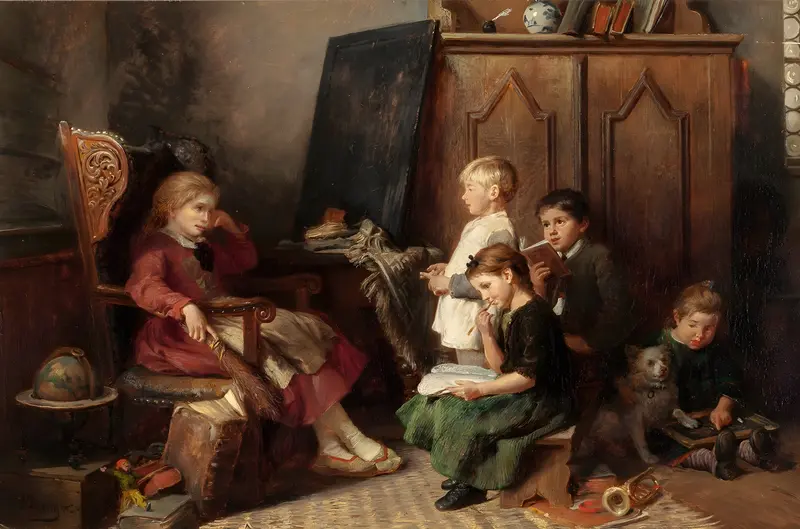
Children Reading
Felix Schlesinger
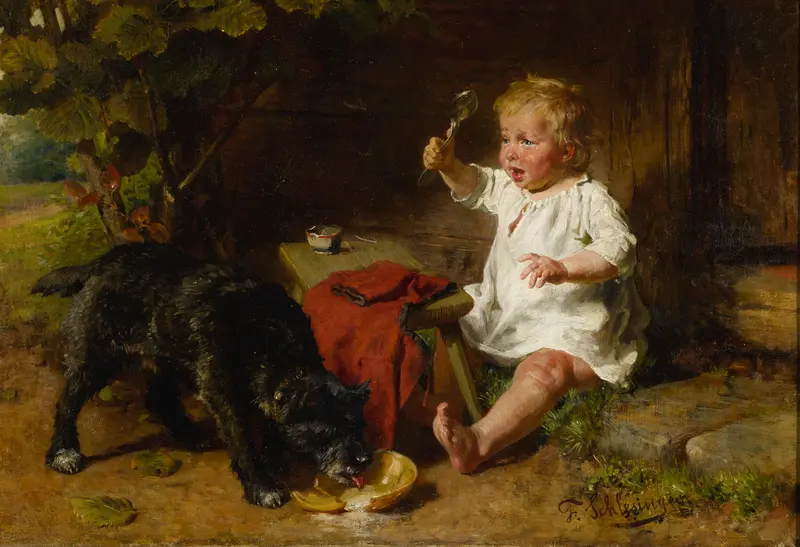
A Shared Meal
Felix Schlesinger
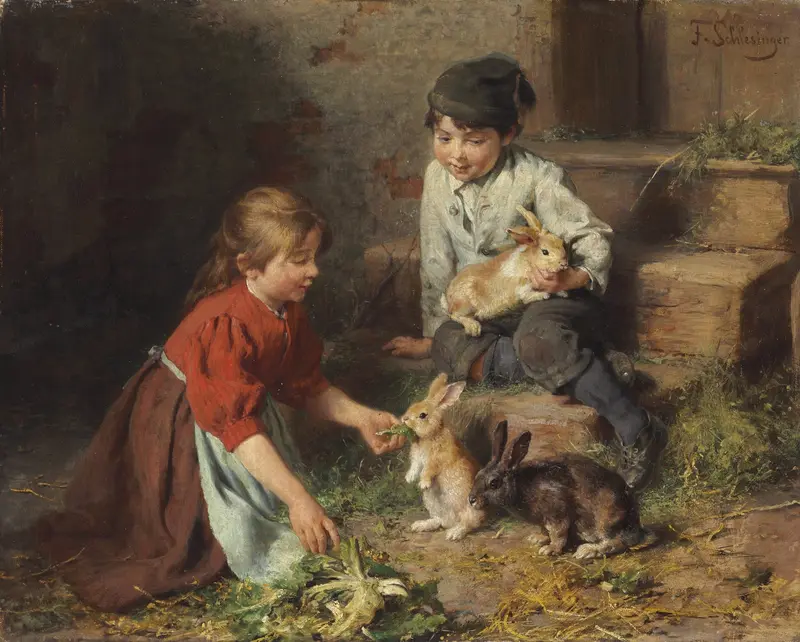
Fütterung Der Kaninchen
Felix Schlesinger
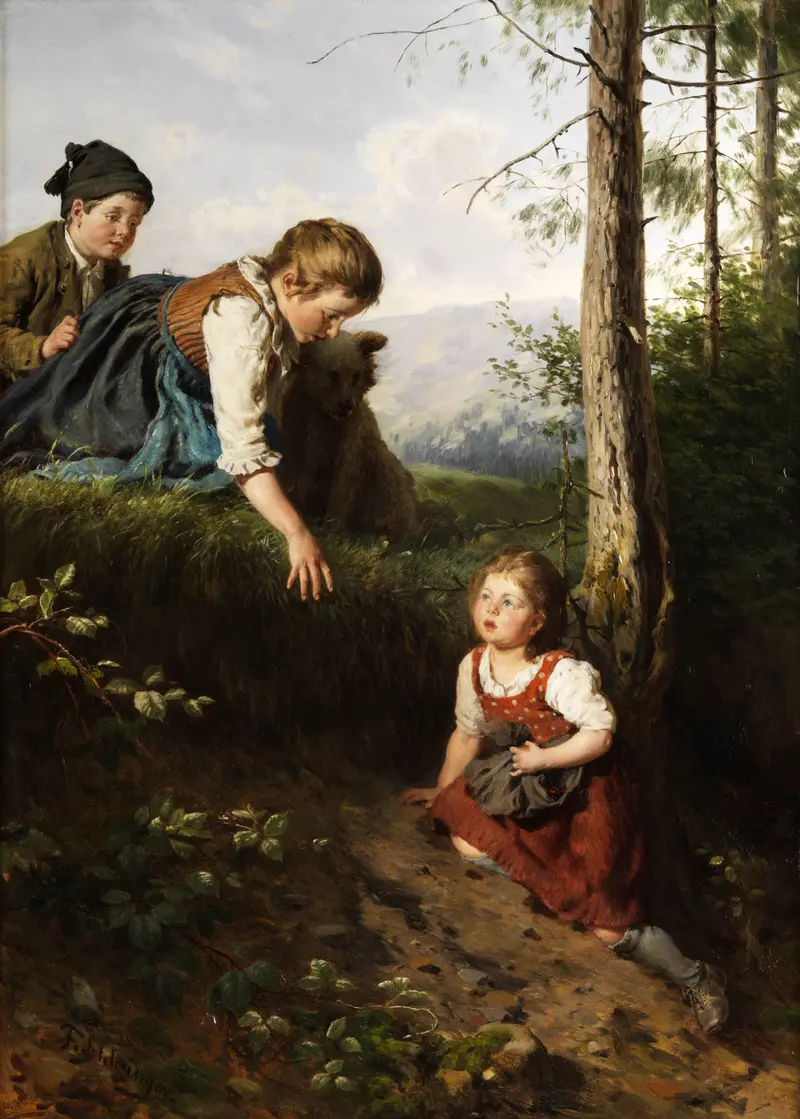
Drei Kinder im Wald beim Beerenpflücken
Felix Schlesinger
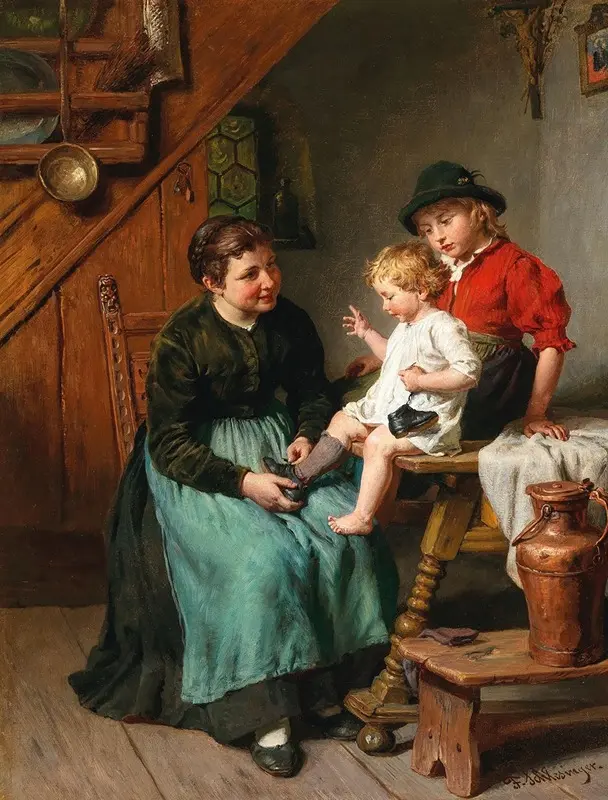
The First Shoe
Felix Schlesinger
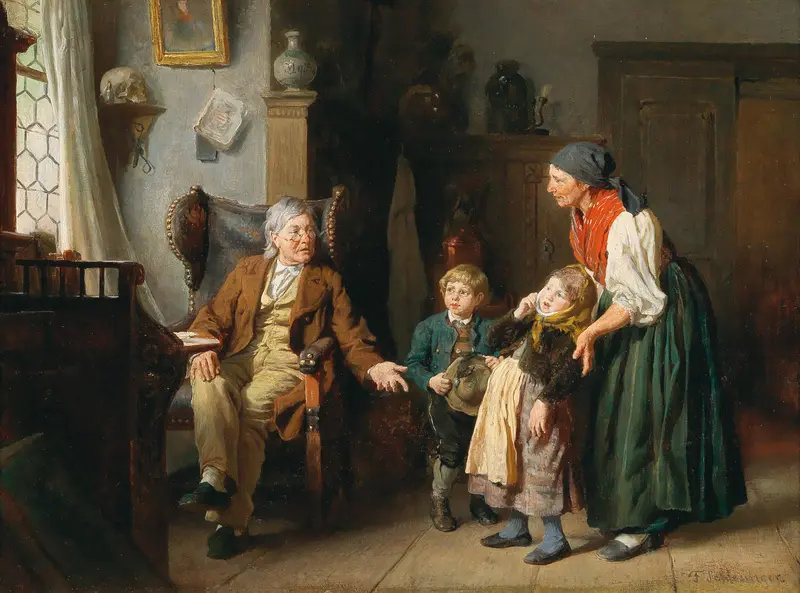
The village doctor
Felix Schlesinger
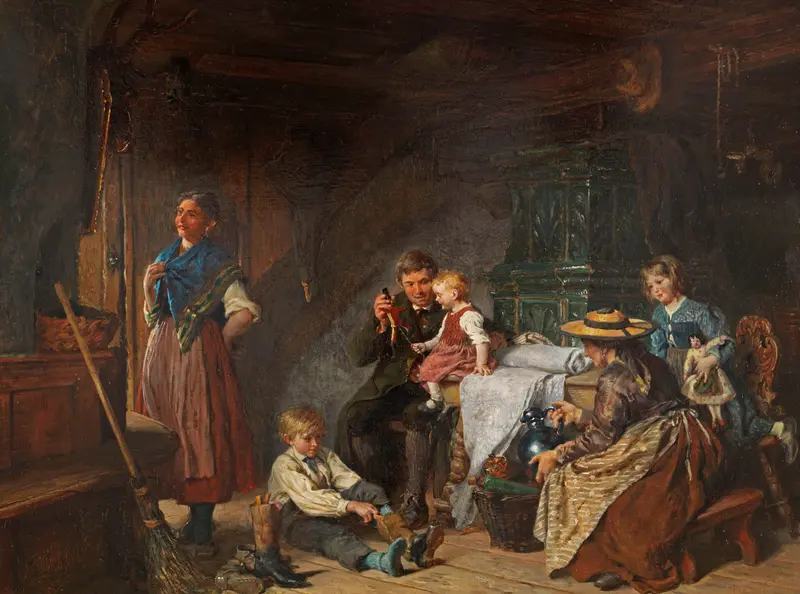
Familienszene
Felix Schlesinger
More Genre Scene Art

Banquet of the Officers of the St George Civic Guard
Frans Hals

Rembrandt and Saskia in the Scene of the Prodigal Son
Rembrandt van Rijn

Bal du moulin de la Galette
Pierre-Auguste Renoir

Quadrille at the Moulin Rouge
Henri de Toulouse-Lautrec

A Burial at Ornans
Gustave Courbet

When Will You Marry?
Paul Gauguin