
The Lovesick Maiden — History & Facts
In The Lovesick Maiden, we see a young woman seated at a table, her expression one of longing and melancholy. The colors are rich and warm, with deep reds and soft yellows dominating the scene. Surrounding her are various objects that hint at her emotional state, including a letter and a flower.
The setting is intimate, likely within a domestic space, enhancing the personal nature of her feelings. The painting is executed in oil on canvas, a common medium during the Dutch Golden Age. The brushwork is detailed, capturing the textures of the fabrics and the softness of the maiden's skin. The composition draws the viewer's eye to the central figure, emphasizing her emotional turmoil.
Light plays a significant role, illuminating her face and creating a sense of depth in the background. Jan Steen was known for his lively genre scenes that often depicted the complexities of human emotions and social interactions. The Lovesick Maiden reflects Steen's ability to blend humor with pathos, showcasing the trials of love. Interestingly, this work is a fine example of how Steen used everyday settings to explore deeper themes.
It remains a notable piece in the collection of the Rijksmuseum, illustrating the artist's significance in Dutch art history.
More Artworks by Jan Steen

The Family Concert
Jan Steen

The Fish Market at Leyden
Jan Steen
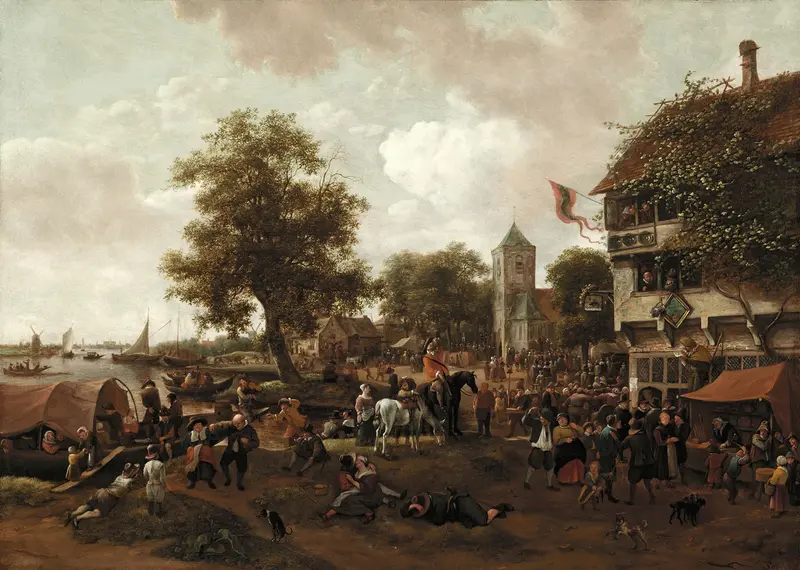
The Fair at Oegstgeest
Jan Steen
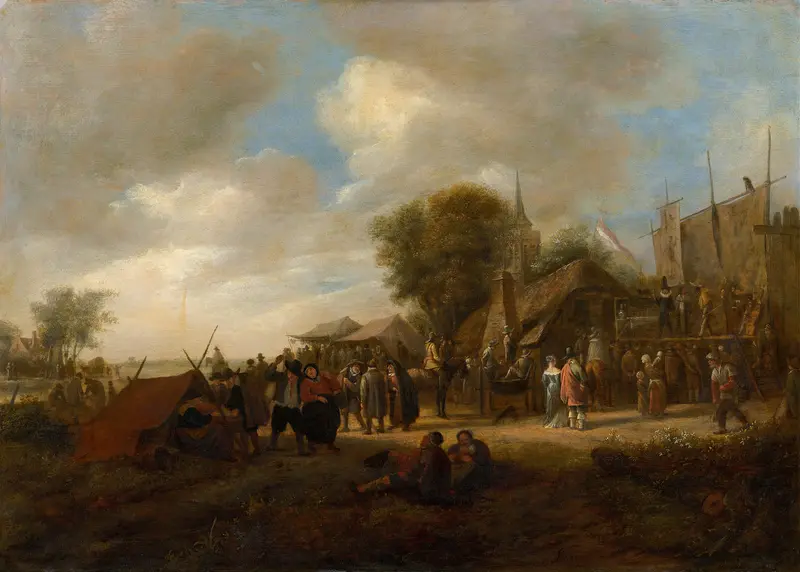
Village Fair
Jan Steen
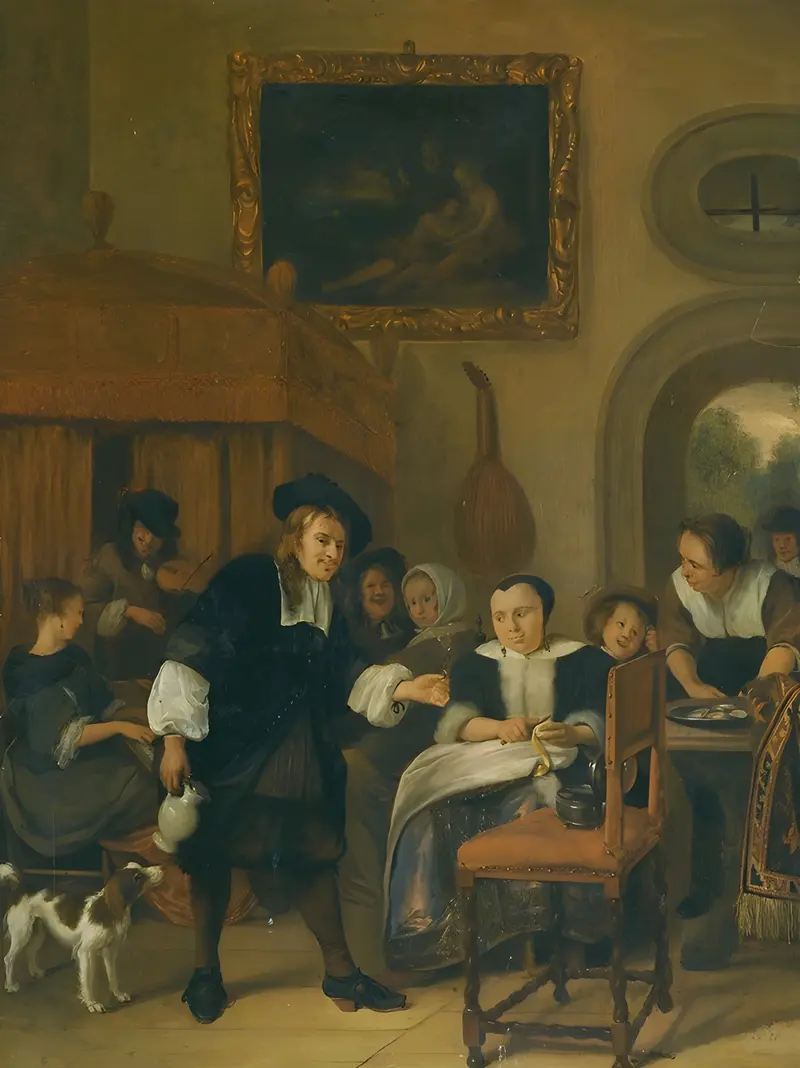
A Gentleman Offering A Lady A Glass Of Wine With A Couple Making Music And Other Townsfolk In An Interior
Jan Steen

The Dancing Lesson
Jan Steen
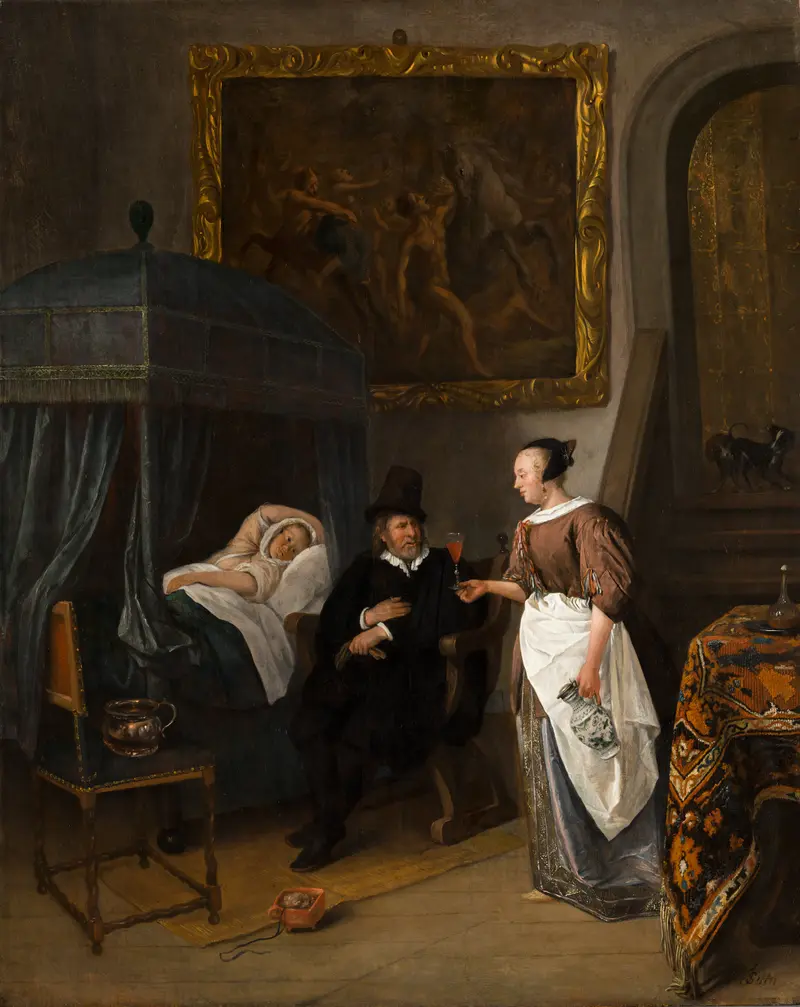
The Doctor’s Visit
Jan Steen
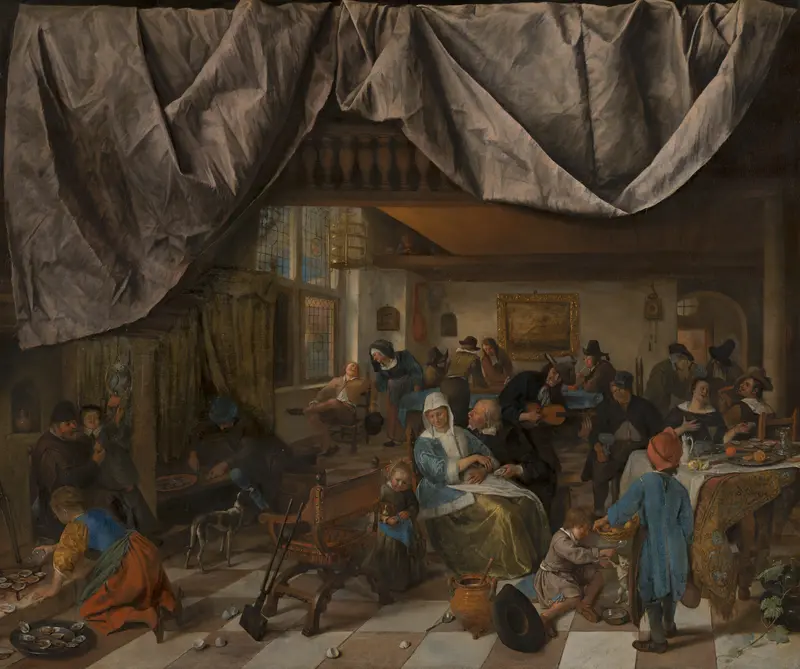
The Life of Man
Jan Steen
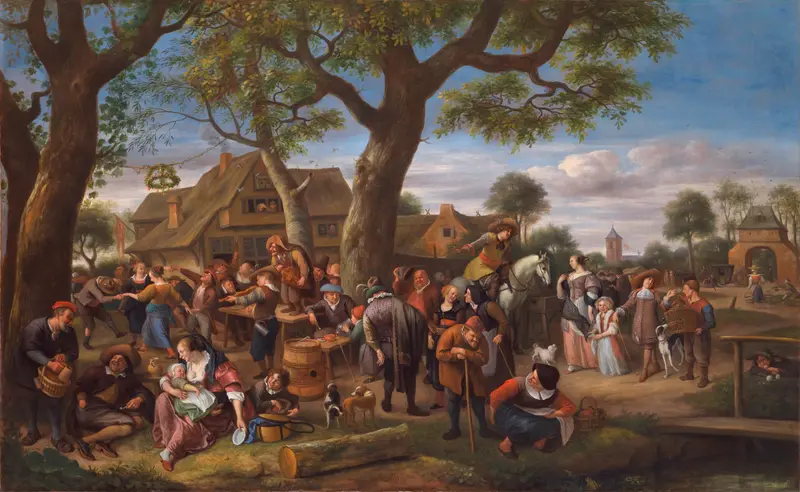
Peasants Merrymaking Outside an Inn
Jan Steen
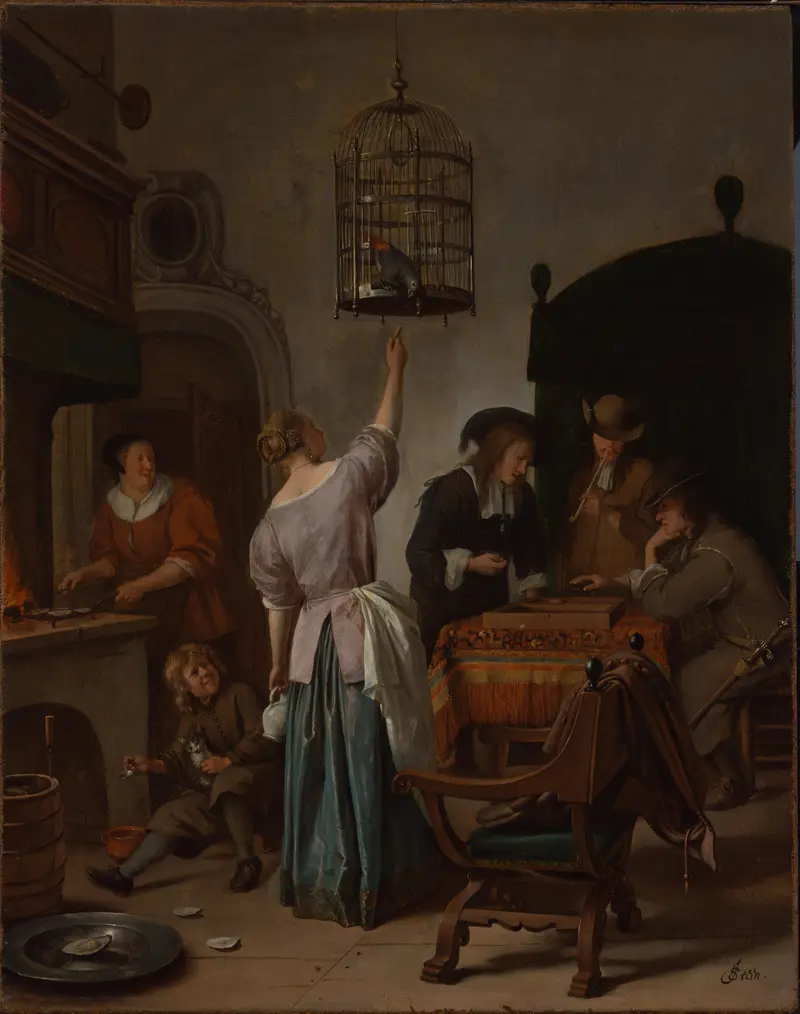
Interior with a Woman Feeding a Parrot, Known as ‘The Parrot Cage’
Jan Steen
More Genre Scene Art

Banquet of the Officers of the St George Civic Guard
Frans Hals

Rembrandt and Saskia in the Scene of the Prodigal Son
Rembrandt van Rijn

Bal du moulin de la Galette
Pierre-Auguste Renoir

Quadrille at the Moulin Rouge
Henri de Toulouse-Lautrec

A Burial at Ornans
Gustave Courbet

When Will You Marry?
Paul Gauguin