
The Marriage of Alexander and Roxana, Villa Farnesina — History & Facts
What first seizes the eye here is the theatrical staging: a marriage bed transformed into a stage, with every figure caught in a moment of ceremony and anticipation. The golden canopy frames Roxana, her body half-turned and luminous, as she becomes the axis of a swirling scene of attendants, cupids, and gods. The gestures are deliberate—Hymen, the god of marriage, advances with a torch, his outstretched arm drawing a line of connection to the bride, while cupids tumble and cling, their playfulness a counterpoint to the ritual gravity.
Even the architecture participates, its colonnades and vaults receding into shadow, suggesting a world beyond the chamber, while the rich palette of reds, golds, and blues pulls the viewer into the intimate drama unfolding at the center. Painted in 1518-1519 by Giovanni Antonio Bazzi, known as Il Sodoma, this fresco belongs to the walls of the Villa Farnesina in Rome—a palace where the union of architecture and painting reached new heights in the Renaissance. Such works were commissioned by powerful patrons to celebrate love, alliance, and myth, transforming private rooms into immersive theatres of ancient legend. The Farnesina, famed for its harmony of space and decoration, stands as a testament to the ambitions of its era: to make the classical past present, vivid, and alive for those who entered its chambers.
History has kept few traces of the personal stories behind these images, but the fresco’s energy and detail invite us to imagine the world for which it was made—one where myth, beauty, and human longing meet in painted stone.
More Artworks by Il Sodoma

The Penitent Magdalene
Il Sodoma

The Death of Lucretia
Il Sodoma
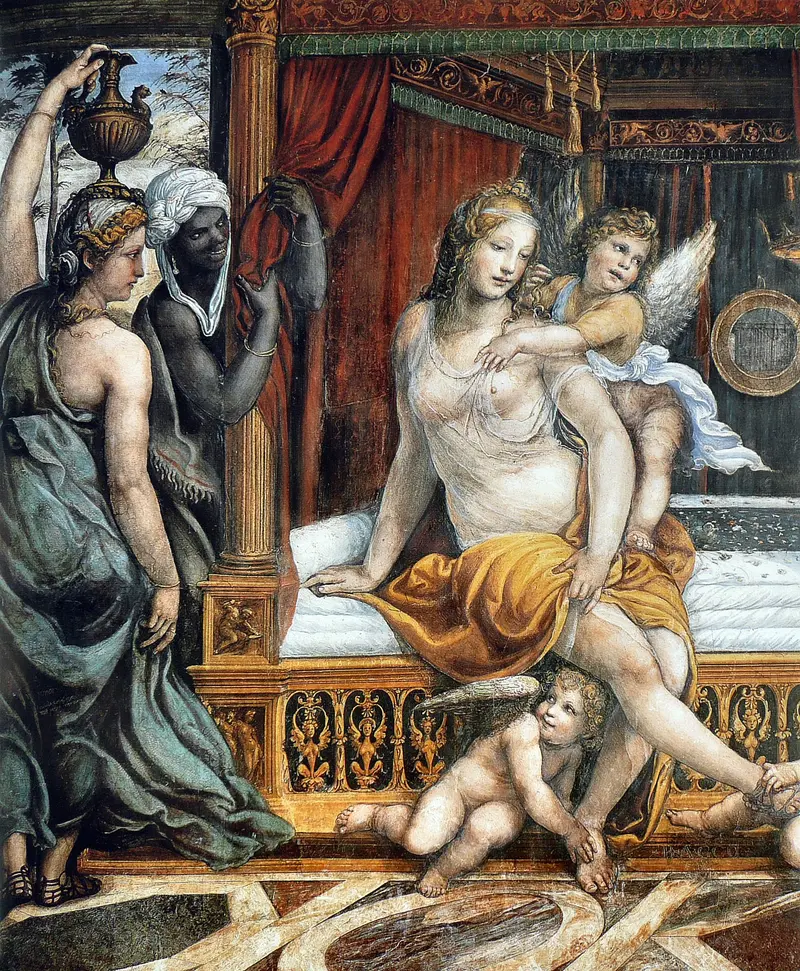
Roxana Receiving the Crown (Il Sodoma)
Il Sodoma
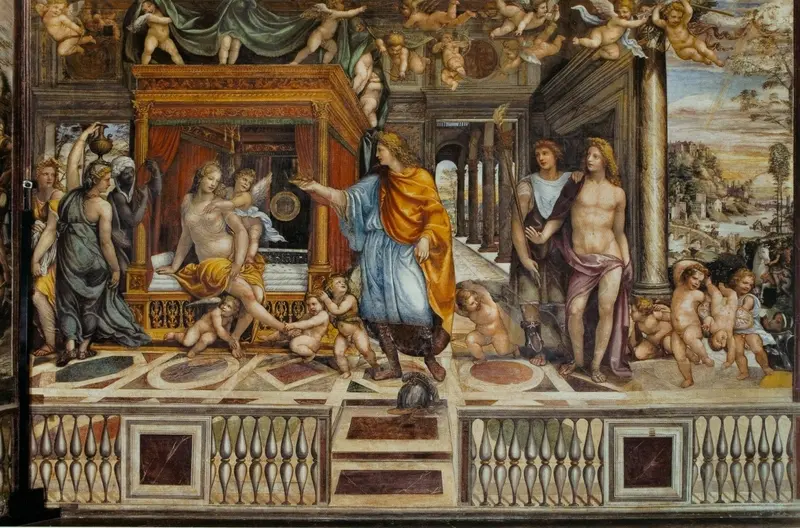
The Wedding of Alexander and Roxana (Il Sodoma)
Il Sodoma
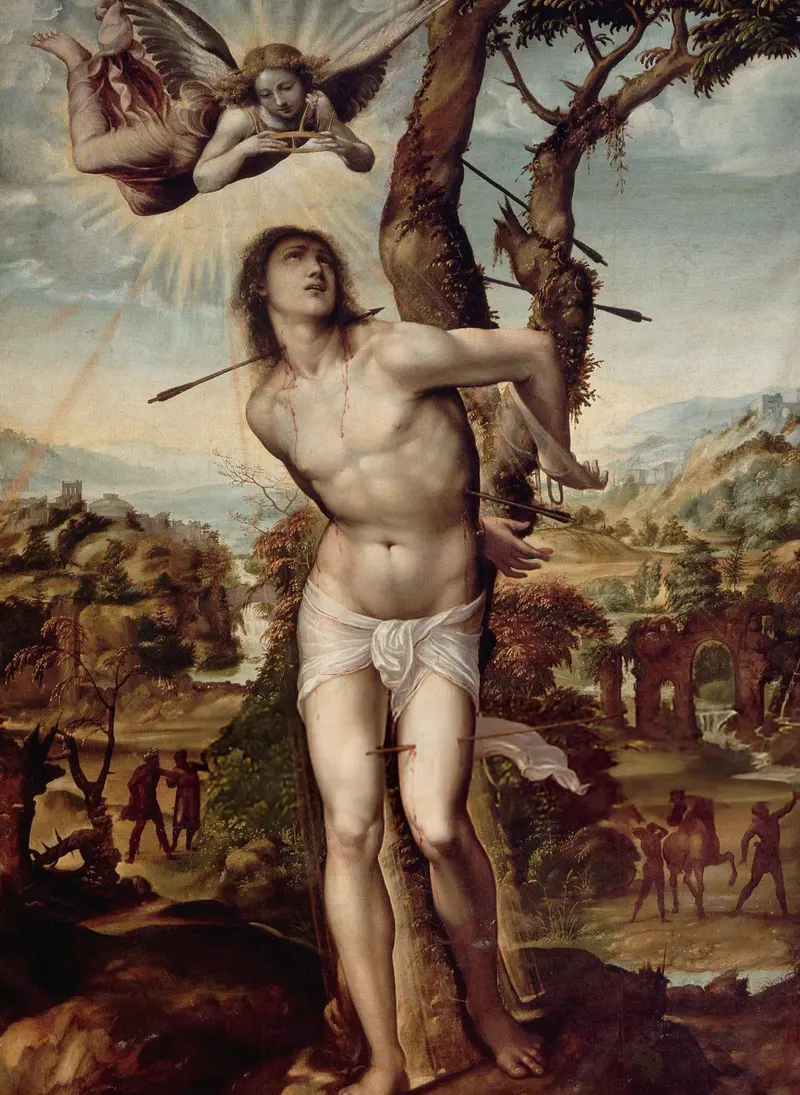
Saint Sebastian
Il Sodoma
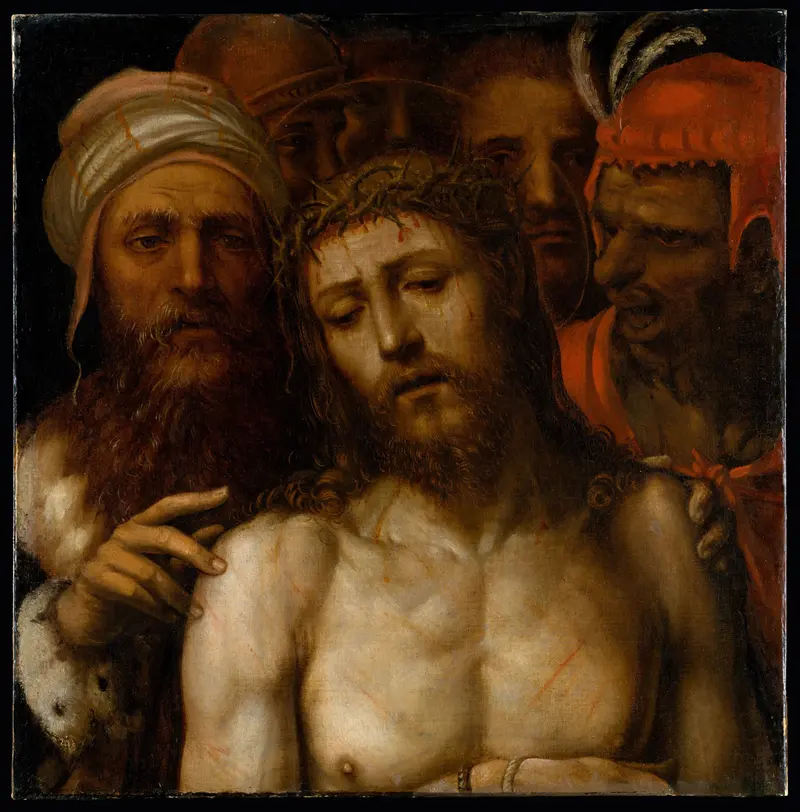
Christ Presented to the People (Ecce Homo)
Il Sodoma
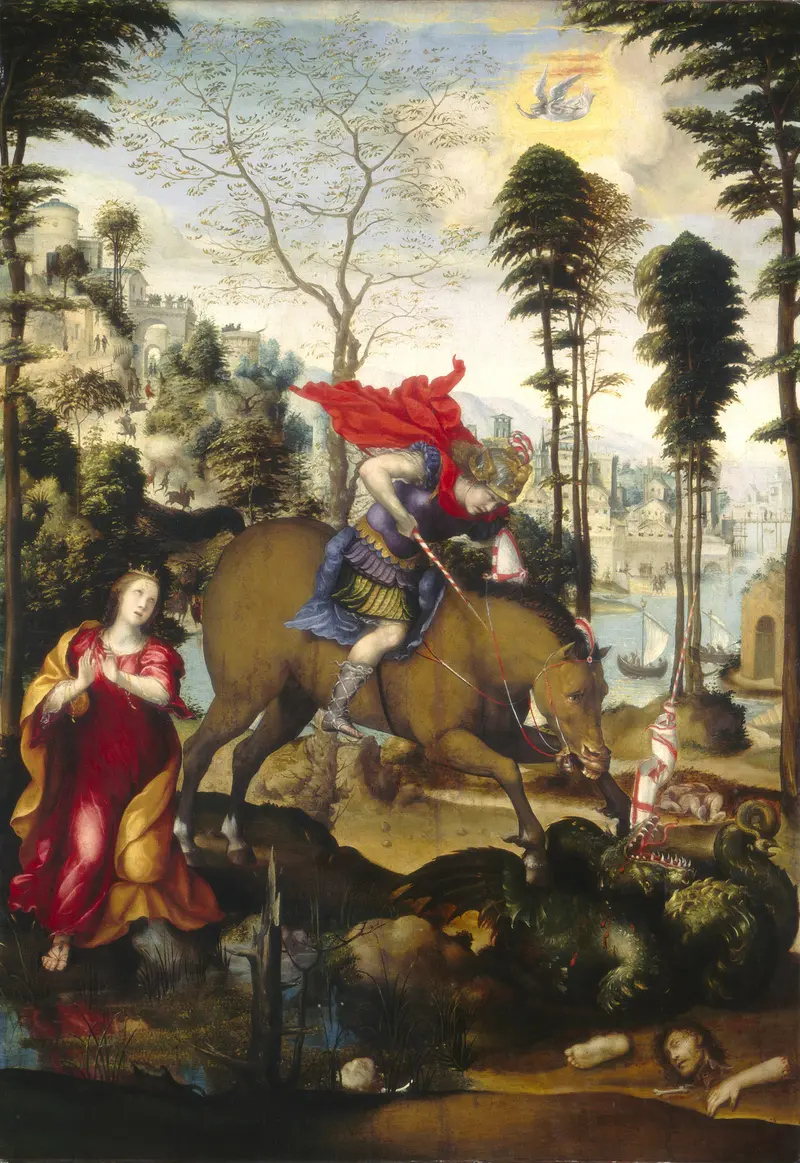
Saint George and the Dragon
Il Sodoma
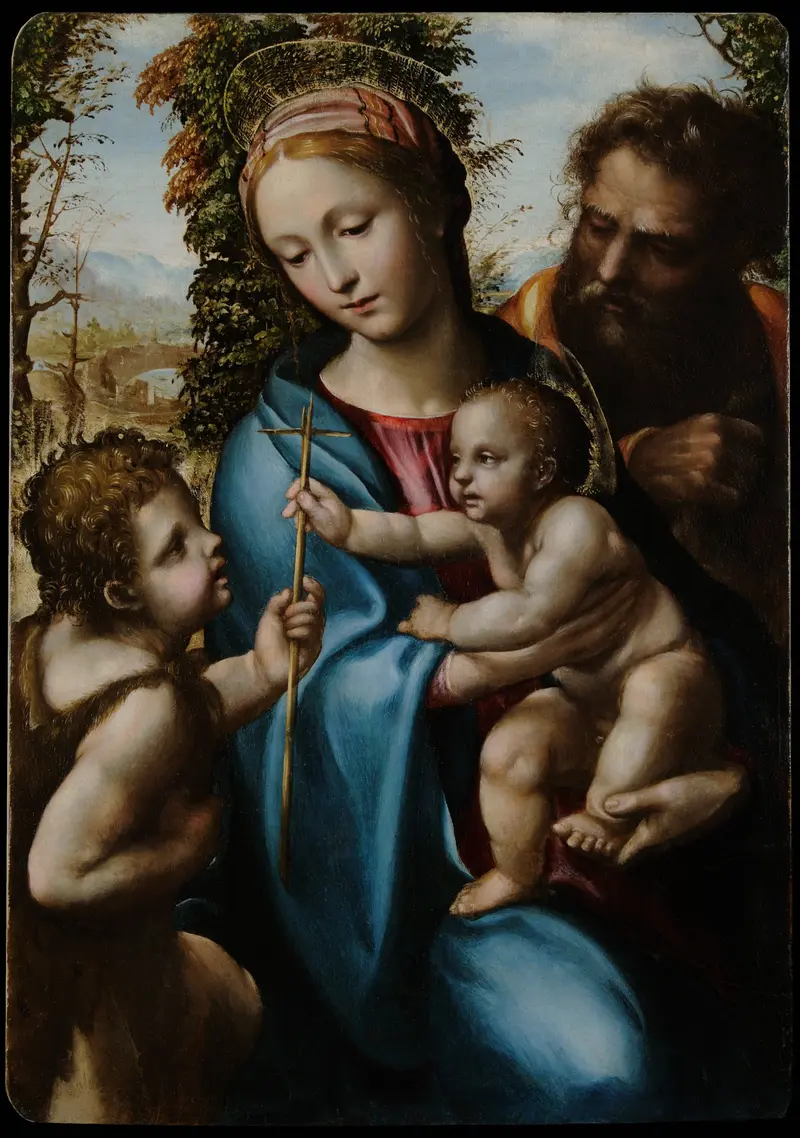
The Holy Family with the Young Saint John
Il Sodoma
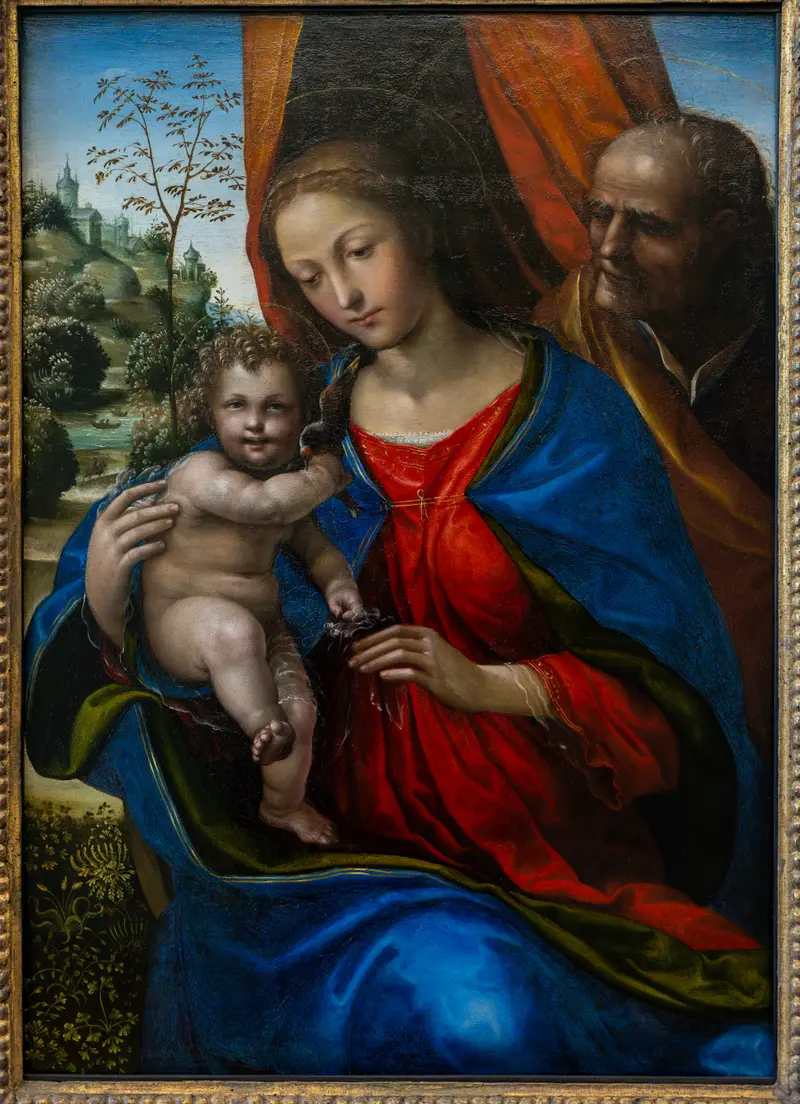
The Holy Family
Il Sodoma





