
The Merry Drinkers — History & Facts
The first thing that catches the eye in The Merry Drinkers is the unguarded joy of the man in the foreground, his flushed face and open shirt announcing a moment of raucous celebration. His raised glass and hat, held aloft in a gesture of boisterous greeting or farewell, pull the viewer into the heart of the gathering. The light falls most warmly on him, drawing attention to his animated expression, while his companions fade into the shadowed background: one fiddles with a pipe and a scrap of paper, the other bows a violin, their faces half-hidden but their roles in the revelry unmistakable.
The scene is intimate, almost conspiratorial, with the figures pressed close around a battered table, the outside world glimpsed only through a distant window. Every detail—the overturned hat, the crumpled sheet, the careless sprawl of limbs—contributes to a sense of spontaneous, lived-in disorder. Painted in 1659 by Adriaen van Ostade, this work belongs to the rich tradition of Dutch genre painting, where everyday life, with all its rough humor and fleeting pleasures, became a worthy subject for art. In the bustling taverns of the Dutch Republic, scenes like this were both a mirror and a caution: they celebrated communal joy while hinting at the follies of excess.
Artists such as Jan Steen and Ostade himself made a specialty of these lively interiors, catering to a clientele eager to see themselves—warts and all—reflected on their walls. Today, The Merry Drinkers resides in the Mauritshuis, a reminder of an age when laughter, music, and a shared glass could briefly dissolve the cares of the world. The painting invites you to linger, to listen for the echo of laughter, and to wonder what stories these faces might tell.
More Artworks by Adriaen van Ostade

Dans in de herberg
Adriaen van Ostade
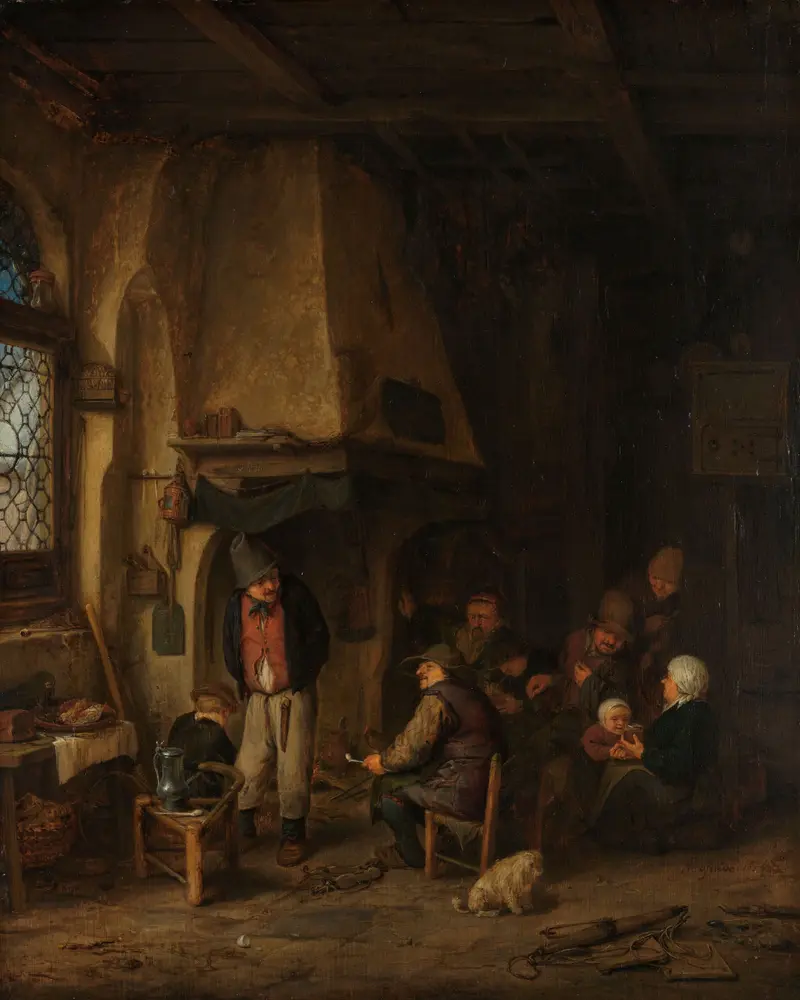
‘The Skaters’: Peasants in an Interior
Adriaen van Ostade
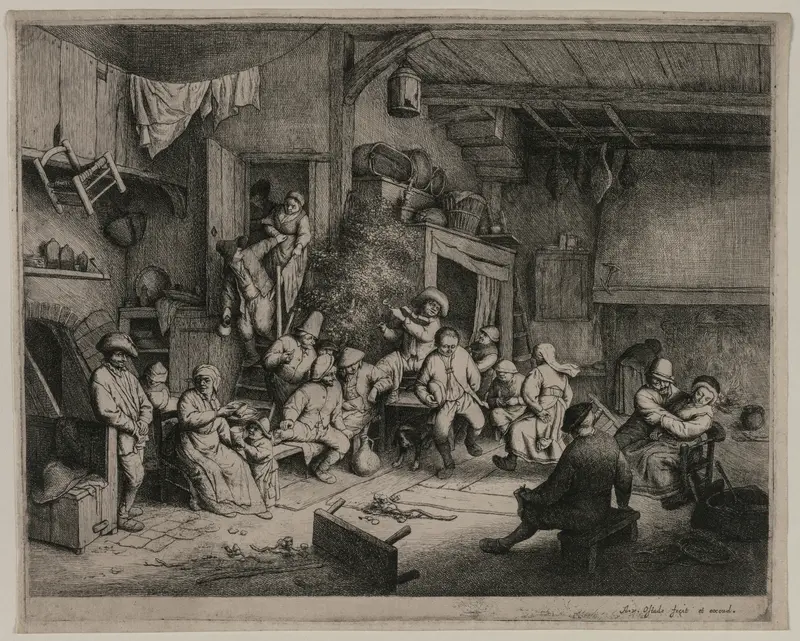
Dance at the Inn
Adriaen van Ostade
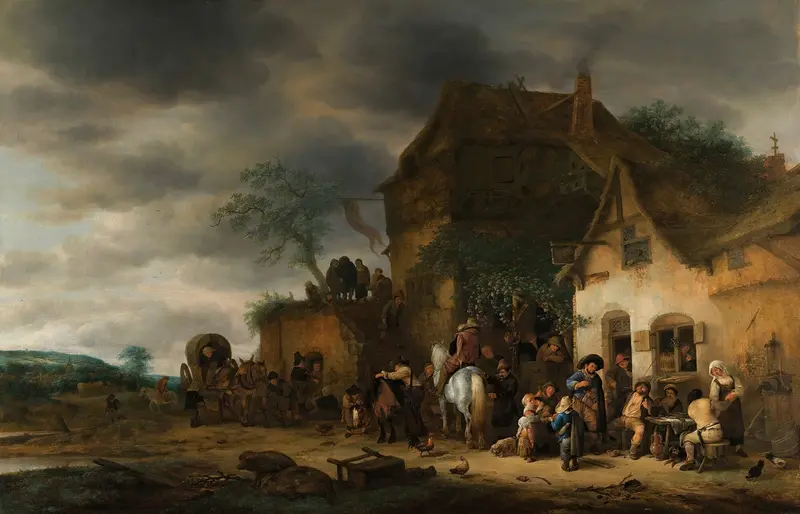
Travellers Halted At A Country Inn
Adriaen van Ostade
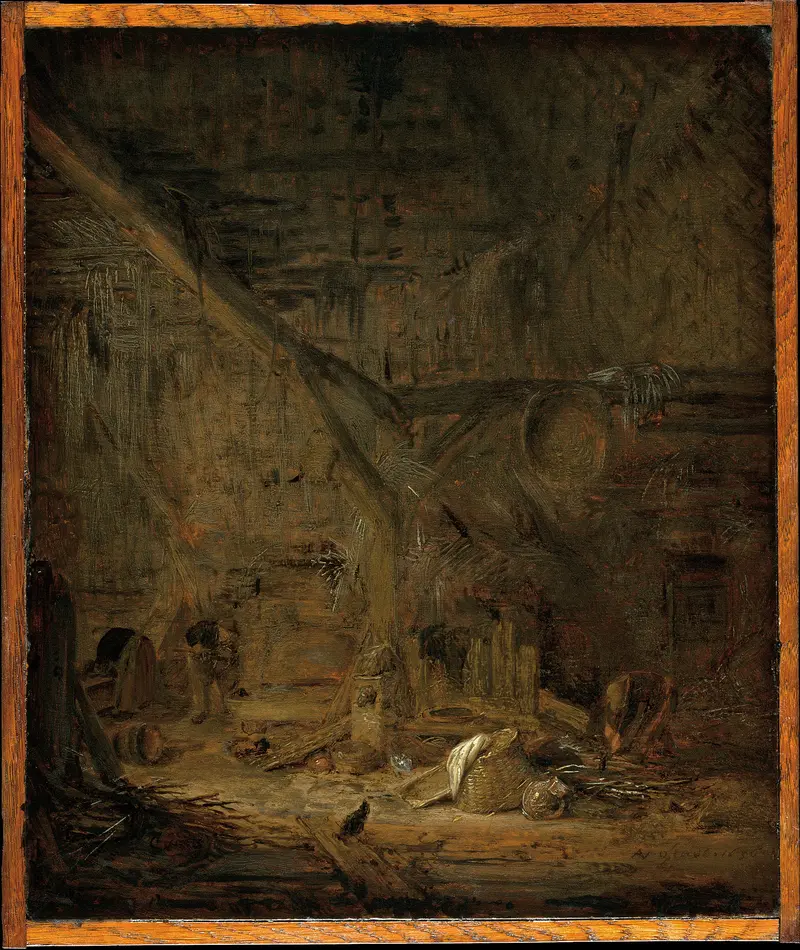
Interior of a Barn
Adriaen van Ostade
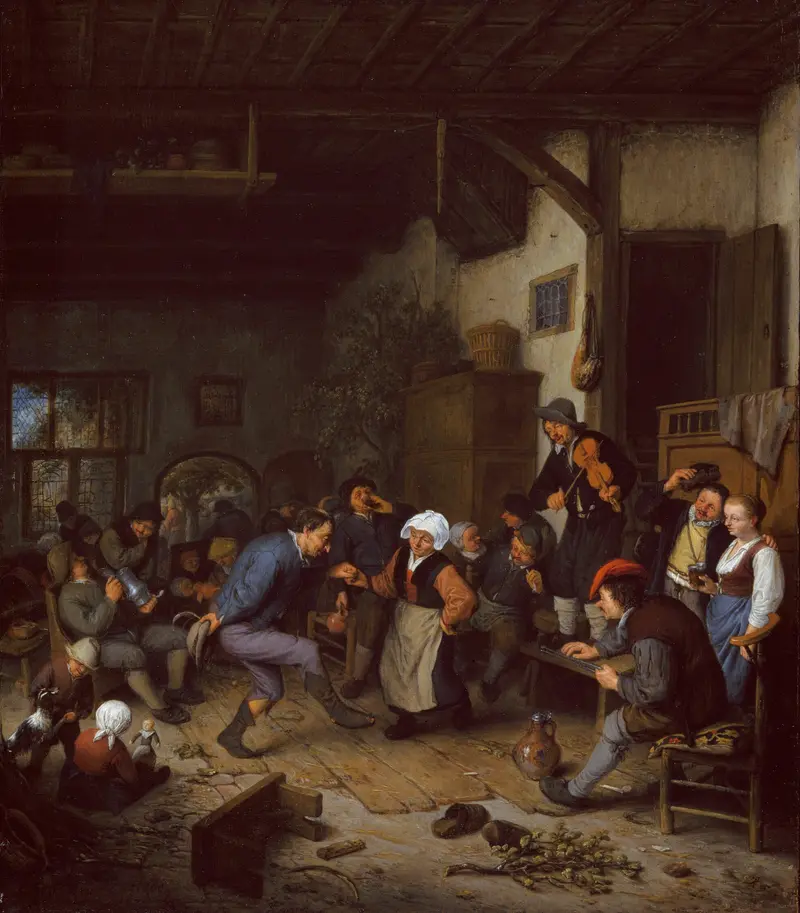
Merrymakers in an Inn
Adriaen van Ostade
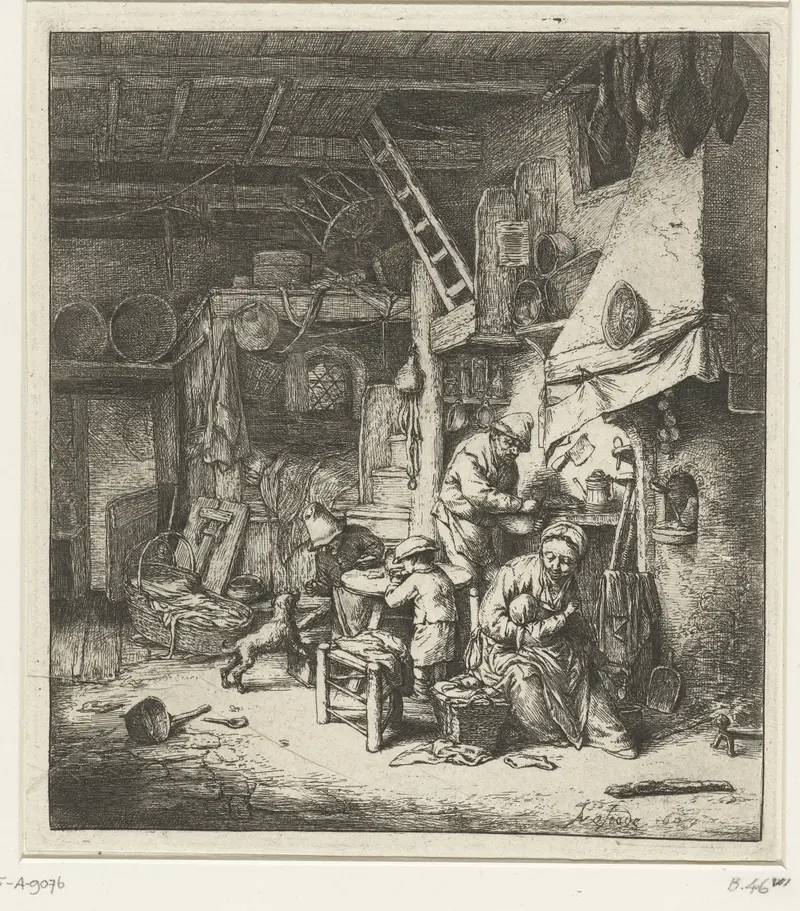
Boerengezin in interieur
Adriaen van Ostade
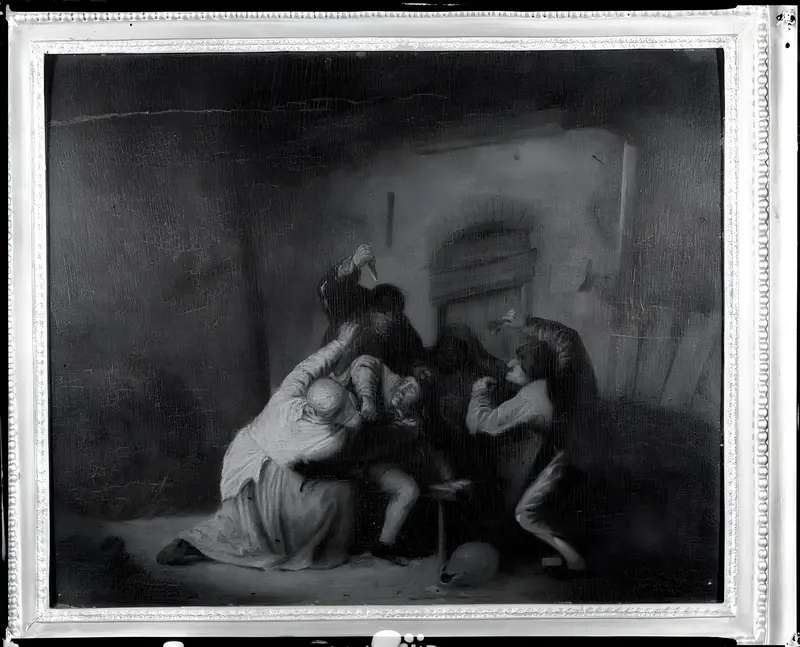
Peasants Brawling in a Tavern
Adriaen van Ostade
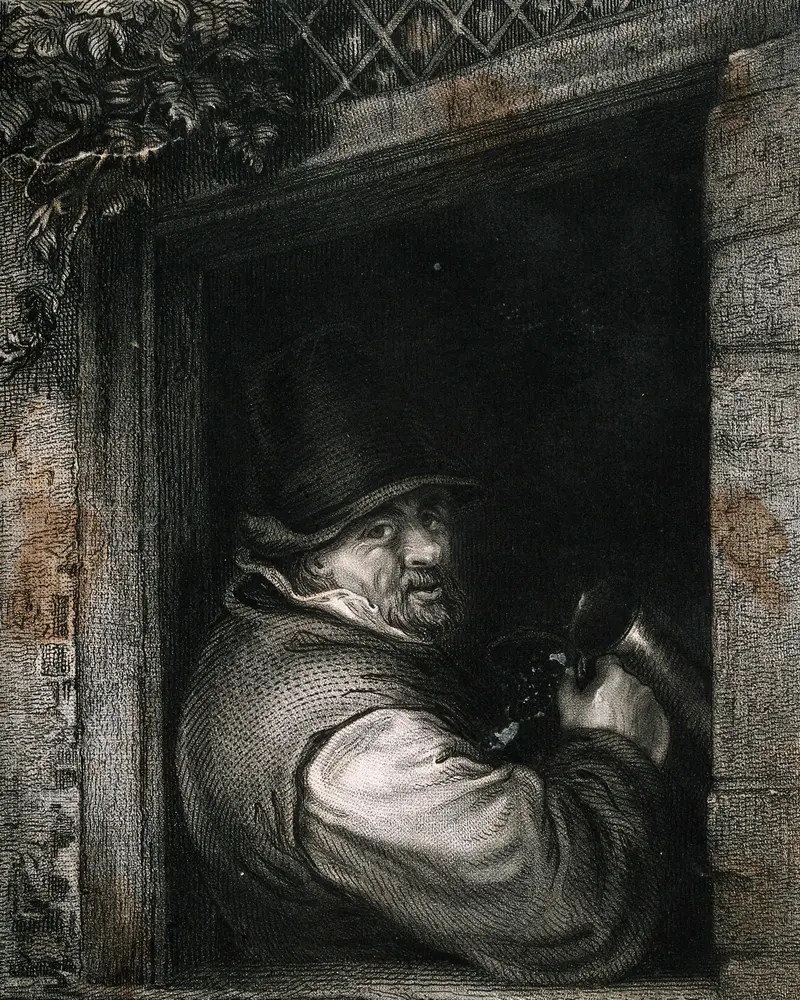
Man with a Tankard at a Window
Adriaen van Ostade
Dans in de herberg
Adriaen van Ostade
More Genre Scene Art

Banquet of the Officers of the St George Civic Guard
Frans Hals

Rembrandt and Saskia in the Scene of the Prodigal Son
Rembrandt van Rijn

Bal du moulin de la Galette
Pierre-Auguste Renoir

Quadrille at the Moulin Rouge
Henri de Toulouse-Lautrec

A Burial at Ornans
Gustave Courbet

When Will You Marry?
Paul Gauguin