The Mocking of Christ — History & Facts
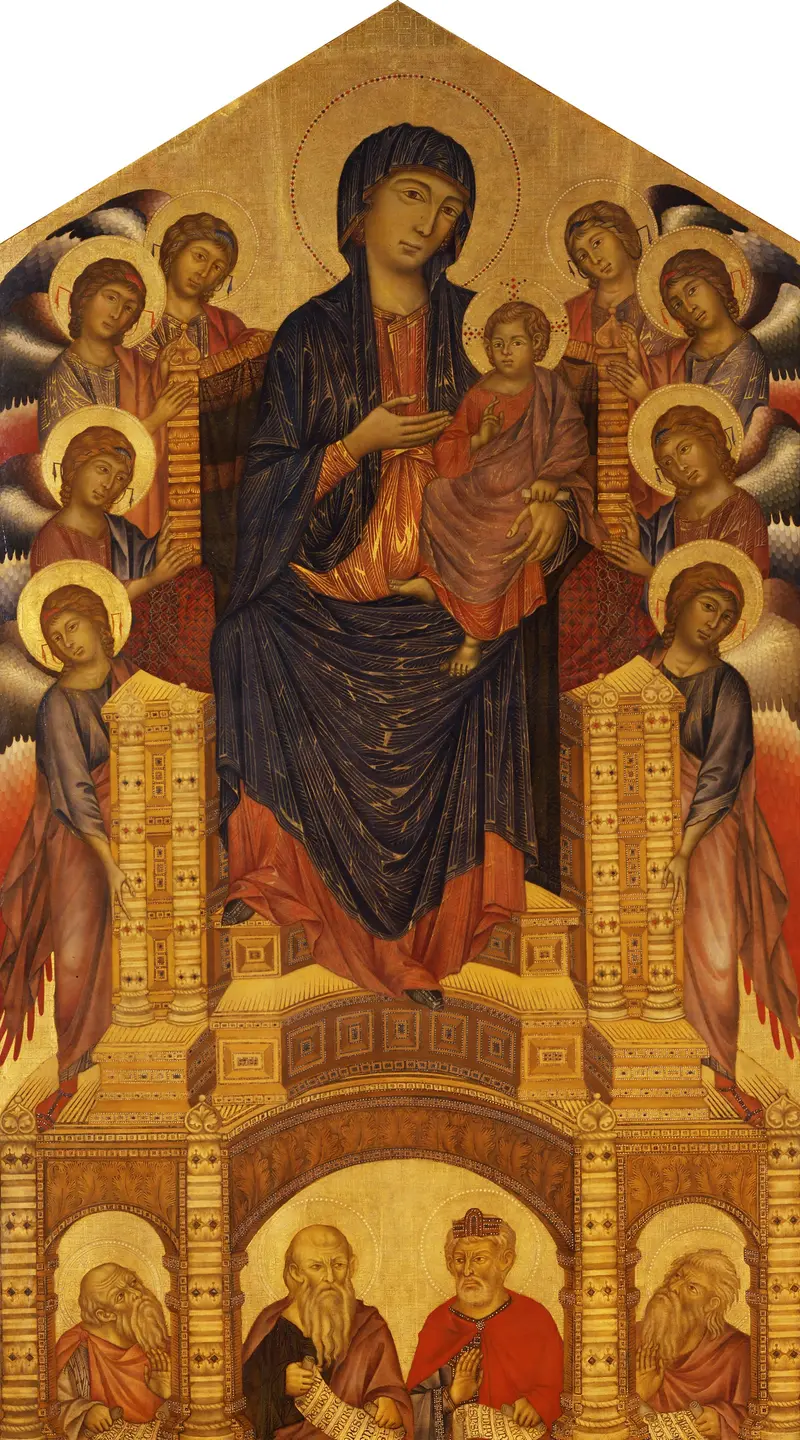
The Mocking of Christ by Cimabue, painted circa 1280 in tempera and gold on poplar panel, represents a key example of late thirteenth-century Italian devotional art. Created during a formative period in Cimabue's career, this work reflects the transition from the Byzantine tradition toward greater naturalism that characterized the early Italian Renaissance. The panel was executed for a religious context, likely as part of a larger altarpiece or devotional ensemble. The scene shows Christ at the center, surrounded by a dense crowd of figures who taunt and abuse him.
The gold background, typical of the period, emphasizes the sacred nature of the event and isolates the figures from any earthly setting. Christ is depicted with a calm, sorrowful expression, wearing a blue robe and a red tunic, while his tormentors are rendered with expressive gestures and individualized faces. The use of tempera allows for precise linear detail and subtle gradations of color, while the gold leaf adds luminosity and spiritual resonance.
Key narrative elements, such as the reed and the gestures of mockery, are clearly visible. This panel is now held in the collection of the Musée du Louvre, with the inventory number RFML.PE.2023.33.1. The Mocking of Christ is one of several surviving works by Cimabue that illustrate his influence on later painters, including Giotto.