
The Palms in Megara — History & Facts
Light pours through a shuttered window, catching on the bent backs and deft hands of women at work, and suddenly the quiet interior becomes a stage for concentration and tradition. The heart of The Palms in Megara is not in grand gestures but in the intimacy of shared labor: five figures, absorbed in weaving palm fronds, form a circle of attention and skill. The diagonal lean of the standing woman draws the viewer into the scene, while the scattered palms and careful fingers speak of a ritual both practical and communal.
The muted palette—creams, ochres, and the soft blue of a shawl—creates a hush, as if the room itself is holding its breath. Painted in 1891 by Theodoros Ralli, this work belongs to a world where genre painting flourished, especially in Greece and the Eastern Mediterranean. Artists like Ralli, often trained in Paris, turned their gaze homeward, capturing the rhythms of rural life and the customs that marked the calendar—here, perhaps, the preparation for Palm Sunday. Such scenes were favored by collectors eager for images of “authentic” folk life, at a time when tradition felt both precious and threatened by modernity.
The painting’s quiet dignity and luminous detail invite us to linger, to notice each gesture and the warmth of the light, and to imagine the stories woven into every palm leaf.
More Artworks by Theodoros Ralli

The Sleeping Concubine
Theodoros Ralli
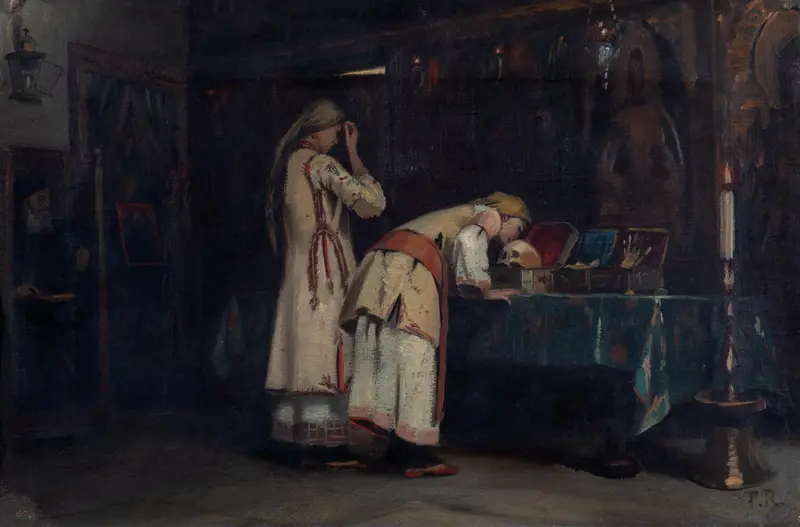
Holy Relics
Theodoros Ralli
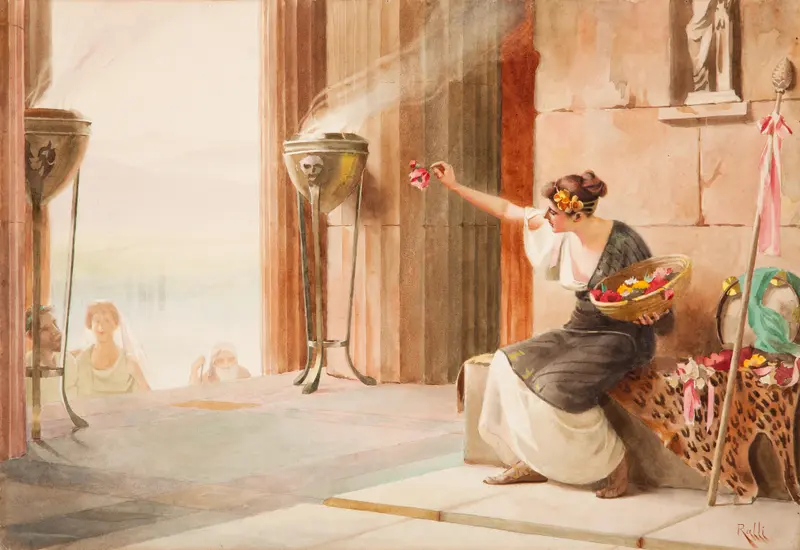
Flower Seller at the Parthenon
Theodoros Ralli
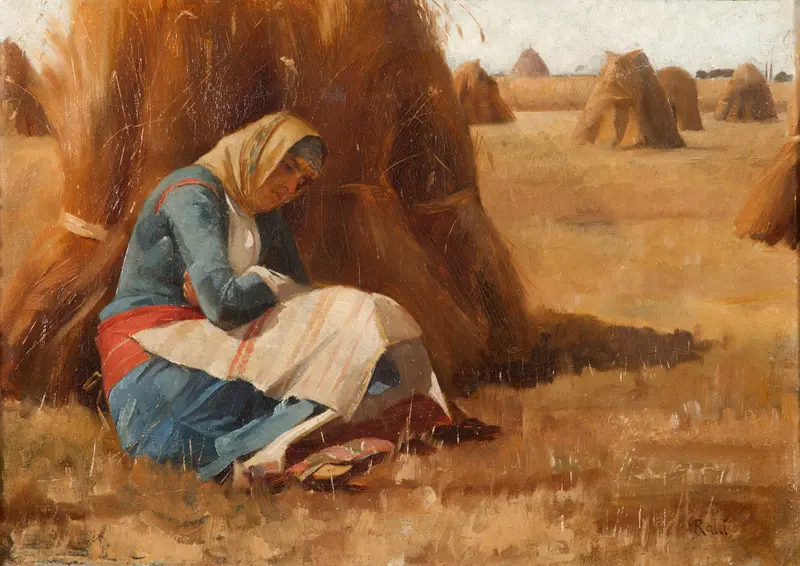
Resting by a Haystack
Theodoros Ralli
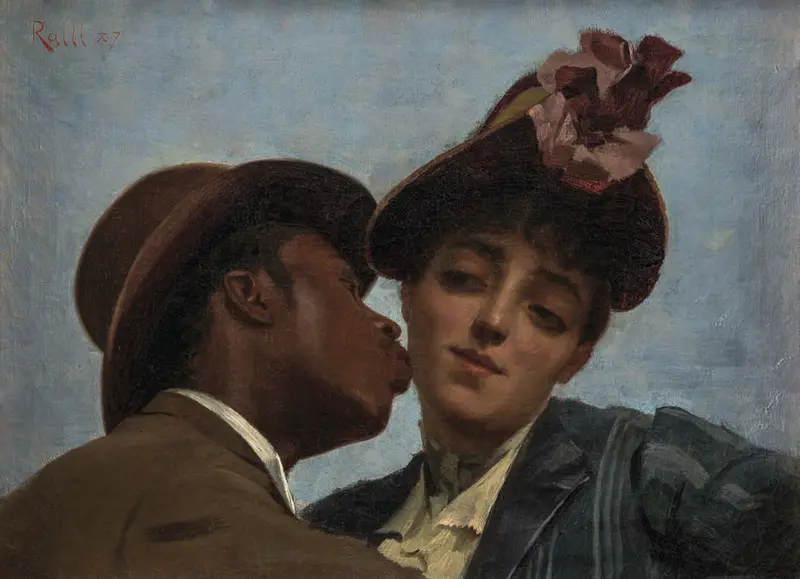
The Kiss (Ralli)
Theodoros Ralli
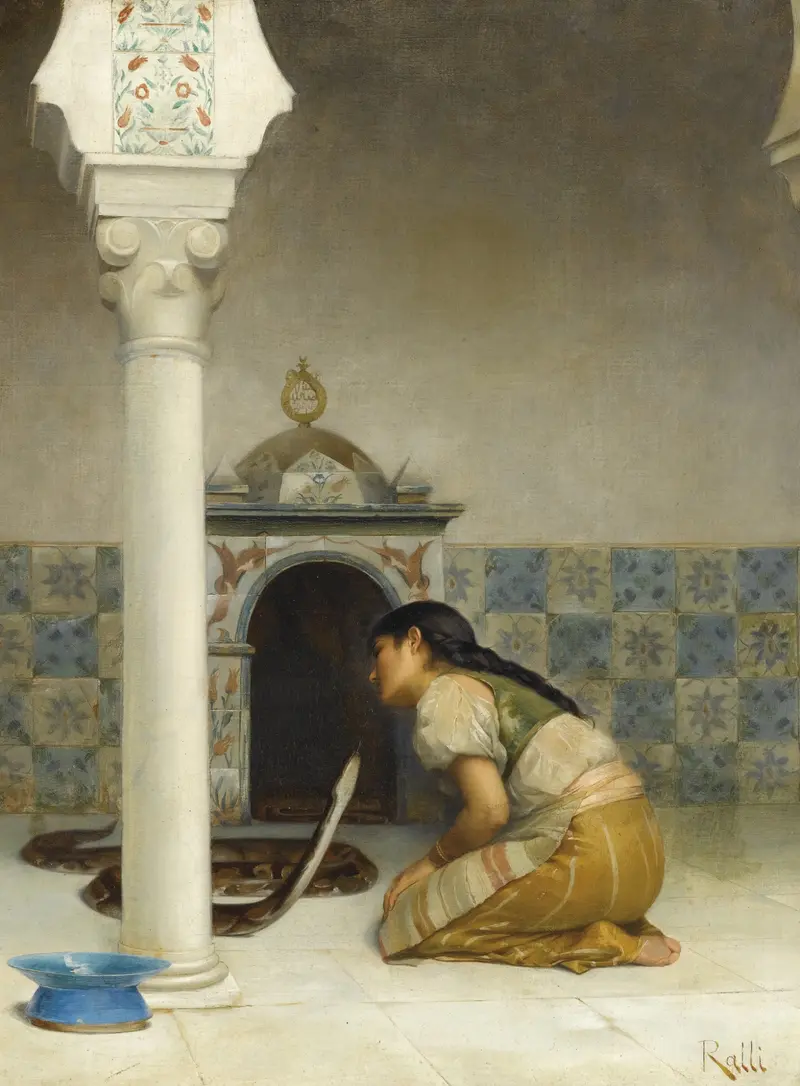
The Sacred Serpent
Theodoros Ralli
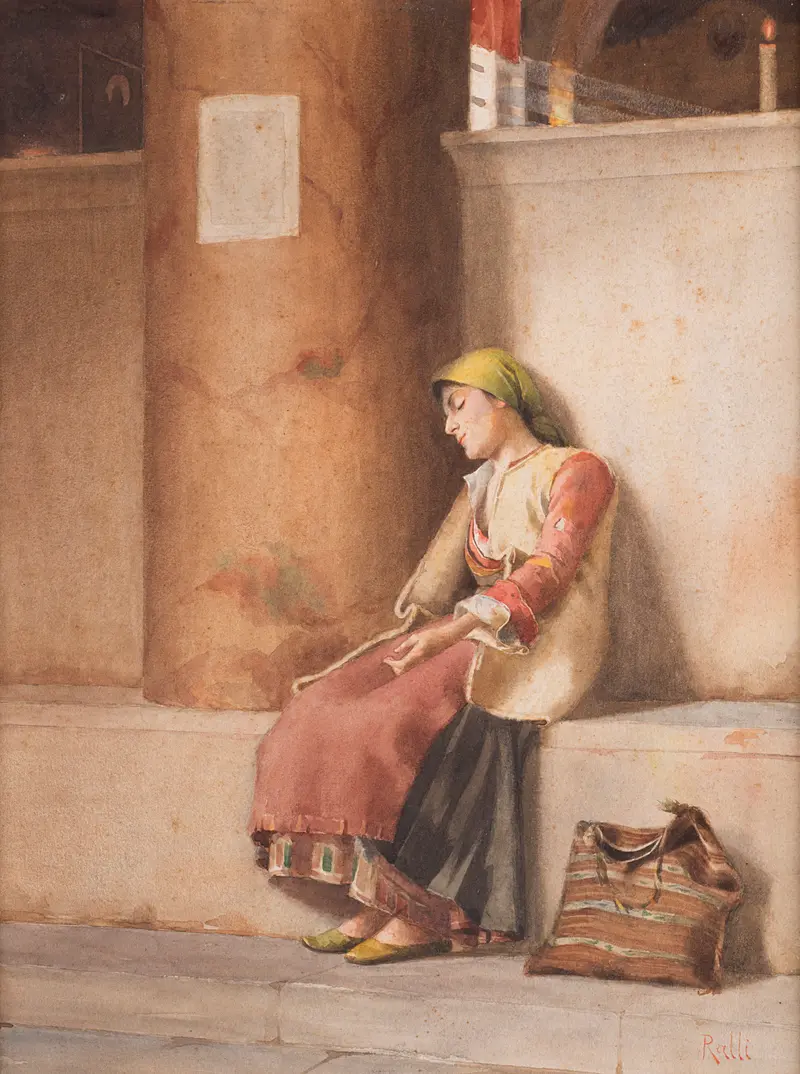
A Moment of Reflection
Theodoros Ralli
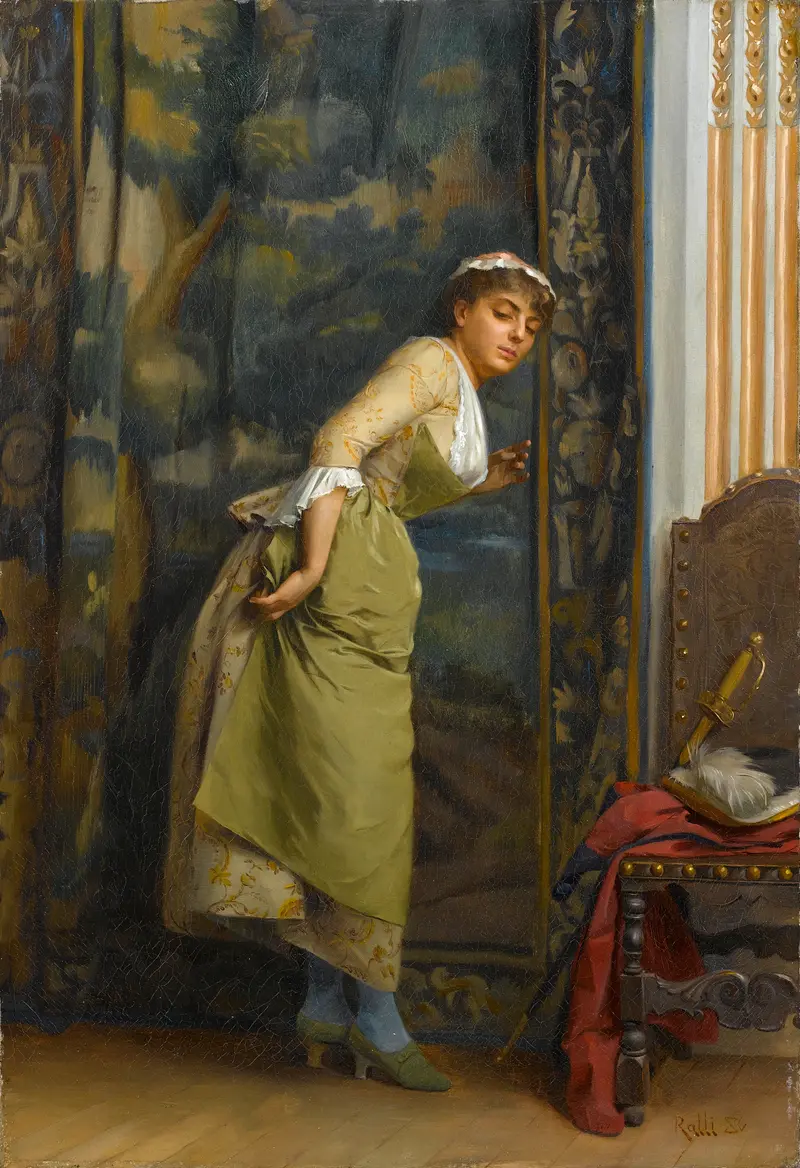
Eavesdropping (Ralli)
Theodoros Ralli
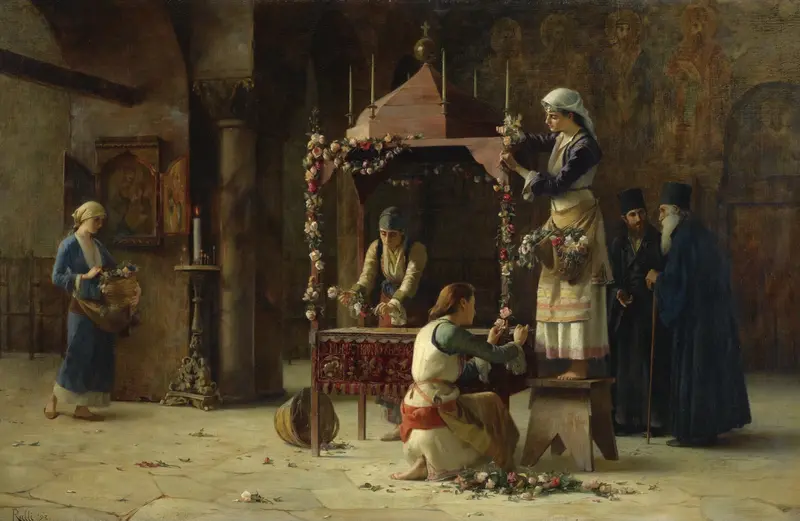
Holy Friday, Greece
Theodoros Ralli
A Moment's Rest
Theodoros Ralli
More Genre Scene Art

Banquet of the Officers of the St George Civic Guard
Frans Hals

Rembrandt and Saskia in the Scene of the Prodigal Son
Rembrandt van Rijn

Bal du moulin de la Galette
Pierre-Auguste Renoir

Quadrille at the Moulin Rouge
Henri de Toulouse-Lautrec

A Burial at Ornans
Gustave Courbet

When Will You Marry?
Paul Gauguin