
The Piazza del Campidoglio and the Cordonata — History & Facts
When Canaletto painted The Piazza del Campidoglio and the Cordonata in 1755, he was already famed across Europe for his Venetian cityscapes, but this work marks a rare Roman subject in his mature period. Unlike his bustling views of the Grand Canal, here he turned his eye to Michelangelo’s grand redesign of the Capitoline Hill, a site layered with the memory of ancient Rome and papal ambition. The painting is one of only a handful in which Canaletto depicted Rome, and its commission is still debated—some suggest it was made for British Grand Tourists eager to bring home a vision of the Eternal City.
The work’s rarity among his oeuvre has long made it a subject of fascination for collectors and historians alike. The scene unfolds at a moment of quiet grandeur: sunlight strikes the elegant geometry of the piazza, while figures ascend the Cordonata, the broad ceremonial staircase designed by Michelangelo. The equestrian statue of Marcus Aurelius commands the center, symbolizing imperial authority reclaimed by papal Rome. To the left and right, the Palazzo dei Conservatori and the Palazzo Senatorio frame the space, their facades rendered with Canaletto’s trademark precision.
The careful placement of small figures—some climbing the steps, others pausing in conversation—invites the viewer to imagine the daily life and ceremony of mid-18th-century Rome. Unlike Piranesi’s dramatic, shadowed engravings of the same site, Canaletto offers clarity and order, emphasizing the harmony of architecture and urban space. The painting’s early history is not fully documented, but it is typical of the works Canaletto produced for the British market during his years in England and after his return to Venice. Many such city views were acquired by aristocratic travelers on the Grand Tour, who prized them as mementoes of their journeys.
Over the centuries, The Piazza del Campidoglio and the Cordonata has passed through private collections and now resides in a major public institution, where it stands as a testament to Canaletto’s fascination with the urban landscapes beyond his native Venice. The work remains a key example of the Vedutismo movement, capturing not only the architecture of Rome but also the cosmopolitan spirit of the 18th century.
More Artworks by Canaletto

The Grand Canal, Venice, looking north-west from the Ca' Corner to the Ca' Contarini degli Scrigni, with the campanile of Santa Maria della Carità
Canaletto

Venice, Bacino di San Marco on Ascension Day
Canaletto

Windsor Castle
Canaletto

The Grand Canal looking North-East from the Palazzo Dolfin-Manin to the Rialto Bridge
Canaletto

Venice: The Campo SS. Giovanni e Paolo
Canaletto

Venice: The Grand Canal from the Rialto to the Palazzo Foscari
Canaletto
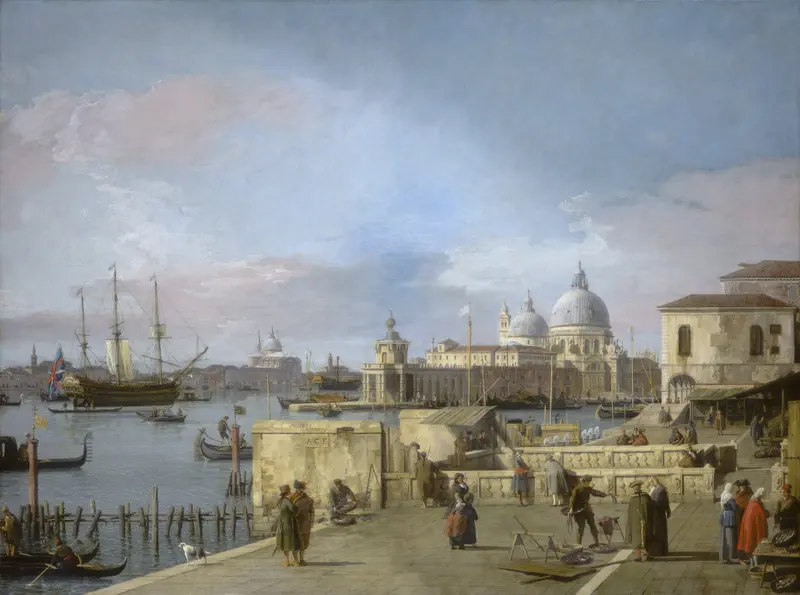
Venice: The Molo towards the Dogana and Santa Maria della Salute
Canaletto

Venice: The Piazzetta
Canaletto
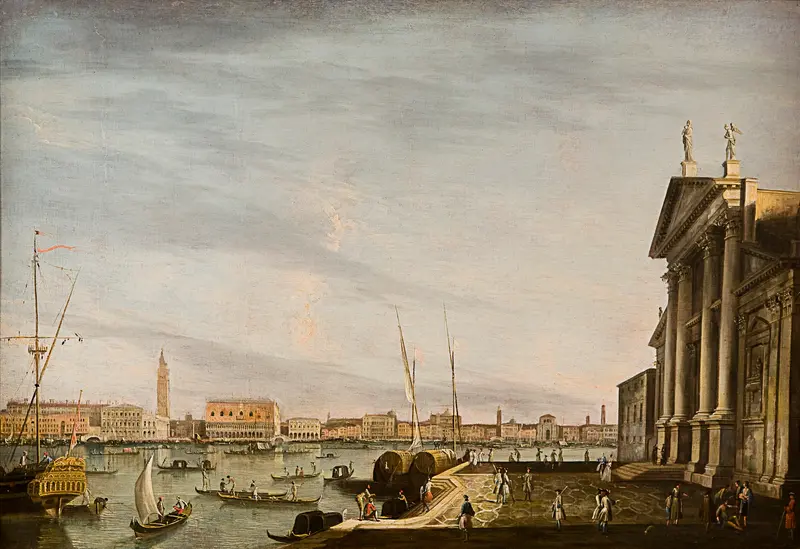
Venice, View of San Giorgio Maggiore
Canaletto

London: The Thames from Somerset House Terrace towards Westminster
Canaletto


