
The Pigeon Tower — History & Facts
How do obsession and memory intertwine within the confines of a single canvas? Focus on the tower at the center, rising like a solitary monument against the soft hues of dusk. Note how the muted grays and browns envelop the structure, conveying a sense of melancholy, while the pigeons flutter around, caught in a delicate dance of freedom and confinement. The brushwork is meticulous, capturing both the rough texture of the stone and the ethereal quality of the surrounding sky, inviting one to ponder the edges between reality and reverie. As you explore the details, notice how the pigeons embody a deeper yearning, a contrast to the starkness of the tower.
Each bird seems alive with a restless spirit, echoing the artist’s own obsessive pursuit of capturing the transient moments of life. The juxtaposition between the static tower and the dynamic flight of the birds evokes themes of longing and the passage of time, suggesting both freedom and the traps we create for ourselves. Alphonse Legros painted The Pigeon Tower during a period of personal and artistic reflection between 1857 and 1911, primarily in Paris. This time was marked by his exploration of themes that oscillate between realism and the emotional resonance of the human experience.
As an artist influenced by the Barbizon School, Legros sought to convey the subtleties of light and texture, capturing not just the physical world but the feelings that intertwine with memory and obsession.
More Artworks by Alphonse Legros
Browse all →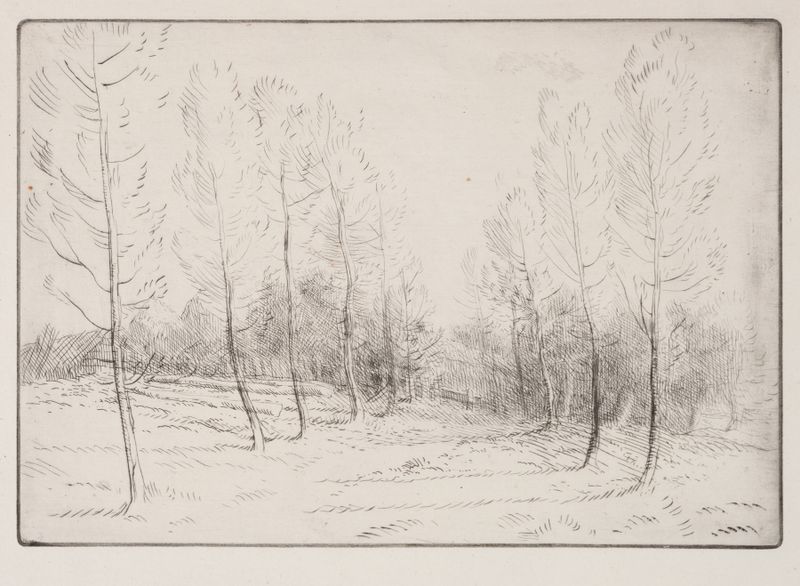
Avenue of Poplars
Alphonse Legros
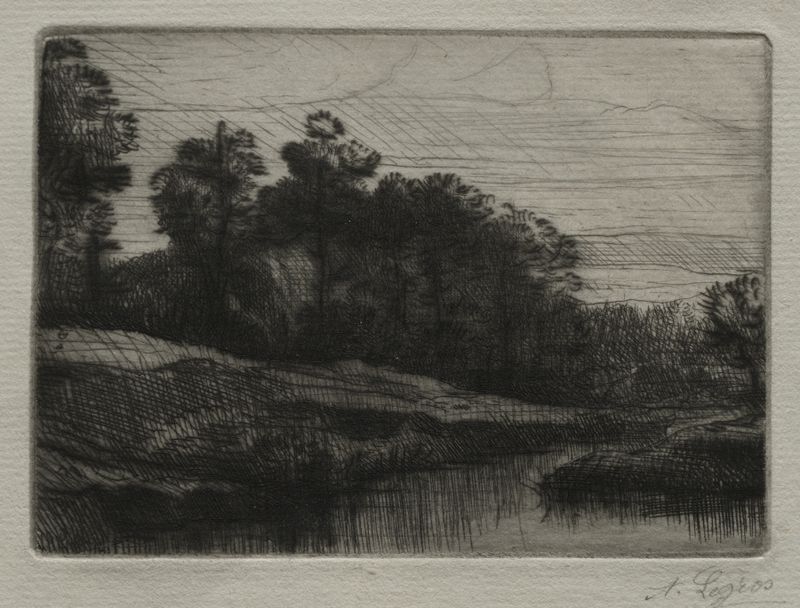
Evening
Alphonse Legros

The Fish in the Hoop Net
Alphonse Legros

The Little Beggar
Alphonse Legros
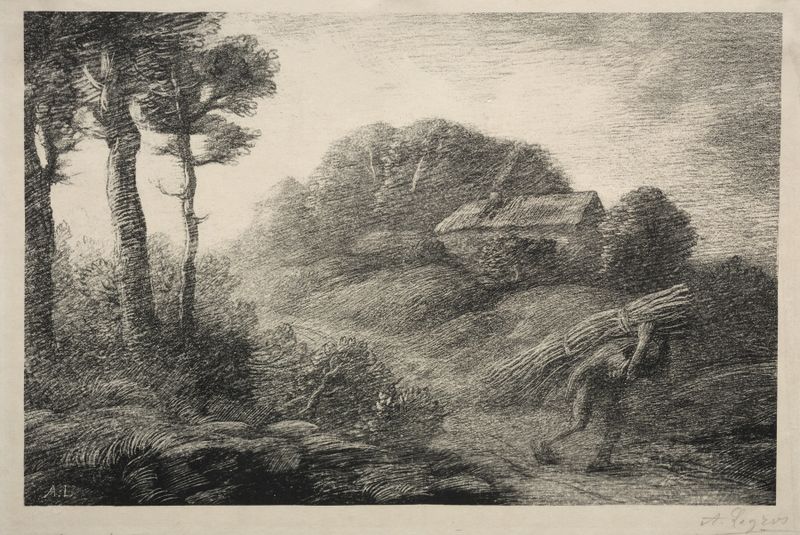
The Return of the Fagot Gatherer
Alphonse Legros

Storm
Alphonse Legros
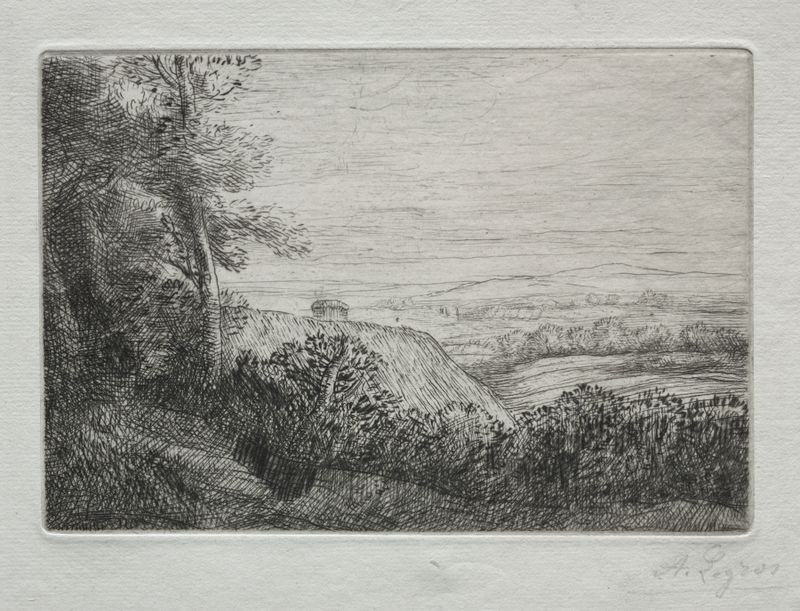
Les dernière Rayons de Soleil
Alphonse Legros
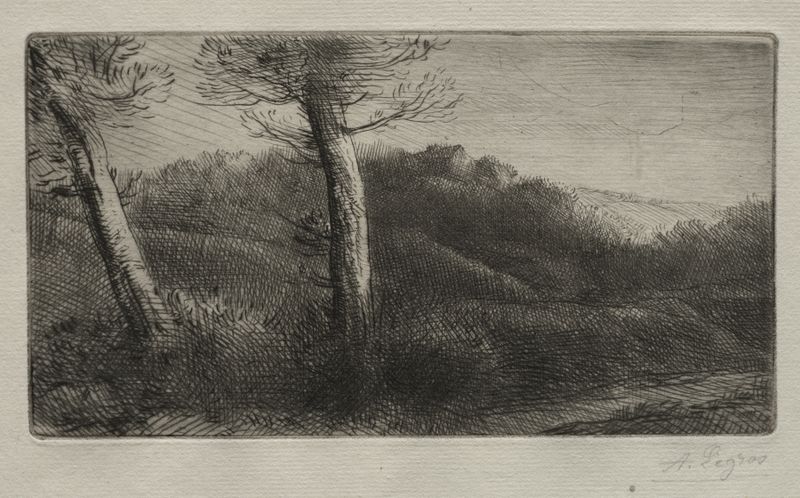
The Traveler Stretched out on the Grass
Alphonse Legros
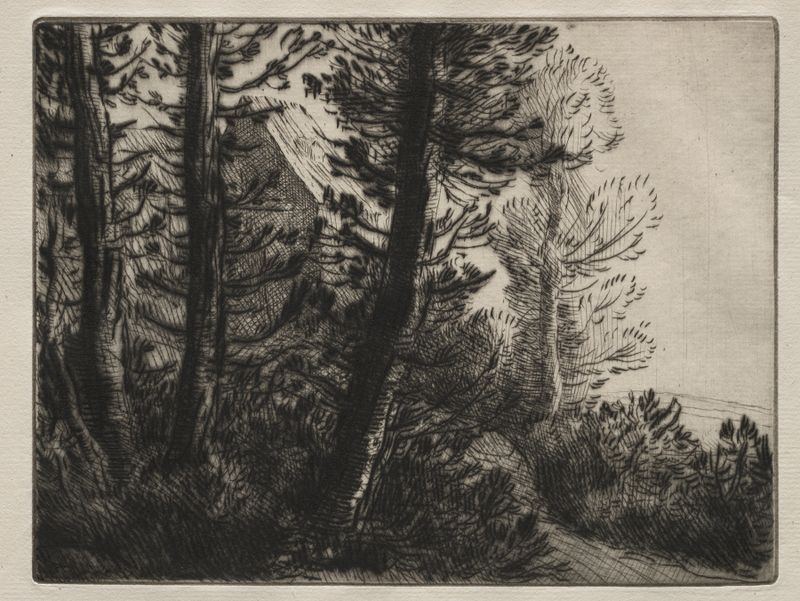
Guard House
Alphonse Legros

Death of a Vagabond
Alphonse Legros
More Architecture Art
Browse all →
The statue of Liberty
Frédéric Auguste Bartholdi

View of Houses in Delft, Known as ‘The Little Street’
Johannes Vermeer

View of Houses in Delft, Known as ‘The Little Street’
Johannes Vermeer

The Cathedral in Rouen. The portal, Grey Weather
Claude Monet

The yellow house
Vincent van Gogh

The Church in Auvers-sur-Oise, View from the Chevet
Vincent van Gogh