
The Plains of Marathon — History & Facts
Could a single brushstroke hold eternity? In John Varley’s The Plains of Marathon, the expanse of land stretches beneath an infinite sky, whispering the secrets of time and peace. Look to the center where the undulating hills rise gently, bathed in soft greens and muted browns. The palette is serene, evoking a sense of tranquility that invites contemplation. Notice how the light plays across the canvas, casting a harmonious glow that draws your eyes outward, enveloping you in the vastness of the plains.
The brushwork, delicate yet purposeful, mimics the gentle caress of a warm breeze, leading you to explore the subtle details of the landscape. As you delve deeper, consider the narrative hidden within the layers. The tranquil beauty of the scene contrasts with the weight of history it embodies; these plains are steeped in ancient battles and heroic legacies, yet Varley presents them in a moment of serene stillness. The distant mountains rise majestically, perhaps symbolizing both the grandeur and the permanence of nature versus the fleeting nature of human strife.
Here, the artist captures a delicate balance between a peaceful present and a tumultuous past. Painted in 1834, Varley was influenced by Romantic ideals, seeking to marry the beauty of nature with historical significance. At this time, England was experiencing a burgeoning interest in landscape painting, and Varley's focus on the harmony of the natural world reflected the broader artistic movements that sought to explore the sublime. He was influenced by his travels and studies in classical art, striving to capture not just a scene, but the essence of existence itself.
More Artworks by John Varley
Browse all →
Knaresborough on the River Nidd, Yorkshire
John Varley

Kirkstall Abbey near Leeds
John Varley

Bamborough Castle from the Northeast, with Holy Island in the Distance, Northumberland
John Varley
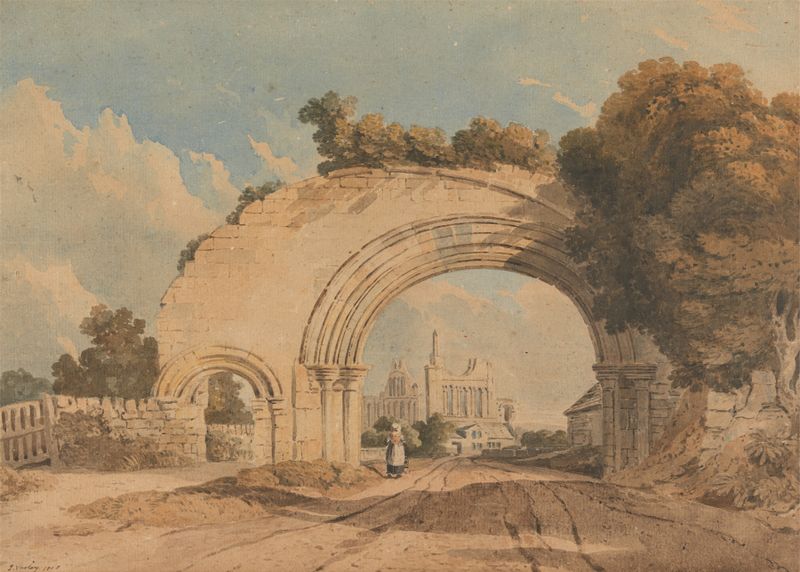
Byland Abbey, Yorkshire
John Varley

View of Conwy Castle, North Wales
John Varley
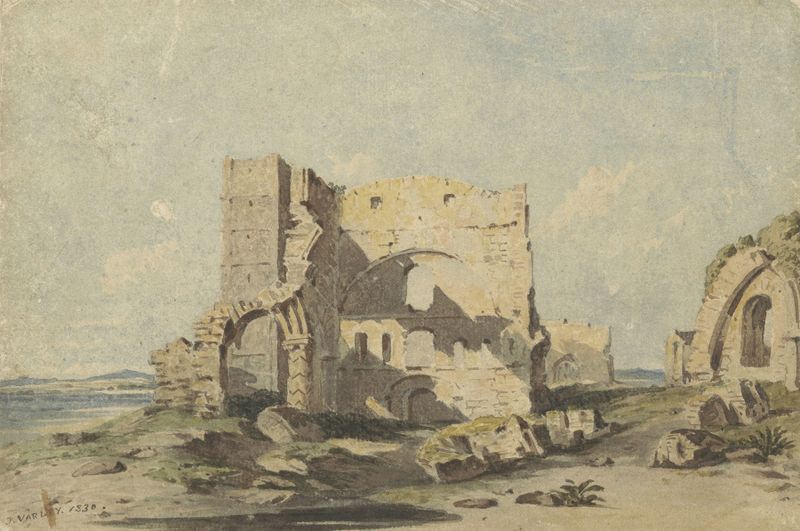
Lindisfarne Abbey op Holy Island, Northumberland
John Varley
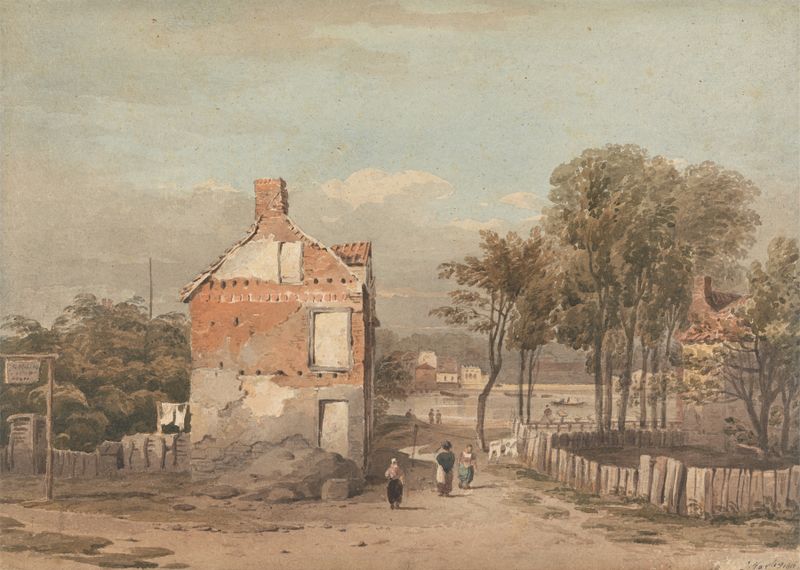
The Thames Near the Penitentiary, Millbank, London
John Varley

Vale of Clwyd, Wales
John Varley

A View along the Thames towards Chelsea Old Church
John Varley

The Thames at Windsor
John Varley





