
The Port of Trouville — History & Facts
Could beauty survive in a century of chaos? The Port of Trouville captures a fleeting moment, a slice of life where tranquility dances amid the tumult of the world beyond its borders. The painting beckons us to step closer, urging us to find solace in the gentle strokes and serene hues that evoke a sense of legacy anchored in time. Look to the left at the soft palette of blues and grays, where the sky meets the sea in a delicate embrace. The light filters through wispy clouds, casting a gentle glow upon the boats bobbing languidly in the harbor.
Notice how the delicate brushwork conveys the movement of water, each wave whispering stories of sailors and dreams. The composition draws the eye across the canvas, inviting us to explore the bustling docks, filled with figures engaged in their everyday rituals, their forms rendered with a sense of intimacy. Yet, beneath the surface of this idyllic scene lies an undercurrent of contrast. The vibrant life of the port suggests both the promise of leisure and the labor that fuels it.
Each vessel, while a symbol of adventure, also reflects the fragility of stability in a world on the brink of change. The figures, small and absorbed in their tasks, serve as a reminder of humanity’s enduring connection to nature and the ephemeral beauty found within our daily lives. Eugène Boudin painted this work between 1888 and 1895 during a period when Impressionism was gaining momentum across Europe. Living in Normandy, he was deeply influenced by the coastal landscapes and the ever-changing light of the sea.
This era marked a turning point in his career, as he sought to capture not only the beauty of his surroundings but also the human experiences embedded within them, forging a legacy that continues to inspire artists today.
More Artworks by Eugène Boudin
Browse all →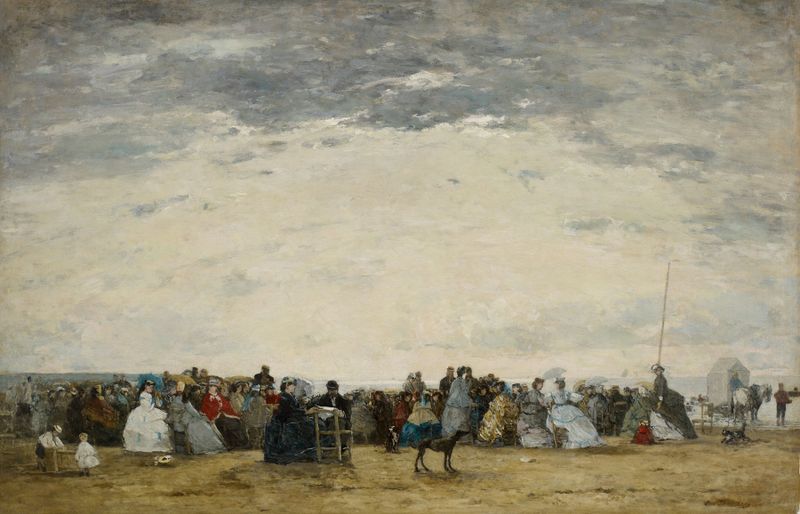
Vacationers on the Beach at Trouville
Eugène Boudin

Washerwoman near Trouville
Eugène Boudin
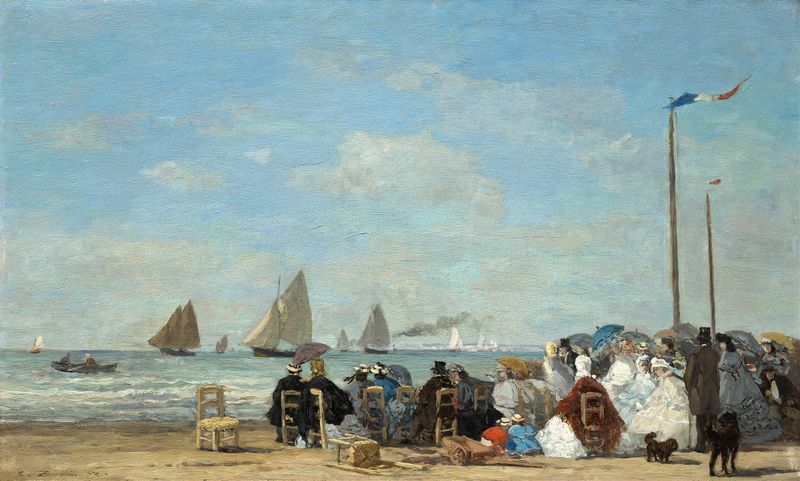
Beach Scene at Trouville
Eugène Boudin

Port aux environs d’Honfleur
Eugène Boudin

Le Faou, un coin du village
Eugène Boudin
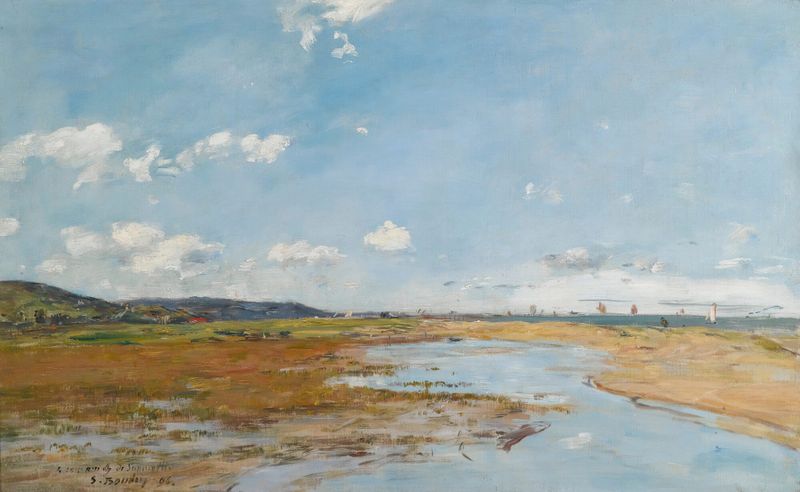
Deauville. Le Rivage
Eugène Boudin
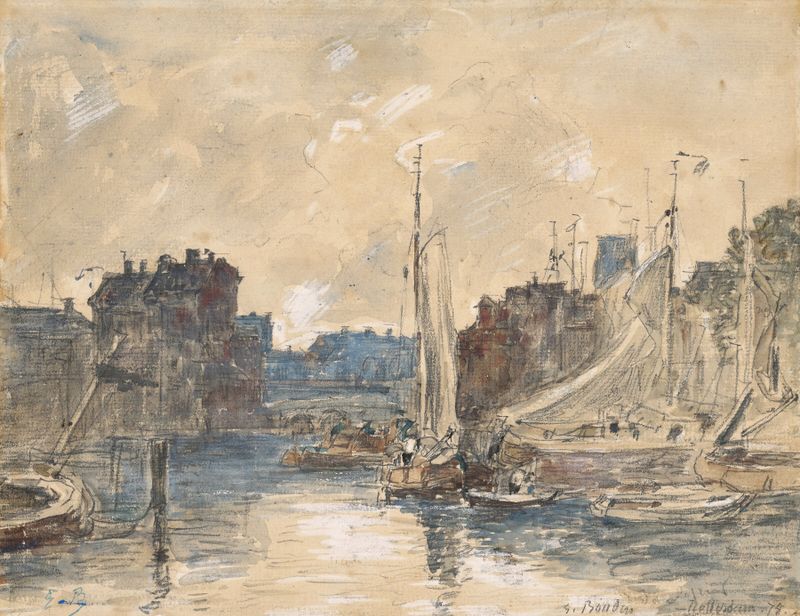
Port de Rotterdam
Eugène Boudin

View of Bordeaux, from the Quai des Chartrons
Eugène Boudin

Trouville, Scène De Plage
Eugène Boudin

Trouville, Le Port
Eugène Boudin





