
The Quack — History & Facts
What draws the eye first is the lively exchange between the quack and his audience, caught in a moment of eager anticipation and skepticism. The figure in the red cap, gesturing with a small vial in hand, is the center of the drama: his animated pose, open mouth, and theatrical flair suggest a practiced pitch honed by years of itinerant trade. The faces around him tell their own stories—some curious, some doubtful, one child peering up with wide-eyed wonder.
The tent and barrel form a makeshift stage, while the dappled light filtering through the tree above gives the scene a sense of intimacy, as if the viewer has stumbled upon a secret performance at the edge of a village. Painted in 1648 by Adriaen van Ostade, this work belongs to a world where the boundaries between entertainment, commerce, and deception were often blurred. Scenes of quacks and charlatans were a favorite subject in Dutch genre painting, reflecting both fascination and wariness toward the itinerant figures who promised miracle cures. Such images were popular with a burgeoning middle class, who delighted in depictions of rural life and its foibles—sometimes as a warning, sometimes as a source of amusement.
Now in the collection of the Rijksmuseum, The Quack invites us to linger over its details and to imagine the sound of the pitch, the rustle of the crowd, and the quiet skepticism that hangs in the air.
More Artworks by Adriaen van Ostade

Dans in de herberg
Adriaen van Ostade
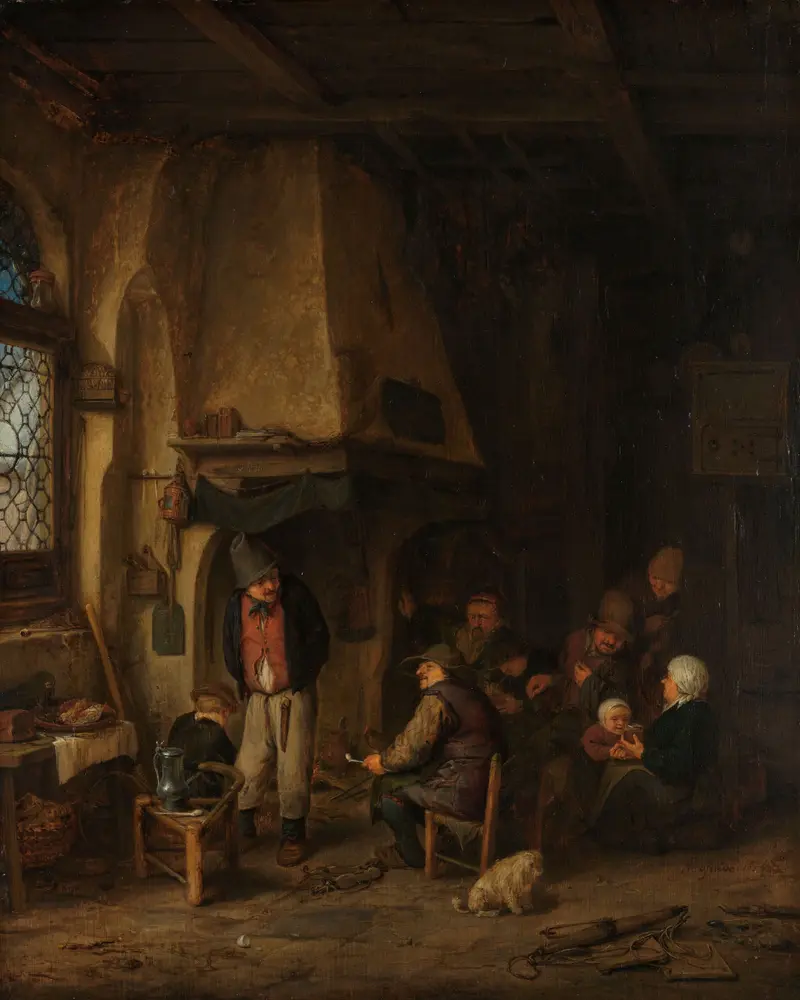
‘The Skaters’: Peasants in an Interior
Adriaen van Ostade
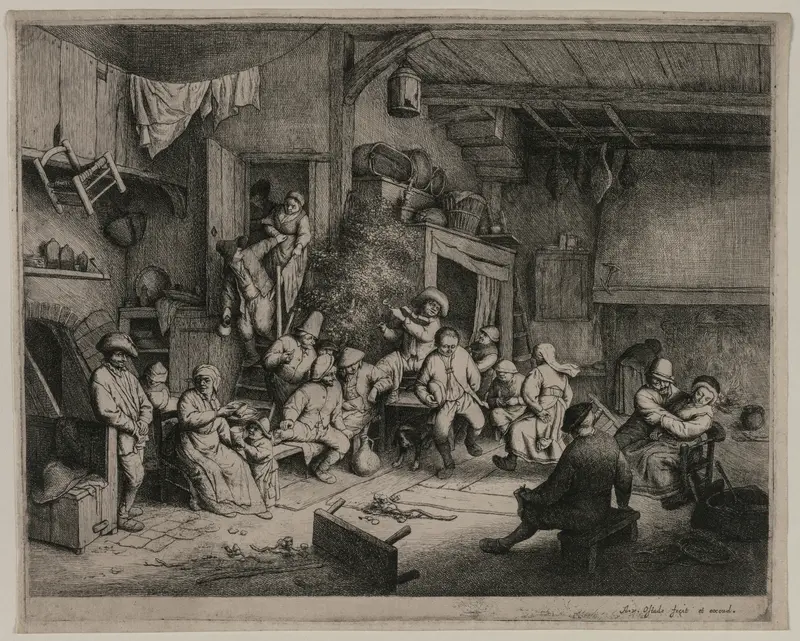
Dance at the Inn
Adriaen van Ostade
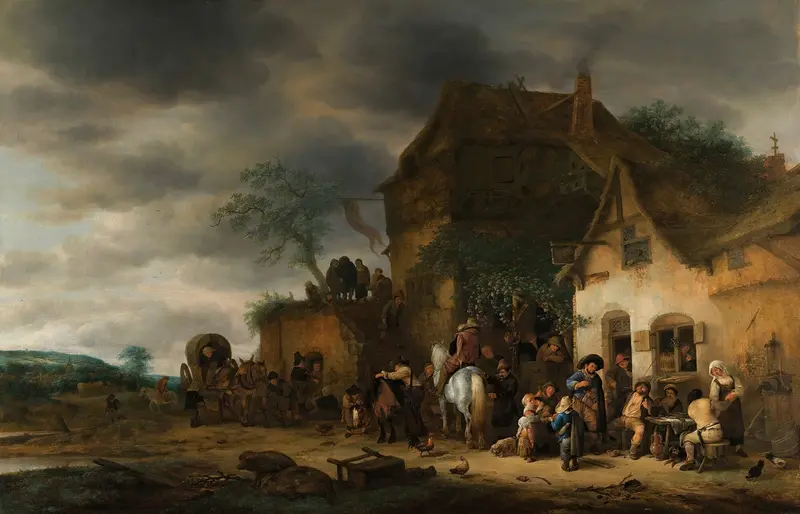
Travellers Halted At A Country Inn
Adriaen van Ostade
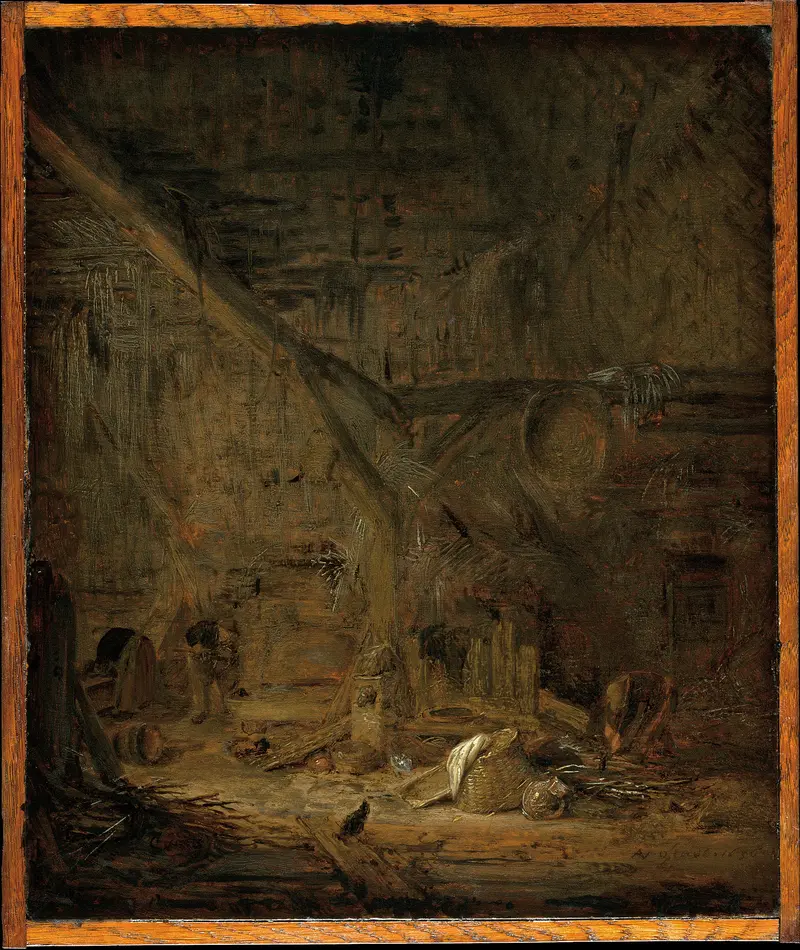
Interior of a Barn
Adriaen van Ostade
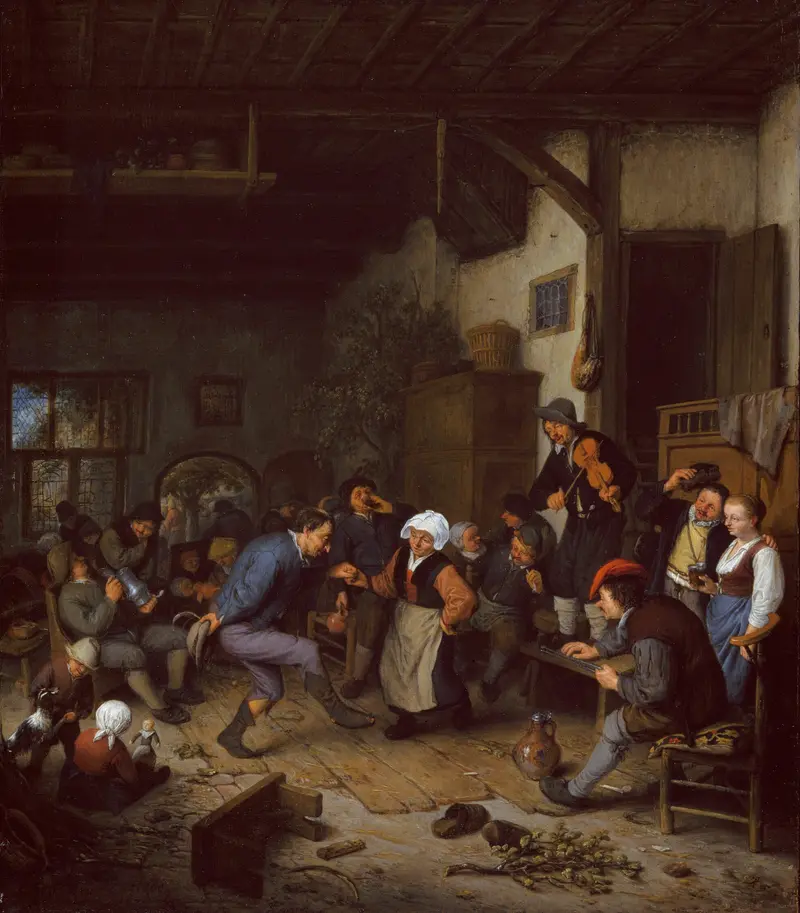
Merrymakers in an Inn
Adriaen van Ostade
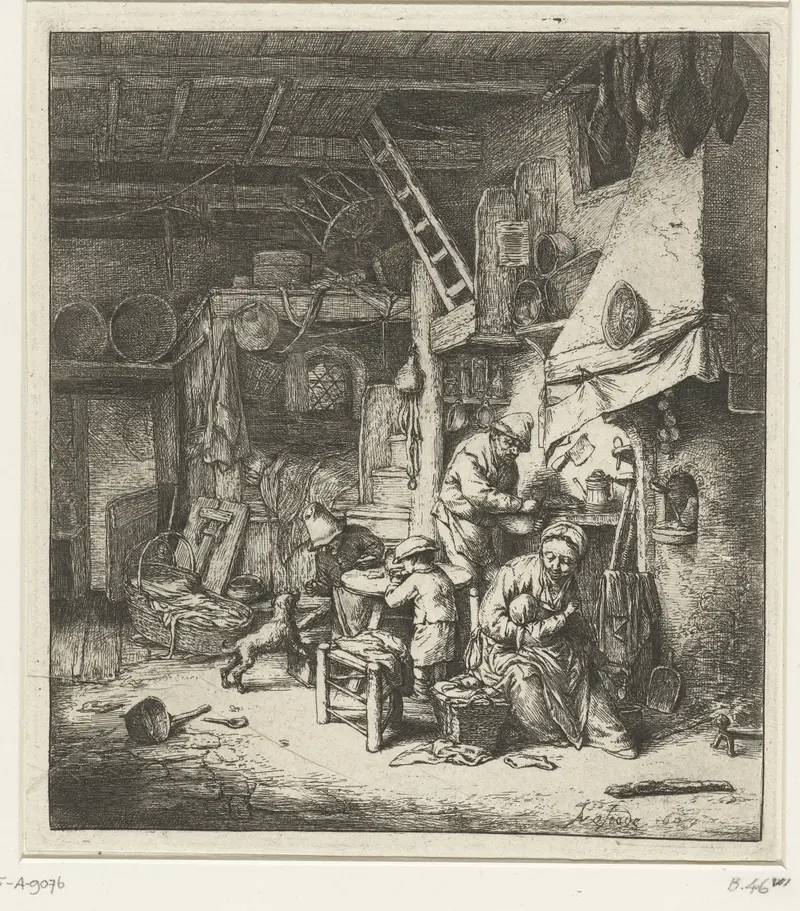
Boerengezin in interieur
Adriaen van Ostade
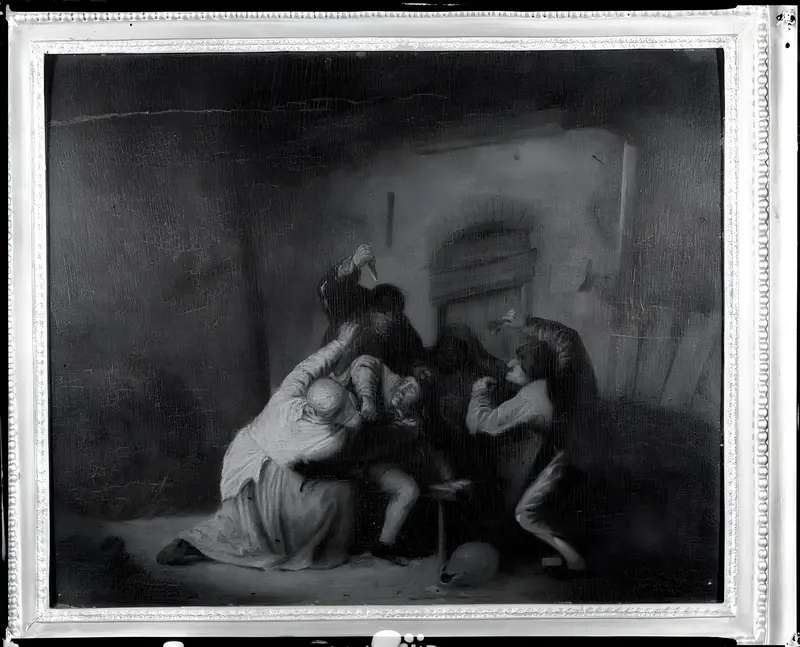
Peasants Brawling in a Tavern
Adriaen van Ostade
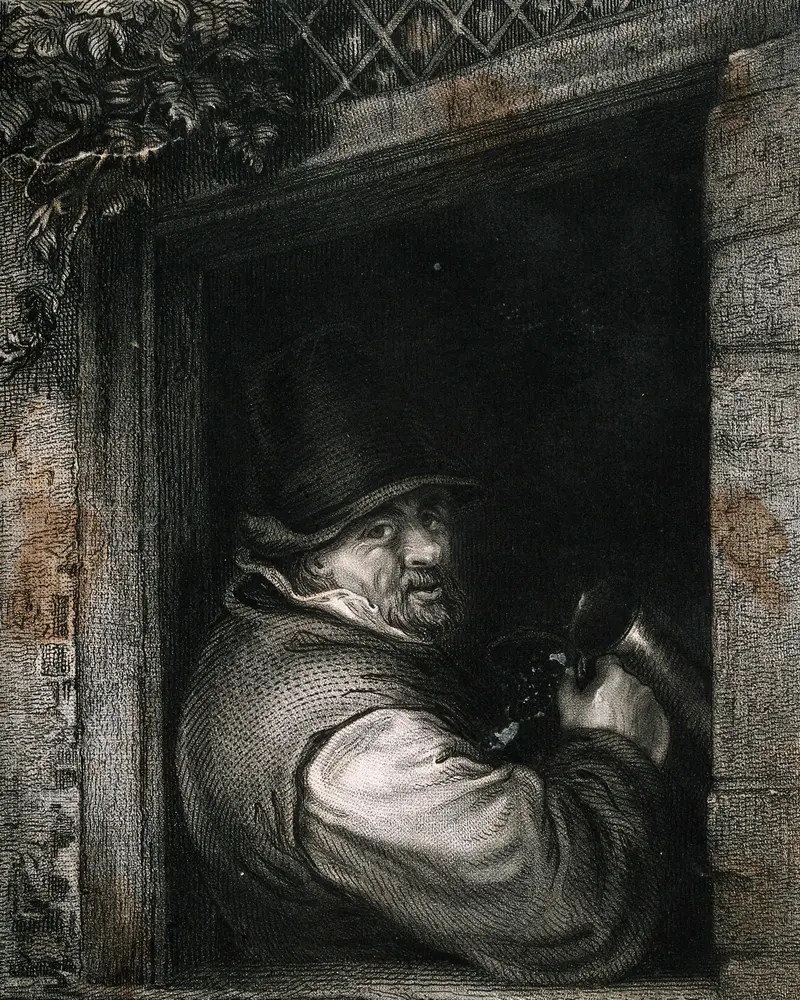
Man with a Tankard at a Window
Adriaen van Ostade
Dans in de herberg
Adriaen van Ostade
More Genre Scene Art

Banquet of the Officers of the St George Civic Guard
Frans Hals

Rembrandt and Saskia in the Scene of the Prodigal Son
Rembrandt van Rijn

Bal du moulin de la Galette
Pierre-Auguste Renoir

Quadrille at the Moulin Rouge
Henri de Toulouse-Lautrec

A Burial at Ornans
Gustave Courbet

When Will You Marry?
Paul Gauguin