The Sea-Shore, Osborne — History & Facts
What first draws the eye in The Sea-Shore, Osborne is the hush: a single sailing vessel glides across a calm, silvery expanse, its sails catching the faintest breath of wind. The horizon sits low, giving the sky and its pale, even light the leading role, while the foreground is anchored by dark, seaweed-draped rocks and the remnants of wooden posts—perhaps the bones of an old jetty or breakwater. These details are not mere background; they signal the slow work of tide and time, the way the shore both welcomes and erases human traces.
The ship’s placement, just off-center, draws us out to sea, yet the shoreline’s curve and the distant headland with its faint silhouette of a structure—possibly a lighthouse or estate—pull us gently back to land. Painted in 1871, this work belongs to a period when European artists were increasingly drawn to the quiet drama of everyday landscapes, often commissioned to capture the character of particular places for private patrons or royal collections. August Becker was known for his sensitive handling of light and atmosphere, qualities prized in the era’s landscape painting, and here he offers a vision that is less about spectacle than about the subtle interplay of nature and human presence. The painting’s home in the Royal Collection hints at its role as both a document of place—Osborne, likely referring to Osborne House on the Isle of Wight, a favored royal retreat—and a meditation on the shifting boundary between land and sea.
History has kept few traces of this specific canvas, but its quiet invitation remains: to stand on the shore, watch the tide, and wonder where the ship is bound.
More Artworks by August Becker

Hirsche und alte Eiche nahe der Wallwitzburg bei Dessau
August Becker
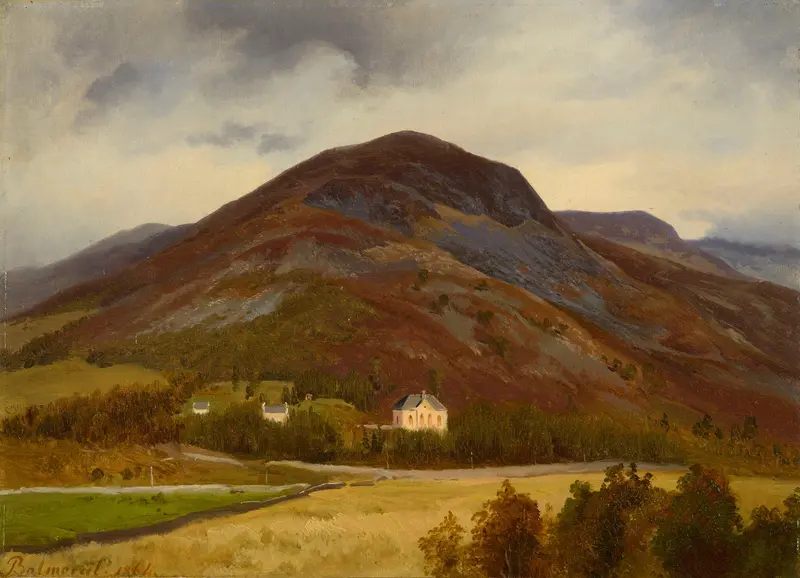
A View of the Church at Crathie
August Becker
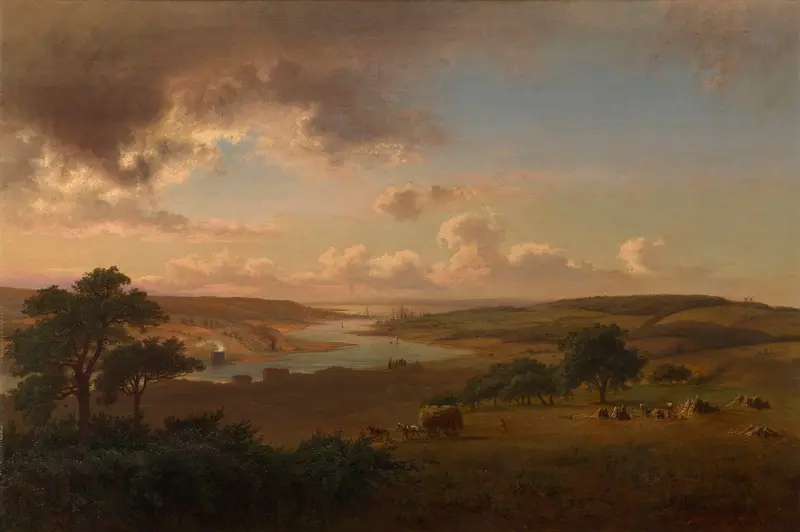
A View of Cowes
August Becker
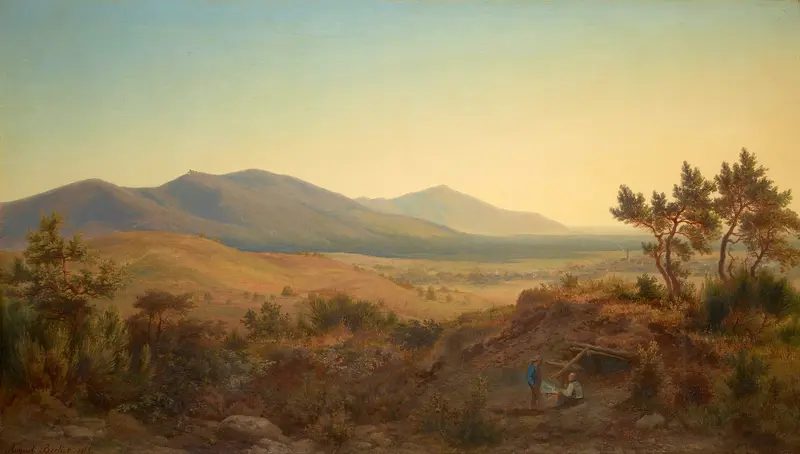
A View of Melibokus and The Bergstrasse
August Becker
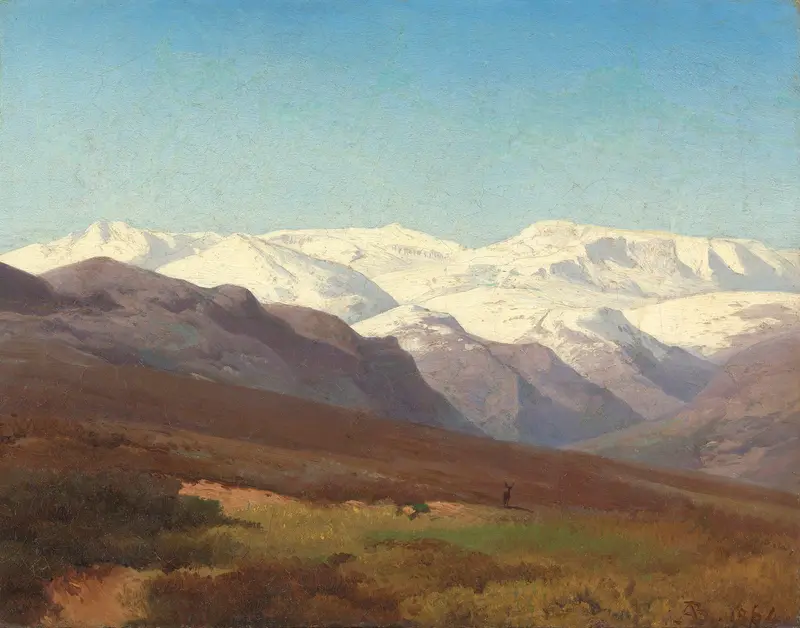
Glen Gelder
August Becker
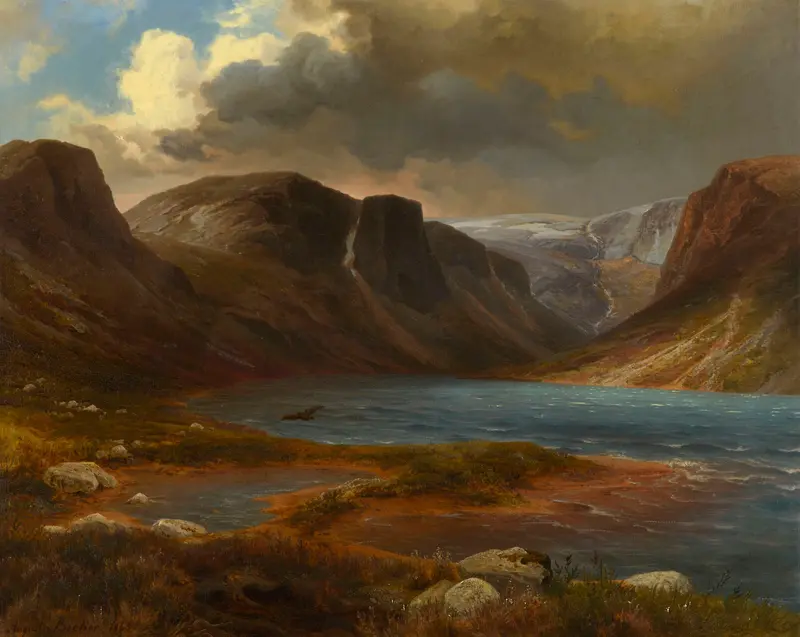
Loch Avon
August Becker
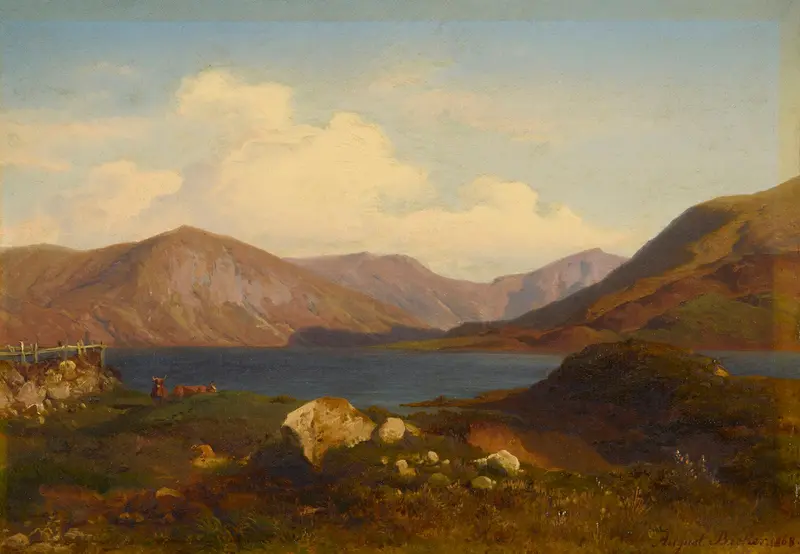
Loch Callater
August Becker
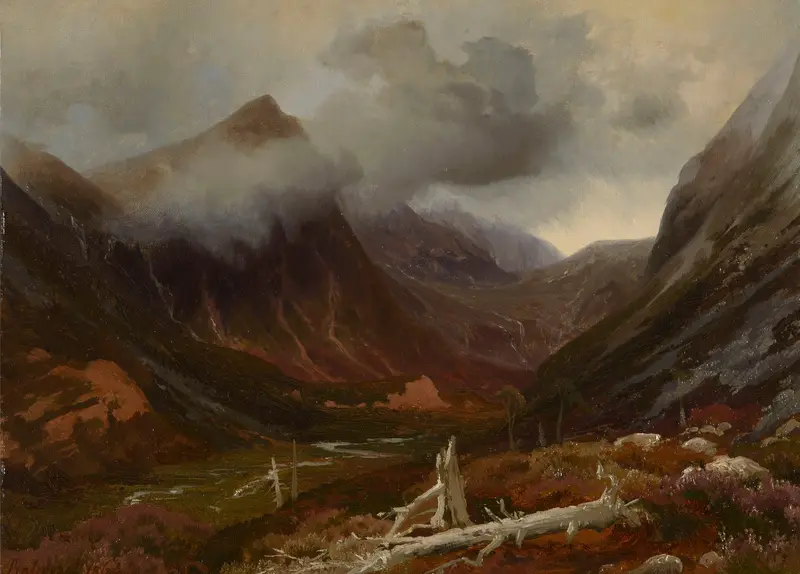
A View in Glen Derry (?)
August Becker
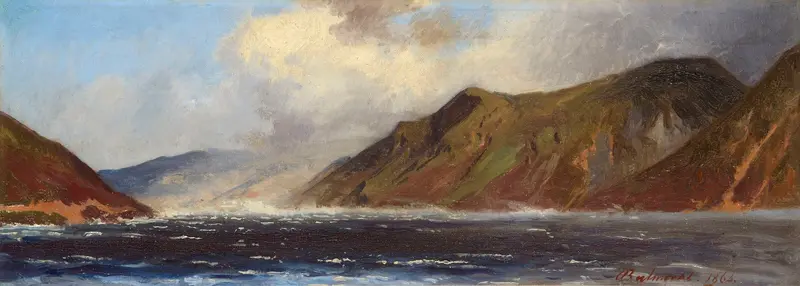
A Storm on Loch Muick
August Becker
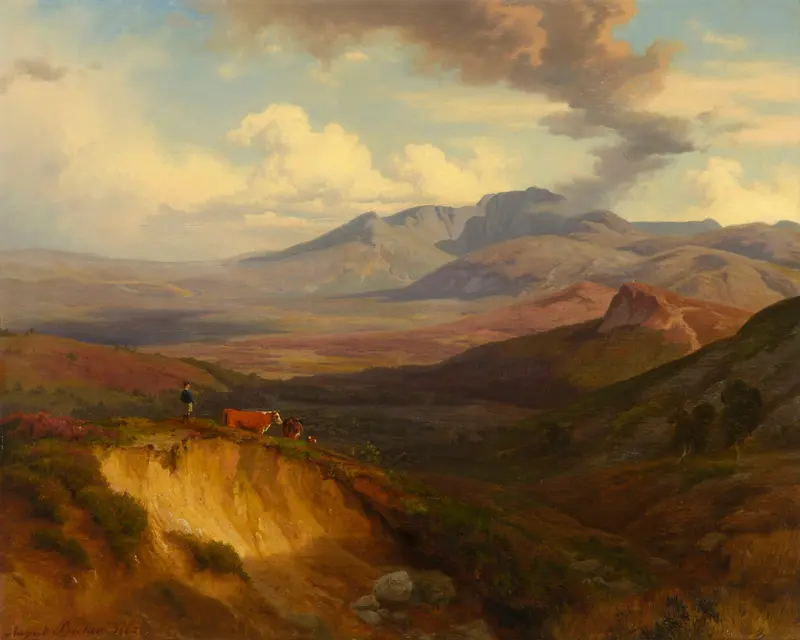
Glen Gelder and Lochnagar
August Becker