
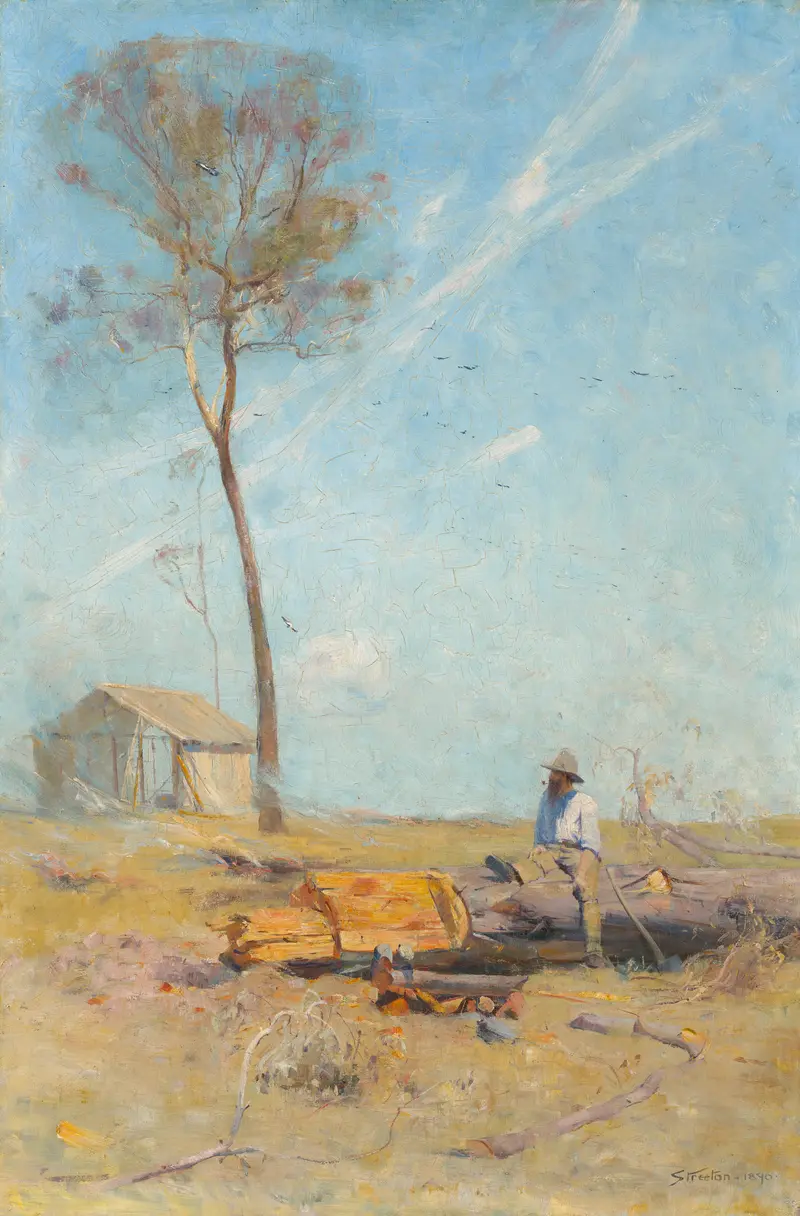
The selector's hut (Whelan on the log) — History & Facts
A single tree stands tall against an enormous sky, its branches feathering out into the blue as if to measure the vastness of the land. The eye is drawn first to this vertical accent, then to the figure seated on a felled log—hat brim low, posture loose, as if pausing mid-thought. The selector’s hut, modest and makeshift, anchors the left edge of the scene, its pale walls catching the same relentless sunlight that bleaches the earth and logs below.
The palette is all dust and daylight: ochres, pale greens, and the sharp, clear blue that seems to hum with heat. Every brushstroke feels intent on capturing not just a place, but the sensation of emptiness and possibility—the way the land dwarfs its inhabitants, and the sky claims the story. Painted in 1890, The selector's hut (Whelan on the log) by Arthur Streeton belongs to a moment when Australian artists turned their gaze from the imported conventions of Europe to the realities of their own landscape. The late nineteenth century saw a surge of images like this, born from the gold rush and the push for rural land settlement, as selectors—small-scale farmers—staked their claims on the frontier.
These works were rarely grand commissions; more often, they were painted for local exhibitions or private collectors who wanted to see their world reflected back at them. History has kept few traces of the individual stories behind such paintings, but the image itself remains a record of a new national vision—one that invites you to linger in the shade, and imagine the silence.
More Artworks by Arthur Streeton

From my camp (Sirius Cove)
Arthur Streeton
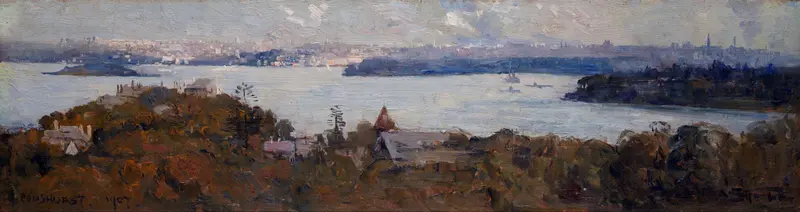
Sydney Harbour from Penshurst (Cremorne)
Arthur Streeton
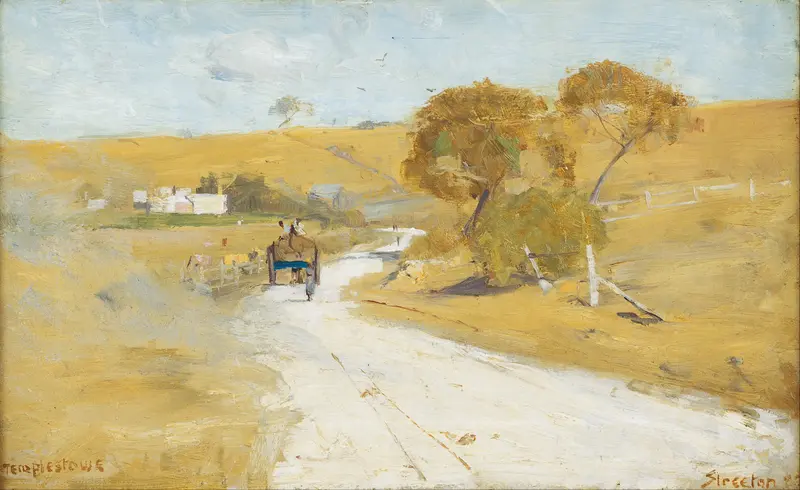
At Templestowe
Arthur Streeton
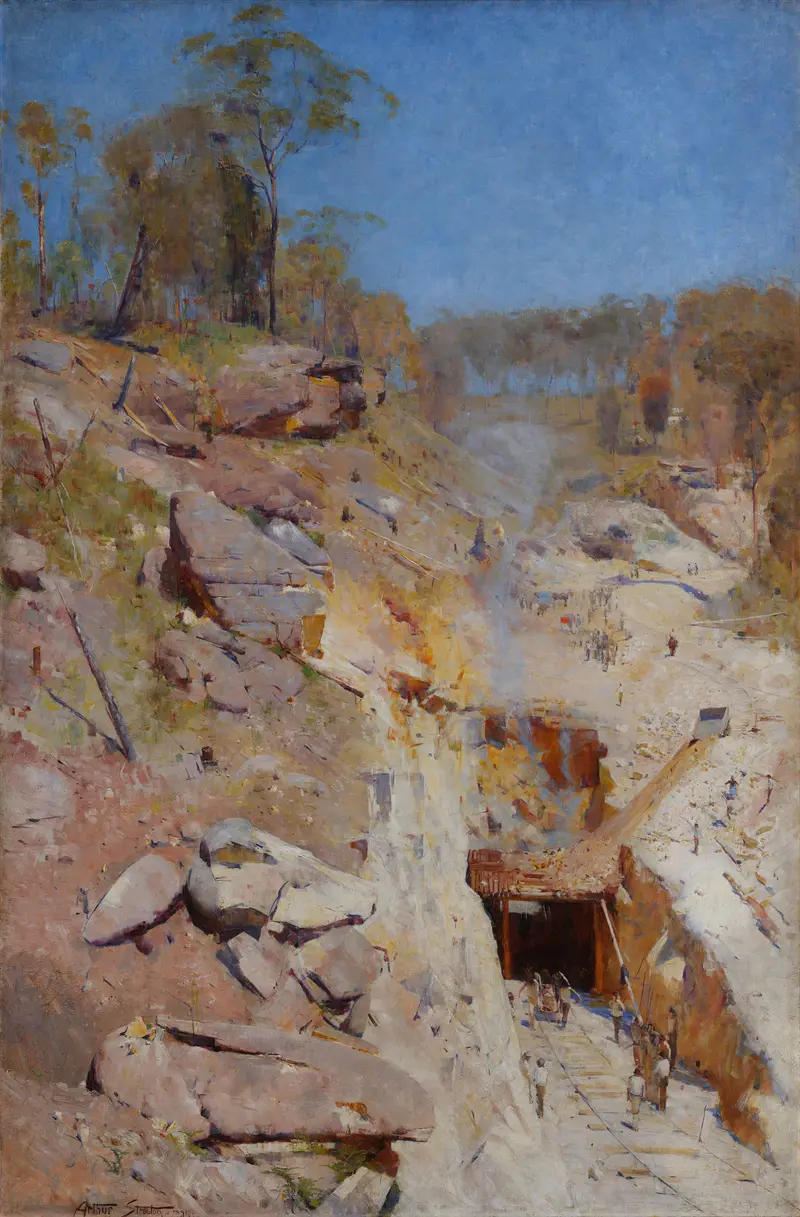
Fire’s on
Arthur Streeton
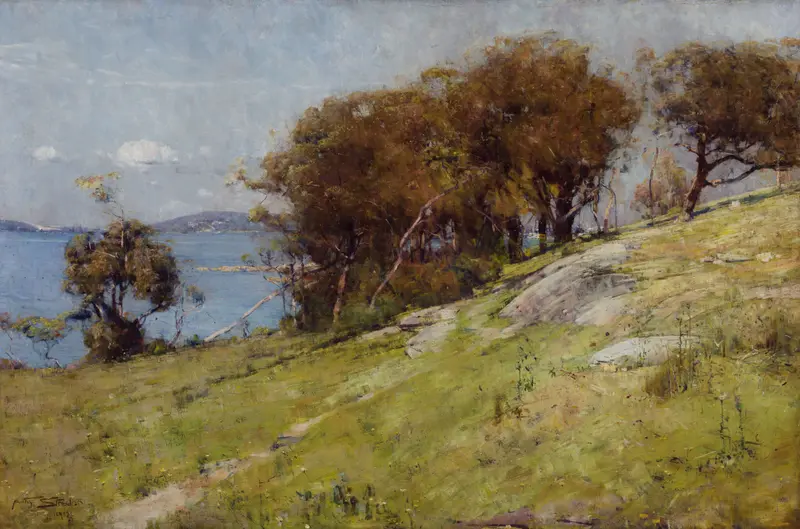
Cremorne pastoral
Arthur Streeton
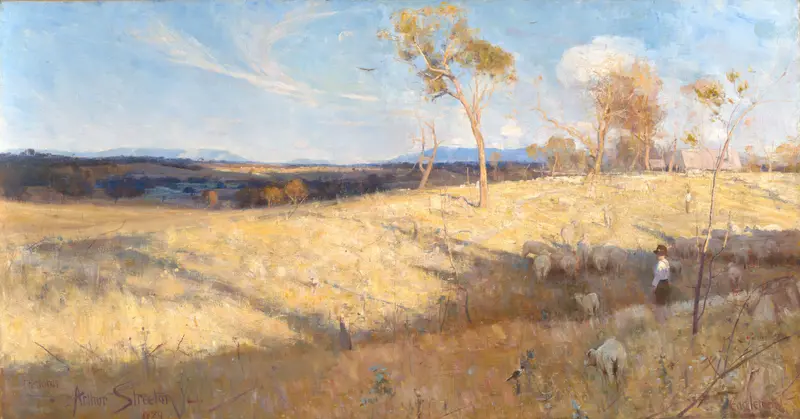
Golden summer, Eaglemont
Arthur Streeton
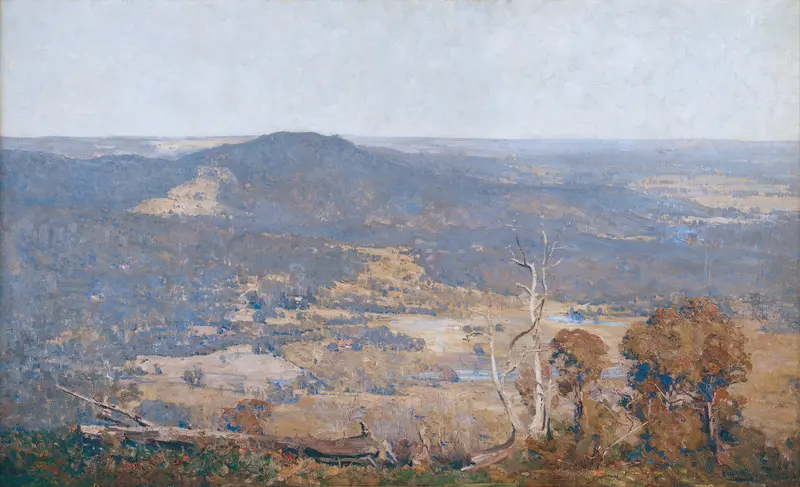
Australia Felix
Arthur Streeton
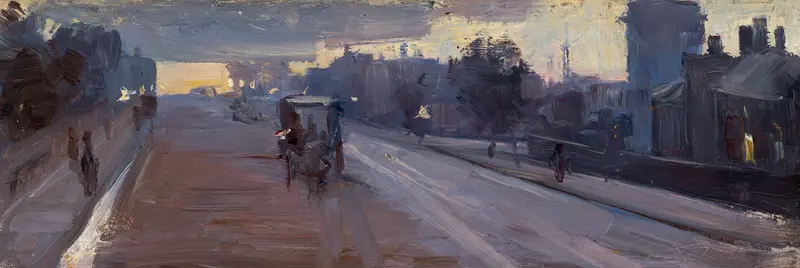
Hoddle St., 10 p.m.
Arthur Streeton
The selector’s hut
Arthur Streeton
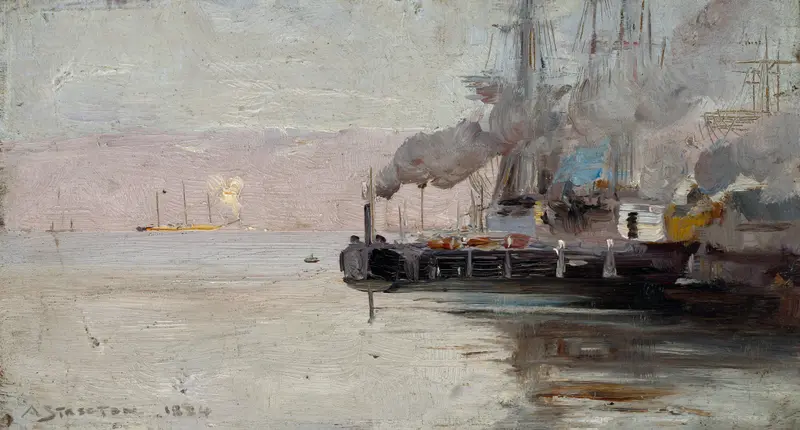
Sandridge
Arthur Streeton
More Landscape Art

The Starry Night
Vincent van Gogh

View of Delft
Johannes Vermeer

Water Lilies
Claude Monet

The Grand Canal, Venice, looking north-west from the Ca' Corner to the Ca' Contarini degli Scrigni, with the campanile of Santa Maria della Carità
Canaletto

Windsor Castle
Canaletto

The Grand Canal looking North-East from the Palazzo Dolfin-Manin to the Rialto Bridge
Canaletto