
The Squall at Trouville — History & Facts
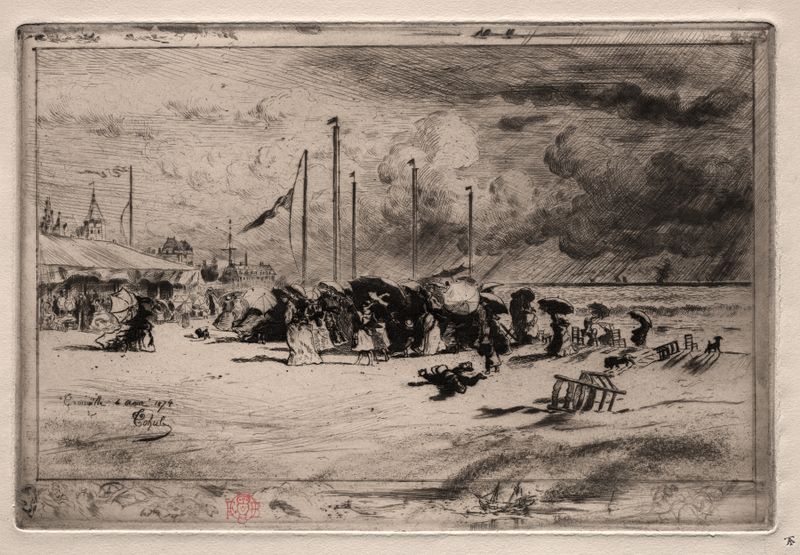
In The Squall at Trouville, destiny intertwines with nature, as the tempestuous sea mirrors the tumult of life itself. Focus on the swirling clouds that dominate the upper half of the canvas, their dark gray and blue hues suggesting an impending storm. Look just below where the churning waves crash against the shoreline, splashing with foamy white that contrasts the deepening sky. The figures along the beach, too, are crucial; their hurried postures convey urgency, while the playfulness of color in their attire brings a sense of vibrancy amidst the chaos.
This dynamic use of light and shade captures the fleeting moment right before nature unleashes its fury. Delving deeper, the juxtaposition of light and storm invokes a visceral tension between safety and danger. The chaotic energy of the sea reflects the unpredictability of life’s path, where calm can swiftly give way to turmoil. Yet, within this turmoil, the vivid colors also hint at resilience and the beauty found even in despair.
Each figure, caught in their own narrative, faces the squall differently, representing varied responses to fate—some seek shelter, while others remain transfixed by the spectacle of nature. Félix Hilaire Buhot painted The Squall at Trouville in 1874, during a time when Impressionism was gaining traction in the art world, offering new perspectives and techniques. Living in France, Buhot was influenced by the changing landscape of artistic expression, blending realism with emotion. This work showcases his ability to capture fleeting moments, reflecting both his personal experiences and the broader shifts in the art movement surrounding him.
More Artworks by Félix Hilaire Buhot
Browse all →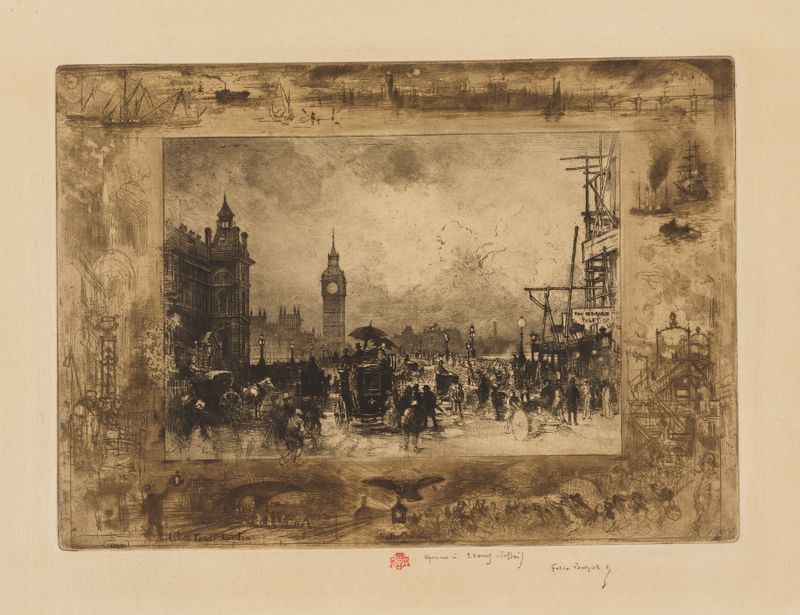
Westminster Bridge, or Westminster Clock Tower
Félix Hilaire Buhot
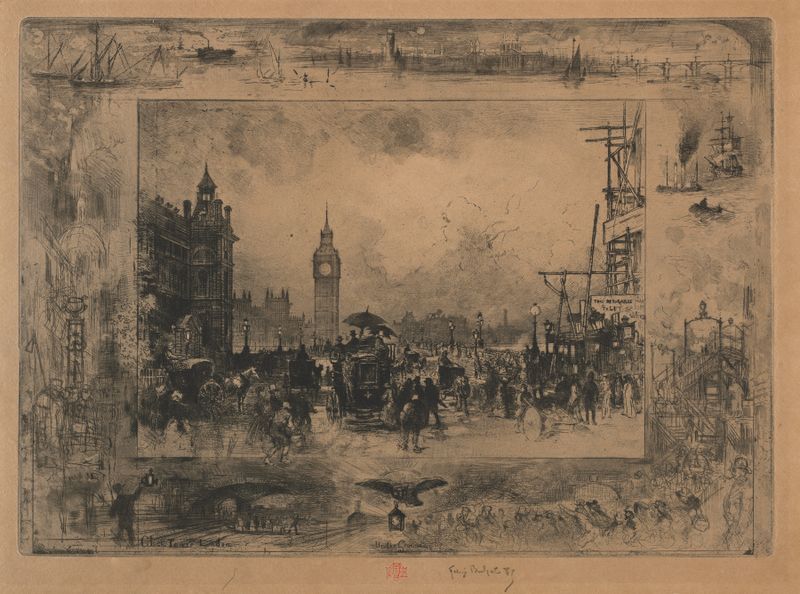
Westminster Bridge, or Westminster Tower
Félix Hilaire Buhot
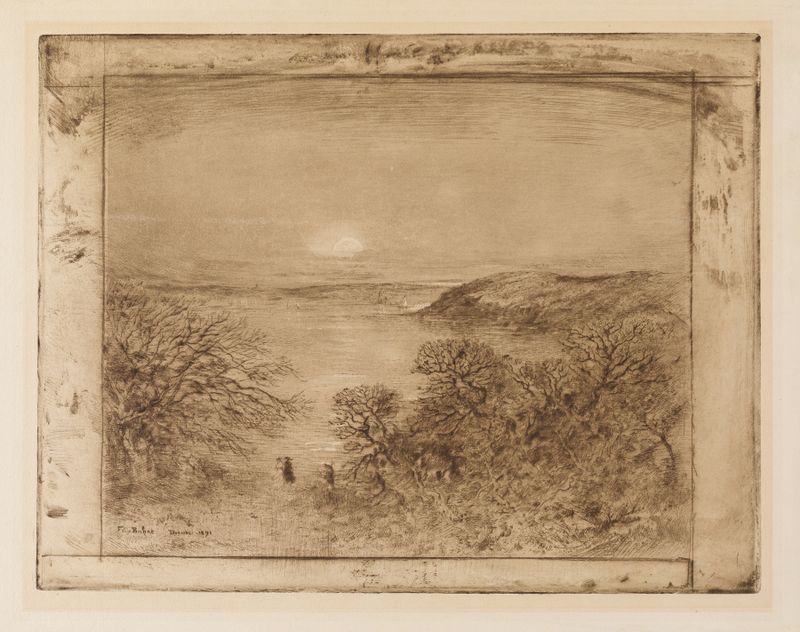
Moonrise at Dinard
Félix Hilaire Buhot
A Squall at Trouville
Félix Hilaire Buhot
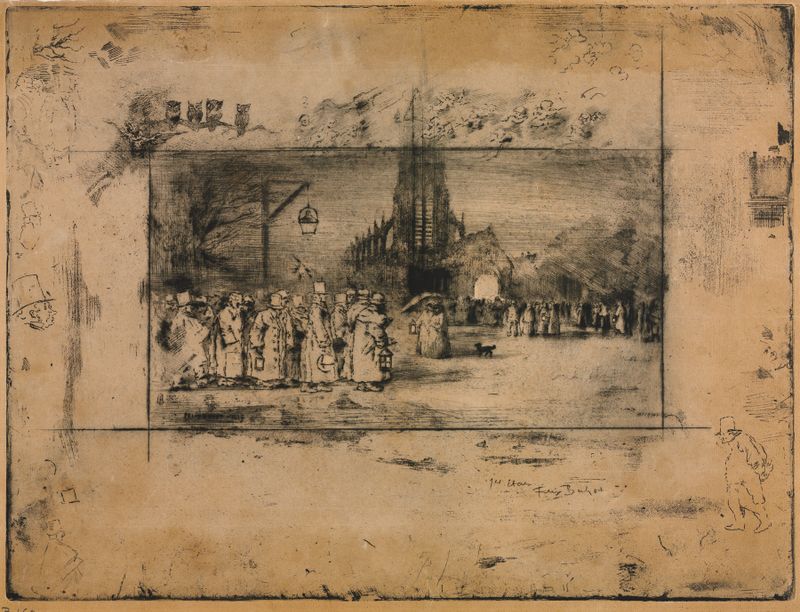
The Midnight Mass
Félix Hilaire Buhot
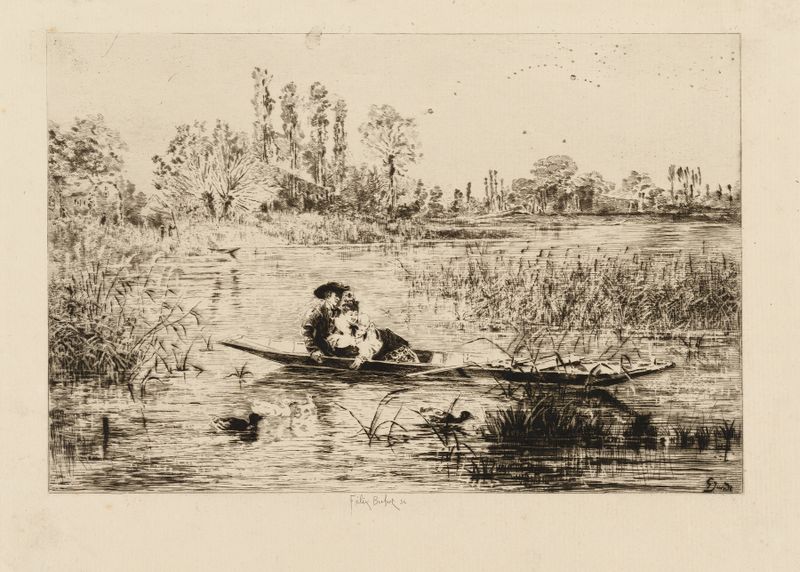
On the Thread of the Water
Félix Hilaire Buhot
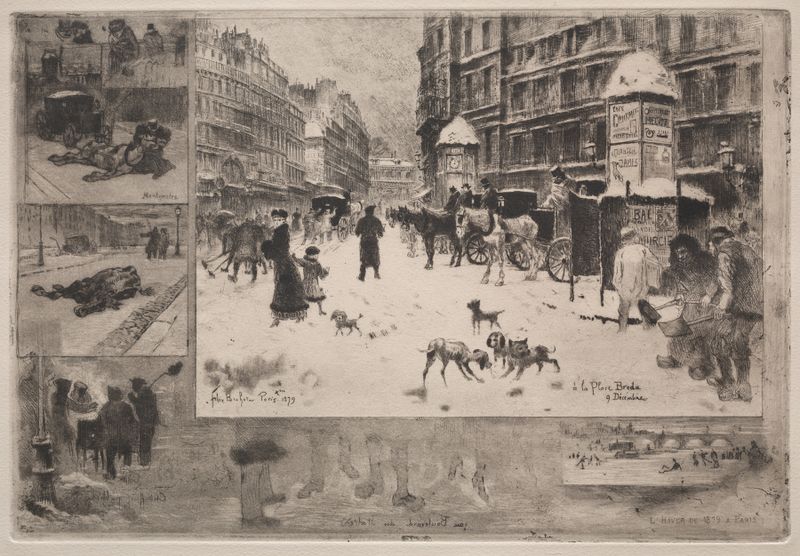
Winter in Paris
Félix Hilaire Buhot
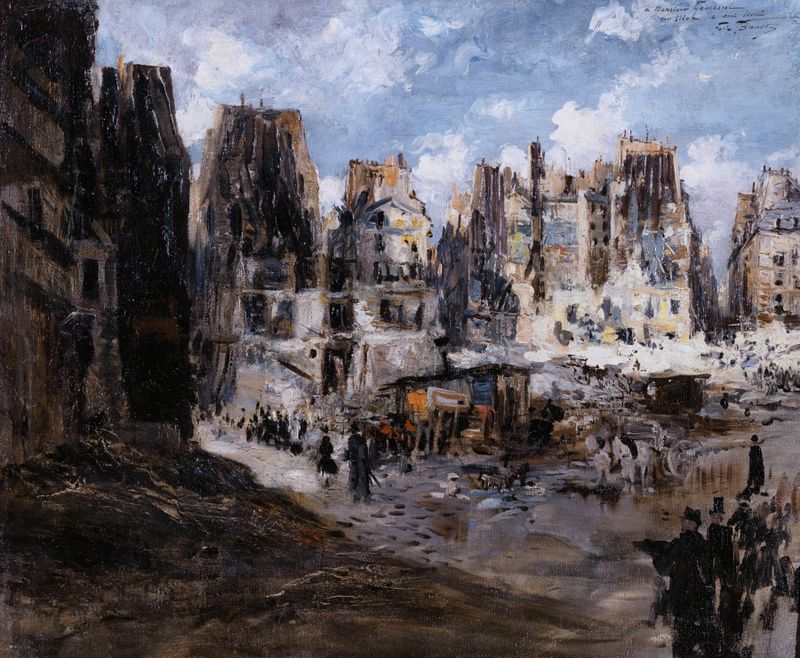
Le percement de l’avenue de l’Opéra.
Félix Hilaire Buhot
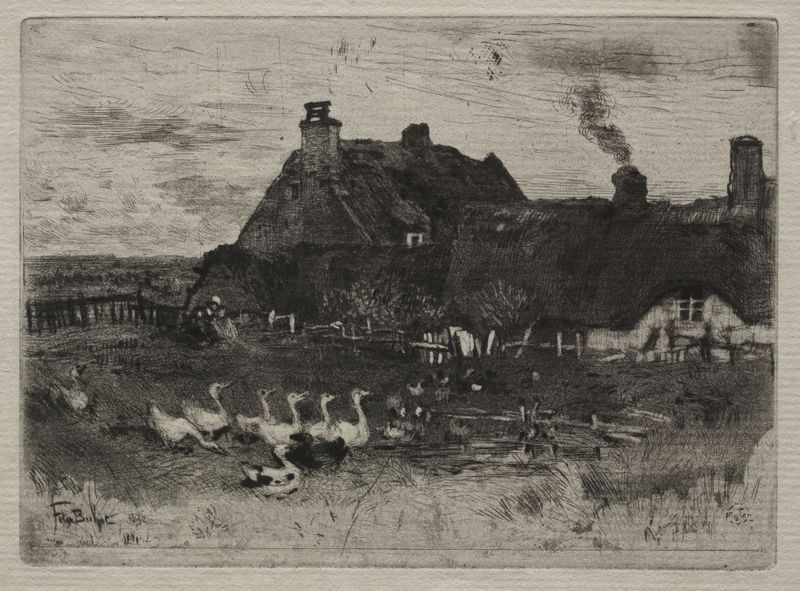
Thatched Cottages
Félix Hilaire Buhot
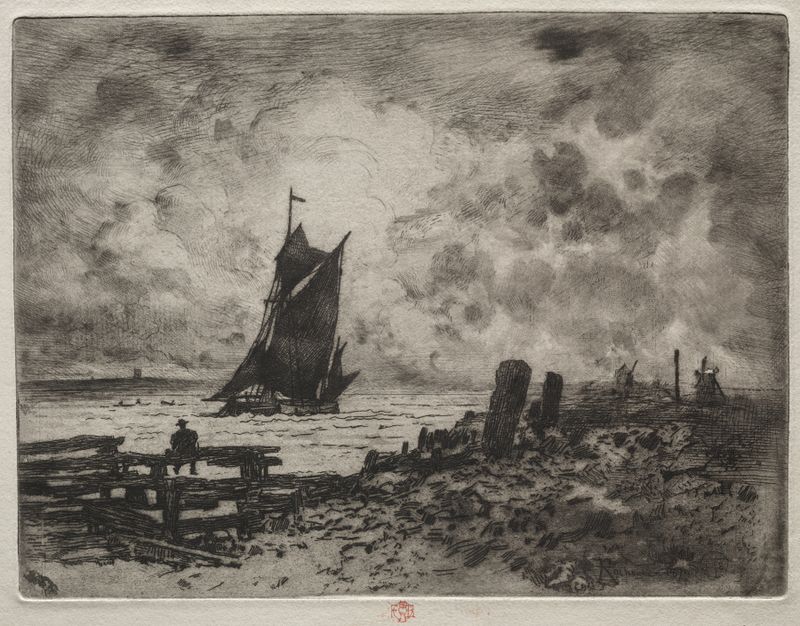
The Little Marine; Souvenir of Medway
Félix Hilaire Buhot





