
The Story of Lucretia — History & Facts
When Roman historian Livy recounted the tragedy of Lucretia, he set in motion a story that would echo through centuries and inspire revolutions. In 1500, Sandro Botticelli captured this pivotal moment, choosing not just a single scene but a sequence: the violation of Lucretia by Sextus Tarquinius, her public suicide, and the uprising that led to the birth of the Roman Republic in 509 BCE. The painting stands out for its rare narrative ambition, weaving multiple episodes into one composition—a visual chronicle of personal and political transformation. At the center, Lucretia’s body collapses before a gathering crowd, her arm outstretched as the dagger falls from her hand—a gesture signaling both her innocence and her sacrifice.
The architecture frames three distinct episodes: to one side, the assault in her chamber; to the other, the rallying of Brutus as he calls the Romans to arms. Botticelli’s use of gesture and costume marks the moral divide: Lucretia’s white garments and exposed breast denote purity and vulnerability, while the soldiers’ raised swords and Brutus’s commanding stance signal the shift from private grief to public revolution. Unlike Titian’s later, more psychological treatment of Lucretia, Botticelli’s version is almost theatrical in its clarity, inviting the viewer to read the story as a sequence of moral lessons. The exact commission of The Story of Lucretia remains uncertain, though it was likely created for a Florentine patron who admired both Roman virtue and the narrative innovations of the Renaissance.
The medium is still debated among scholars, as the work’s surface and technique show signs of both tempera and oil. Today, the painting is recognized as a late work by Botticelli, reflecting his interest in complex, multi-figure compositions and moral allegory. It survives as one of the few large-scale narrative panels by the artist, a testament to the enduring power of ancient stories in the hands of a Renaissance master.
More Artworks by Sandro Botticelli
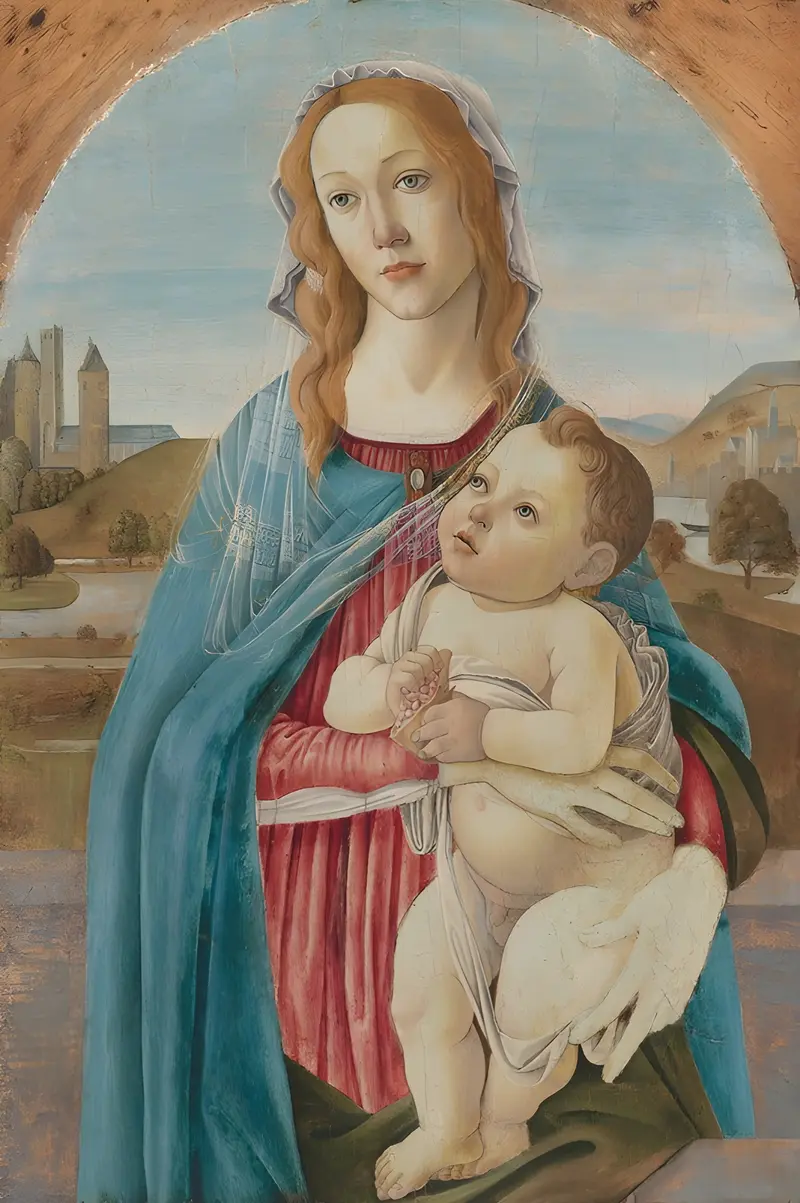
Virgin and Child
Sandro Botticelli
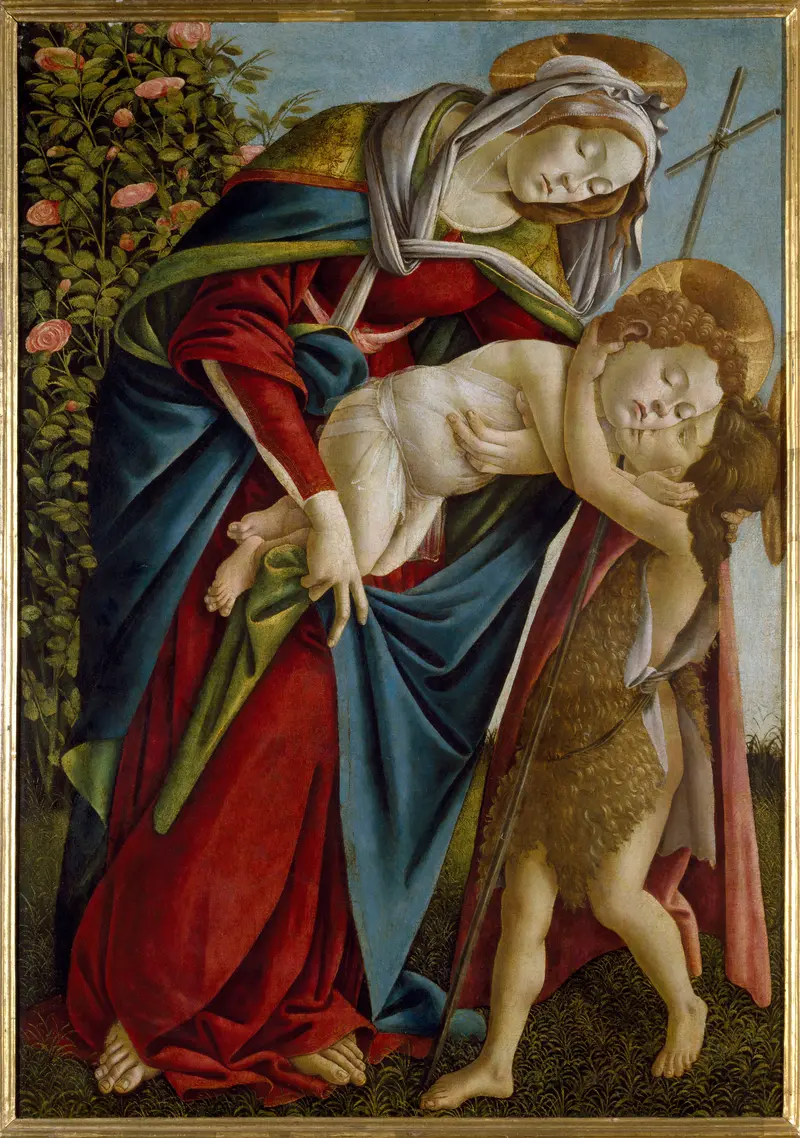
Madonna and Child and the Young St John the Baptist
Sandro Botticelli
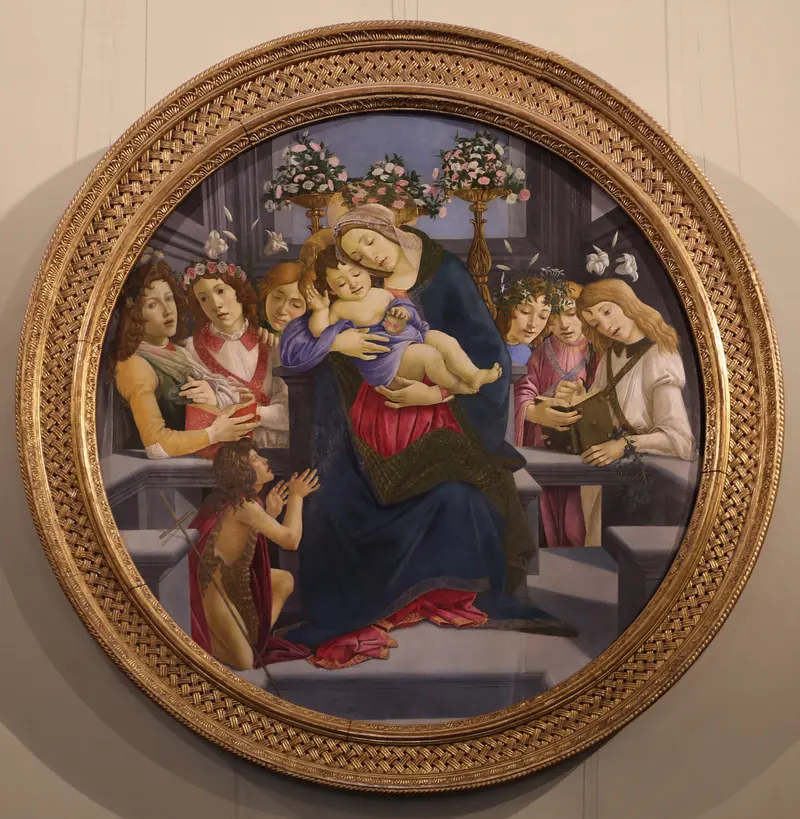
Madonna and Child with six angels and Saint John the Baptist as Child
Sandro Botticelli
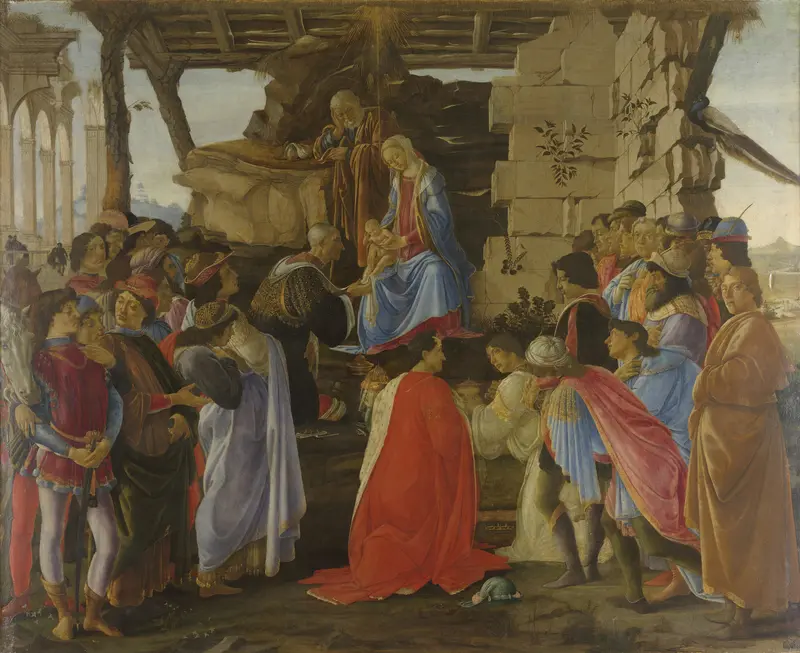
Adoration of the Magi
Sandro Botticelli

Virgin and Child with the Young Saint John the Baptist
Sandro Botticelli
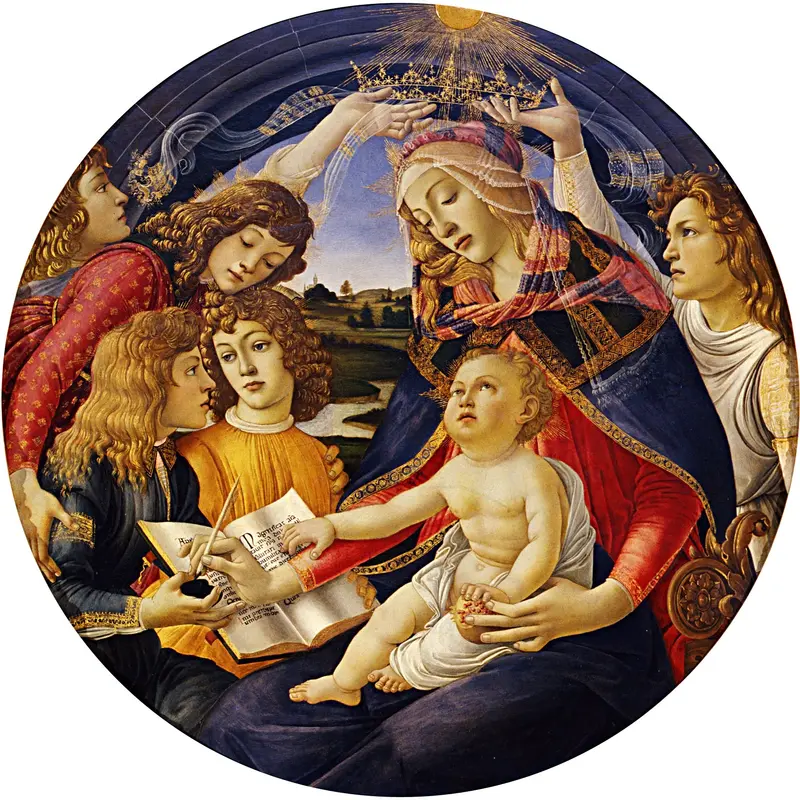
Madonna of the Magnificat
Sandro Botticelli
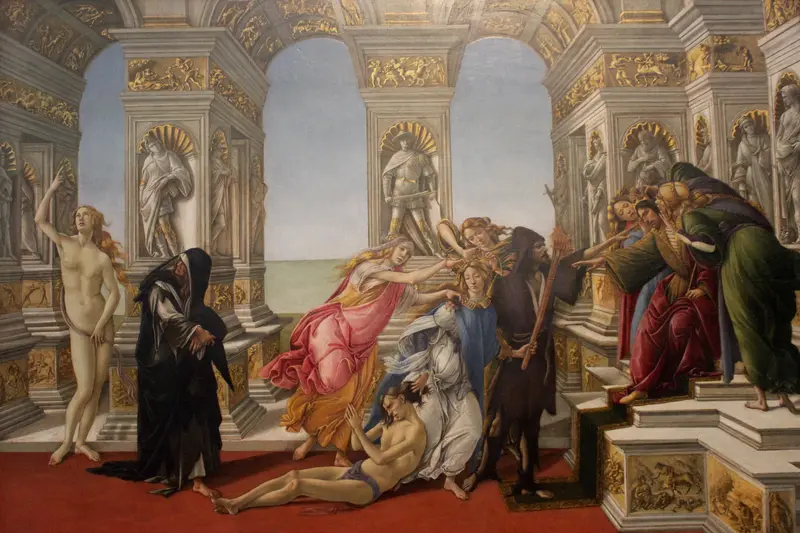
Calumny of Apelles
Sandro Botticelli
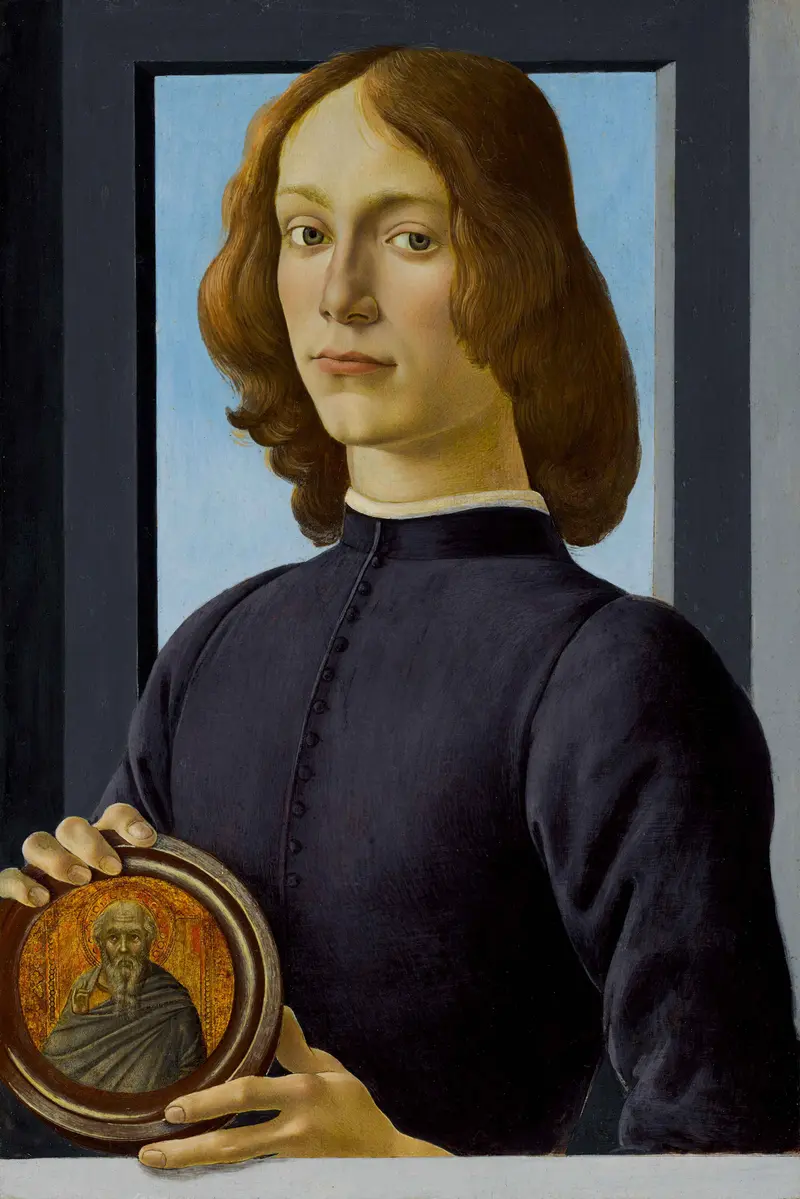
Portrait of a young man holding a roundel
Sandro Botticelli

The Trinity with Saint Mary Magdalene and Saint John the Baptist, the Archangel Raphael and Tobias
Sandro Botticelli
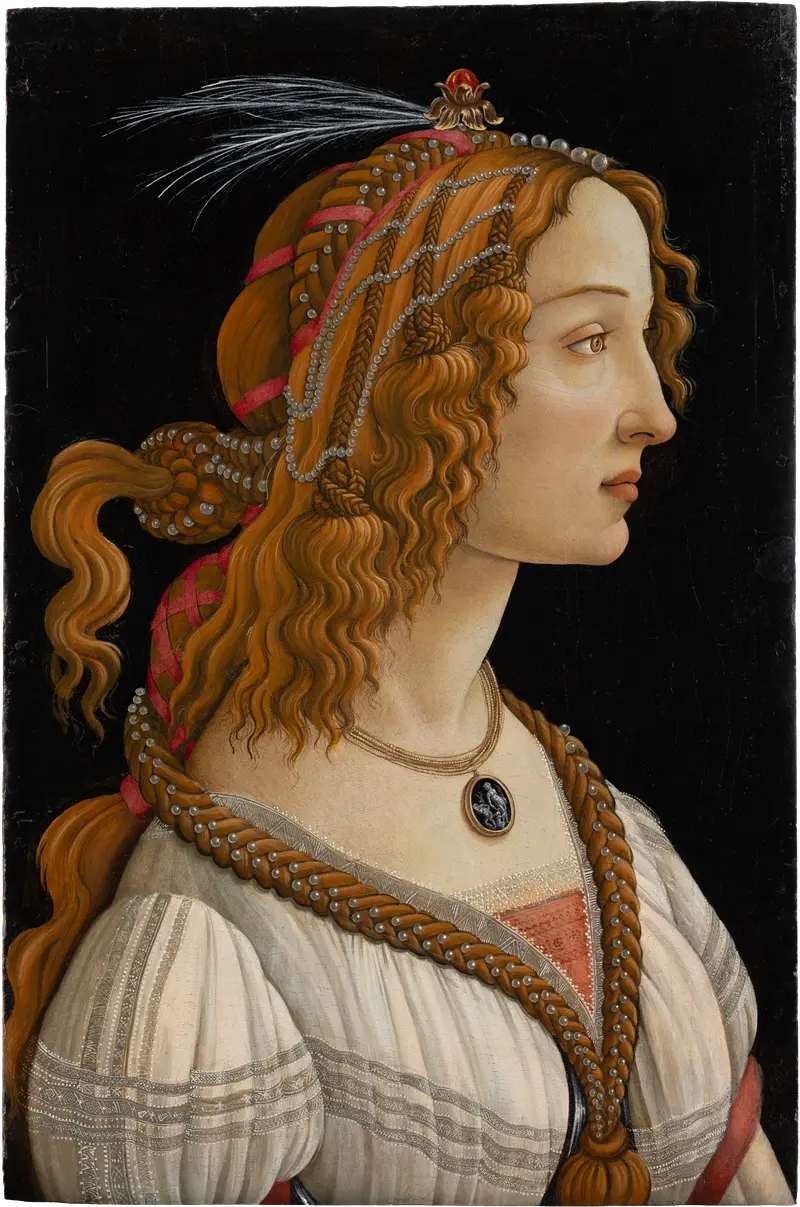
Idealized Portrait of a Lady (Portrait of Simonetta Vespucci as Nymph)
Sandro Botticelli





