
The Temple of Vesta and the Falls at Tivoli — History & Facts
Could a single brushstroke hold eternity? In The Temple of Vesta and the Falls at Tivoli, the divine whispers from the canvas, inviting viewers to contemplate the intersection of nature and ancient architecture. Look to the left at the graceful curve of the falls, cascading down with an almost musical fluidity. The interplay of light and shadow captures the vibrancy of the scene — glistening highlights on the water juxtaposed with the darker, shaded rocks beneath. Notice how the lush greenery frames the temple, its classical columns standing resolute against the gentle chaos of the waterfall.
Callow’s color palette, dominated by soft greens and warm earth tones, evokes a sense of harmony, a serene balance between man-made beauty and the wild forces of nature. Yet beneath this picturesque surface lies a profound tension. The temple, a symbol of divinity and permanence, contrasts sharply with the transient nature of the water, which endlessly flows and reshapes the landscape. This juxtaposition raises questions about the pursuit of immortality in art and religion, suggesting that while structures may withstand the test of time, nature’s relentless passage renders them mere remnants of a fleeting moment.
The viewer is left to ponder the fragility of human endeavors against the backdrop of eternity. In 1859, The Temple of Vesta and the Falls at Tivoli emerged from Callow's journey through Italy, a period marked by deep admiration for the country's classical heritage. At this time, the artist was influenced by the Romantic movement, which celebrated the sublime in nature. Callow’s work reflects a broader trend among artists who sought to capture the emotive power of landscapes, merging the spiritual and the earthly in a quest to depict moments of transcendence.
More Artworks by William Callow
Browse all →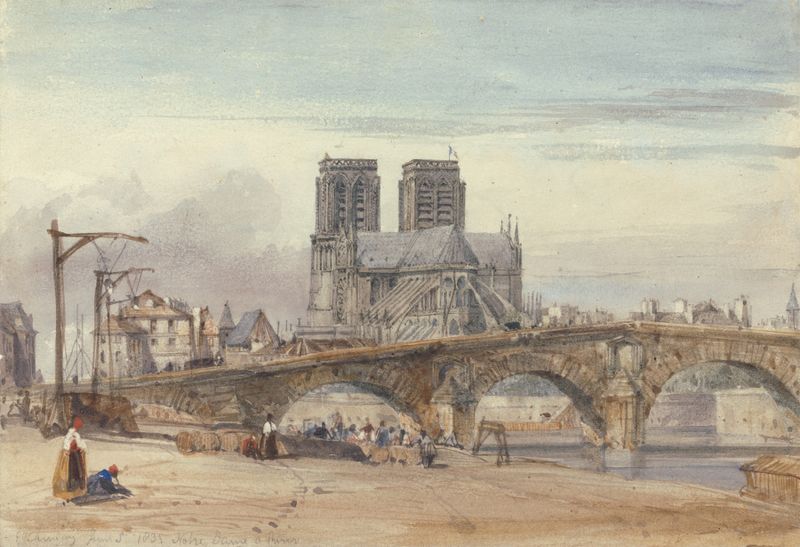
Notre Dame, Paris
William Callow
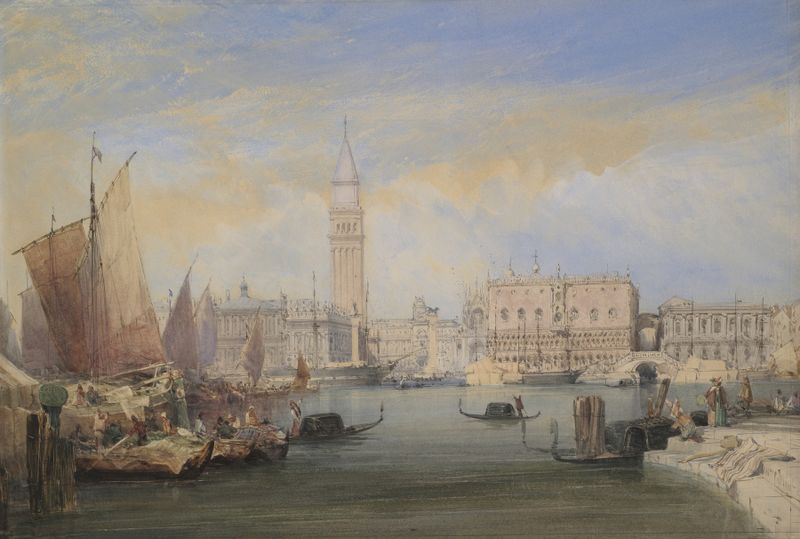
Venice from St. Giorgio
William Callow
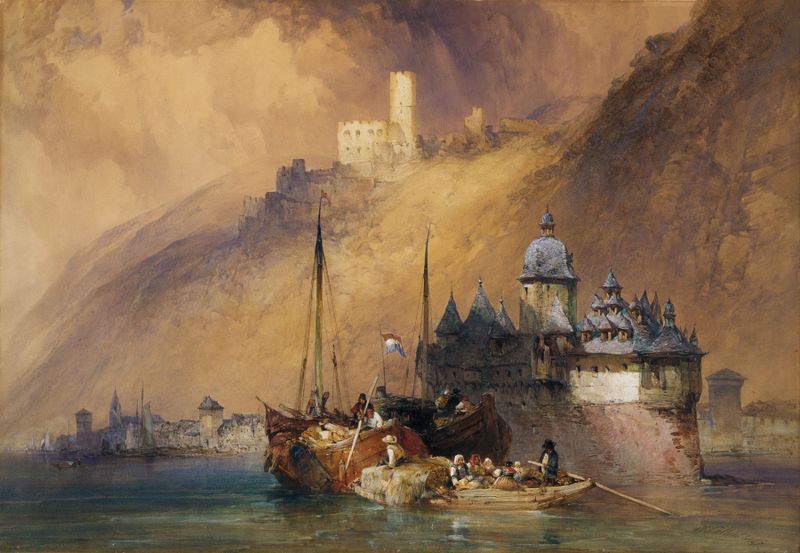
The Phalz Castle on the Rhine
William Callow

The Luxor, Paris, December 1833
William Callow

On the Wharfe, Bolton Abbey
William Callow

Caesar’s Tower, Warwick Castle
William Callow
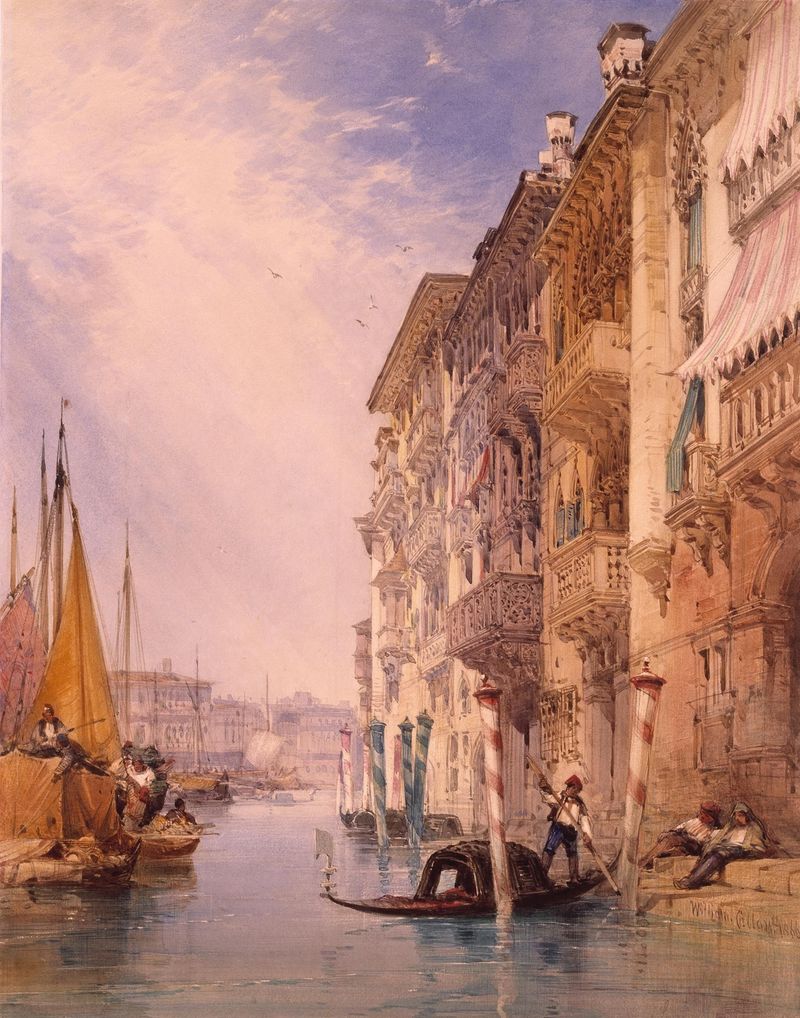
A Gondola on the Grand Canal, Venice
William Callow

Rheinfels and St. Goar
William Callow
Castel Sant’Angelo, Rome
William Callow

Entering Harbour
William Callow





