
The three liners, Circular Quay — History & Facts
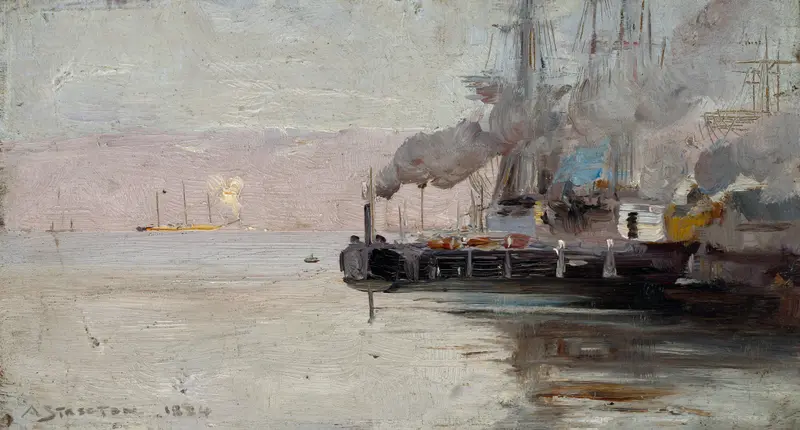
The first thing that catches the eye in The three liners, Circular Quay is the brooding presence of the great steamships, their hulls stretched almost impossibly long across the water, slicing the horizon into a drama of industry and arrival. The artist, Arthur Streeton, has chosen a moment when the harbor is alive with movement: the dark silhouettes of the liners anchor the scene, while smaller boats dart and skim across the pale, choppy surface. The smoke rising from the funnels is not just a detail—it signals the pulse of a city in motion, a port that is both gateway and stage.
The low vantage point and wide sweep of water invite the viewer to feel the scale and energy of the place; the eye is drawn from the restless water up to the distant, hazy buildings that crown the hill, softened by a veil of atmospheric light. Painted in 1893, this work belongs to a period when Australian cities were surging with ambition and the Impressionist eye was turning toward the modern world. Artists like Streeton were fascinated by the play of light on water and the spectacle of urban growth, often working quickly to capture the fleeting effects of weather and industry. Such paintings were rarely grand commissions; more often, they were made for a growing middle class eager to see their rapidly changing world reflected back at them.
The presence of this painting in the Google Cultural Institute’s collection today is a reminder that history has kept few traces of these everyday marvels, but the energy of the quay—its smoke, its ships, its restless promise—still waits in the paint for anyone willing to look.
More Artworks by Arthur Streeton

From my camp (Sirius Cove)
Arthur Streeton
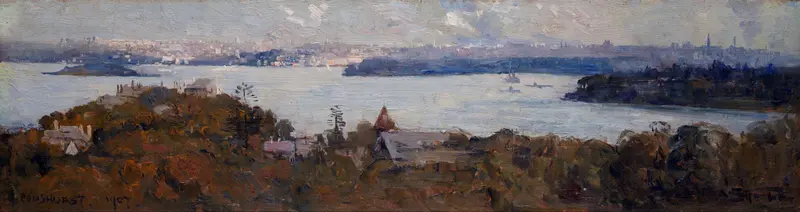
Sydney Harbour from Penshurst (Cremorne)
Arthur Streeton
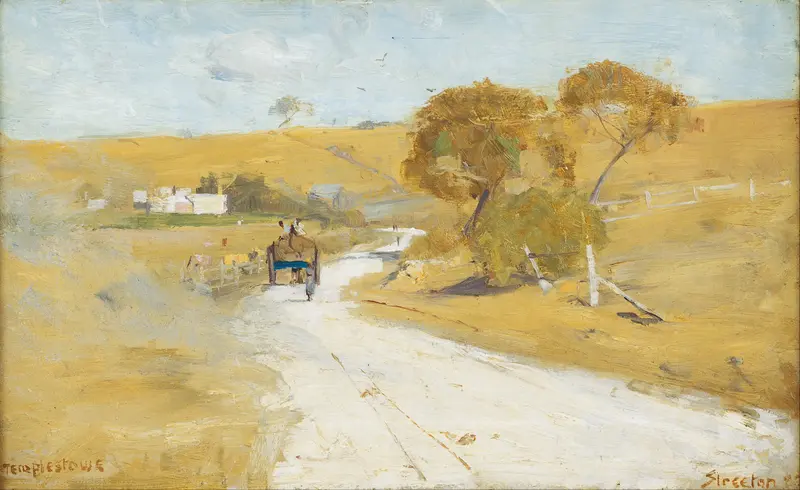
At Templestowe
Arthur Streeton
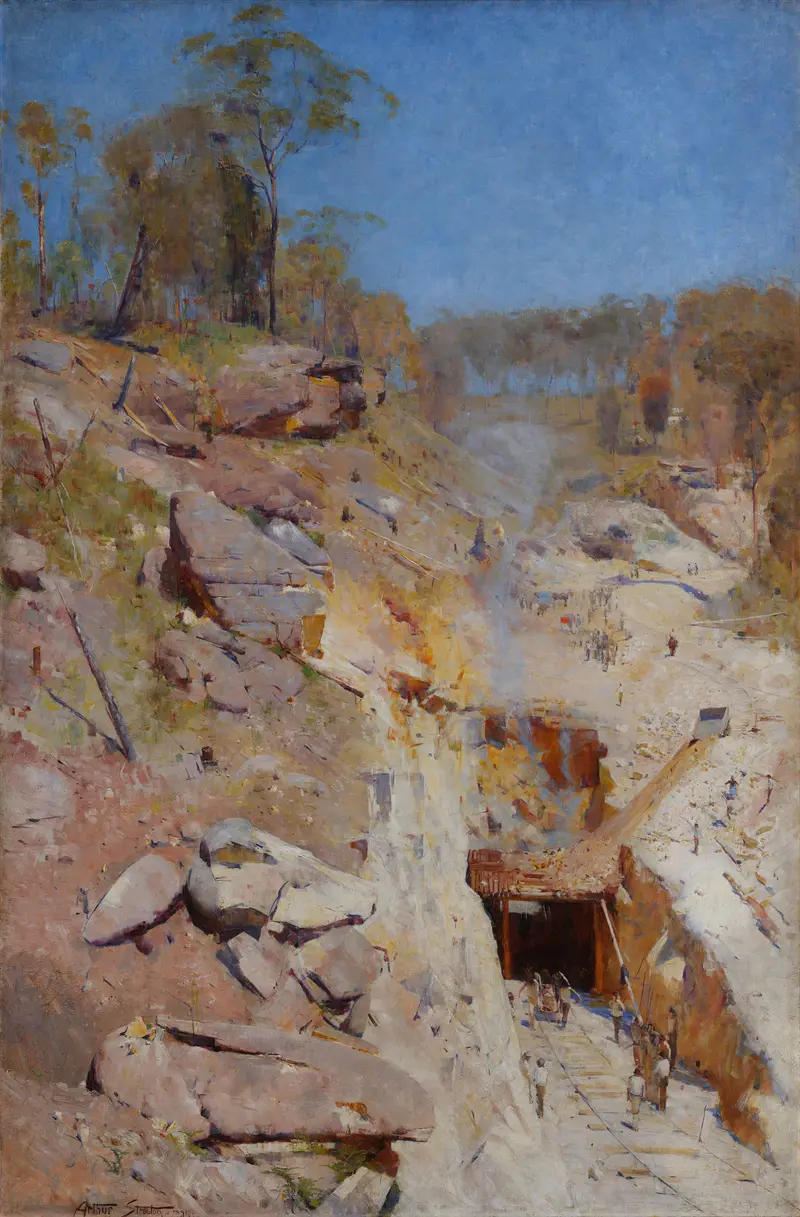
Fire’s on
Arthur Streeton
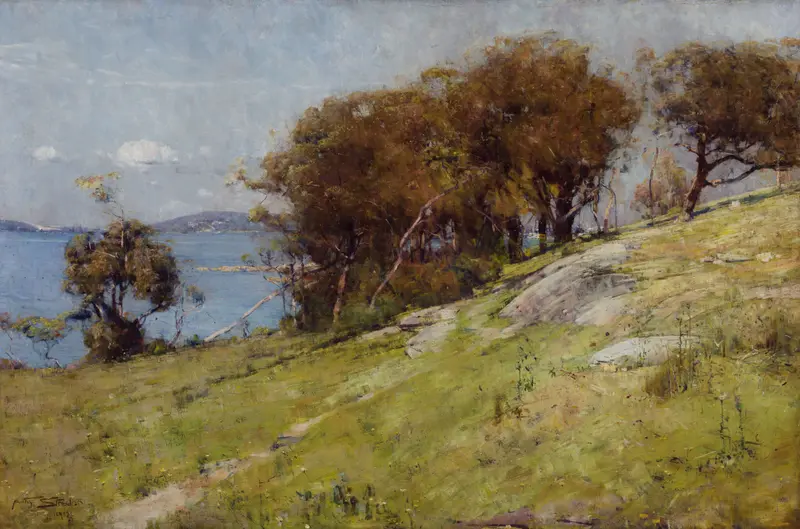
Cremorne pastoral
Arthur Streeton
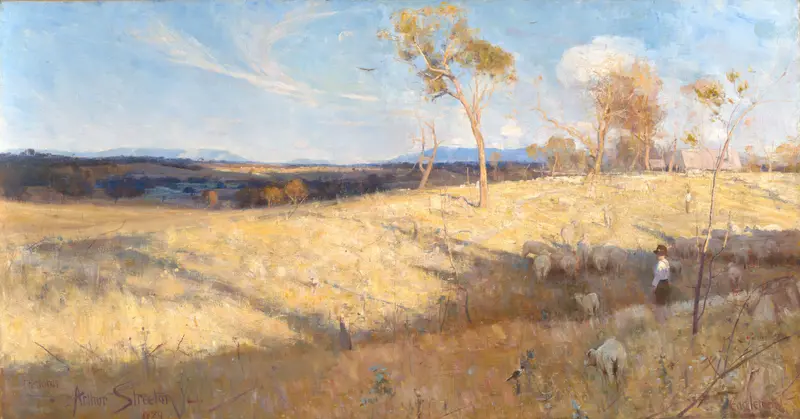
Golden summer, Eaglemont
Arthur Streeton
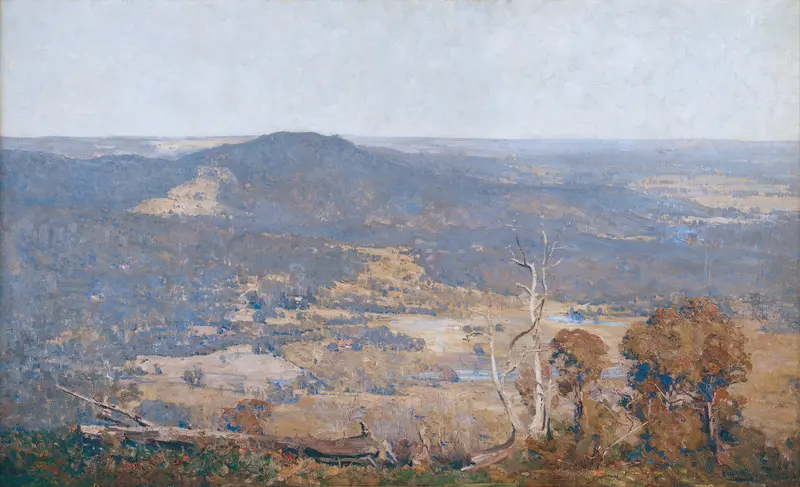
Australia Felix
Arthur Streeton
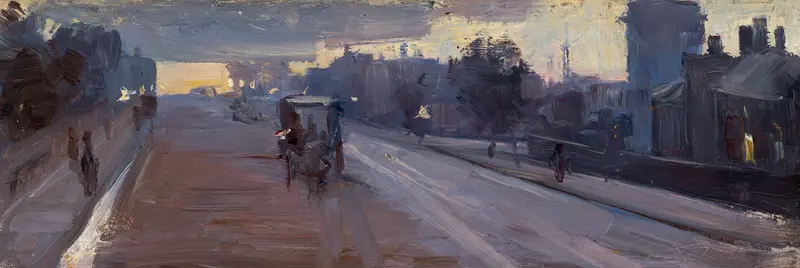
Hoddle St., 10 p.m.
Arthur Streeton
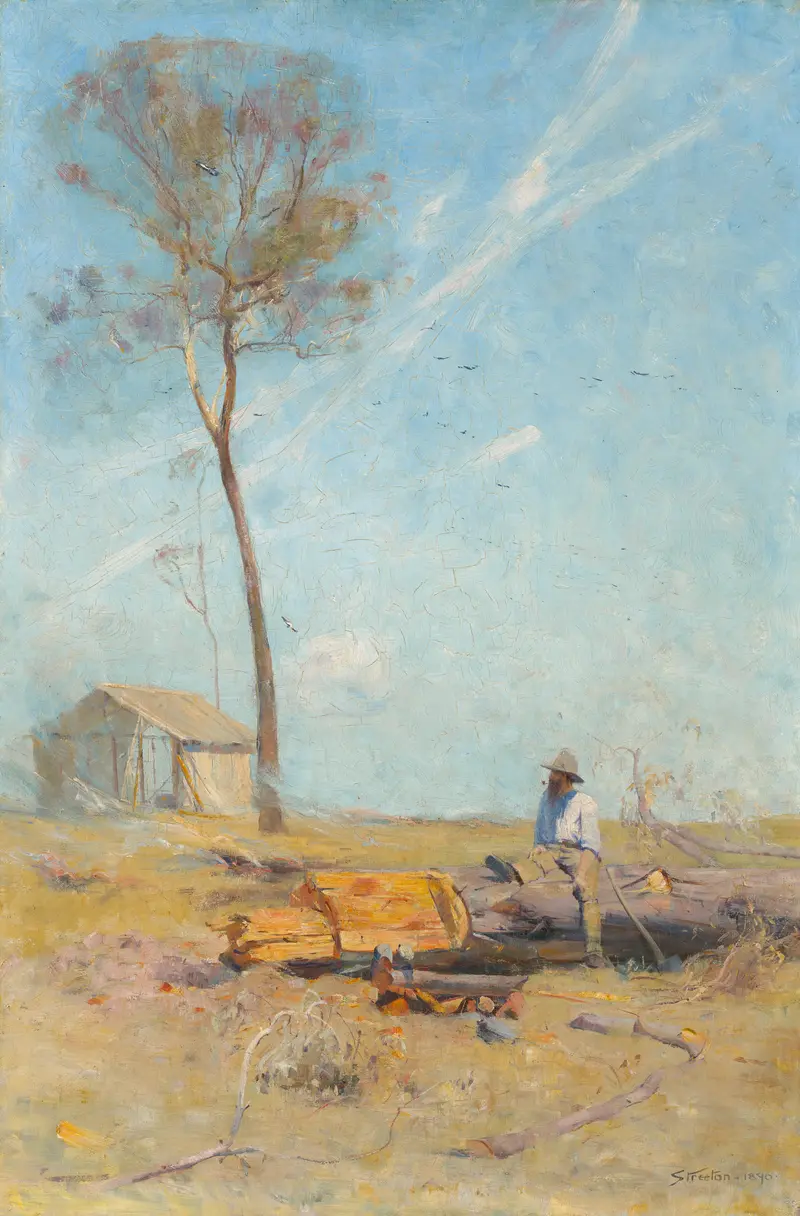
The selector’s hut
Arthur Streeton
Sandridge
Arthur Streeton





