
The Tower of Babel — History & Facts
A spiral of ambition rises from the earth, its stone ribs and arches climbing skyward in defiance of the storm-darkened heavens. At the heart of The Tower of Babel, the eye is swept up by the sheer audacity of the structure, a teeming monument to human ingenuity and pride. Abel Grimmer fills every ledge and ramp with activity: masons heave blocks, overseers gesture, and laborers swarm like ants, each figure caught in the machinery of a project that dwarfs them all.
The tower itself dominates the landscape, its unfinished crown dissolving into clouds, while the city sprawls outward, a network of waterways and bustling streets that pulse with life. Painted in 1604, this scene belongs to a long tradition of Northern European fascination with the Babel story—a cautionary tale of ambition and confusion. Grimmer’s vision is unmistakably shaped by the world of Antwerp, where trade, construction, and civic pride were at their height. The palette is cool and clear, the light crisp, lending the scene a sense of order even as chaos lurks in the legend.
Unlike the fire and drama of Italian treatments, here the focus is on the choreography of daily work and the marvel of collective effort. The viewer is left to wonder not just at the folly of reaching too high, but at the marvel of what people can build together—until the moment it all unravels. History has kept few traces of this specific Tower of Babel, but works like this were prized by merchants and burghers who saw in them both a warning and a mirror. In the bustling cities of the Low Countries, paintings of biblical towers, bustling ports, and crowded markets found eager patrons.
Abel Grimmer, working at the dawn of the seventeenth century, was part of a generation that turned the old stories into scenes that felt immediate and local. This painting, dated 1604 and once offered at Christie’s, stands as a testament to a world both enchanted by progress and wary of its costs. Let your eye wander the winding ramps and distant riverbanks—the story, and its questions, are never quite finished.
More Artworks by Abel Grimmer

Flemish proverbs
Abel Grimmer
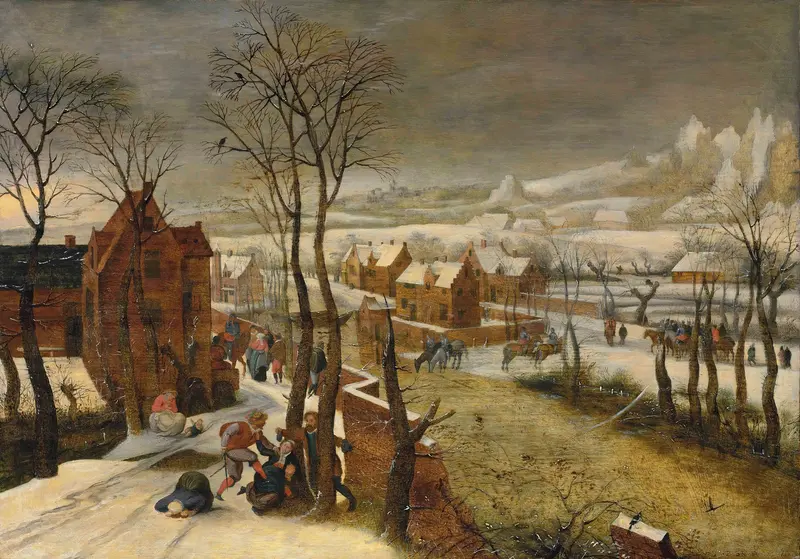
A Village Landscape In Winter With The Massacre Of The Innocents
Abel Grimmer
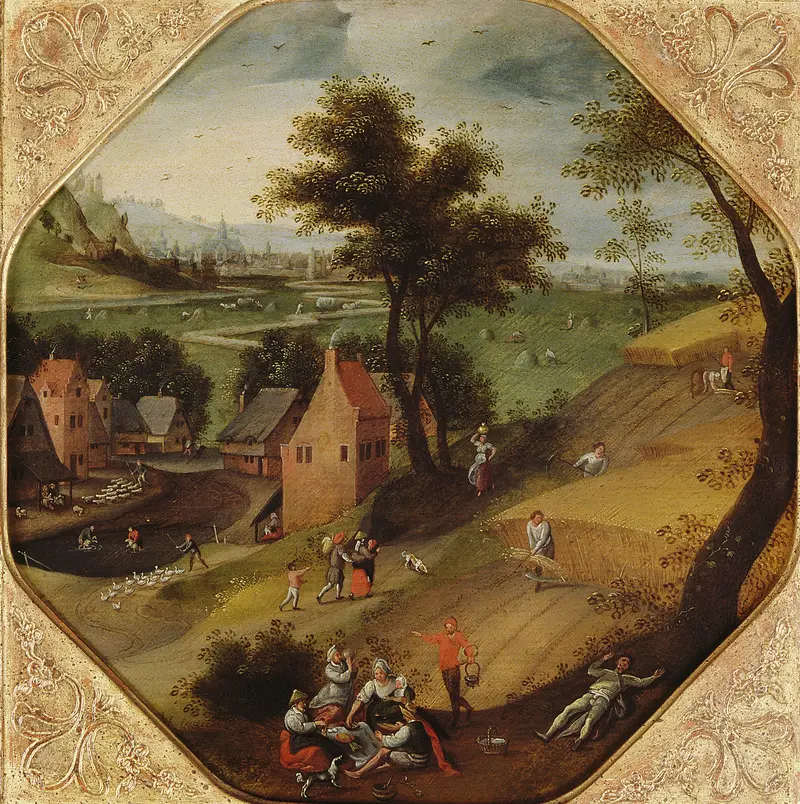
De Zomer
Abel Grimmer
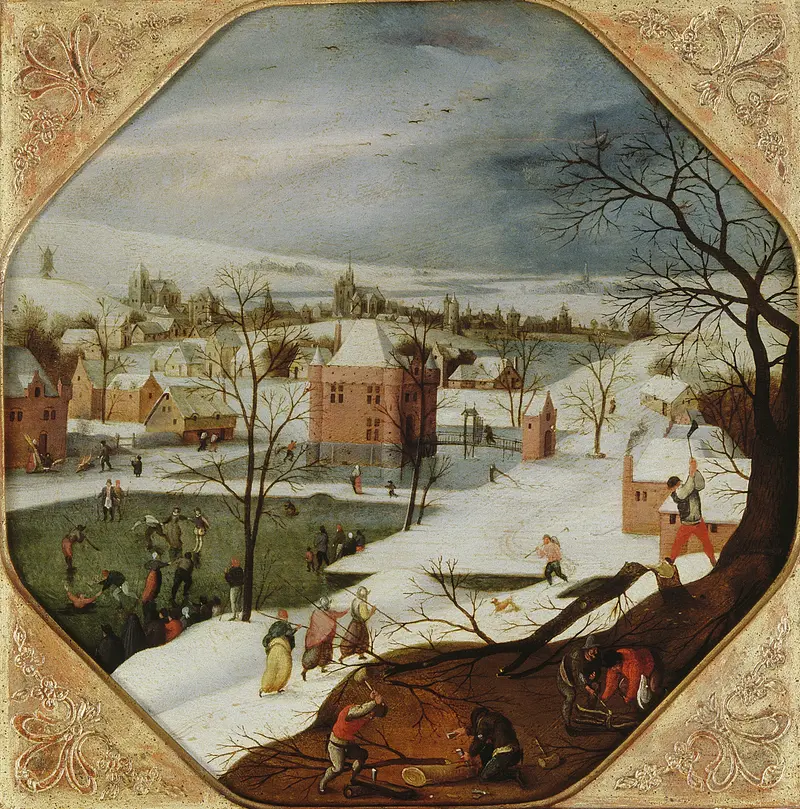
De Winter
Abel Grimmer
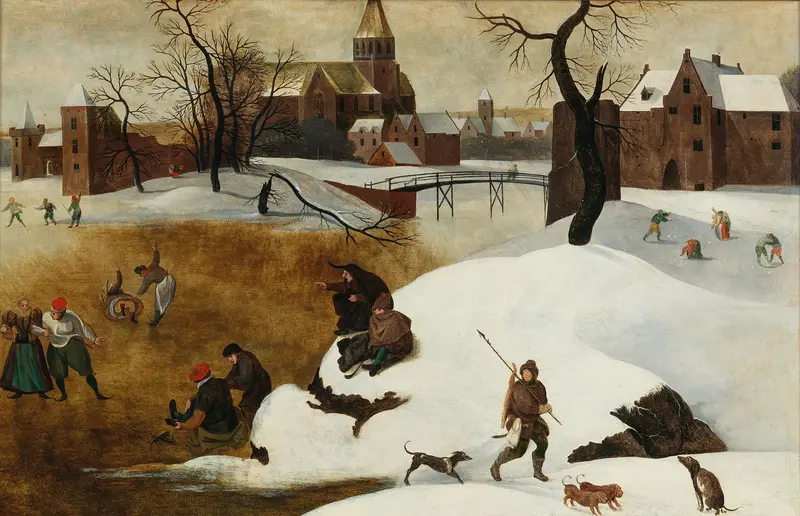
winter landscape with skaters
Abel Grimmer
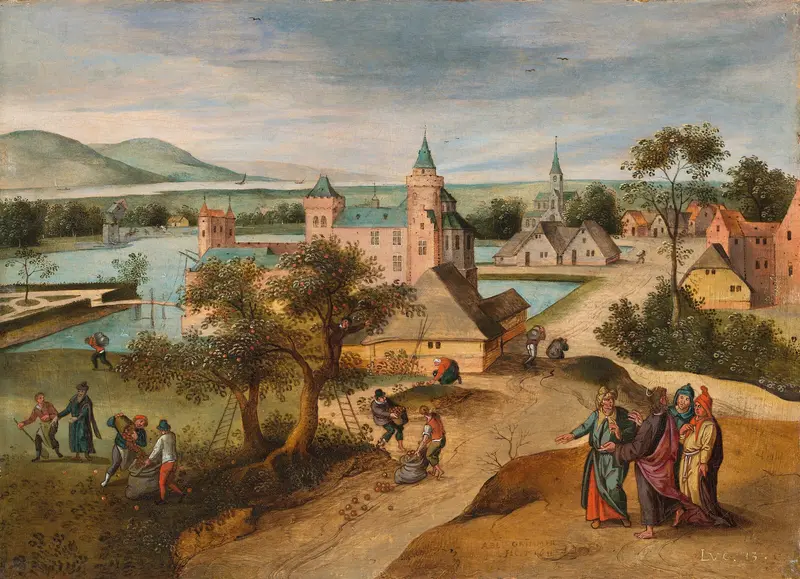
September – The Parable of the Barren Fig Tree
Abel Grimmer
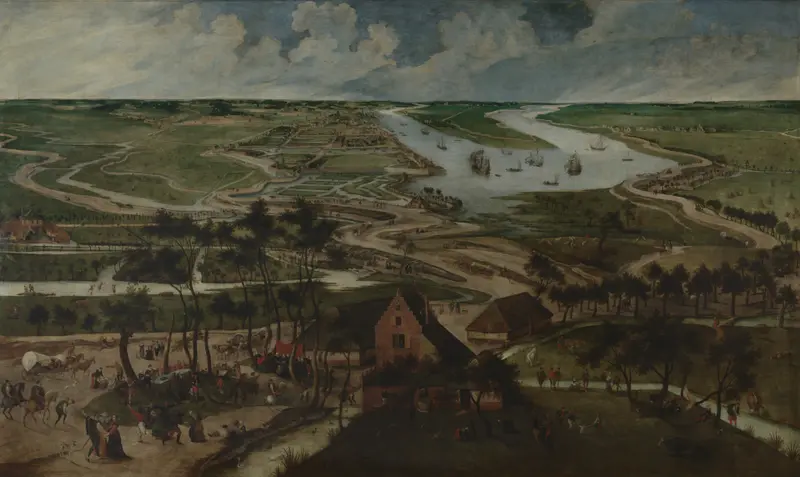
The Eel Huts in the Antwerp Polder outside the Lillo or Slijk Gate
Abel Grimmer
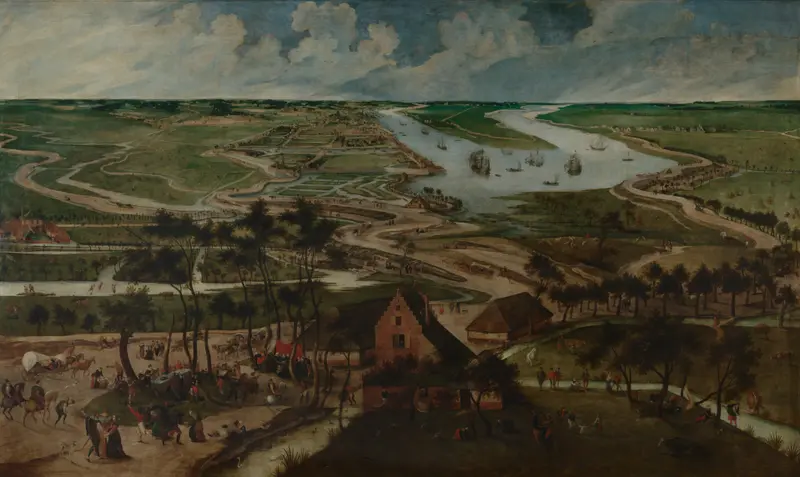
De Antwerpse polder en de Palinghuizen buiten de Slijk- of Lillopoort
Abel Grimmer
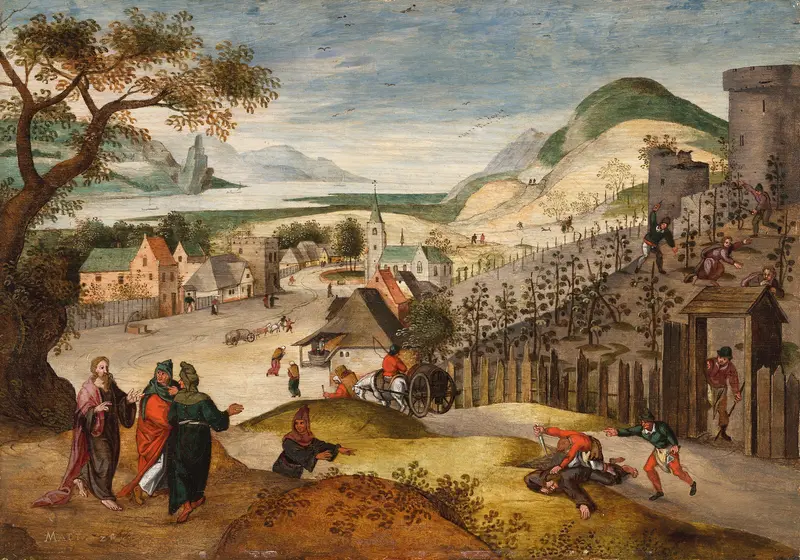
October – The Parable of the Vineyard
Abel Grimmer
The Marketplace in Bergen op Zoom
Abel Grimmer





