
The Village Church — History & Facts
What secret hides in the quiet of the canvas? In an age where every brushstroke counts as a whisper of legacy, The Village Church stands as a serene memorial to time's passage and the stories it weaves. Look to the center, where the church rises majestically against a backdrop of lush greenery. Notice the way sunlight dapples the stone walls, illuminating the warm hues of ochre and soft grays. The painter skillfully captures the gentle sway of the trees, their leaves a vibrant contrast to the subdued tones of the structure, drawing the eye back and forth like a heartbeat.
The thoughtfully placed clouds, soft and billowing, evoke a sense of tranquility, inviting the viewer to linger and reflect. Yet beneath this calm facade lies a tension between permanence and fleeting moments. The rustling leaves suggest the passage of time, hinting at generations that have come and gone, their souls intertwined with the very fabric of the church. Simultaneously, the darkness at the foot of the church hints at the unknown, the mysteries of life encoded within the stillness.
This delicate balance invites contemplation, urging one to ponder the lives touched by this sacred space. In 1891, Harpignies painted this scene during a period of profound change in France, as the Impressionist movement was evolving and gaining momentum. Living in the countryside, he sought to capture the essence of rural life, reflecting both a nostalgia for simpler times and a desire to preserve the beauty of fleeting moments amid a rapidly industrializing world. This painting embodies that ethos, merging nostalgia with the hope of legacy and remembrance.
More Artworks by Henri-Joseph Harpignies
Browse all →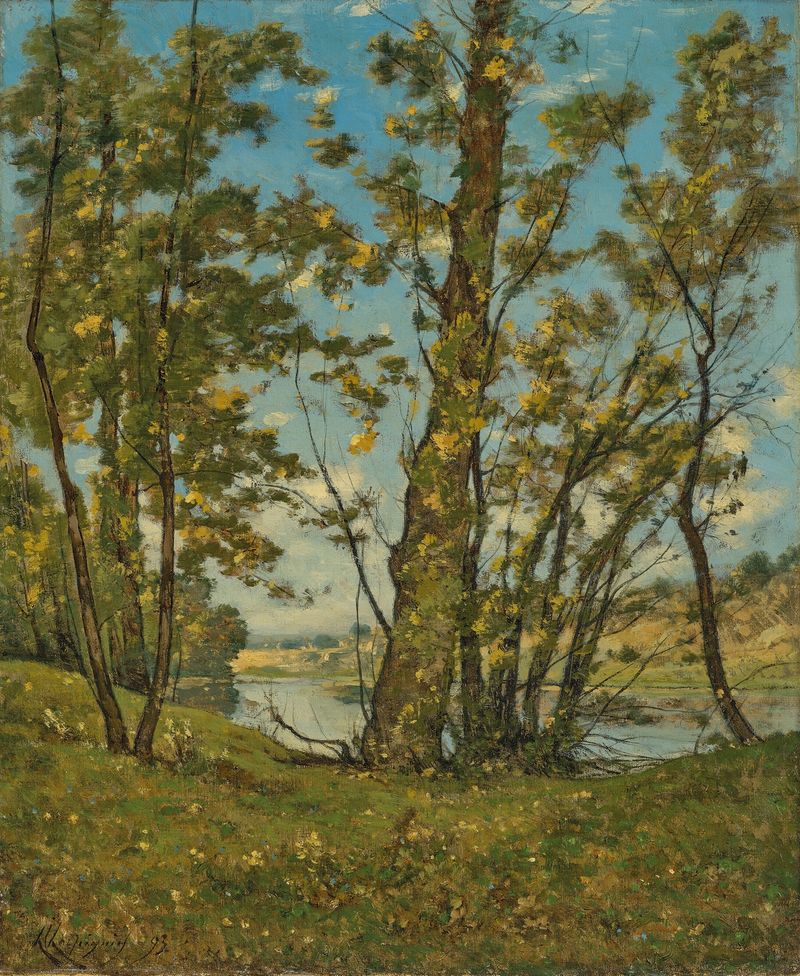
La Loire à Bonny
Henri-Joseph Harpignies
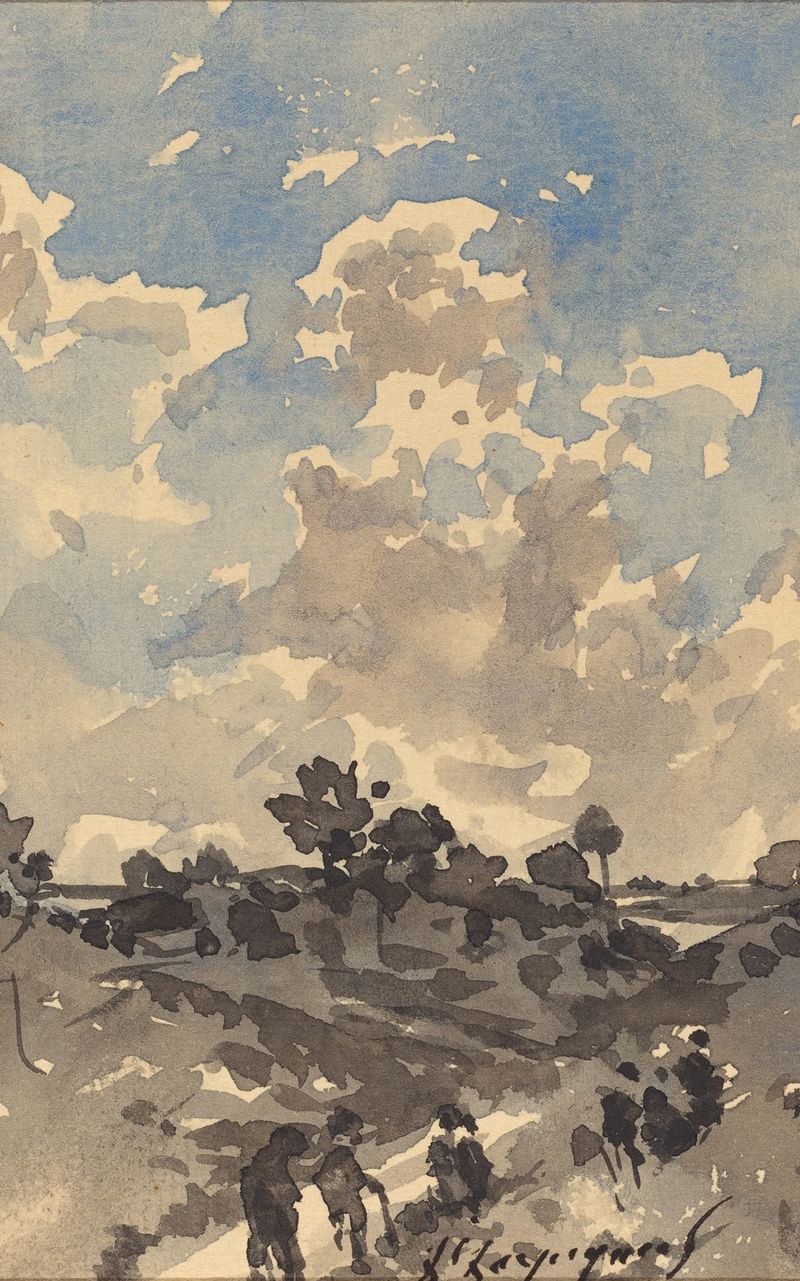
A Landscape with Figures Walking along a Path
Henri-Joseph Harpignies
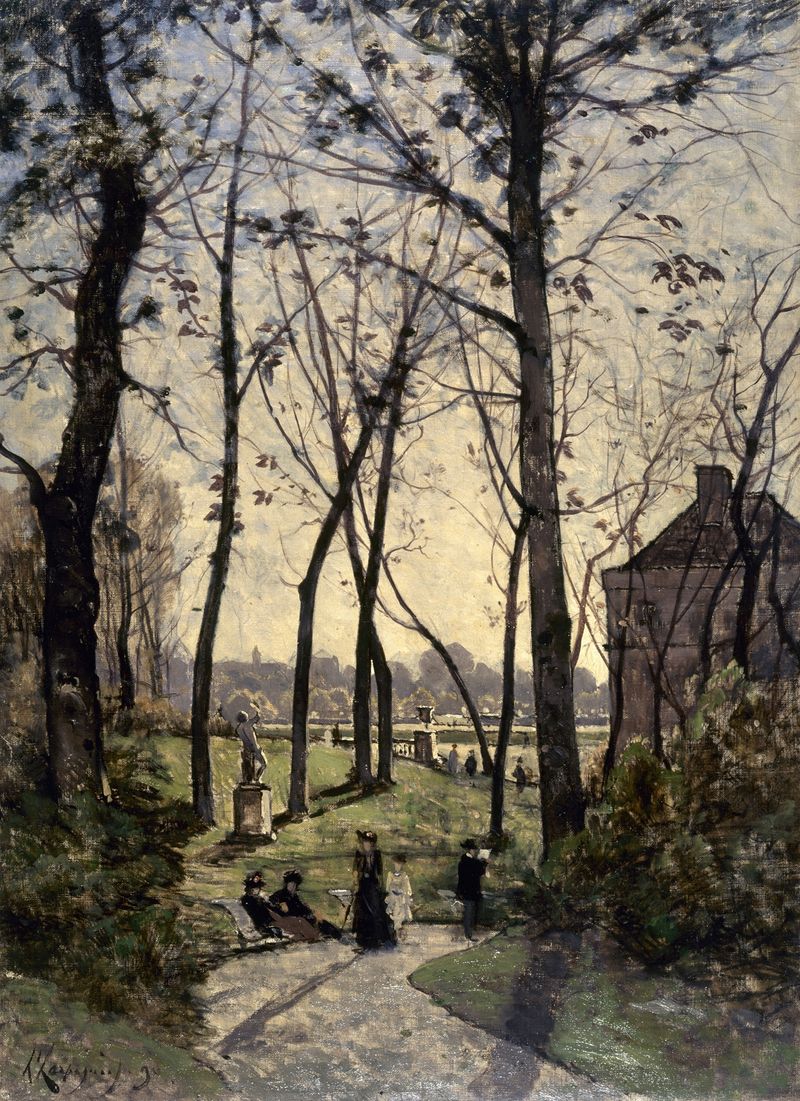
Le jardin du Luxembourg
Henri-Joseph Harpignies
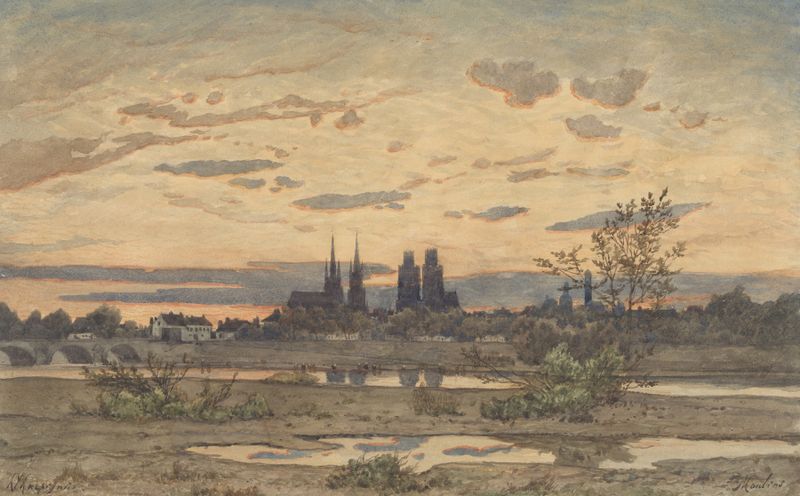
A View of Moulins
Henri-Joseph Harpignies
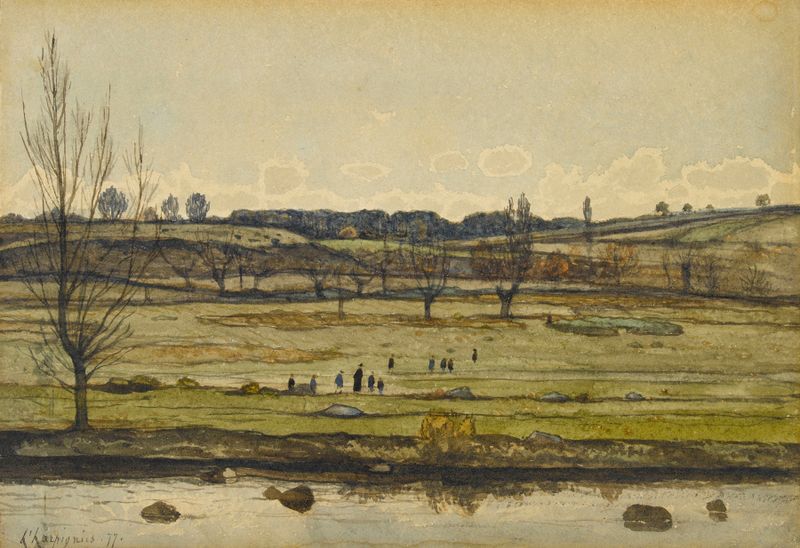
Paysage
Henri-Joseph Harpignies
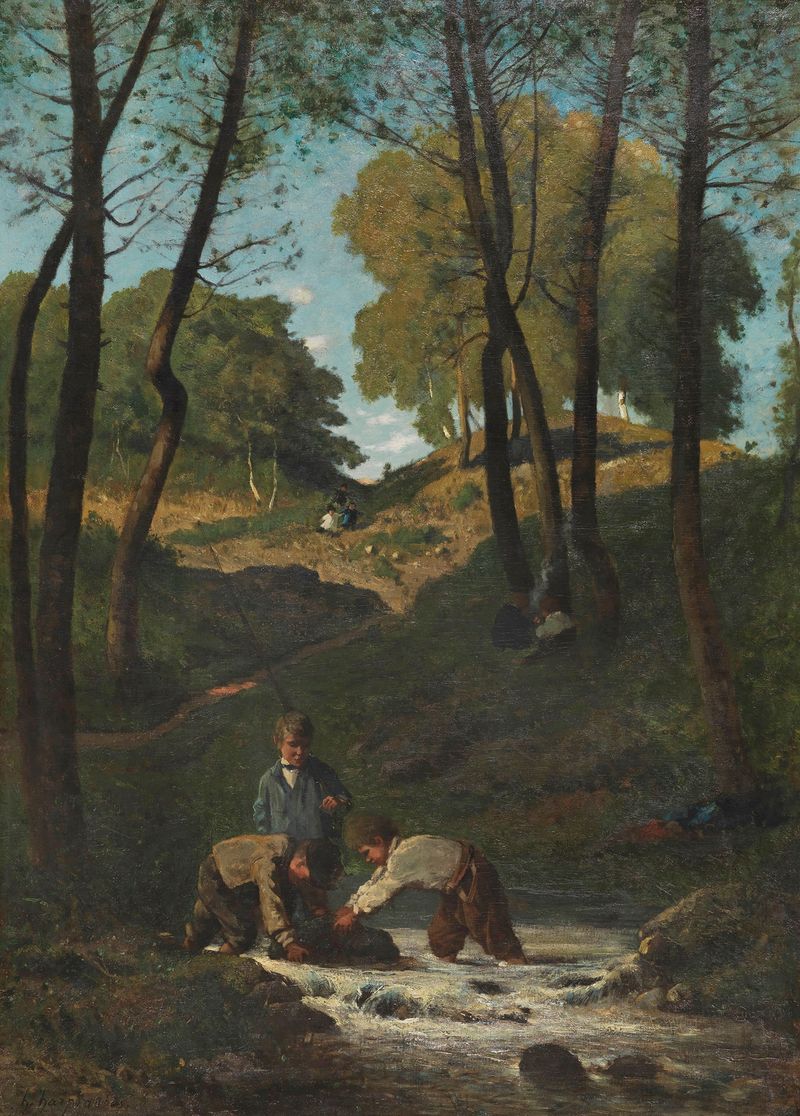
Chercheurs d’écrevisses
Henri-Joseph Harpignies
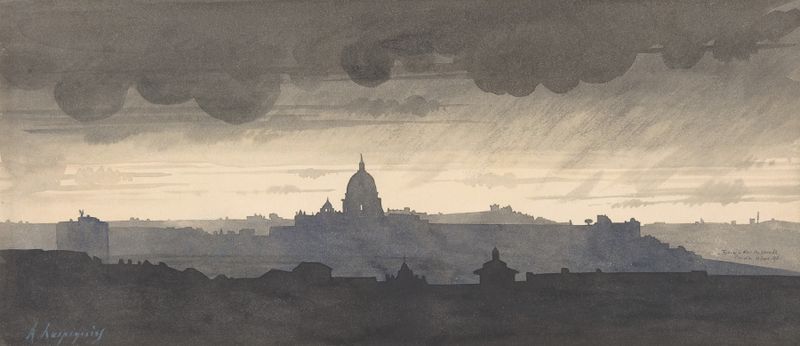
Saint Peter’s Seen From the Pincio, Rome
Henri-Joseph Harpignies
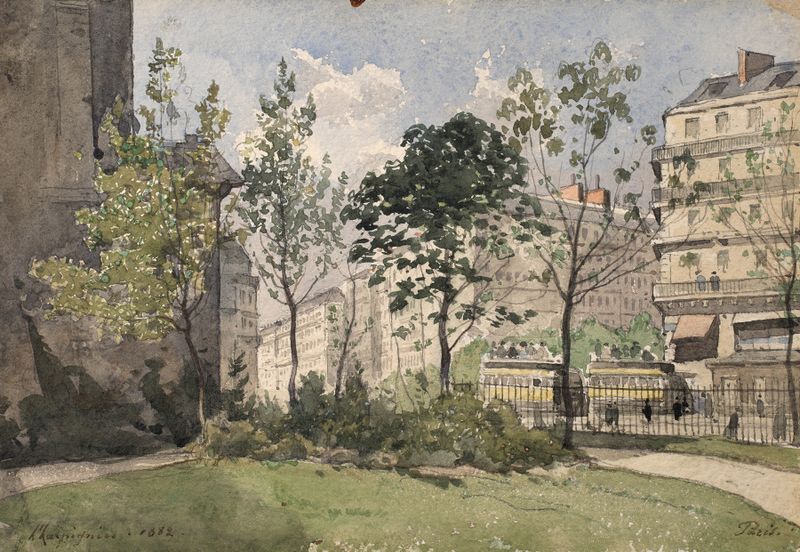
View of the forecourt of the Saint-Germain-des-Prés church
Henri-Joseph Harpignies
Le Colisée à Rome
Henri-Joseph Harpignies

Villefranche
Henri-Joseph Harpignies





