
The Wailing Wall, Jerusalem — History & Facts
A hush seems to settle over the sunlit stones, drawing the viewer into a space at once public and deeply private. The eye is led along the pale flagstones to the figures scattered in the shadow of the ancient wall, each absorbed in their own quiet ritual. A cluster of men in red fezzes sits in the cool shade, their posture relaxed but attentive, while farther along, two women—one draped in white—kneel in contemplation.
The light pours in from above, illuminating the upper foliage and casting a golden glow that softens the severity of the stone, suggesting a moment suspended between history and the everyday. Every gesture, from the bowed heads to the solitary figure at the far right, signals reverence and longing, the wall itself becoming both backdrop and silent participant in the scene. Painted by Theodoros Ralli between 1873 and 1909, this work belongs to a period when European artists were drawn to the Eastern Mediterranean, seeking to capture its people and sacred sites. Such paintings were often commissioned by collectors fascinated by the so-called “Orient,” eager for windows into distant rituals and landscapes.
The genre, known as Orientalism, was shaped by both curiosity and stereotype, yet artists like Ralli brought a quiet observation to their scenes. History has kept few traces of this particular canvas’s journey, but its presence today invites us to linger before it, tracing the lines of devotion and sunlight across the ancient stones.
More Artworks by Theodoros Ralli

The Sleeping Concubine
Theodoros Ralli
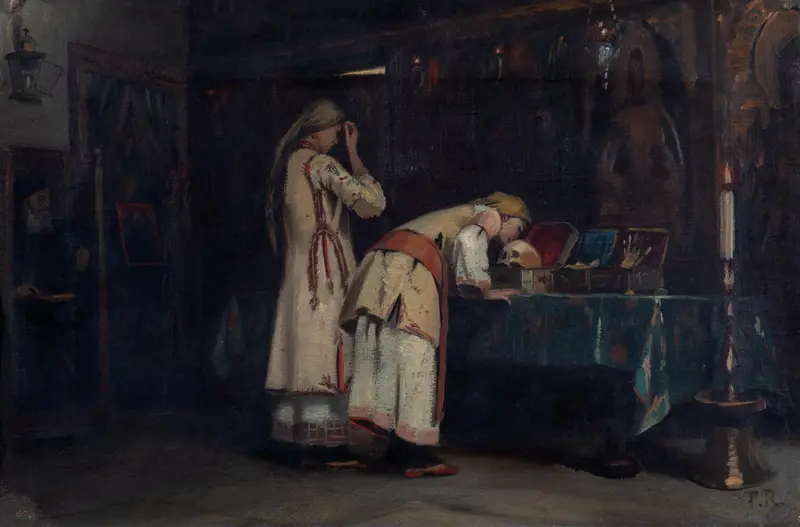
Holy Relics
Theodoros Ralli
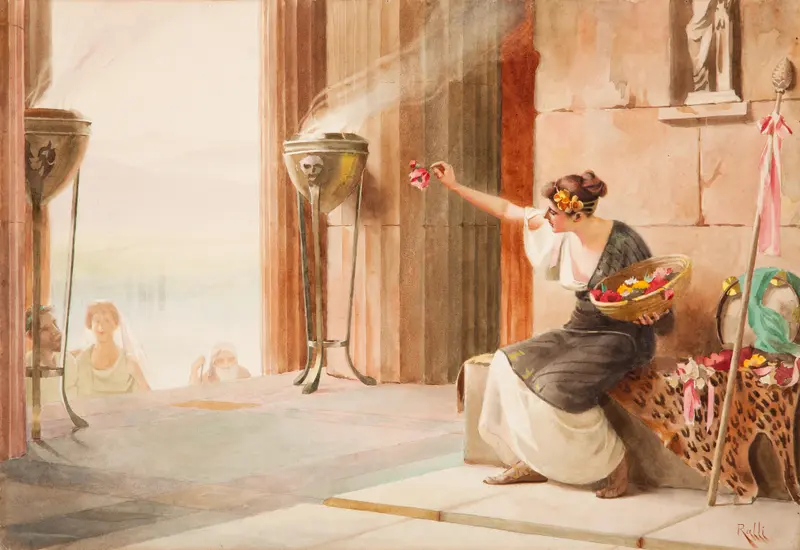
Flower Seller at the Parthenon
Theodoros Ralli
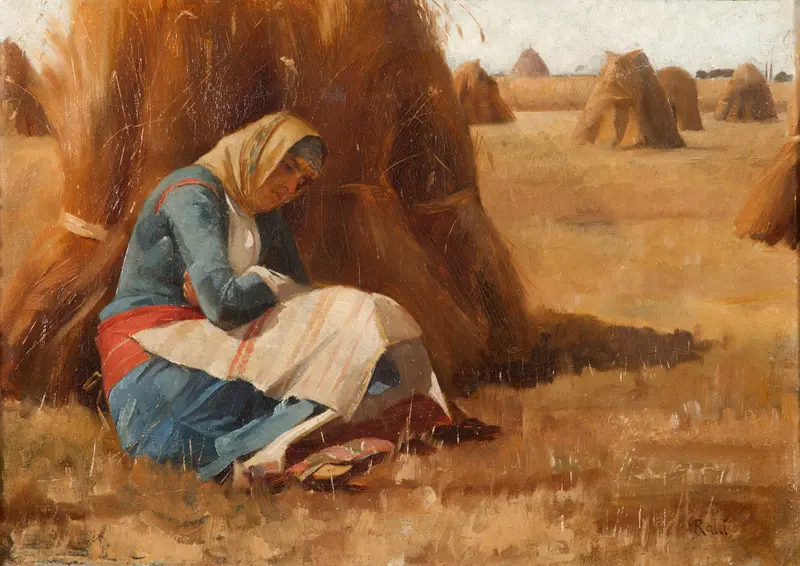
Resting by a Haystack
Theodoros Ralli
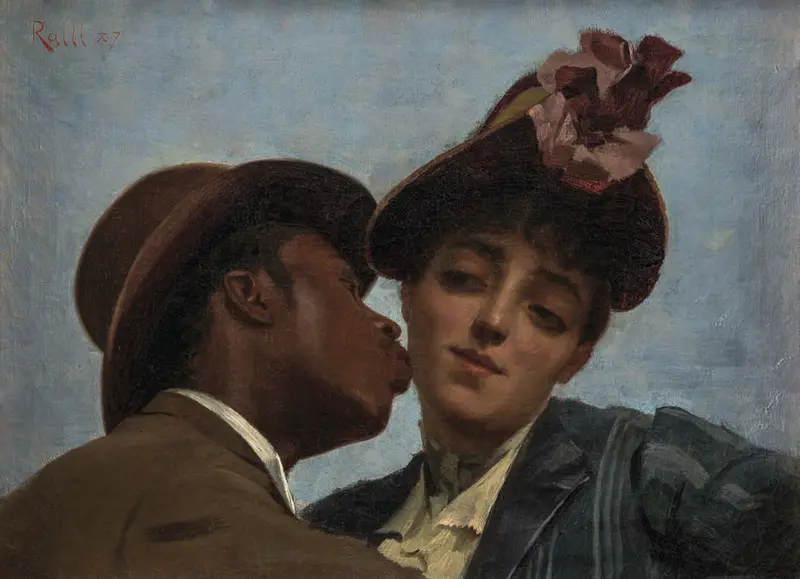
The Kiss (Ralli)
Theodoros Ralli
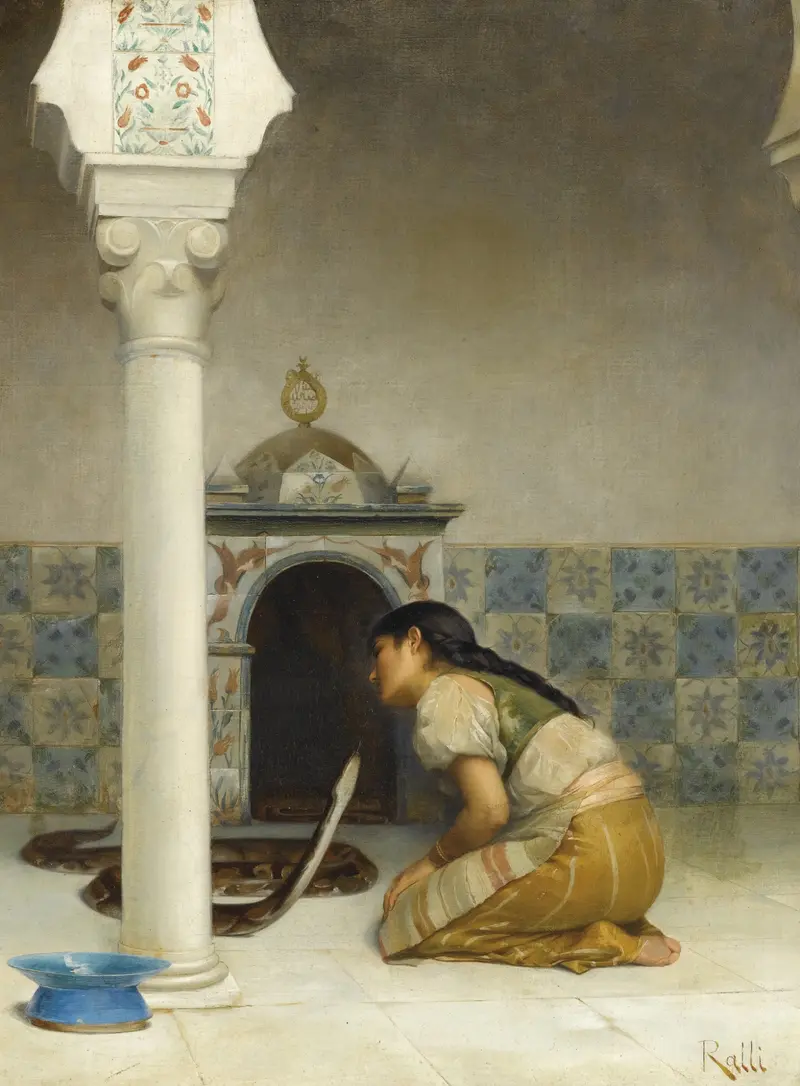
The Sacred Serpent
Theodoros Ralli
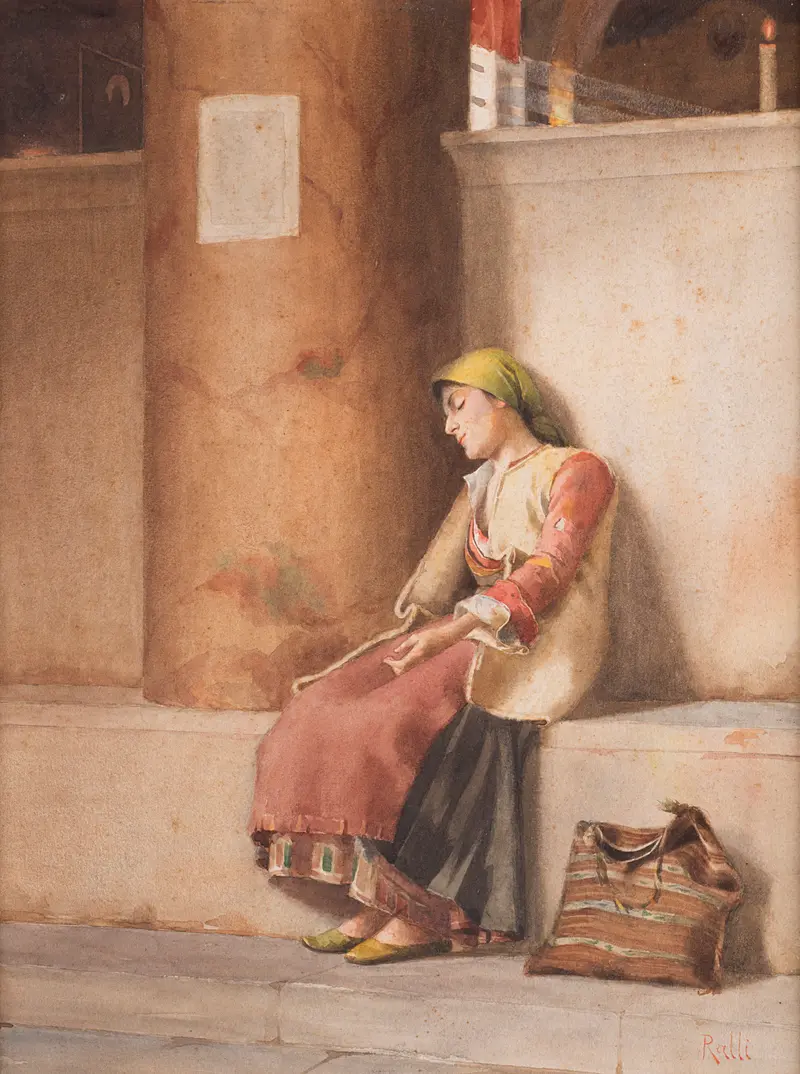
A Moment of Reflection
Theodoros Ralli
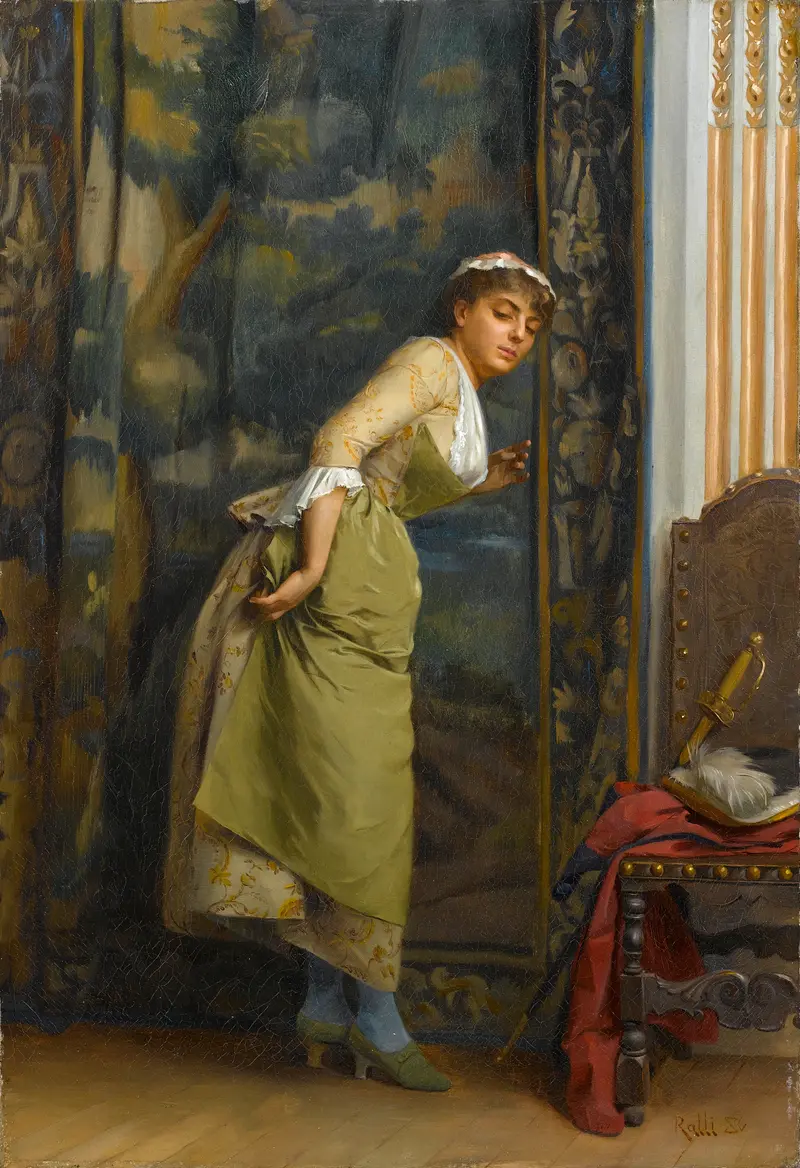
Eavesdropping (Ralli)
Theodoros Ralli
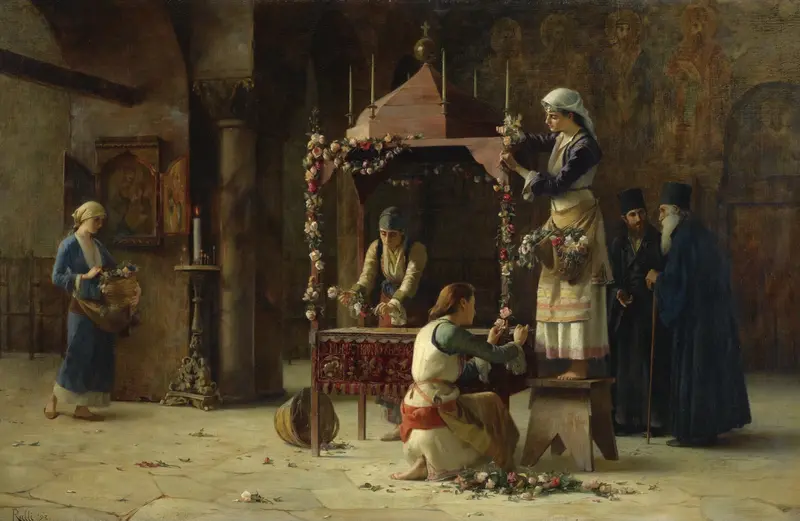
Holy Friday, Greece
Theodoros Ralli
A Moment's Rest
Theodoros Ralli
More Genre Scene Art

Banquet of the Officers of the St George Civic Guard
Frans Hals

Rembrandt and Saskia in the Scene of the Prodigal Son
Rembrandt van Rijn

Bal du moulin de la Galette
Pierre-Auguste Renoir

Quadrille at the Moulin Rouge
Henri de Toulouse-Lautrec

A Burial at Ornans
Gustave Courbet

When Will You Marry?
Paul Gauguin