
The Wash-house (Le lavoir) — History & Facts
A restless energy hums through The Wash-house (Le lavoir), drawing your attention first to the woman straining up the gangplank, her burden nearly as large as herself. The lines of the ramp and the heavy timber in the foreground pull your gaze across the scene, where the river’s surface is etched with quick, nervous strokes. The wash-house itself rises like a stage set, its shutters flung open to the light, with figures bent over their work or pausing in conversation.
Every gesture is purposeful: the stooped washerwomen at the water’s edge, the man seated in profile, pipe in mouth, lost in thought. Lepère’s palette is the crisp contrast of ink on paper, but the world he conjures is anything but static—here, labor and leisure, solitude and community, all unfold at the river’s edge. Created in 1891, this work belongs to a moment when artists like Auguste Lepère turned their gaze to the everyday life of the city and its outskirts. The wash-house was a hub of working-class existence, a place where the rhythms of urban labor met the flowing life of the river.
In the late nineteenth century, such scenes were both documentary and quietly radical, offering dignity to the anonymous figures of modern life. History has kept few traces of the individual stories behind these images, but the print survives today in the National Gallery of Art’s collection, a testament to both the era’s changing social fabric and Lepère’s gift for finding drama in the ordinary. Every time you return to it, the scene seems to shift, as if the tide might rise and the washerwomen might look up and meet your gaze.
More Artworks by Auguste Lepère

Le Pont-Neuf (Paris)
Auguste Lepère
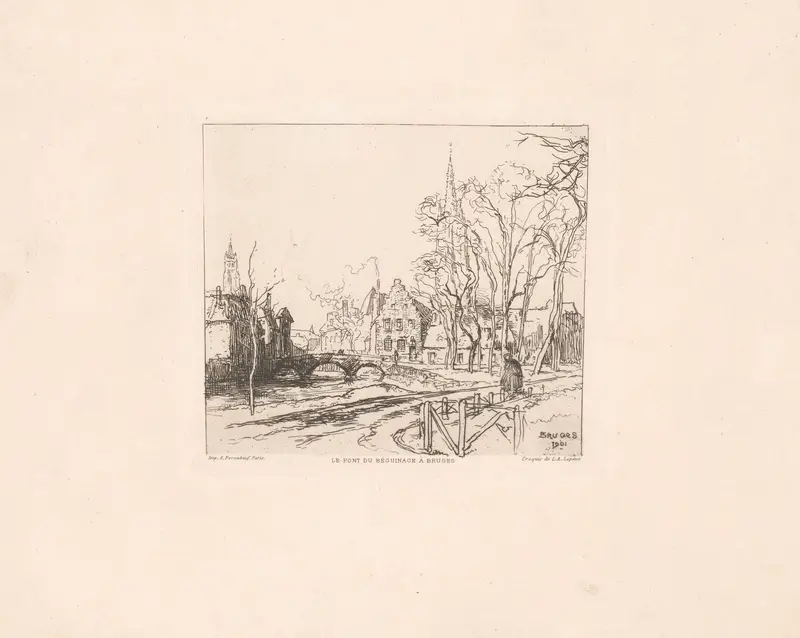
Le pont du Beguinage à Bruges
Auguste Lepère
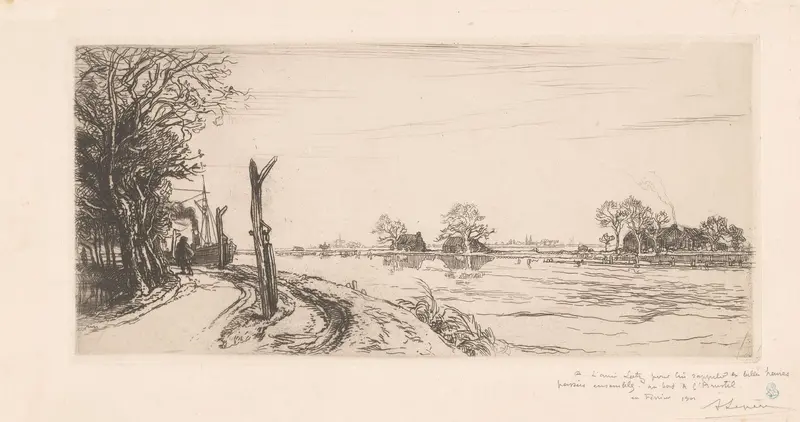
Au bord de l’Amstel
Auguste Lepère
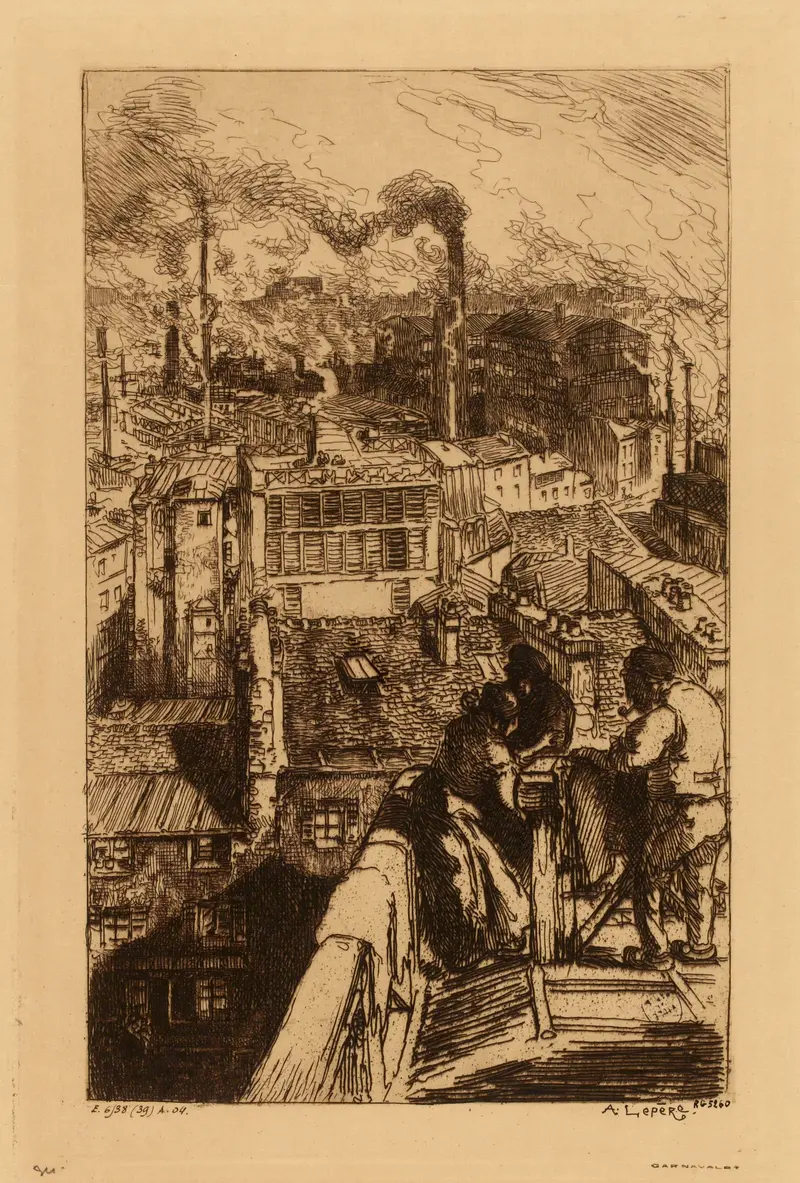
Le quartier des Gobelins
Auguste Lepère
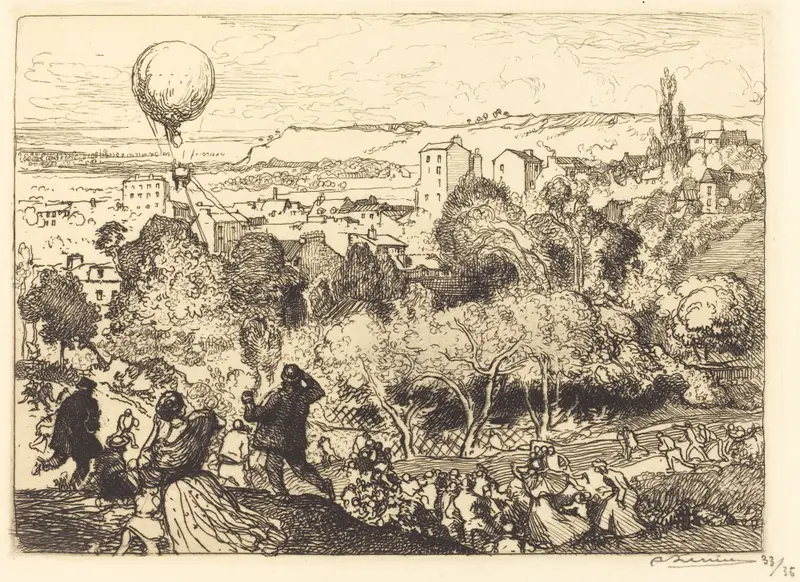
The Falling Balloon, in Pre-Saint-Gervais (Lebaloon qui tombe, au Pre-Saint-Gervais)
Auguste Lepère
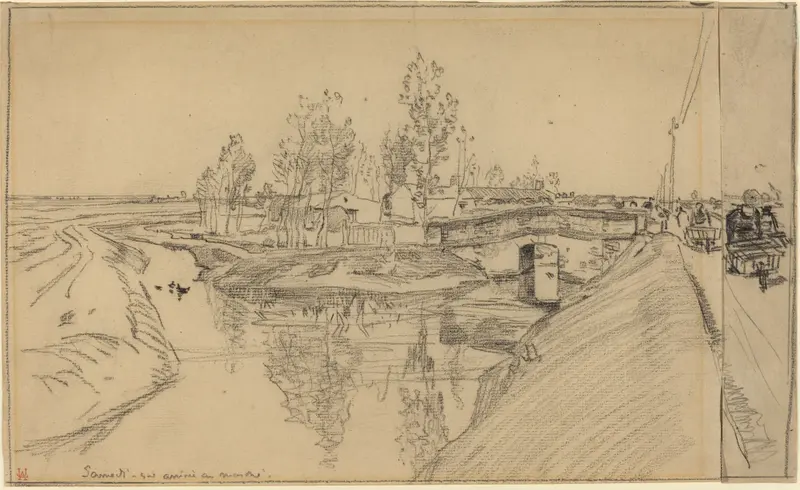
Arrivee au Marche
Auguste Lepère
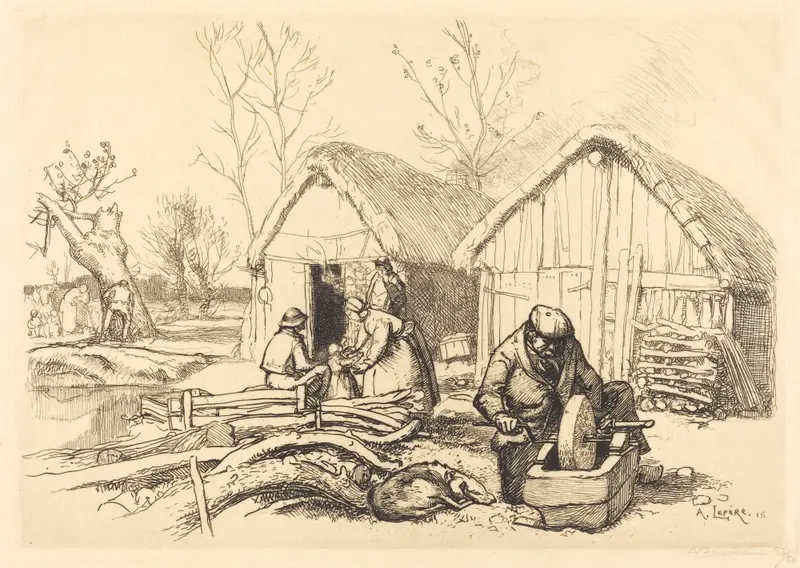
The House of the Woodcutter, Vendee (La maison du bucheron, Vendee)
Auguste Lepère
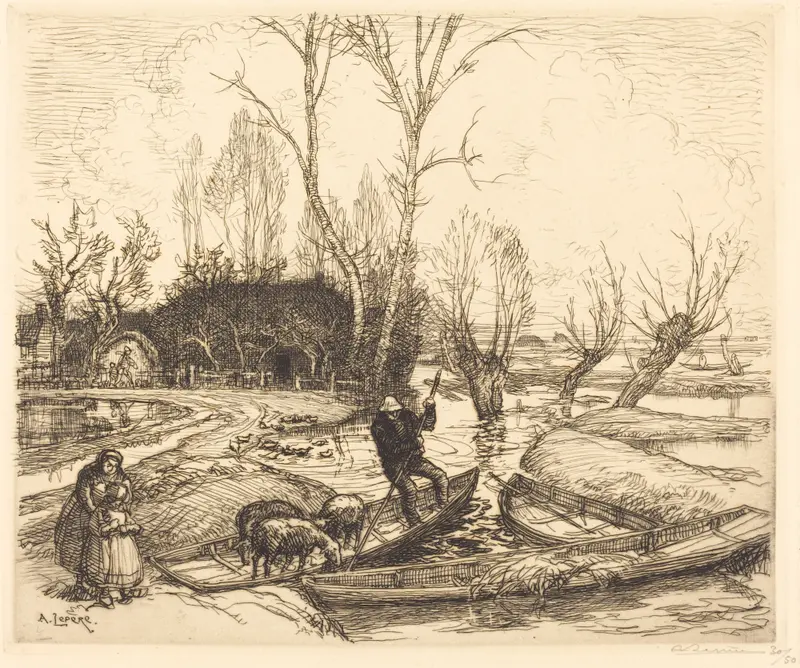
In the Deluged Marsh - The Shepherd (Au marais inonde - Le berger)
Auguste Lepère
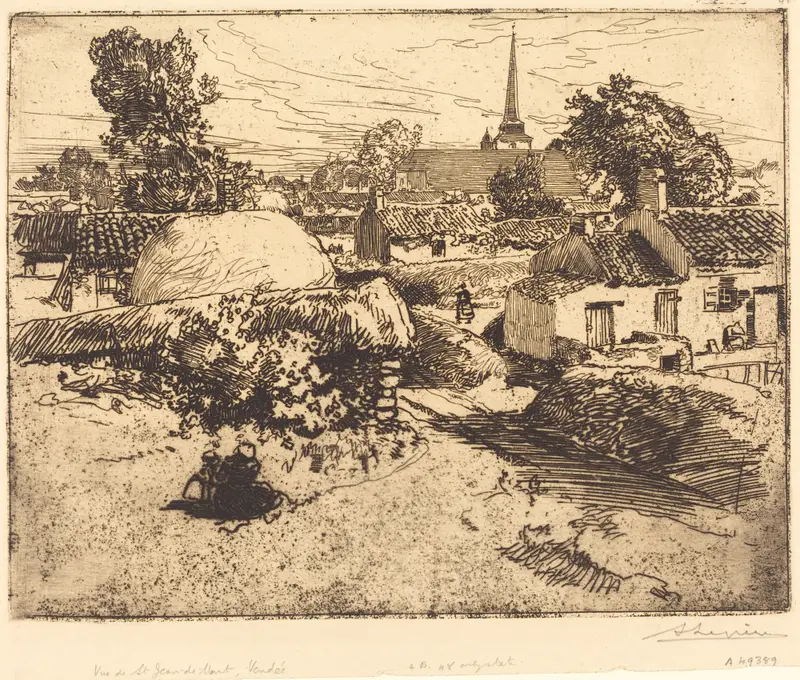
View of St.-Jean-de-Mont, Vendee (Vue de St.-Jean-de-Mont, Vendee)
Auguste Lepère
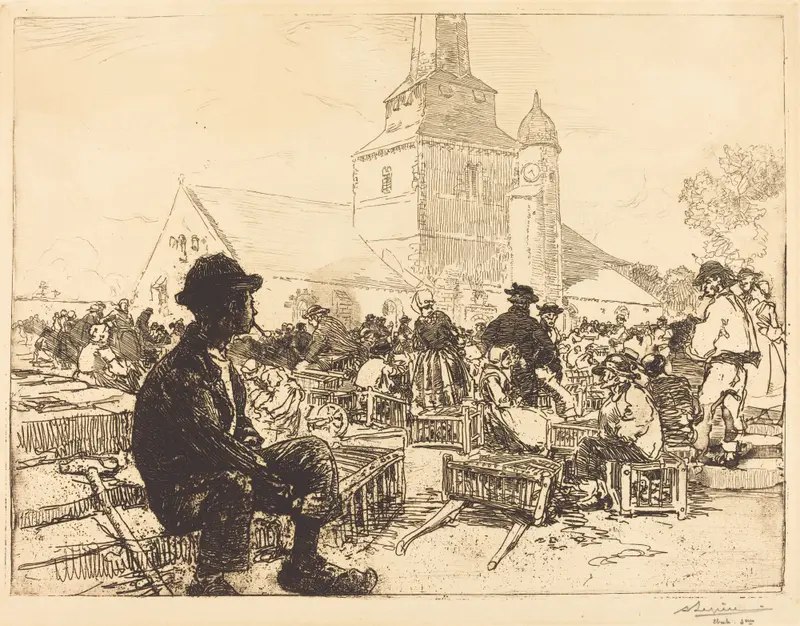
Poultry Market at St.-Jean-de-Mont (Marche a la volaille, a St.-Jean-de-Mont)
Auguste Lepère
More Genre Scene Art

Banquet of the Officers of the St George Civic Guard
Frans Hals

Rembrandt and Saskia in the Scene of the Prodigal Son
Rembrandt van Rijn

Bal du moulin de la Galette
Pierre-Auguste Renoir

Quadrille at the Moulin Rouge
Henri de Toulouse-Lautrec

A Burial at Ornans
Gustave Courbet

When Will You Marry?
Paul Gauguin