
The watering place at Pont Marie, Paris — History & Facts
A riverbank in Paris becomes a stage for daily ritual, its cast drawn from every corner of city life. The eye is pulled first to the bustle at the water’s edge: men and women, horses and boats, all converging where the Seine meets the stone steps beneath Pont Marie. The artist, Auguste Lepère, arranges these figures in a gentle arc, their gestures purposeful—one man leans into his work, another stands surveying the scene, while a child and a horse share a moment at the shallows.
The bridge’s arches frame the background, their solidity contrasting with the fluid, lively lines of the river and the people. Smoke drifts from a riverside building, hinting at industry, while the city’s rooftops and trees rise quietly behind, anchoring the scene in its Parisian setting. Created in 1902, this work belongs to a moment when artists across Europe were drawn to the rhythms of modern urban life. Scenes like this—of labor, leisure, and the mingling of classes on the banks of great rivers—were favored by collectors eager to capture the pulse of a changing city.
Lepère was known for his sensitive renderings of everyday Paris, often working in print and drawing to record the fleeting interactions that defined the metropolis at the turn of the century. Now held in the collection of Musea Brugge, this image offers not only a record of a vanished way of life, but an invitation to linger over the quiet drama of ordinary moments—each figure, each ripple, a thread in the fabric of the city.
More Artworks by Auguste Lepère

Le Pont-Neuf (Paris)
Auguste Lepère
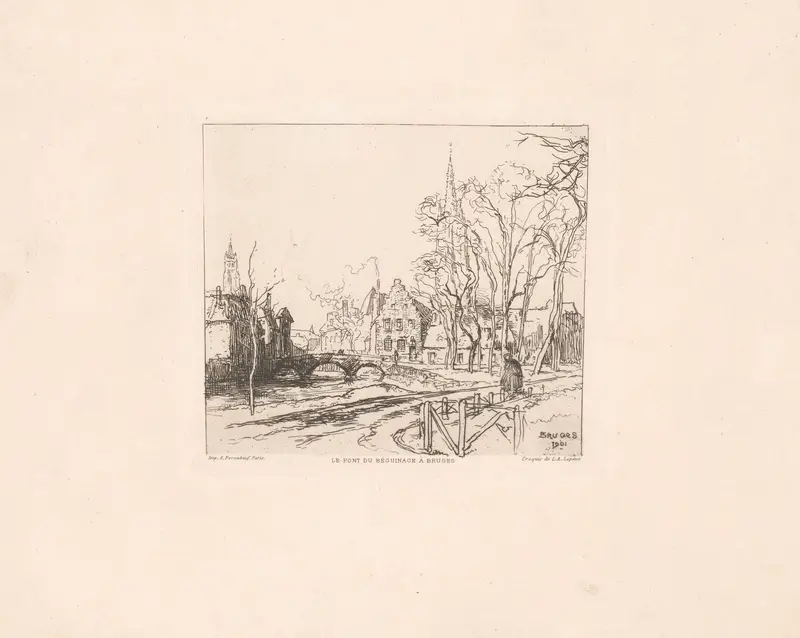
Le pont du Beguinage à Bruges
Auguste Lepère
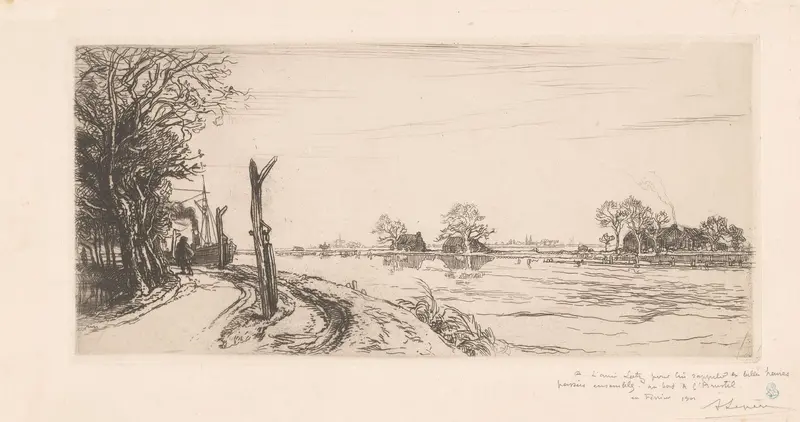
Au bord de l’Amstel
Auguste Lepère
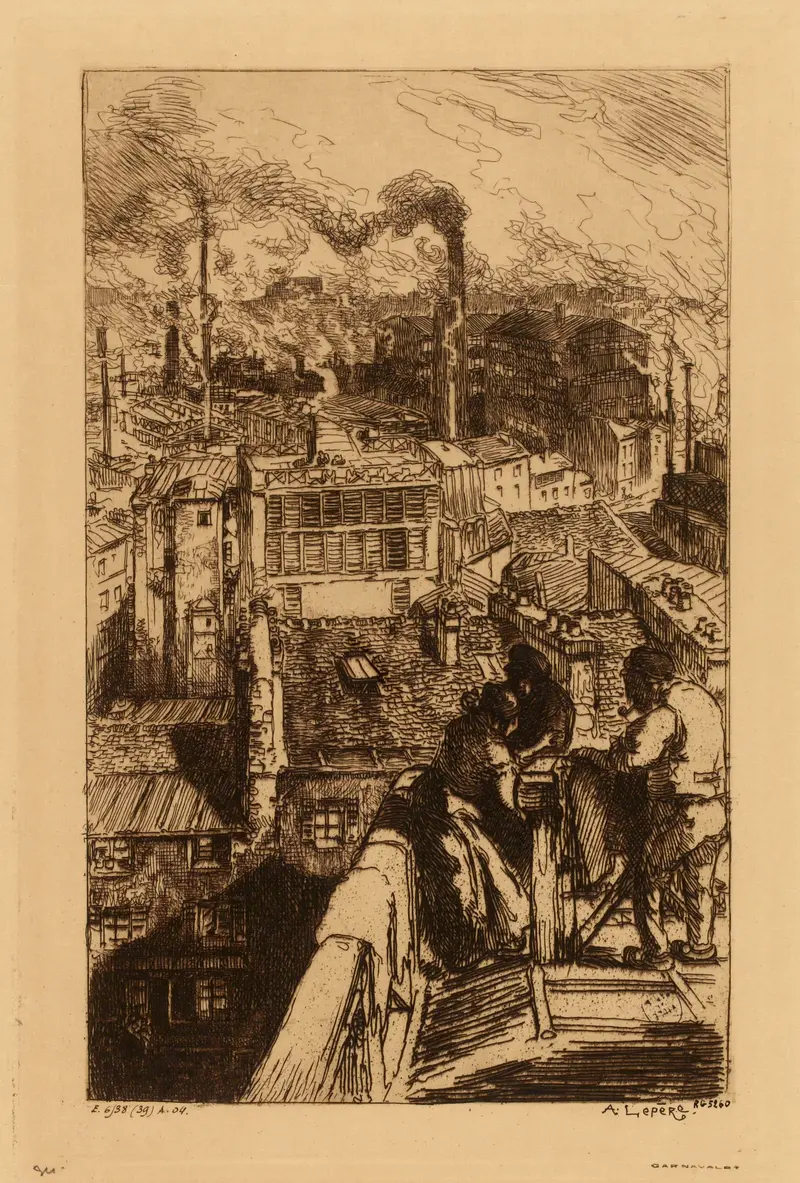
Le quartier des Gobelins
Auguste Lepère
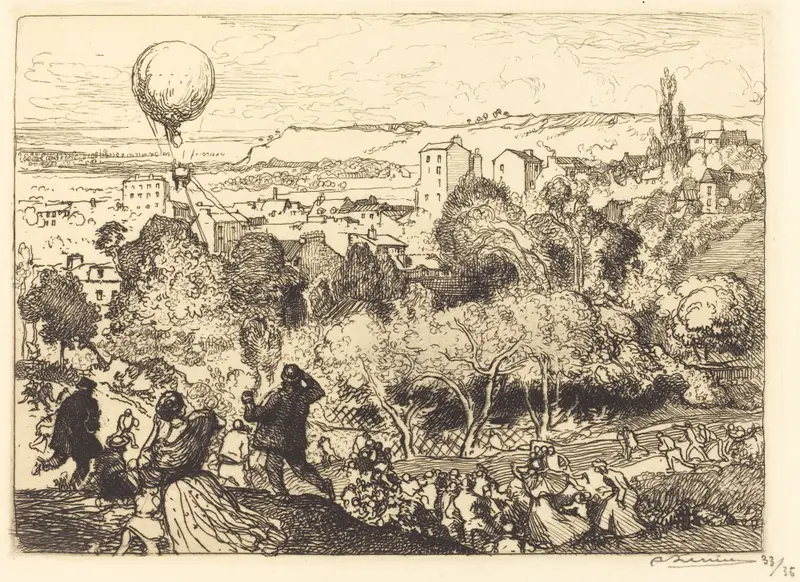
The Falling Balloon, in Pre-Saint-Gervais (Lebaloon qui tombe, au Pre-Saint-Gervais)
Auguste Lepère
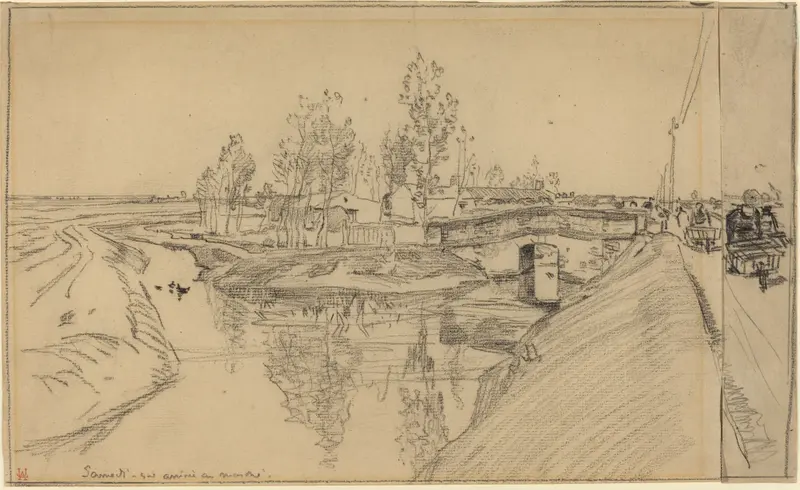
Arrivee au Marche
Auguste Lepère
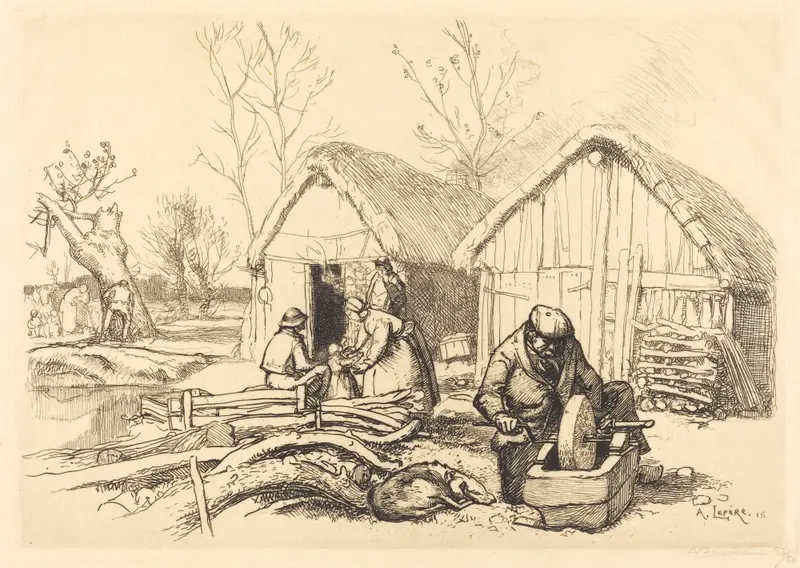
The House of the Woodcutter, Vendee (La maison du bucheron, Vendee)
Auguste Lepère
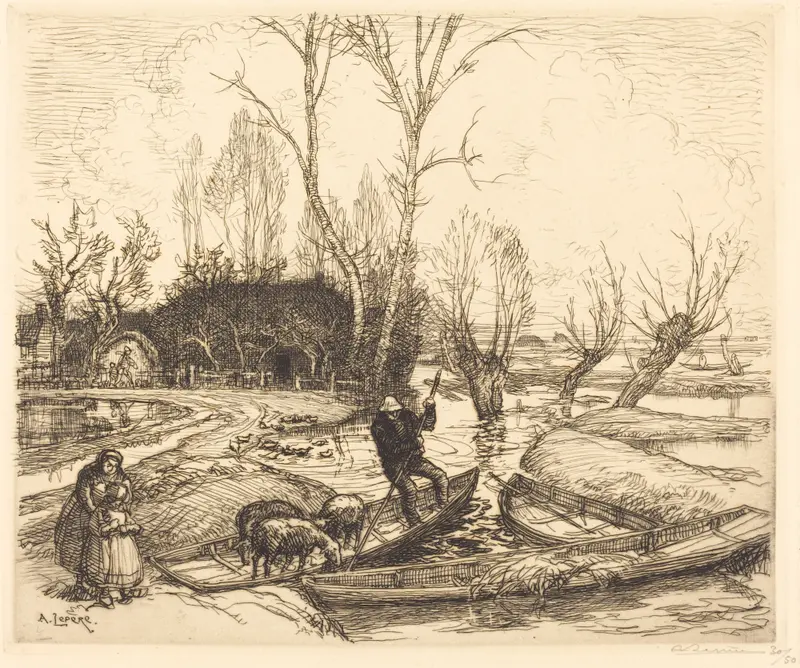
In the Deluged Marsh - The Shepherd (Au marais inonde - Le berger)
Auguste Lepère
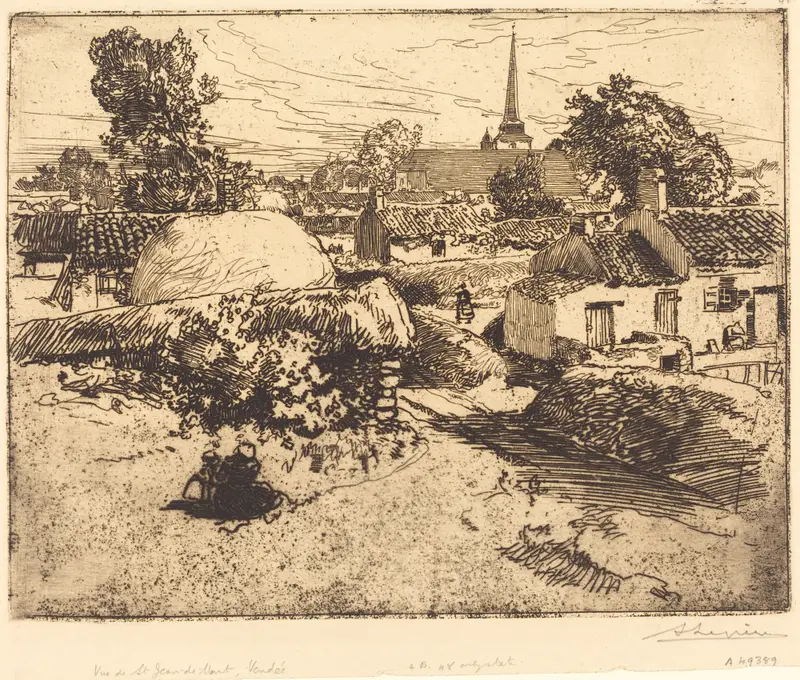
View of St.-Jean-de-Mont, Vendee (Vue de St.-Jean-de-Mont, Vendee)
Auguste Lepère
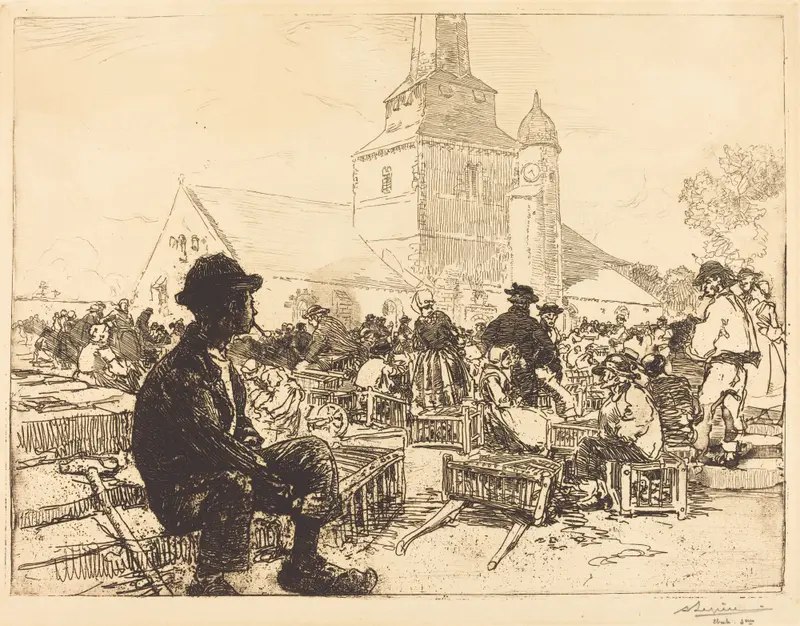
Poultry Market at St.-Jean-de-Mont (Marche a la volaille, a St.-Jean-de-Mont)
Auguste Lepère
More Genre Scene Art

Banquet of the Officers of the St George Civic Guard
Frans Hals

Rembrandt and Saskia in the Scene of the Prodigal Son
Rembrandt van Rijn

Bal du moulin de la Galette
Pierre-Auguste Renoir

Quadrille at the Moulin Rouge
Henri de Toulouse-Lautrec

A Burial at Ornans
Gustave Courbet

When Will You Marry?
Paul Gauguin