
The Weavers, Arachova — History & Facts
A shaft of morning light slices across rough wooden beams and settles on the concentrated face of a young woman at her loom, drawing the viewer into the quiet labor of The Weavers, Arachova. Every detail here has a purpose: the angled shadows, the cracked plaster wall, the careful tension in the women's postures. One sits, her hands guiding the shuttle, eyes lowered in focus; the other bends over the fabric, her long braid falling forward, lost in the rhythm of her work.
The loom itself, rendered with almost architectural precision, dominates the foreground, its sturdy presence anchoring the scene in the world of craft and necessity. The palette is earthy and restrained, punctuated by the bright red sash—a flash of individuality in a world of daily repetition. Painted in 1877, this work belongs to an era when artists across Europe and the Eastern Mediterranean turned their gaze to everyday life, capturing the habits and rituals that defined local identity. Genre scenes like this were often commissioned by collectors eager for glimpses of rural tradition, as industrialization threatened to erase such moments.
Theodoros Ralli, a Greek artist working in the late nineteenth century, was known for his careful observation and sympathetic eye, bringing dignity to humble subjects. While little is recorded about the specific journey of this painting, its presence in a collection today invites us to linger over the textures of wood, cloth, and sunlight, and to imagine the stories woven into every thread.
More Artworks by Theodoros Ralli

The Sleeping Concubine
Theodoros Ralli
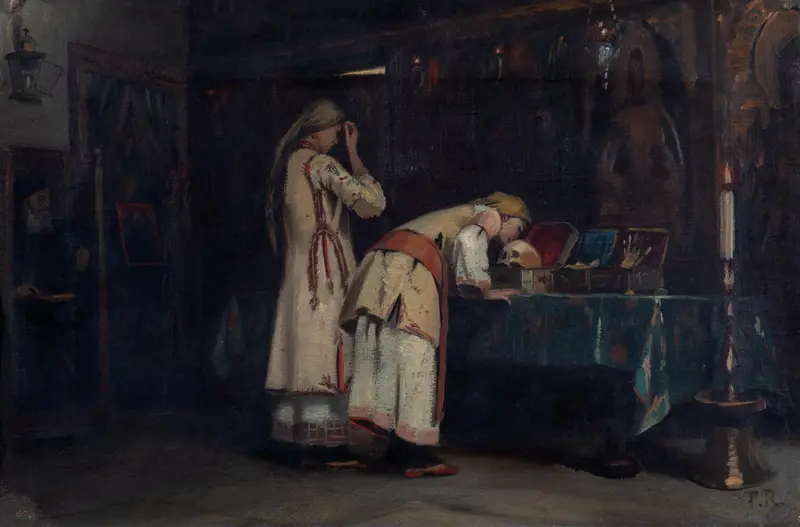
Holy Relics
Theodoros Ralli
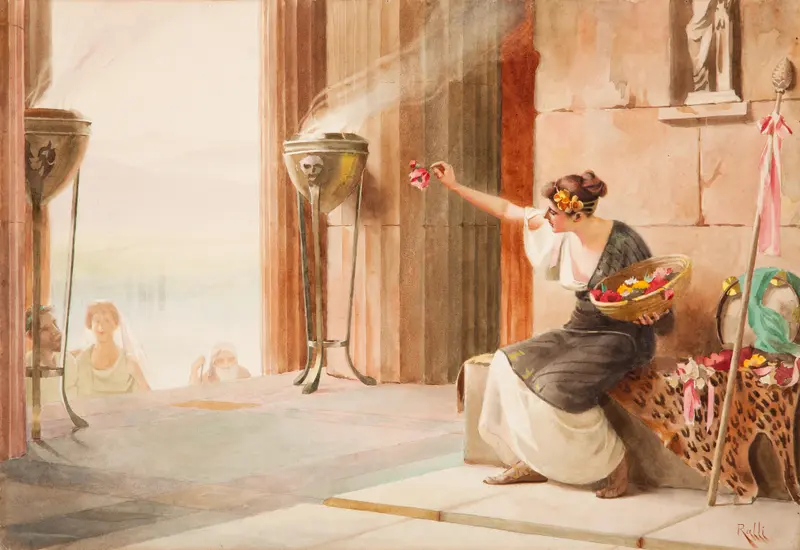
Flower Seller at the Parthenon
Theodoros Ralli
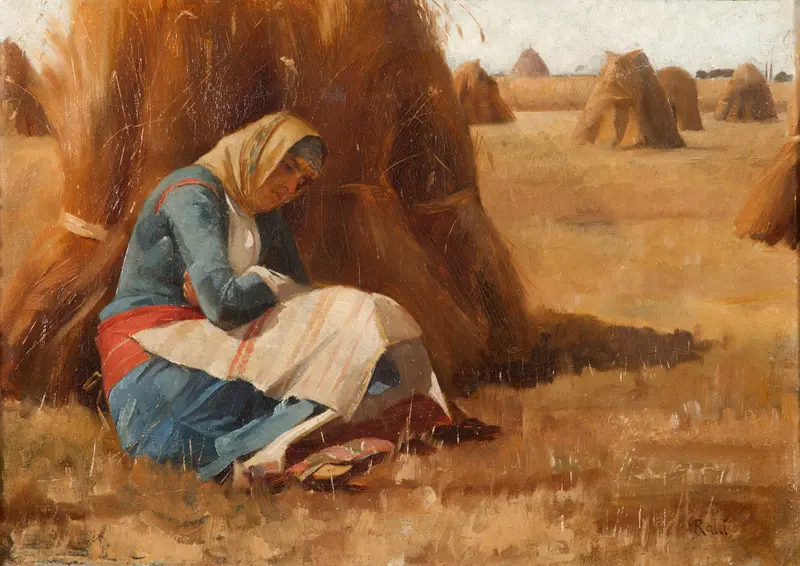
Resting by a Haystack
Theodoros Ralli
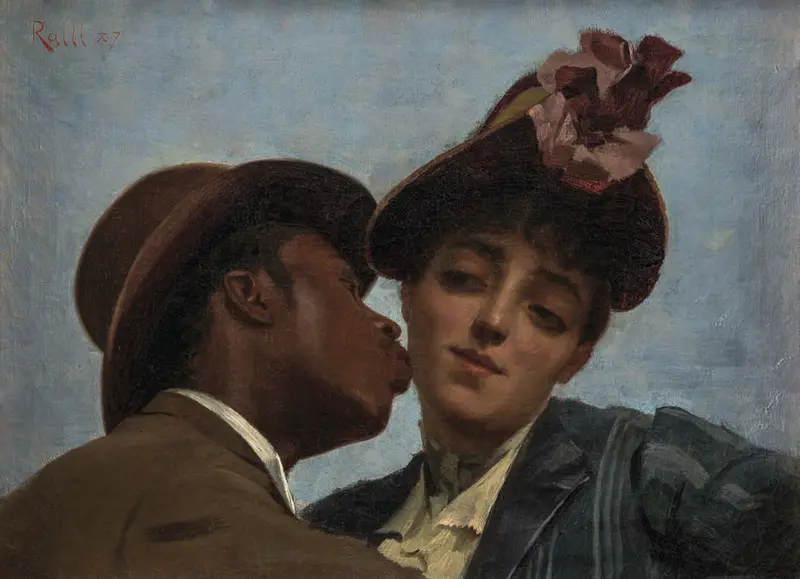
The Kiss (Ralli)
Theodoros Ralli
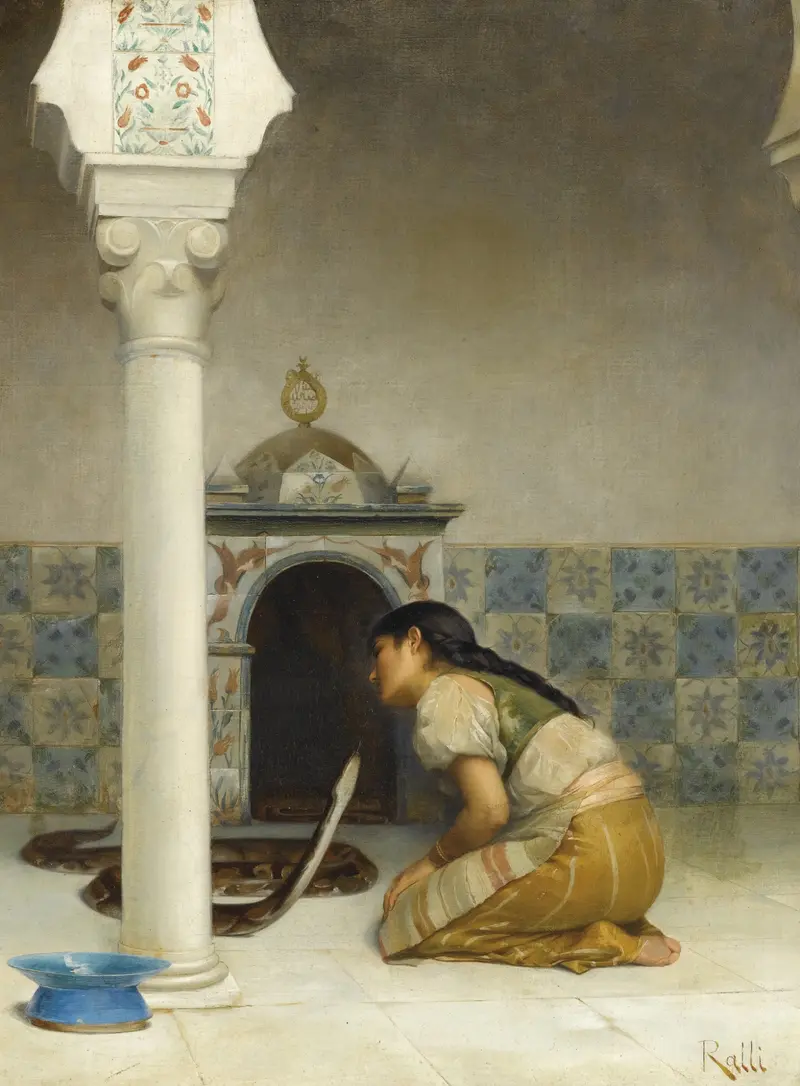
The Sacred Serpent
Theodoros Ralli
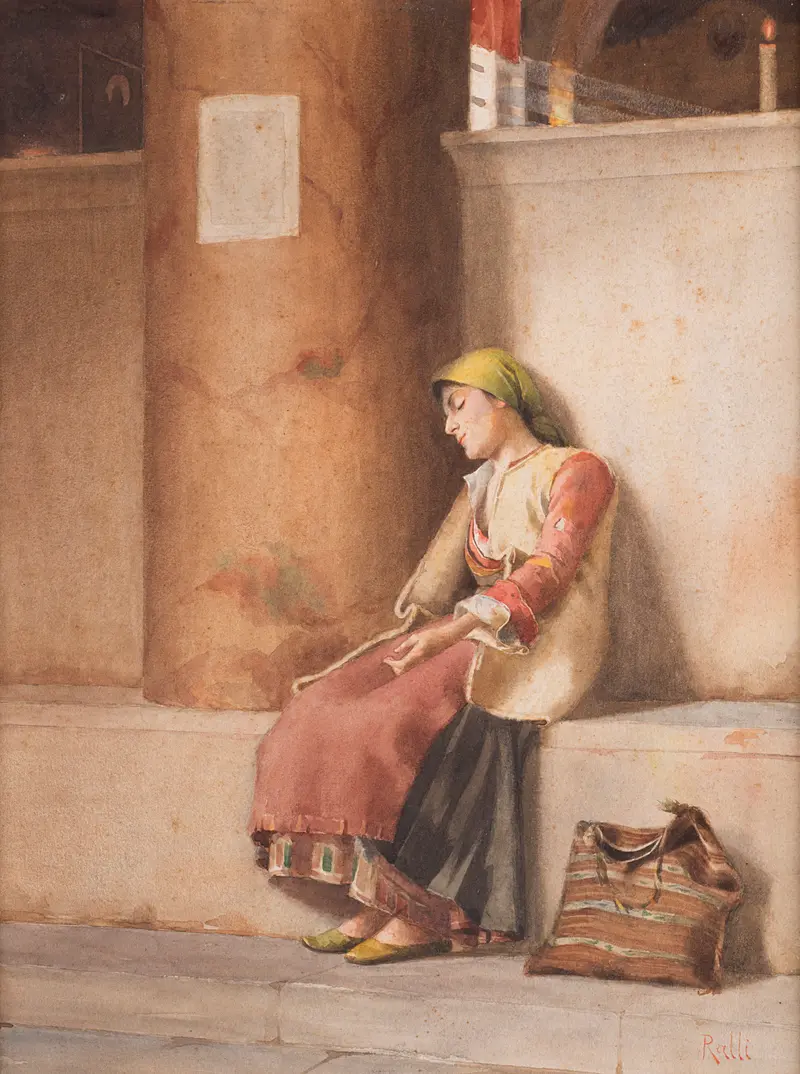
A Moment of Reflection
Theodoros Ralli
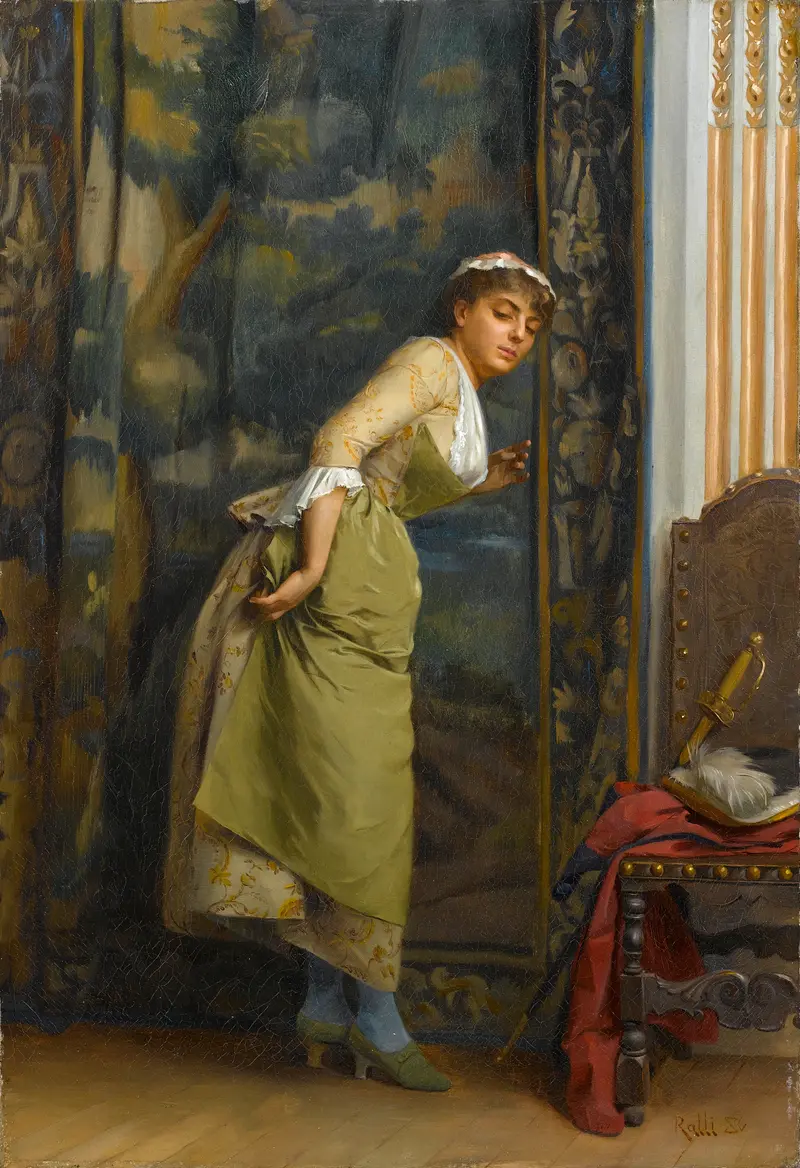
Eavesdropping (Ralli)
Theodoros Ralli
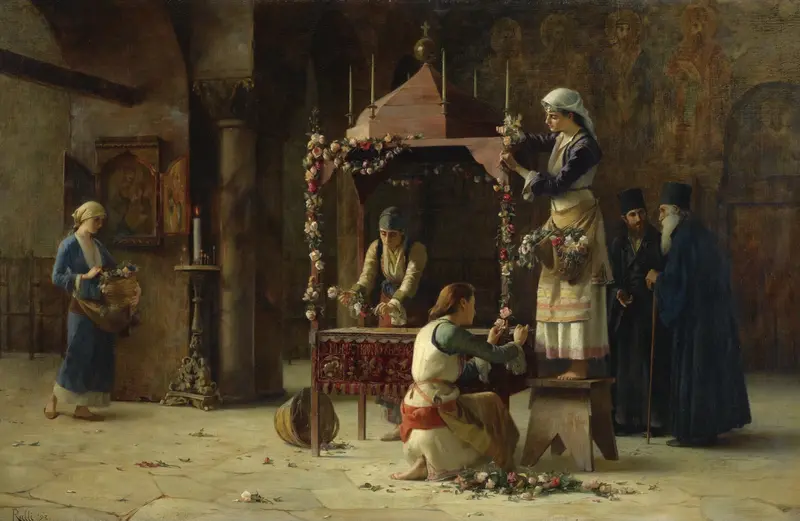
Holy Friday, Greece
Theodoros Ralli
A Moment's Rest
Theodoros Ralli
More Genre Scene Art

Banquet of the Officers of the St George Civic Guard
Frans Hals

Rembrandt and Saskia in the Scene of the Prodigal Son
Rembrandt van Rijn

Bal du moulin de la Galette
Pierre-Auguste Renoir

Quadrille at the Moulin Rouge
Henri de Toulouse-Lautrec

A Burial at Ornans
Gustave Courbet

When Will You Marry?
Paul Gauguin