
The Weeding Is Coming — History & Facts
A hush of anticipation seems to hang in the winter air, as if the snow itself is pausing to watch. At the heart of The Weeding Is Coming, a woman stands with her back to us, wrapped in a blue skirt and shawl, her hands folded in a gesture that suggests both patience and longing. She is not part of the festive crowd beyond the fence, where villagers in vibrant folk dress—crimson skirts, flowered jackets, and patterned shawls—gather around a musician, their faces lively with conversation and expectation.
The fence, capped with snow, is more than a boundary: it divides the solitary watcher from the whirl of community life, inviting us to wonder at her story. Light glances off the snow, brightening the reds and greens of the costumes, while the subdued palette of the foreground draws our gaze to the central figure’s quiet presence. Painted in 1891, this work by Antoni Piotrowski belongs to a moment when artists across Eastern Europe turned their eyes to the rituals and rhythms of rural life, capturing the customs that defined local identity in a rapidly changing world. Such scenes of village gatherings—weddings, markets, festivals—were often commissioned by collectors eager to preserve or celebrate national traditions, especially as industrialization and political upheaval threatened to erase them.
Today, The Weeding Is Coming resides in the National Museum in Kraków, a testament to the era’s fascination with folk culture and the painter’s careful observation of gesture, costume, and community. The painting’s quiet drama invites you to linger, searching for stories in the faces and spaces between its figures.
More Artworks by Antoni Piotrowski

Execution of an insurgent in Warsaw Citadel in 1863 or
Antoni Piotrowski
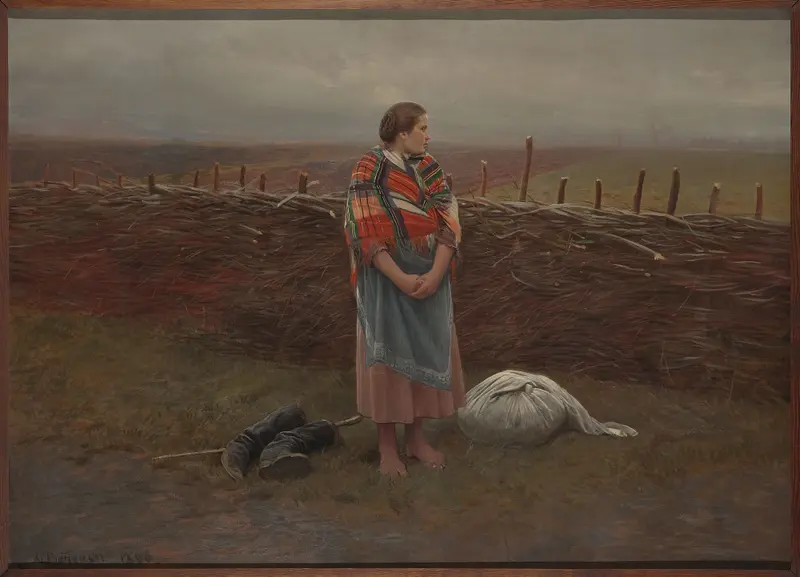
Homeless (Country girl at the fence).
Antoni Piotrowski
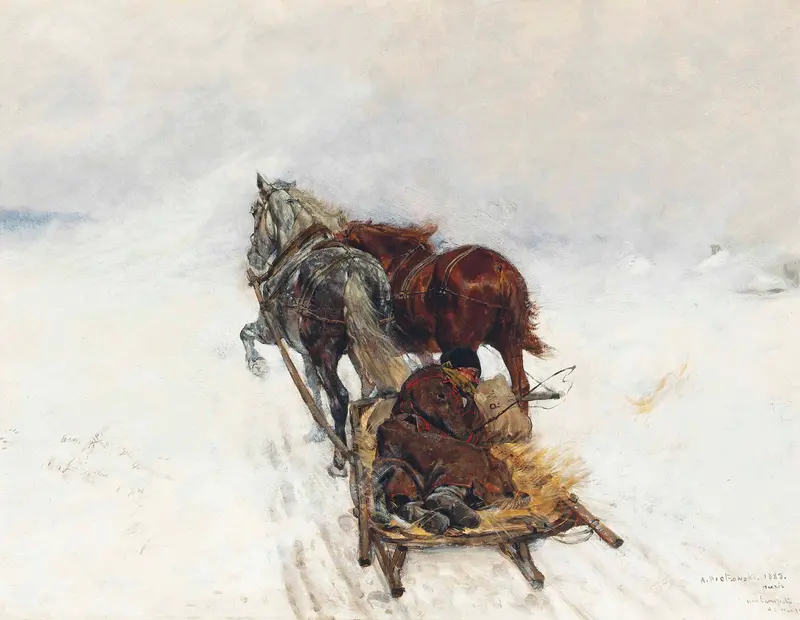
A snow storm
Antoni Piotrowski
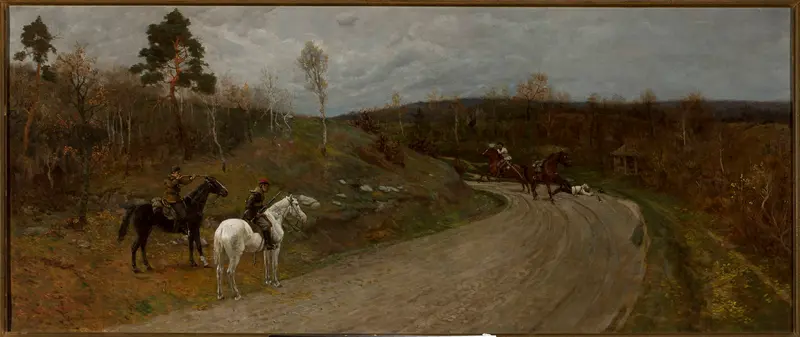
A scene from the 1863 Uprising.
Antoni Piotrowski

Wedding in the evening
Antoni Piotrowski
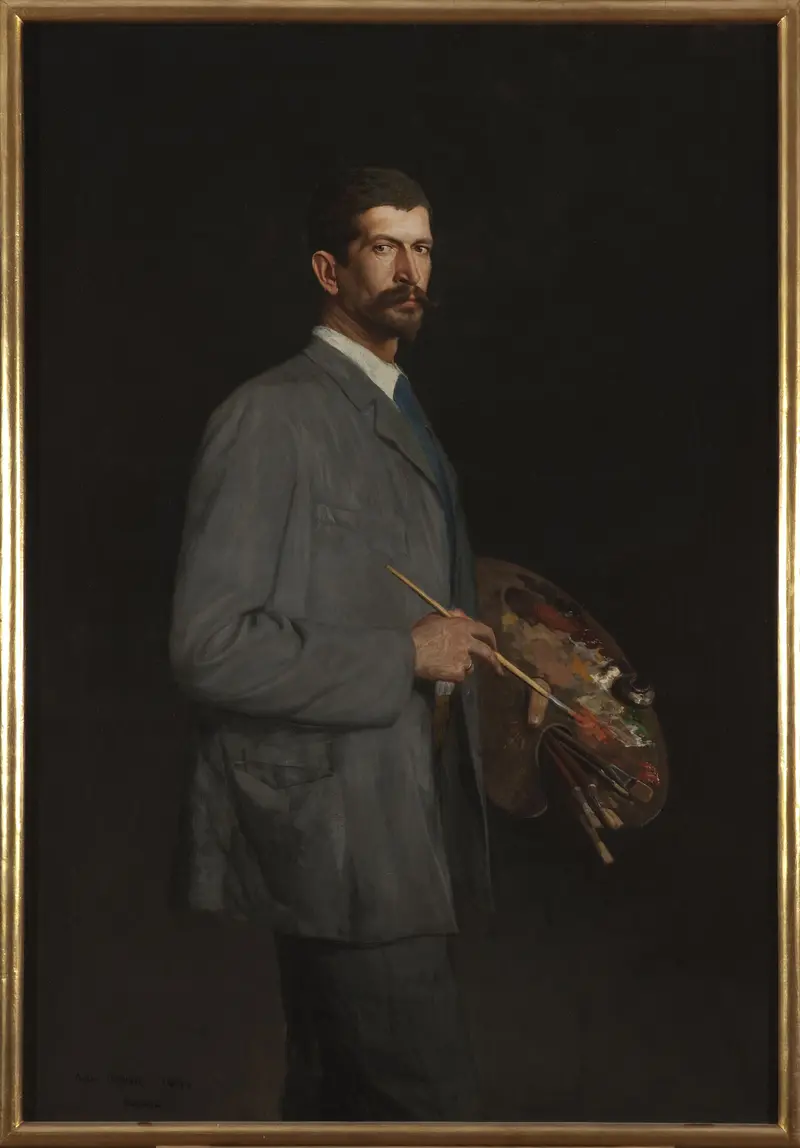
Self-portrait with a palette
Antoni Piotrowski
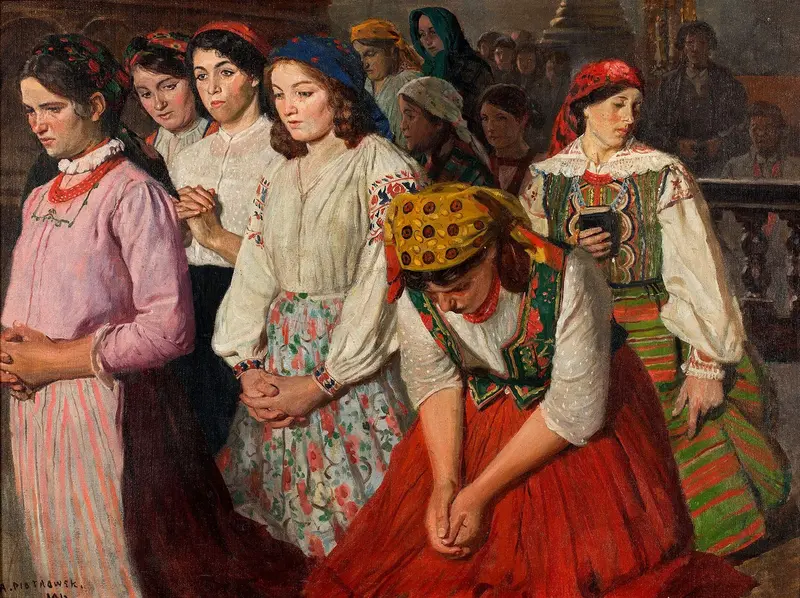
Intencja
Antoni Piotrowski
Berezina
Antoni Piotrowski
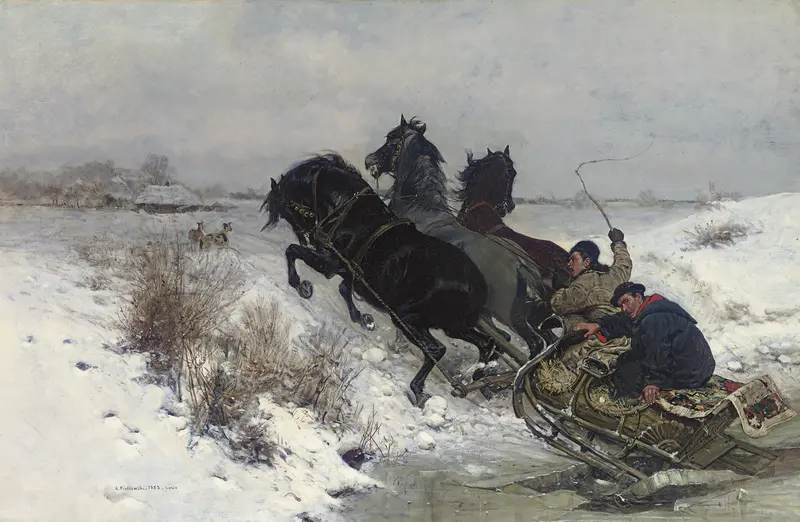
The cracked ice
Antoni Piotrowski
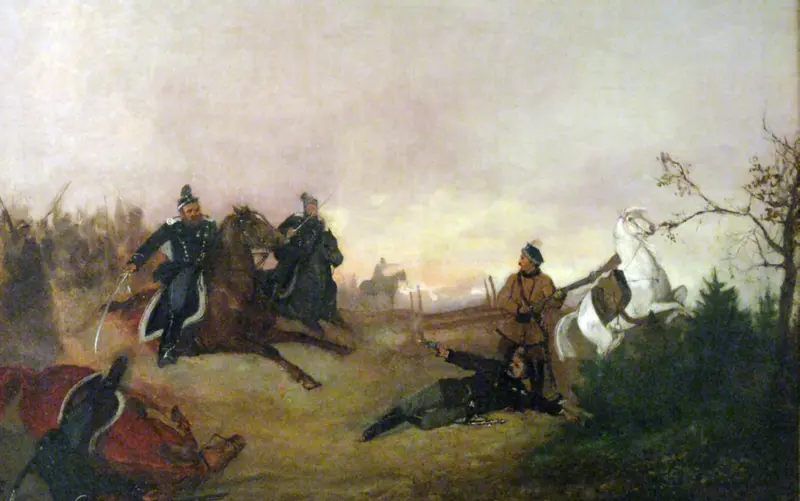
Death of Dionizy Czachowski during battle of Wierzchowiska in
Antoni Piotrowski
More Genre Scene Art

Banquet of the Officers of the St George Civic Guard
Frans Hals

Rembrandt and Saskia in the Scene of the Prodigal Son
Rembrandt van Rijn

Bal du moulin de la Galette
Pierre-Auguste Renoir

Quadrille at the Moulin Rouge
Henri de Toulouse-Lautrec

A Burial at Ornans
Gustave Courbet

When Will You Marry?
Paul Gauguin