
The White Hound at the Curtain (East of the Sun and West of the Moon) — History & Facts
What first catches the eye in The White Hound at the Curtain (East of the Sun and West of the Moon) is the embrace at its heart: a pale, otherworldly figure shrouded in the pelt of a white bear draws close a dark-haired woman, their faces nearly touching, their bodies folded together in a moment of quiet intimacy. The surrounding space is almost dizzyingly vertical, with fine lines stretching upward, interrupted only by a single, ornate black panel and the delicate chain of a lamp. The patterned mound they rest on, dotted with stylized flowers, seems to float above a checked floor, while a pair of red slippers and a scattering of pearls hint at a story in progress—something left behind, something about to begin.
Every detail here is deliberate: the bear’s head, resting gently on the woman’s lap, signals both protection and enchantment, while the sharp contrast of textures—soft fur, intricate embroidery, the cool smoothness of the curtain—pulls the viewer deeper into the tale. This illustration belongs to the world of early twentieth-century fairy tale books, when artists like Kay Nielsen were transforming old stories into visual feasts for a new generation of readers. Published in 1922 in East of the Sun and West of the Moon: Old Tales from the North, this work is a testament to the era’s fascination with Scandinavian folklore and the decorative possibilities of Art Nouveau. Such images were commissioned to bring printed tales to life, their stylized elegance and dreamlike spaces offering young and old alike a window into realms of magic and longing.
History has kept few traces of the individual journeys of these illustrations, but their power endures in every line and pattern—inviting us to linger, to wonder, and to imagine what lies just beyond the curtain.
More Artworks by Kay Nielsen
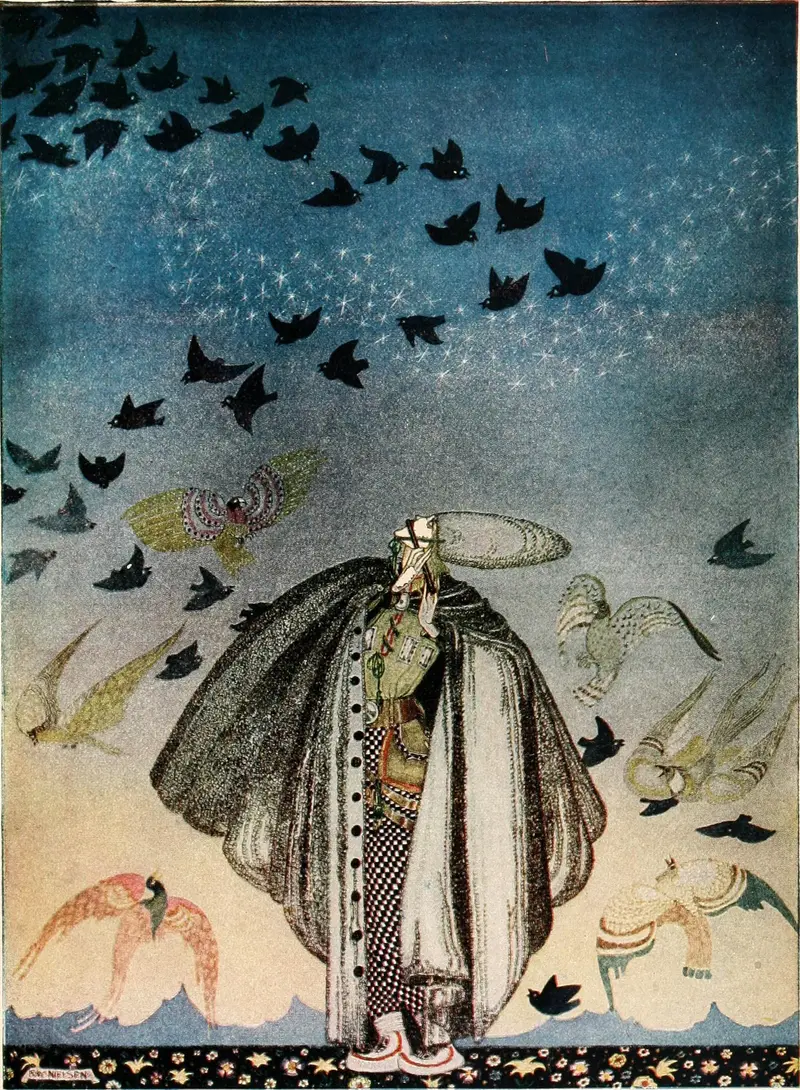
The Cloak of Black Birds (East of the Sun and West of the Moon)
Kay Nielsen

The Spirit at the Lighted Door (East of the Sun and West of the Moon)
Kay Nielsen
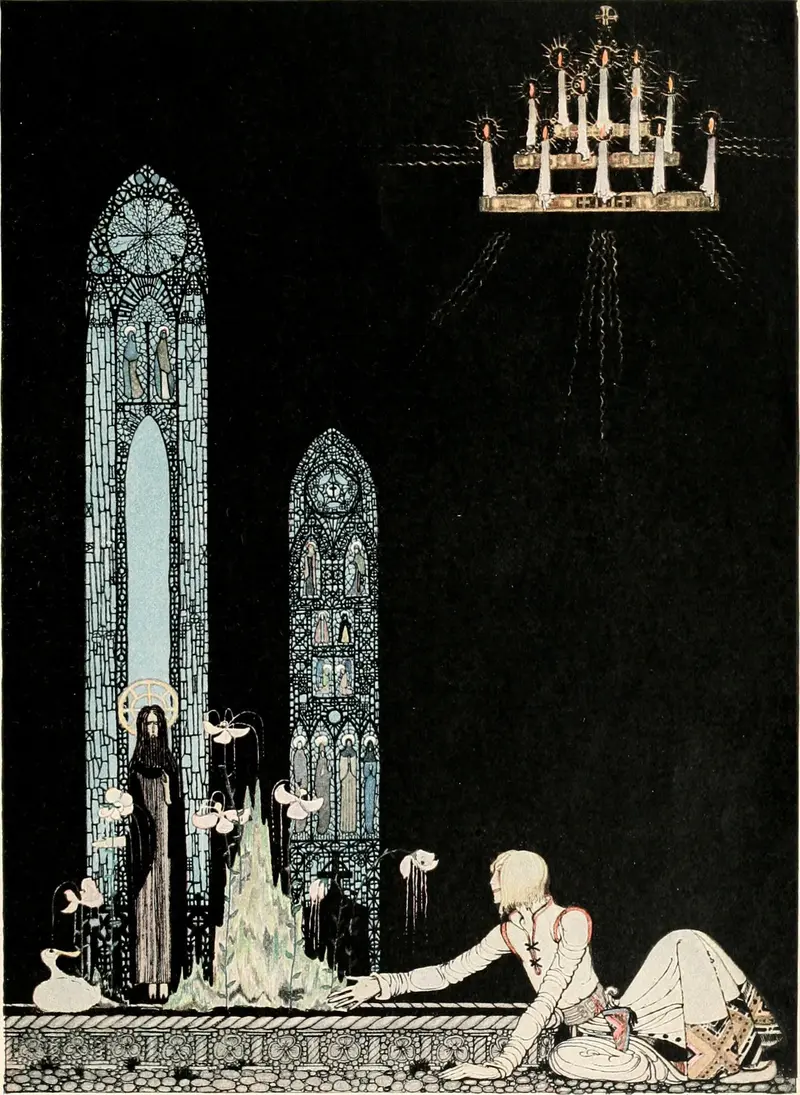
The Widow's Son and the Candles (East of the Sun and West of the Moon)
Kay Nielsen
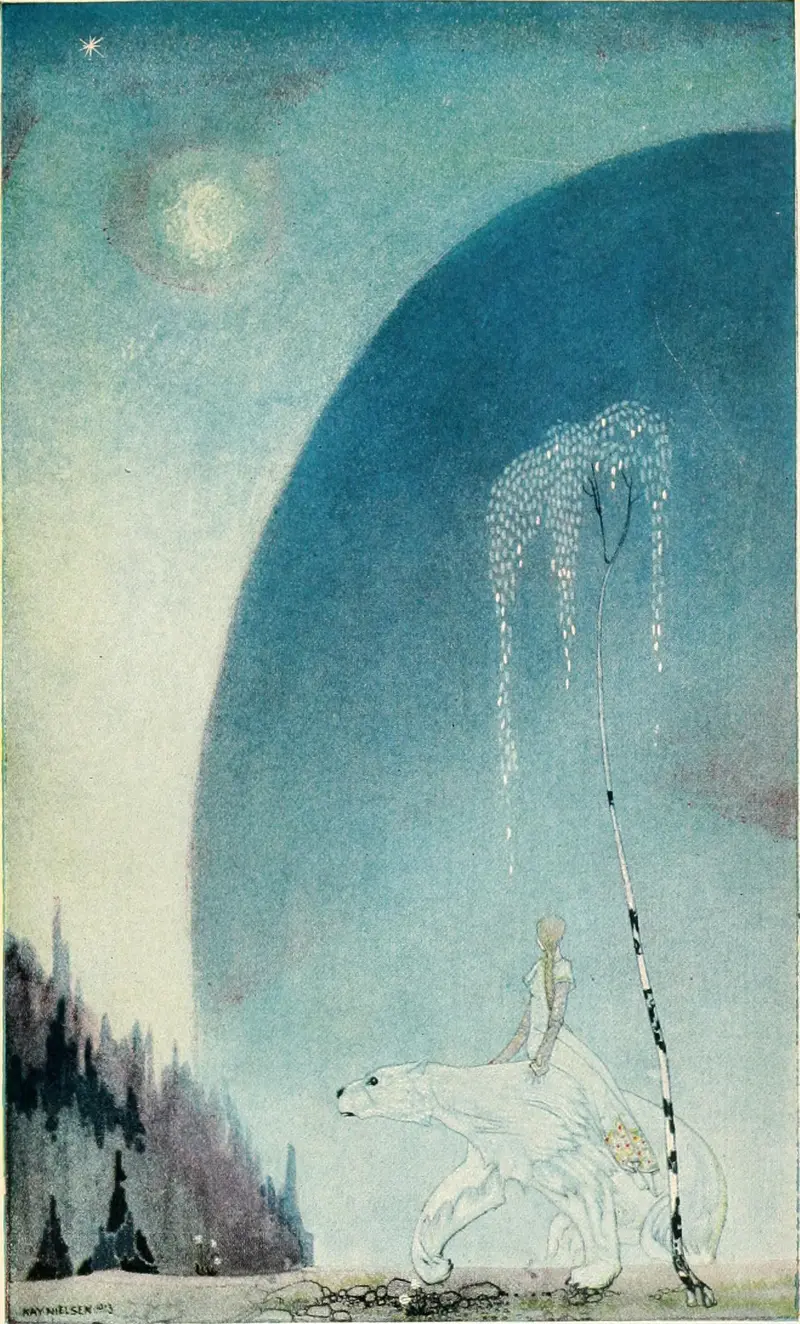
The White Goat Under the Moon (East of the Sun and West of the Moon)
Kay Nielsen

The Cloud Castle (Hansel and Gretel and Other Stories)
Kay Nielsen
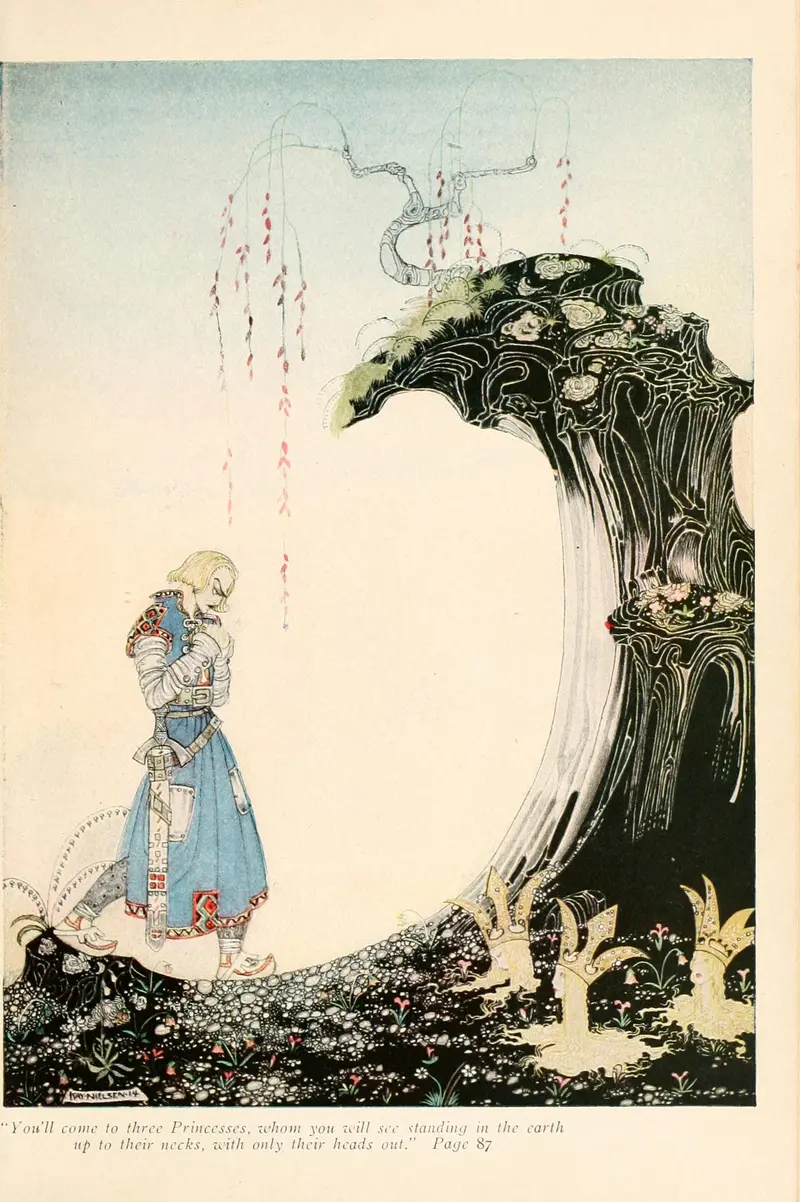
The Enchanted Wave (East of the Sun and West of the Moon)
Kay Nielsen
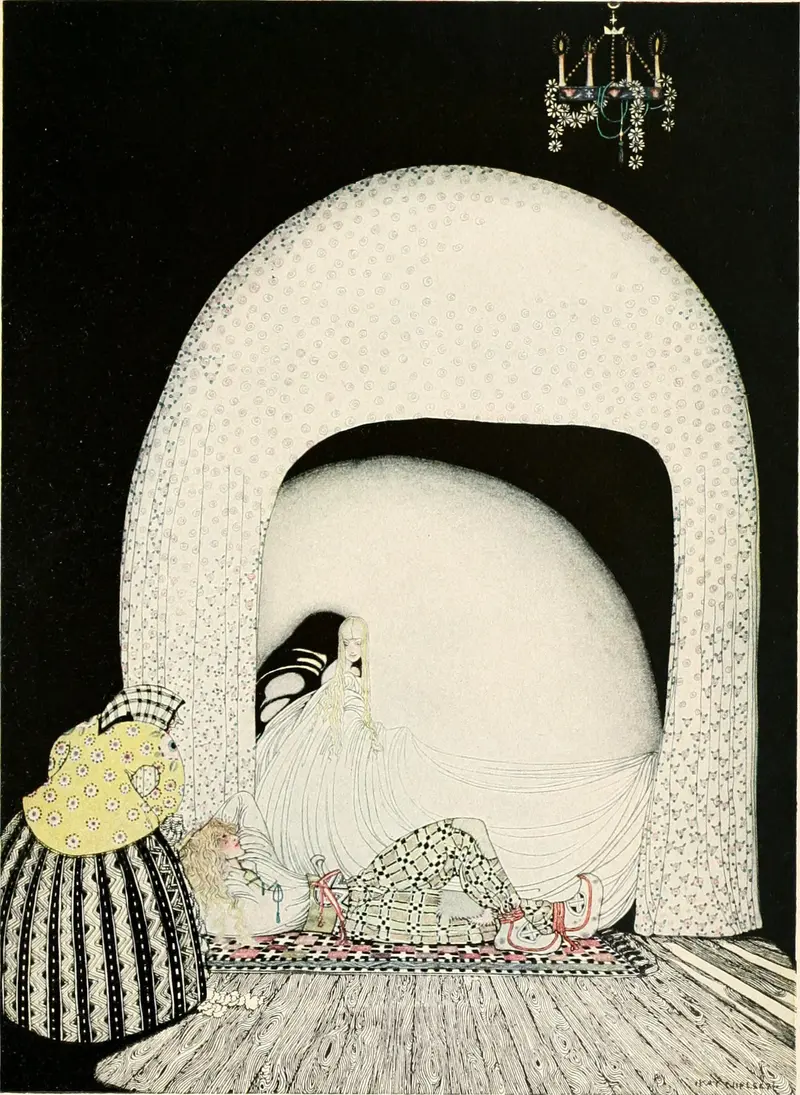
Beneath the White Canopy (East of the Sun and West of the Moon)
Kay Nielsen
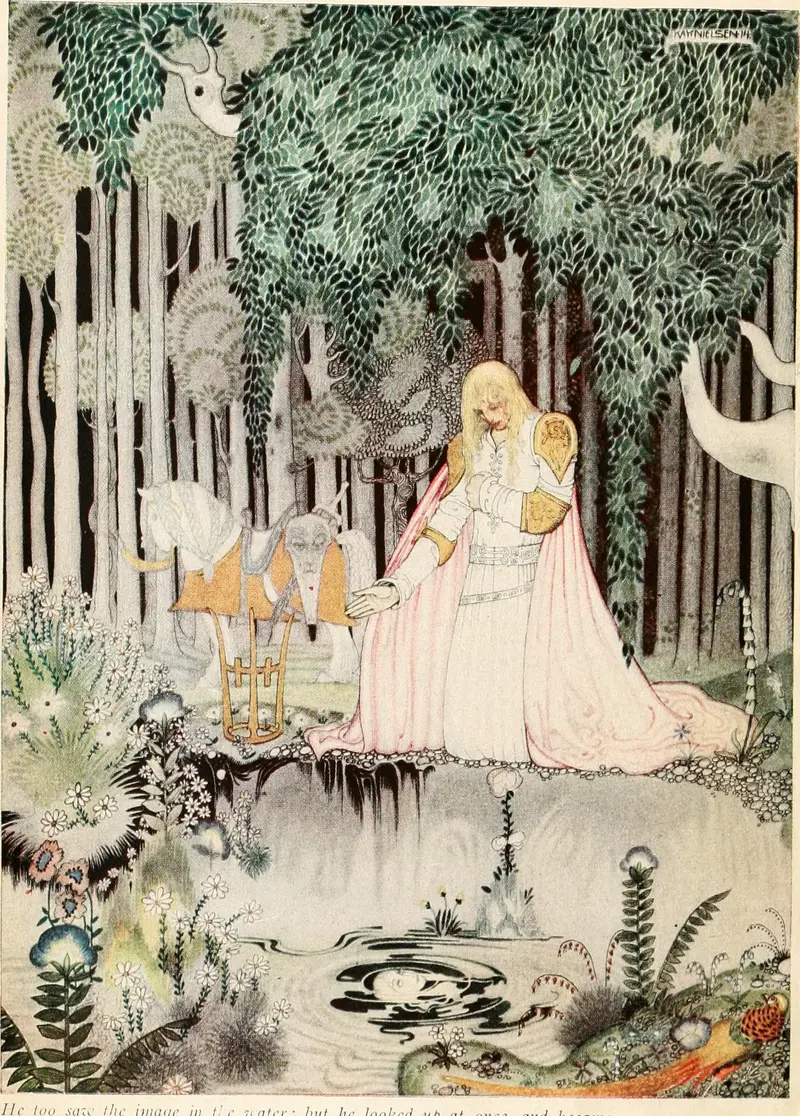
The Princess in the Moonlit Wood (East of the Sun and West of the Moon)
Kay Nielsen
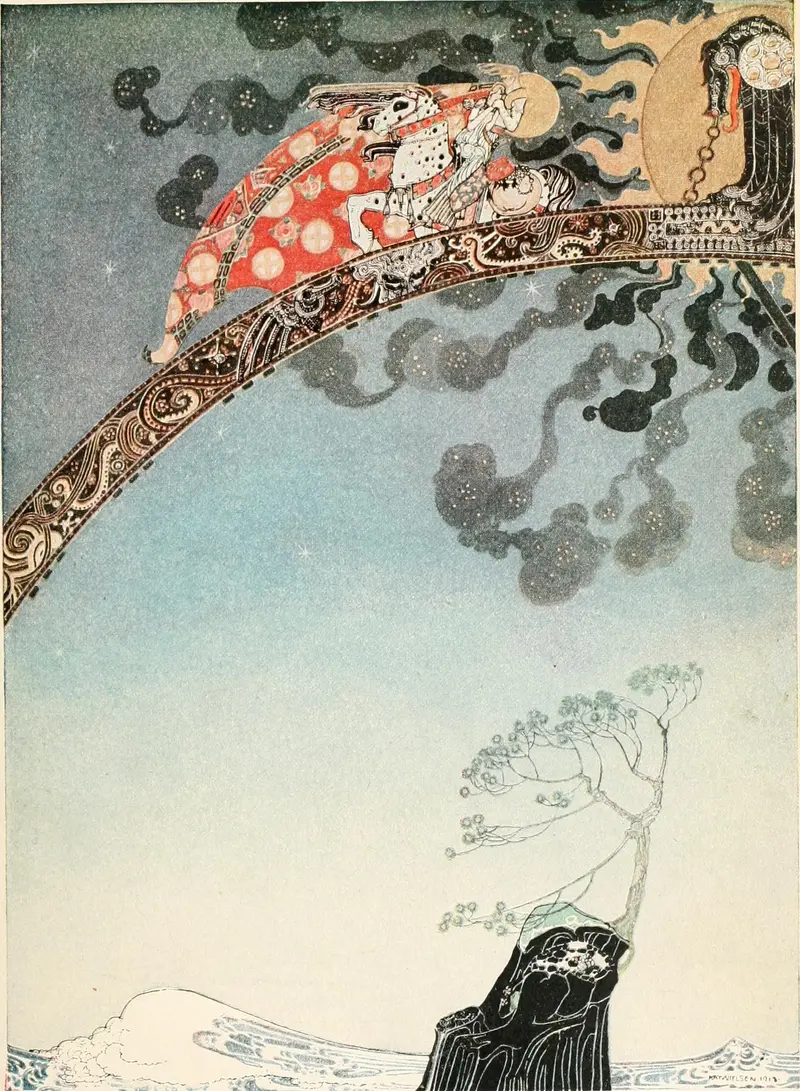
The Bridge Over the Sea (East of the Sun and West of the Moon)
Kay Nielsen
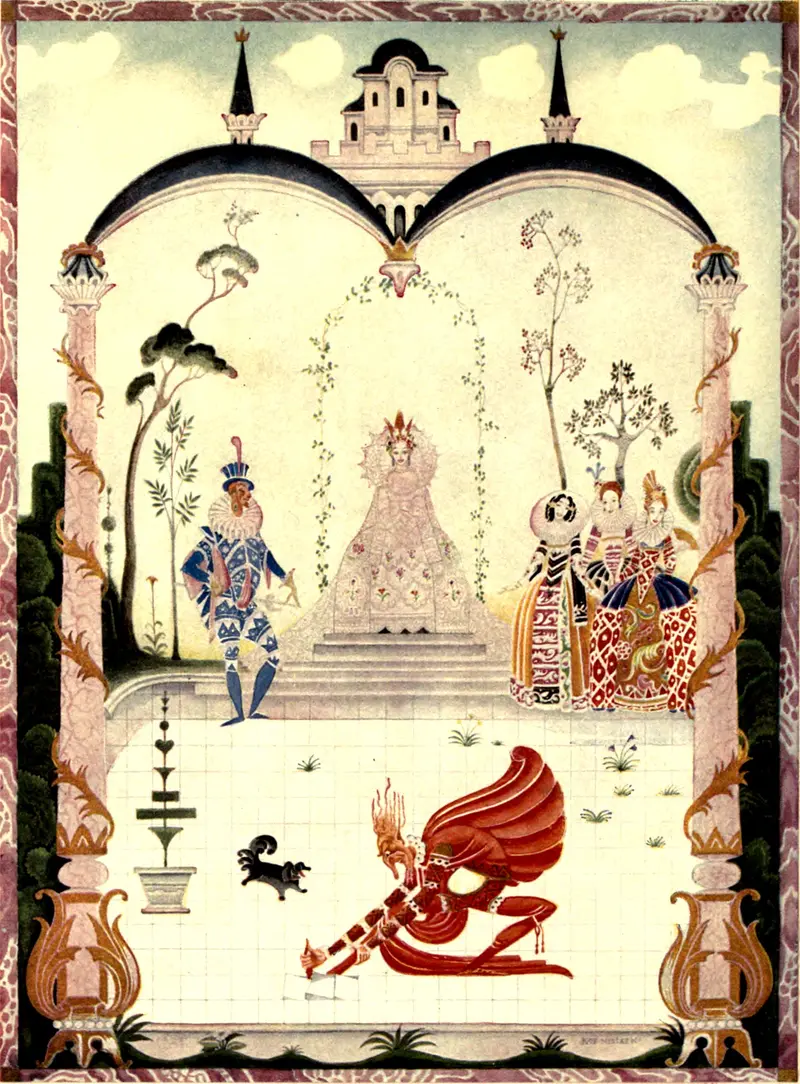
Frontispiece (Hansel and Gretel and Other Stories)
Kay Nielsen





