
Three Boors drinking and Smoking in the Spirit House — History & Facts
What draws the eye first is the sly, sidelong glance of the man at the right, his grin half-hidden beneath a bristling mustache, as he tips a pewter jug toward a glass. The table between the three men is littered with playing cards and spoons, the remnants of a game and a meal, while the smoky air and battered hats speak to a world of rough camaraderie. Light falls through the leaded window behind them, catching the gleam of the jug and the white of a ruffled collar, setting these humble figures in sharp relief against the shadowed interior.
Each gesture is deliberate: the man in the red cap sniffs his drink with suspicion, the one in the woolen cap peers at his spoon, and together they form a triangle of earthy humor and shared mischief. The palette is all warm browns and ochres, the mood intimate, conspiratorial, and unmistakably alive. Scenes like this one flourished in the Dutch Republic of the seventeenth century, when painters such as Adriaen van Ostade made their names by capturing the daily rituals of peasants and townsfolk. Painted in 1660, this work belongs to a tradition that delighted urban collectors with glimpses of rural life—sometimes affectionate, sometimes mocking, always rich in detail.
These genre paintings were rarely grand commissions; instead, they were made for a growing middle class eager to see itself reflected, or gently caricatured, on the walls of their homes. Three Boors drinking and Smoking in the Spirit House now survives as a vivid record of that world, its laughter and its vices, inviting us to linger over the faces and imagine the stories behind each crooked smile.
More Artworks by Adriaen van Ostade

Dans in de herberg
Adriaen van Ostade
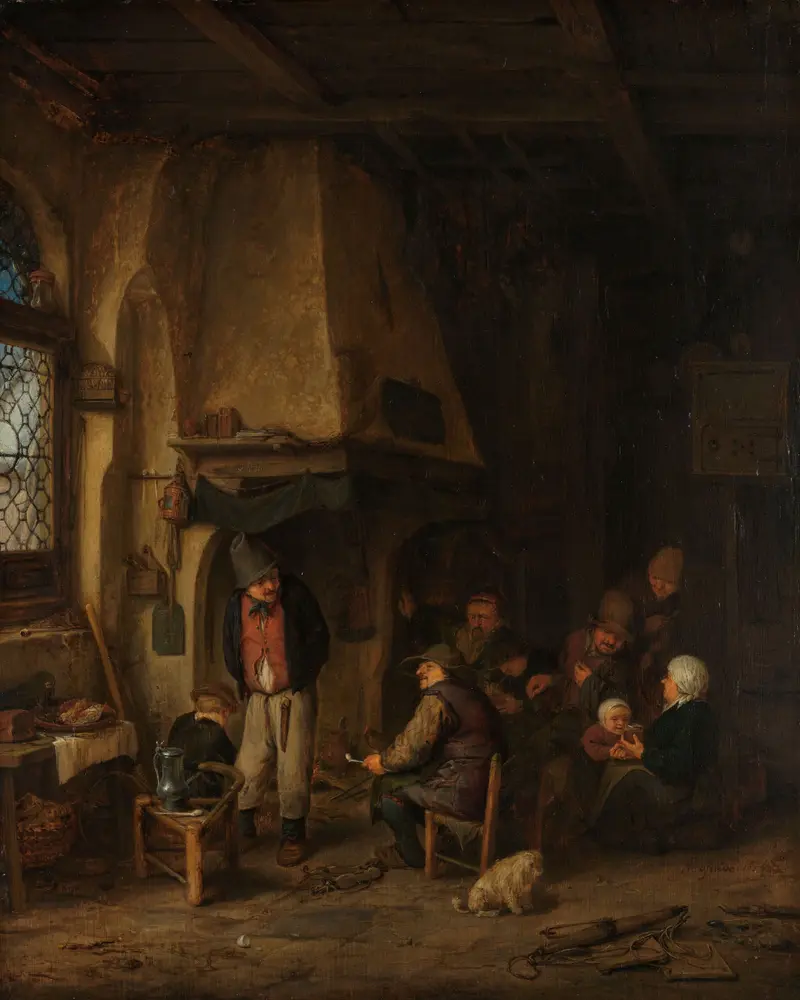
‘The Skaters’: Peasants in an Interior
Adriaen van Ostade
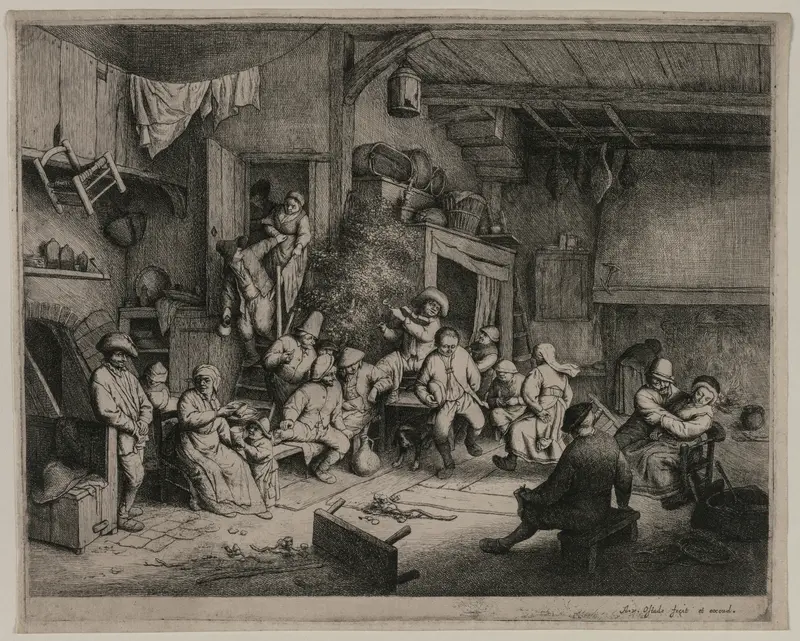
Dance at the Inn
Adriaen van Ostade
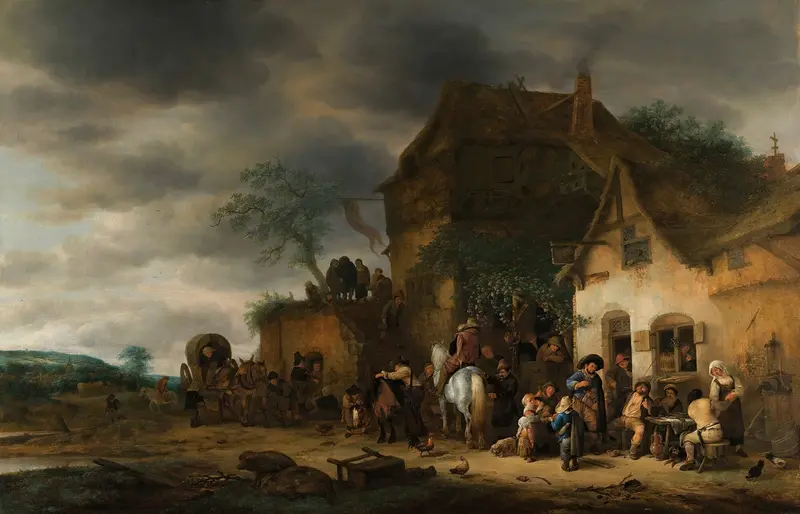
Travellers Halted At A Country Inn
Adriaen van Ostade
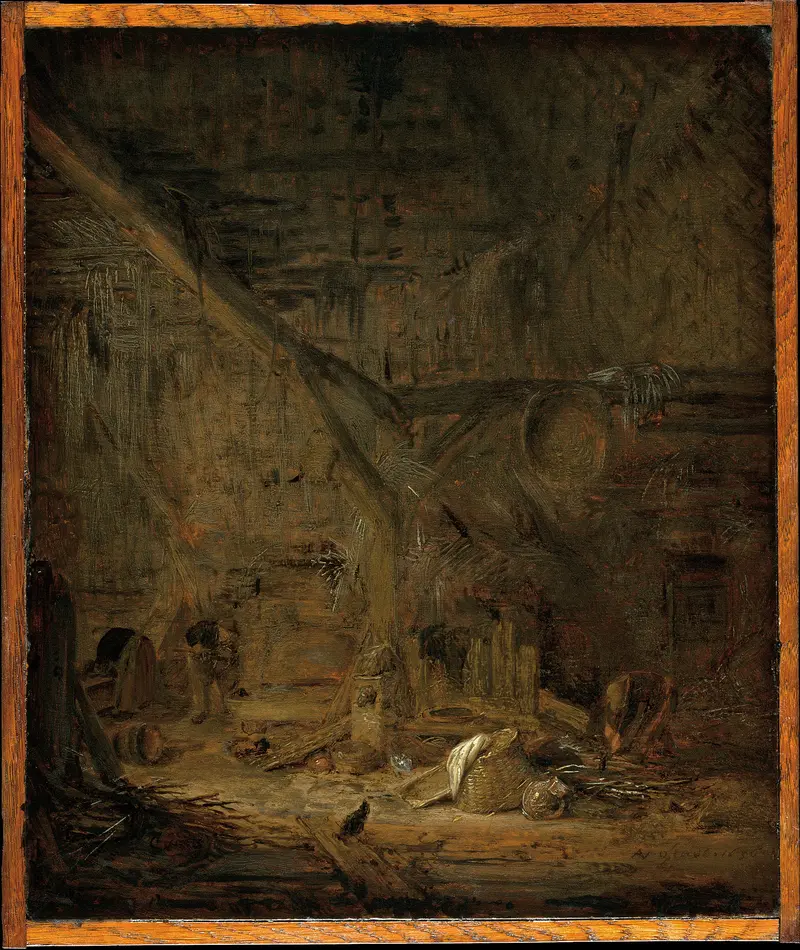
Interior of a Barn
Adriaen van Ostade
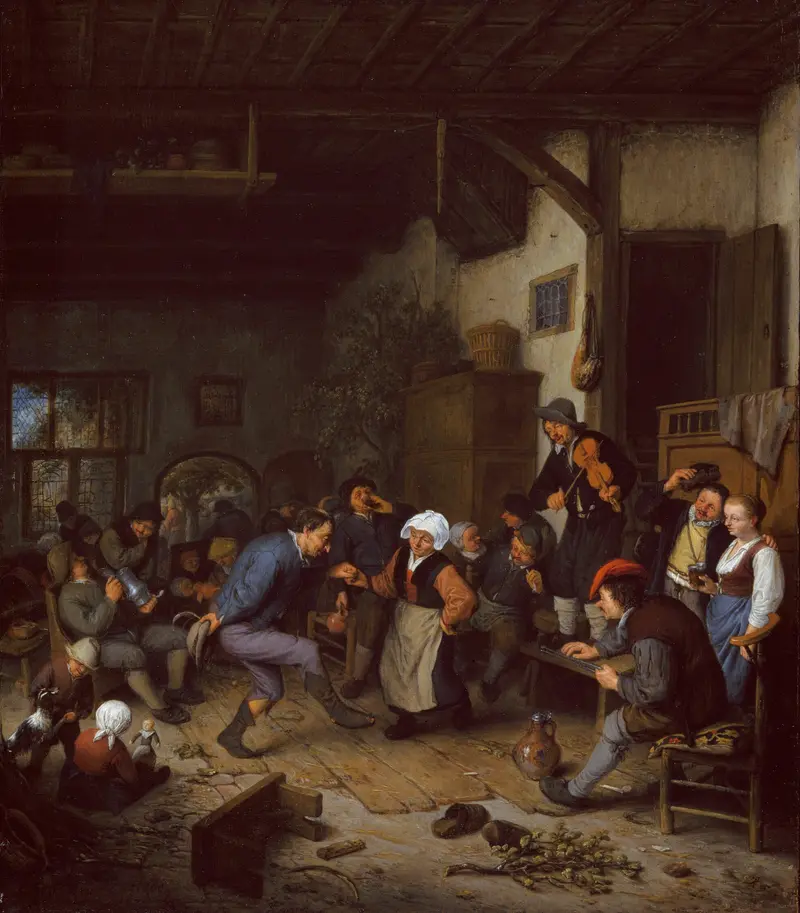
Merrymakers in an Inn
Adriaen van Ostade
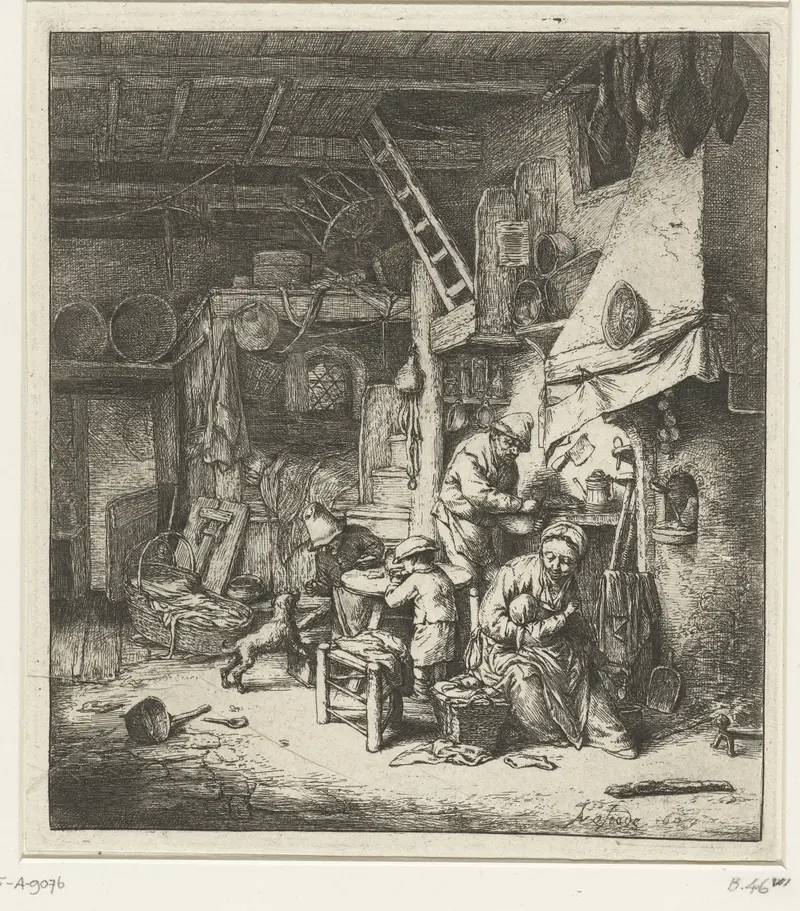
Boerengezin in interieur
Adriaen van Ostade
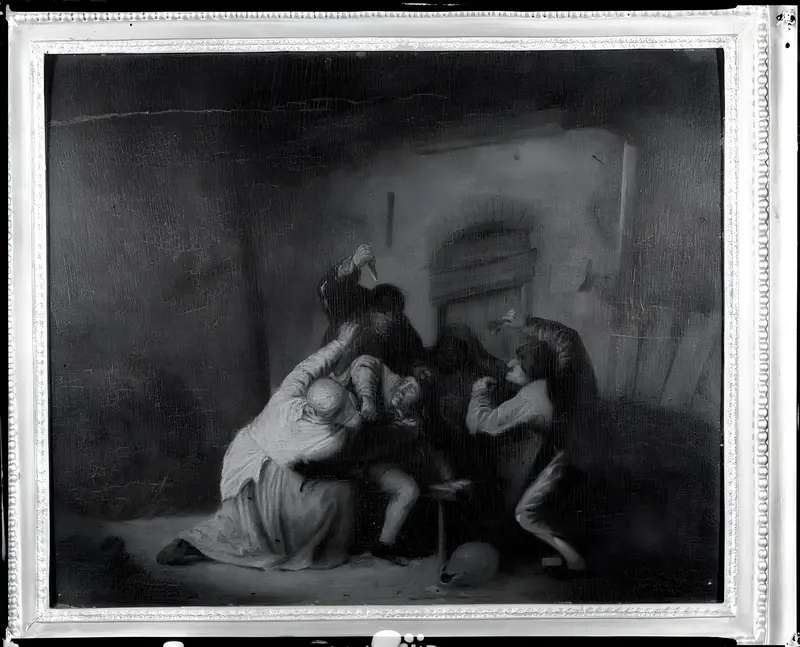
Peasants Brawling in a Tavern
Adriaen van Ostade
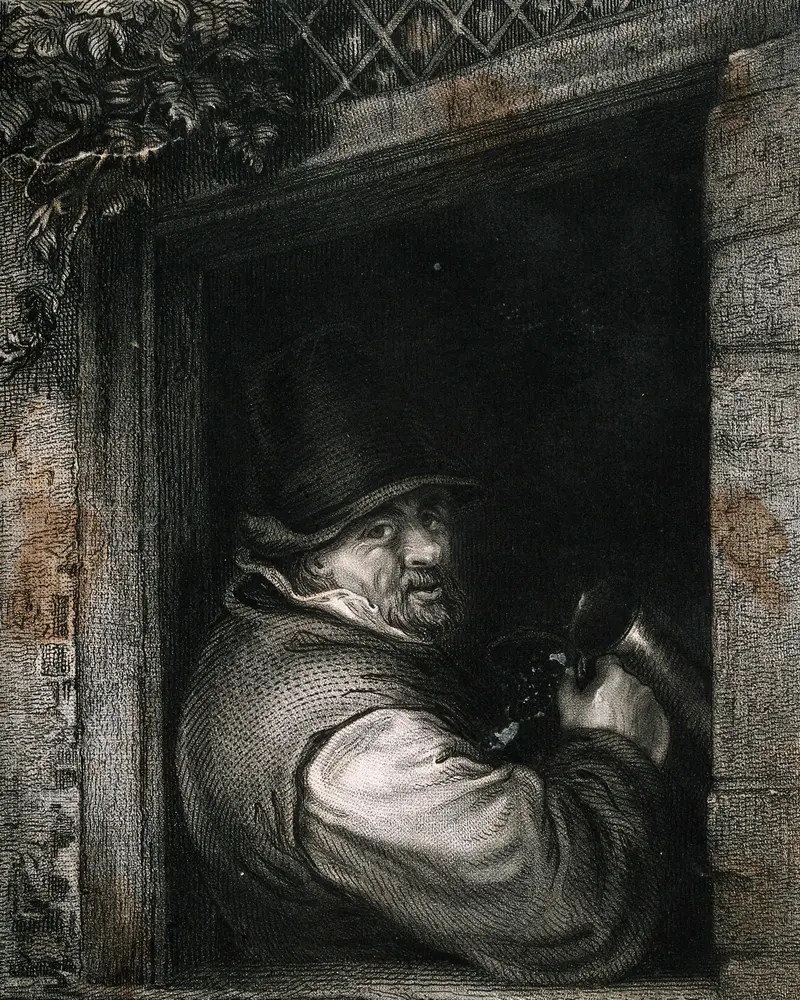
Man with a Tankard at a Window
Adriaen van Ostade
Dans in de herberg
Adriaen van Ostade
More Genre Scene Art

Banquet of the Officers of the St George Civic Guard
Frans Hals

Rembrandt and Saskia in the Scene of the Prodigal Son
Rembrandt van Rijn

Bal du moulin de la Galette
Pierre-Auguste Renoir

Quadrille at the Moulin Rouge
Henri de Toulouse-Lautrec

A Burial at Ornans
Gustave Courbet

When Will You Marry?
Paul Gauguin