
Three Peasants in an Interior — History & Facts
What draws the eye first is the sense of camaraderie: a raised glass, a half-smile, the easy slouch of men at rest. In this dimly lit interior, the painter has caught a moment of shared pleasure, the kind that needs no grand occasion. The man in the foreground leans forward, tankard in hand, as if about to toast or tease his companion, while the fiddler behind them draws his bow with a look of concentration that suggests the music is as much for himself as for his audience.
The palette is muted—earthy browns, dull reds, and the blue of a well-worn jacket—channeling the warmth and modesty of the setting. Light falls gently from the left, illuminating faces and hands, drawing us into the intimacy of the scene. Works like this, painted in the mid-seventeenth century, belong to a world where scenes of everyday life were prized for their wit and familiarity. In the Dutch Republic, artists such as Adriaen van Ostade made their names painting tavern interiors and peasant gatherings, often for a prosperous urban clientele who delighted in these glimpses of rustic leisure.
The date places this piece around 1650-1655, a period when such genre scenes were at their height. While little is recorded about the journey of this particular painting—last known to have passed through Sotheby’s in London—its subject and style speak for a whole generation’s fascination with the ordinary joys and rituals of common folk. Look again at the faces: the story is not grand, but it is utterly human.
More Artworks by Adriaen van Ostade

Dans in de herberg
Adriaen van Ostade
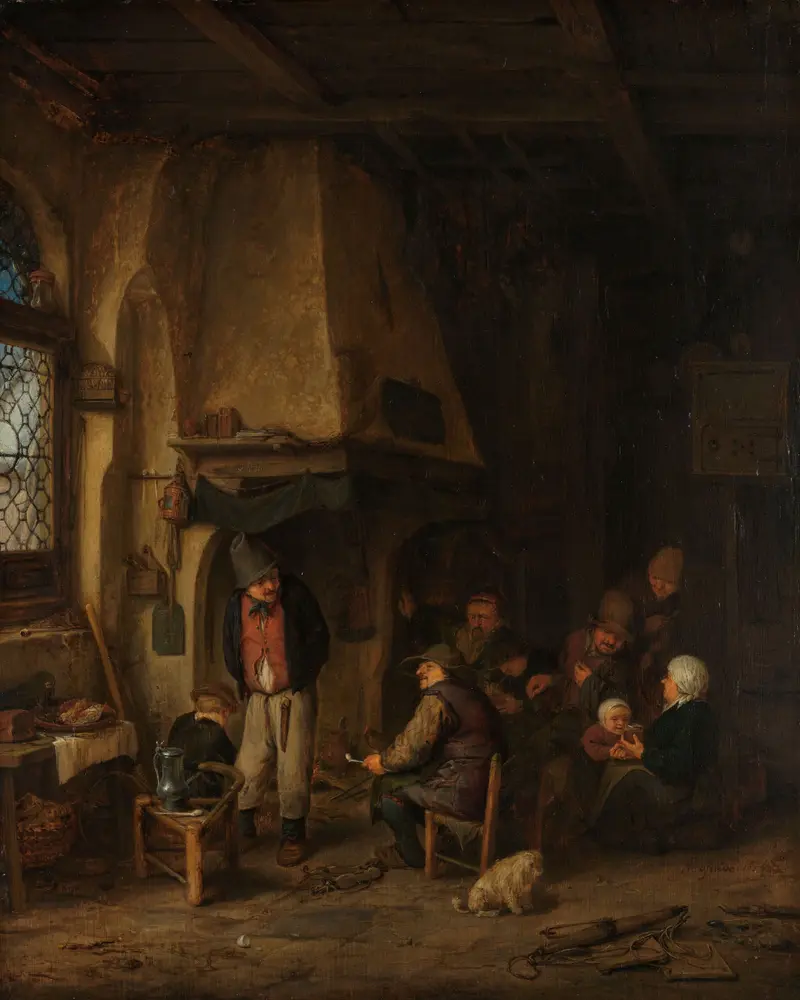
‘The Skaters’: Peasants in an Interior
Adriaen van Ostade
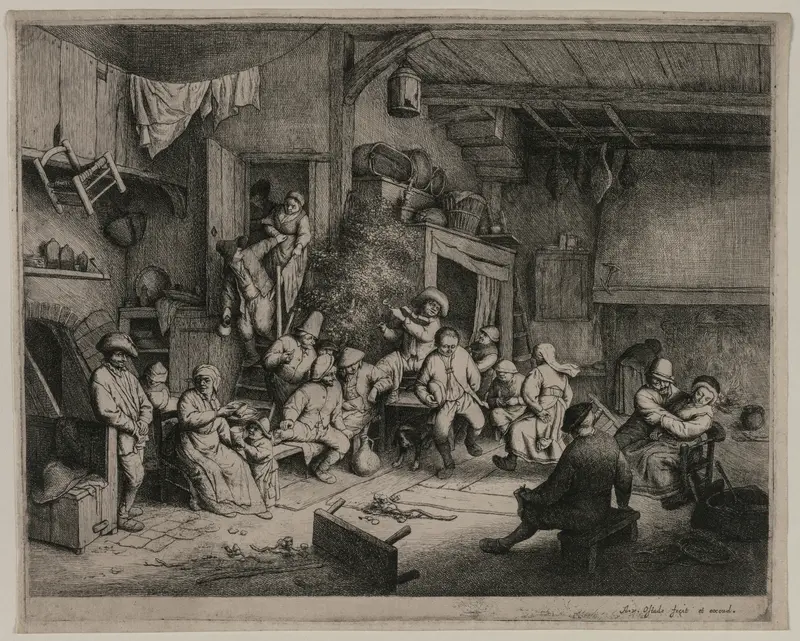
Dance at the Inn
Adriaen van Ostade
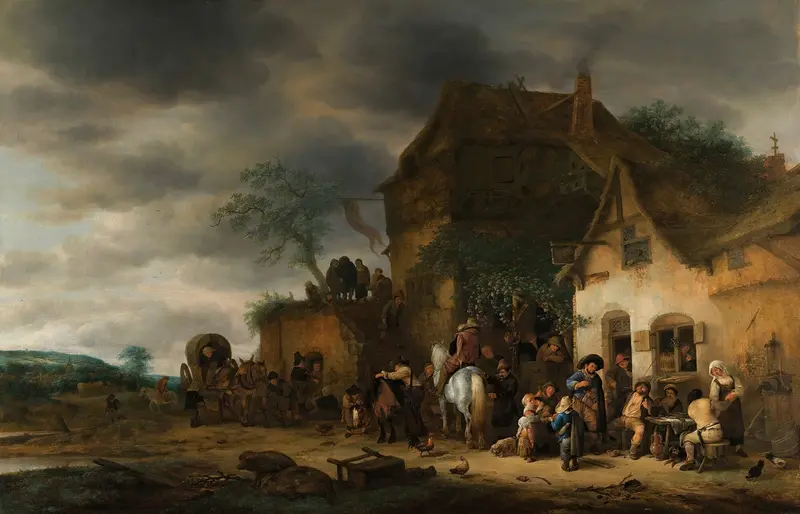
Travellers Halted At A Country Inn
Adriaen van Ostade
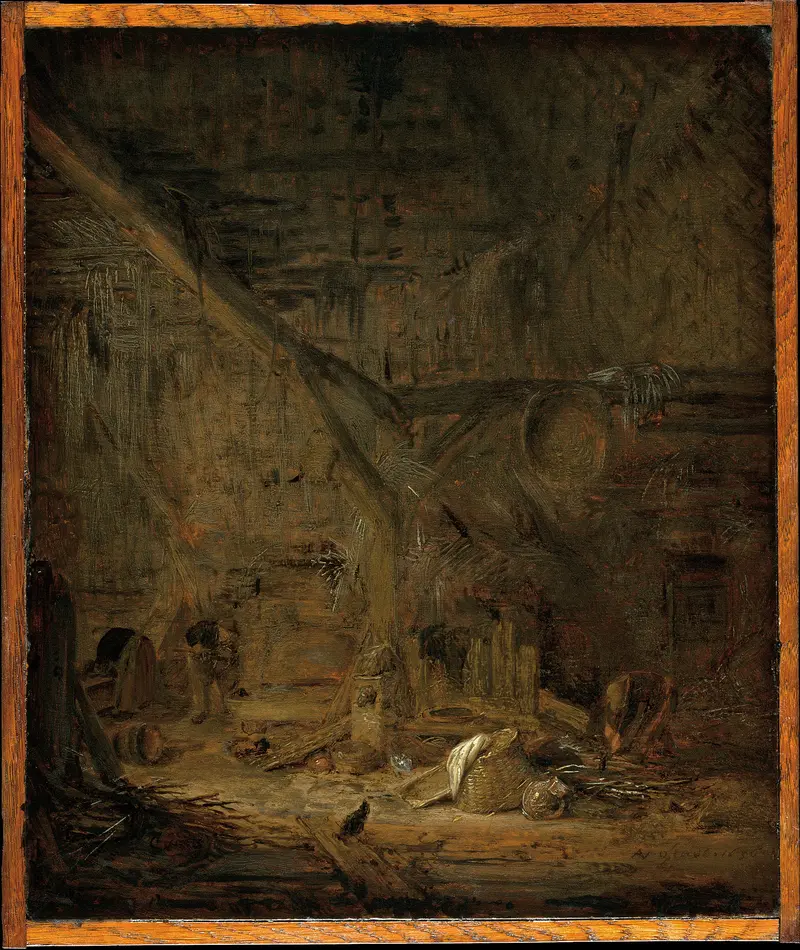
Interior of a Barn
Adriaen van Ostade
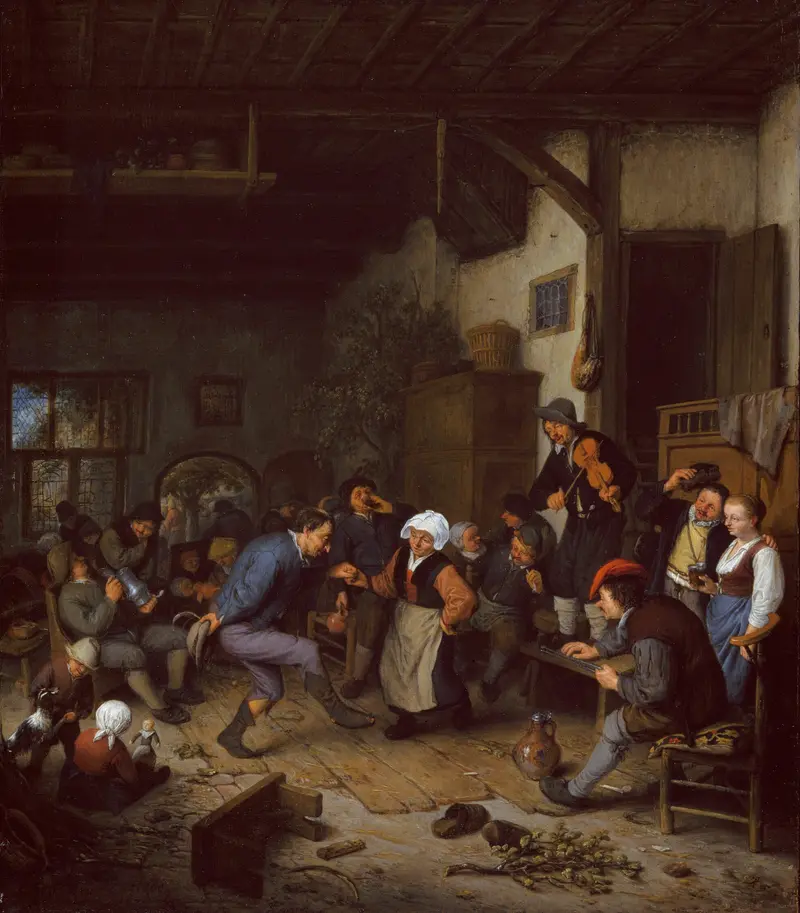
Merrymakers in an Inn
Adriaen van Ostade
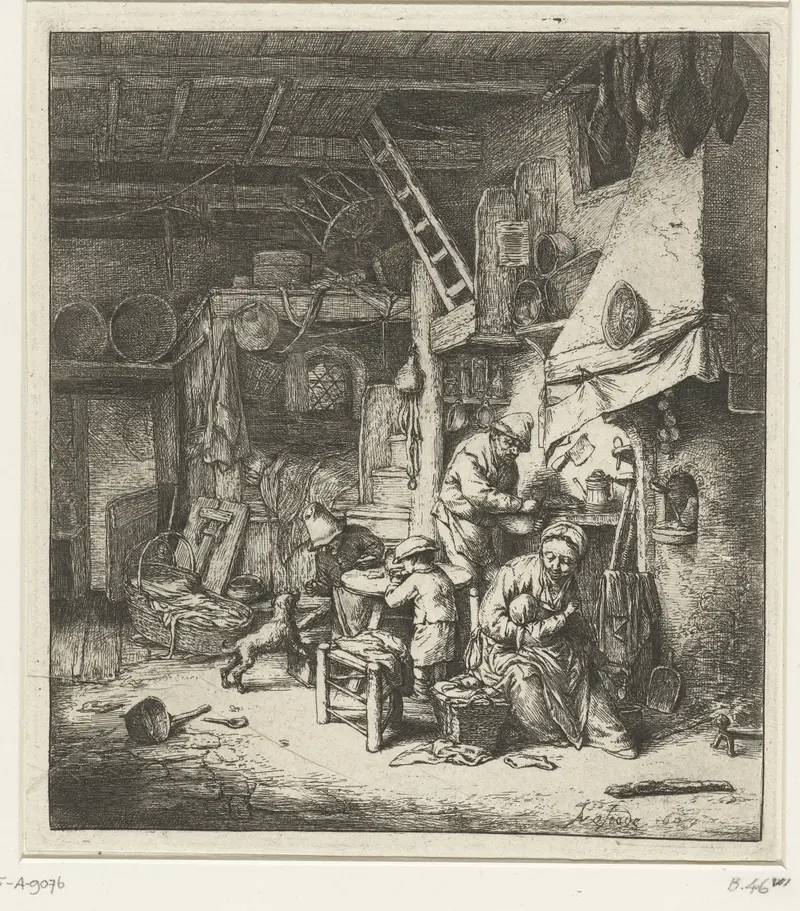
Boerengezin in interieur
Adriaen van Ostade
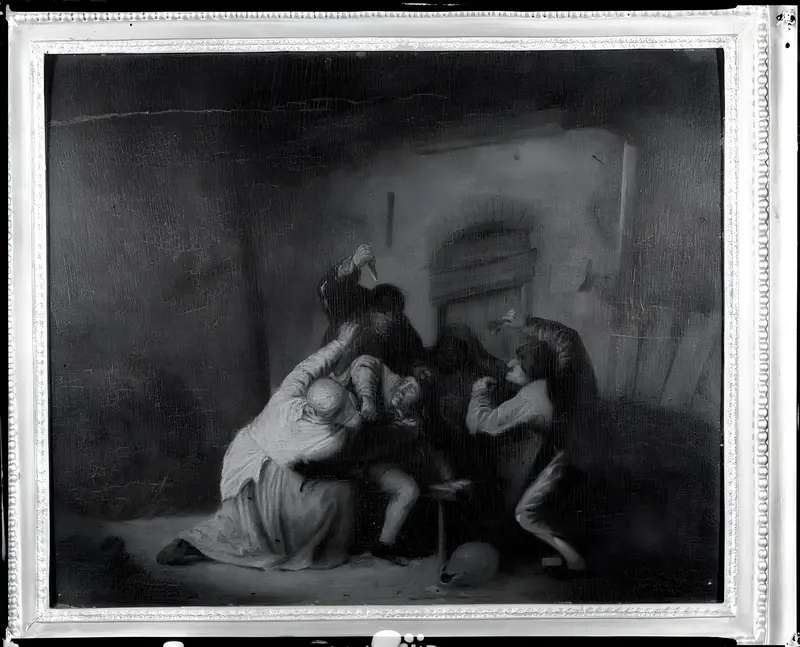
Peasants Brawling in a Tavern
Adriaen van Ostade
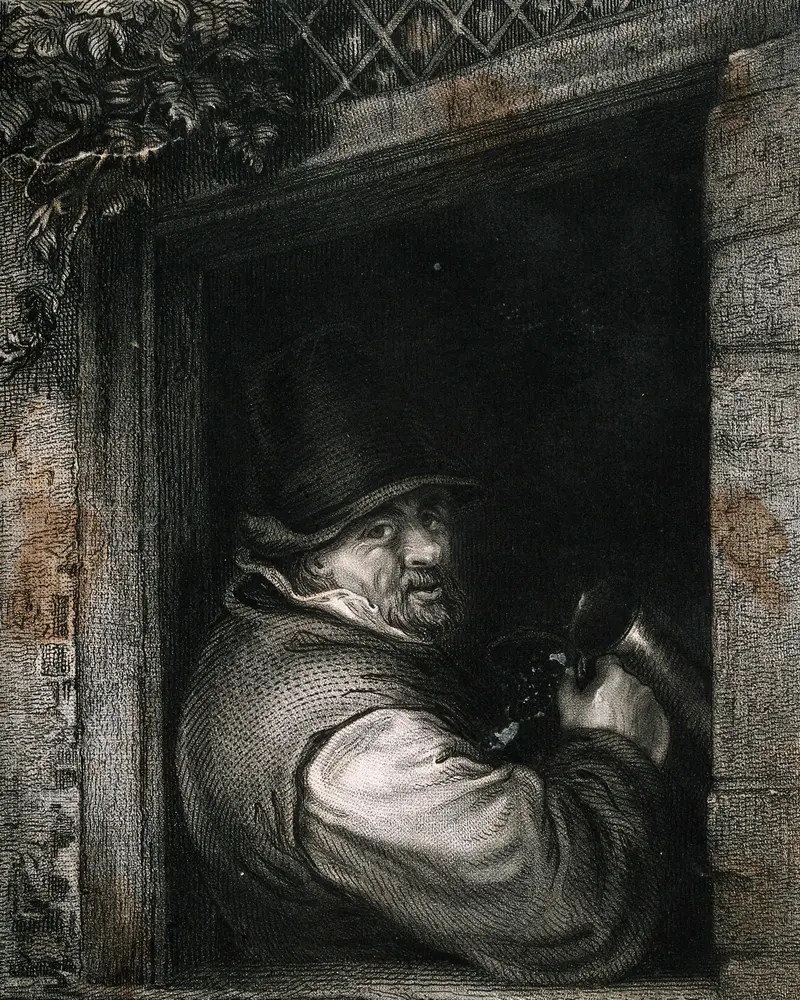
Man with a Tankard at a Window
Adriaen van Ostade
Dans in de herberg
Adriaen van Ostade
More Genre Scene Art

Banquet of the Officers of the St George Civic Guard
Frans Hals

Rembrandt and Saskia in the Scene of the Prodigal Son
Rembrandt van Rijn

Bal du moulin de la Galette
Pierre-Auguste Renoir

Quadrille at the Moulin Rouge
Henri de Toulouse-Lautrec

A Burial at Ornans
Gustave Courbet

When Will You Marry?
Paul Gauguin