Three studies of heads — History & Facts
When Anthony van Dyck painted Three studies of heads in 1622, he was just twenty-three years old and already recognized as a prodigy in the Antwerp studio of Peter Paul Rubens. What makes this work remarkable is its likely role as a preparatory study for a major altarpiece—possibly the now-lost Deposition for the Jesuit church in Antwerp. Rather than a finished portrait, it is a rare glimpse into the artist’s process, capturing a living model from multiple angles to refine the emotional intensity he would later bring to his religious compositions.
This practice was not common at the time, making the sheet a valuable document of van Dyck’s working method. The three heads, all studies of the same bearded man, are rendered with swift, confident strokes. Each face is caught at a different angle: one in profile, one looking downward, and one turned slightly away, as if the sitter is lost in thought or prayer. The shifting expressions suggest sorrow and resignation, emotions often required in scenes of Christ’s Passion.
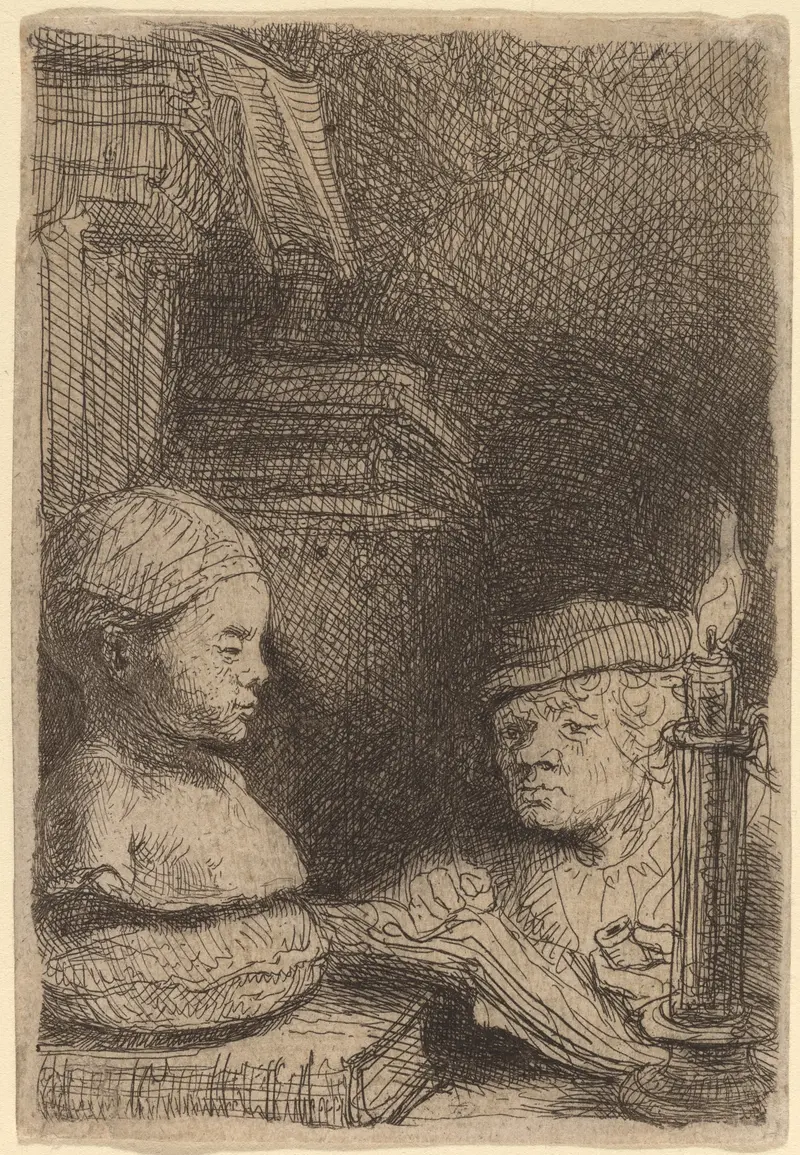
The loose handling of paint—if indeed this is oil, as many believe—lets the viewer see the artist’s hand at work, in contrast to the more polished finish of Rubens or the psychological precision of Rembrandt in his own studies of heads. The focus here is not on likeness but on capturing fleeting emotion, a hallmark of van Dyck’s early style. The exact journey of Three studies of heads is not fully documented, but works like this were typically kept in the artist’s studio as reference material, sometimes traded among fellow painters or collected by connoisseurs who valued insight into the creative process. Over time, such studies have become prized for their immediacy and rarity, as many were lost or destroyed once their purpose was served.
Today, this sheet stands as a testament to van Dyck’s early genius and his ties to the flourishing Antwerp school of the early seventeenth century. It offers a window into the formative years of an artist who would soon become court painter to Charles I of England and a defining figure of the Baroque movement.
More Artworks by Anthony van Dyck

Portrait of a Man
Anthony van Dyck

Portrait of Anne, Lady Russell, later Countess of Bedford (1615-1684)
Anthony van Dyck

Portrait of Francisco de Moncada, Marqués de Aytona
Anthony van Dyck

Portrait of Charles I, King of the Great Britain (1600-1649)
Anthony van Dyck

Portrait of Sir Robert Howard, K.B. (1626-1698)
Anthony van Dyck

King Charles I of England (1600-1649), three-quarter portrait
Anthony van Dyck

Charles I (1600-49) on Horseback
Anthony van Dyck

An Equestrian Portrait of Charles I (1600–1649)
Anthony van Dyck

Equestrian Portrait of Charles I
Anthony van Dyck

Self-portrait with a Sunflower
Anthony van Dyck