
Three Women in a Hammam — History & Facts
What first catches the eye in Three Women in a Hammam is the quiet choreography of glances and gestures, each figure absorbed in her own moment yet bound together by the shimmering blue of the bath. The woman perched on the tiled ledge draws the viewer in, her pale form wrapped in a translucent cloth, toes just grazing the water’s surface. Her gaze turns inward, while her companions—one climbing from the pool, the other half-submerged—complete a triangle of movement and pause.
The cool, geometric tiles and the faded rug suggest a setting both intimate and ceremonial, where the play of light on skin and water becomes the true subject. Every detail, from the archway’s shadow to the subtle reflections, is a cue to linger, to notice how the artist choreographs privacy and presence. This painting belongs to a world fascinated by the allure and mystery of the East, a current that swept through European art in the late nineteenth century and is known as Orientalism. Artists like Theodoros Ralli often conjured scenes of hammams, markets, and interiors, not as documentary records but as invitations to imagine lives and rituals beyond the viewer’s own.
Between 1873 and 1909, when this work was created, such images were prized by collectors eager for glimpses of distant cultures—filtered, of course, through Western eyes. History has kept few traces of the specific journeys of this painting, but its mood and setting still invite us to step quietly into another world, to follow the light as it slips across tile, water, and skin.
More Artworks by Theodoros Ralli

The Sleeping Concubine
Theodoros Ralli
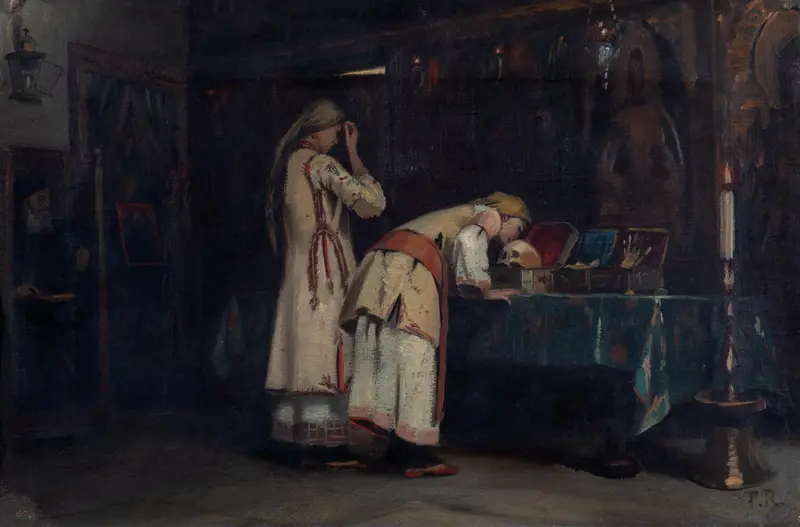
Holy Relics
Theodoros Ralli
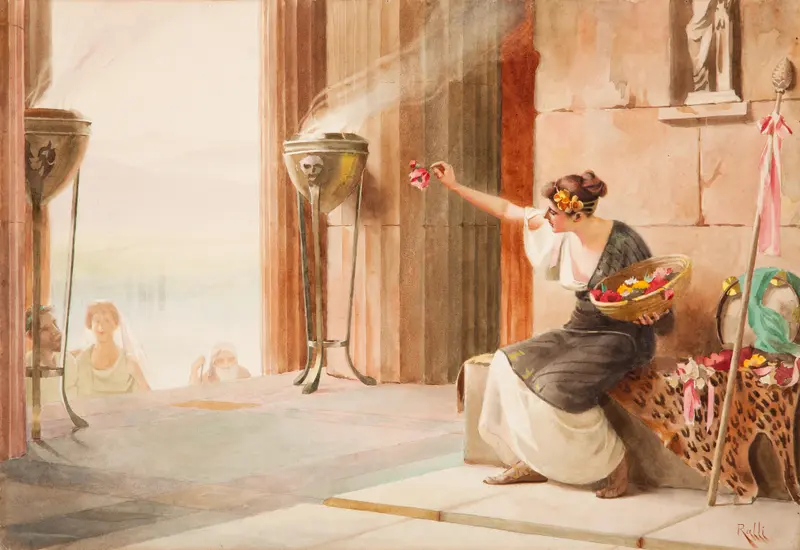
Flower Seller at the Parthenon
Theodoros Ralli
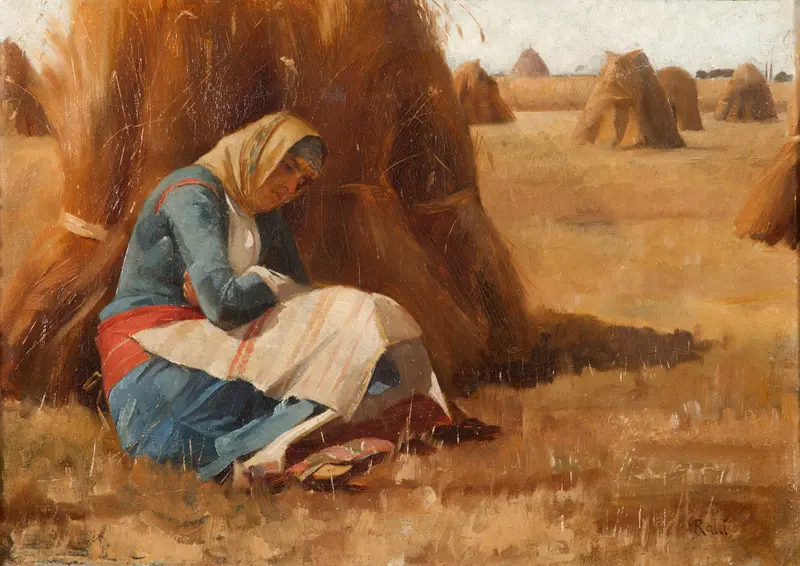
Resting by a Haystack
Theodoros Ralli
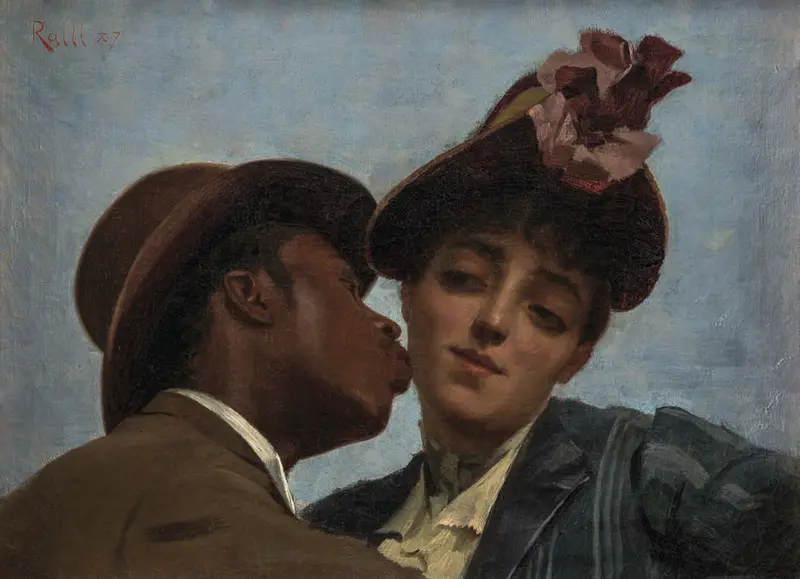
The Kiss (Ralli)
Theodoros Ralli
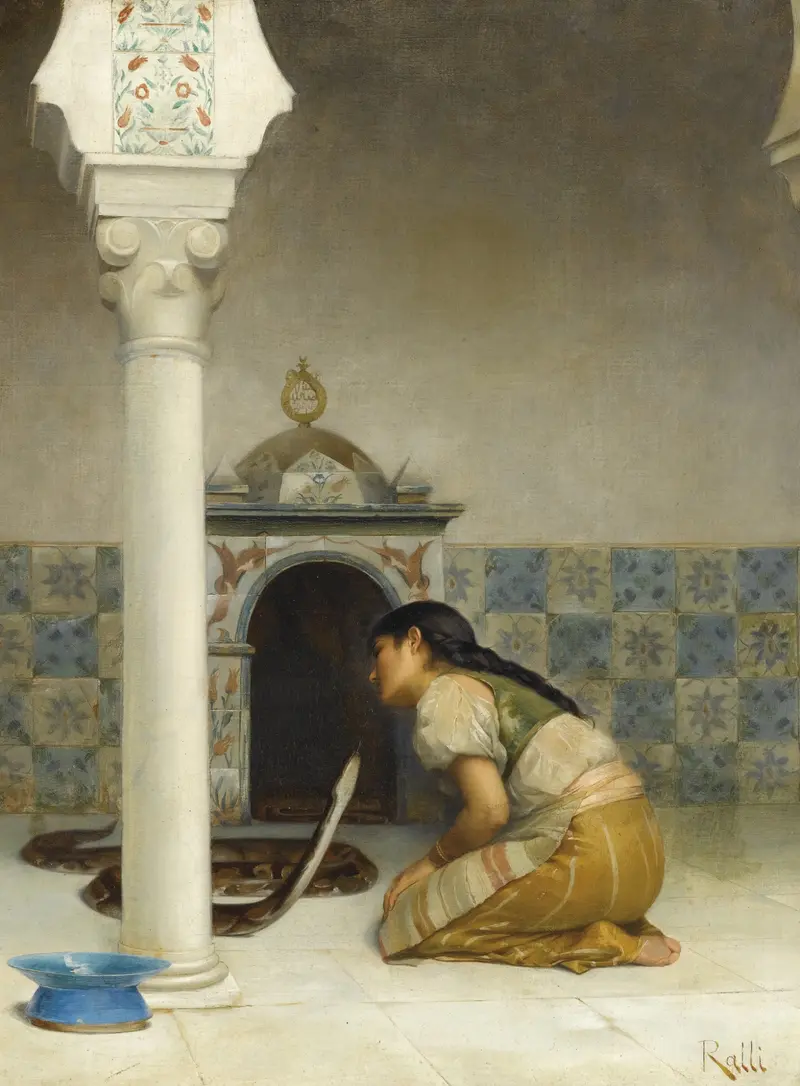
The Sacred Serpent
Theodoros Ralli
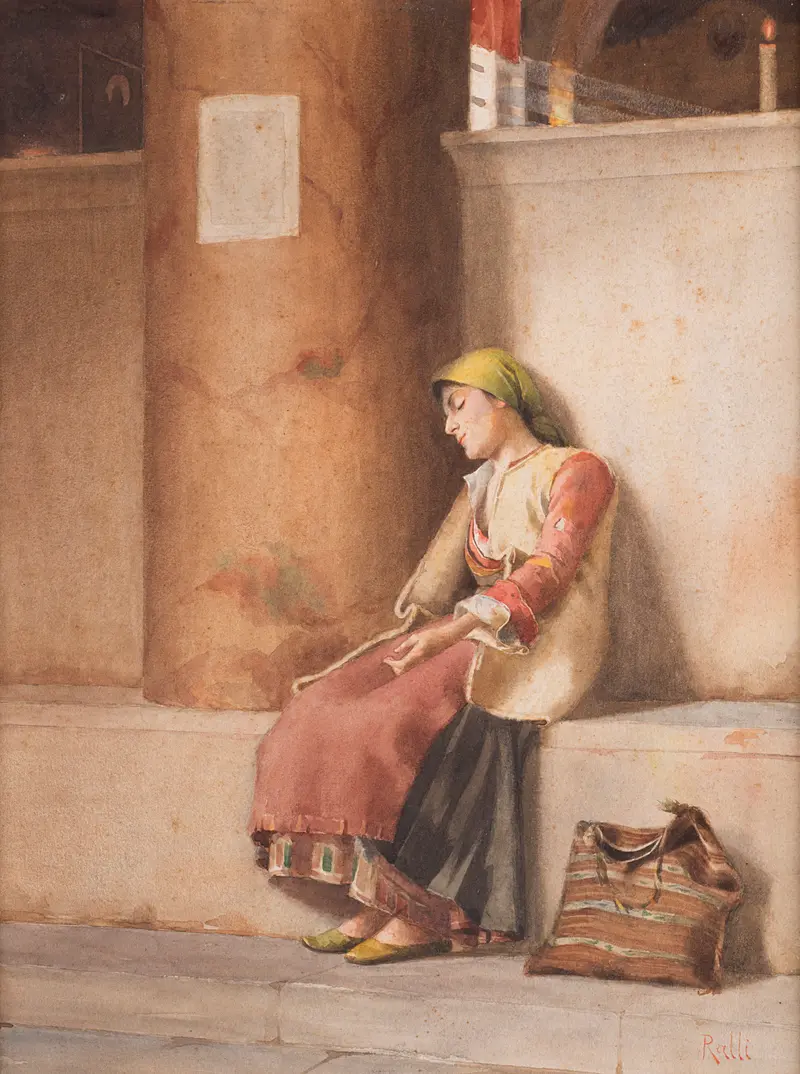
A Moment of Reflection
Theodoros Ralli
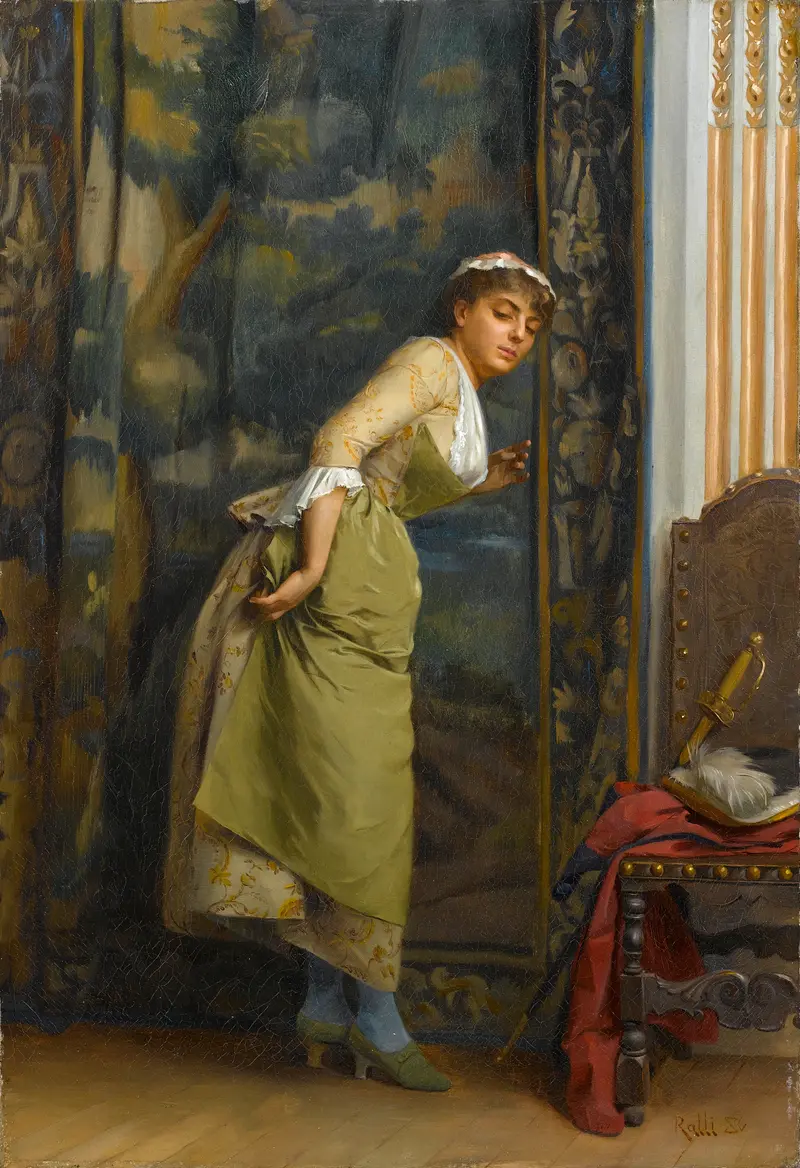
Eavesdropping (Ralli)
Theodoros Ralli
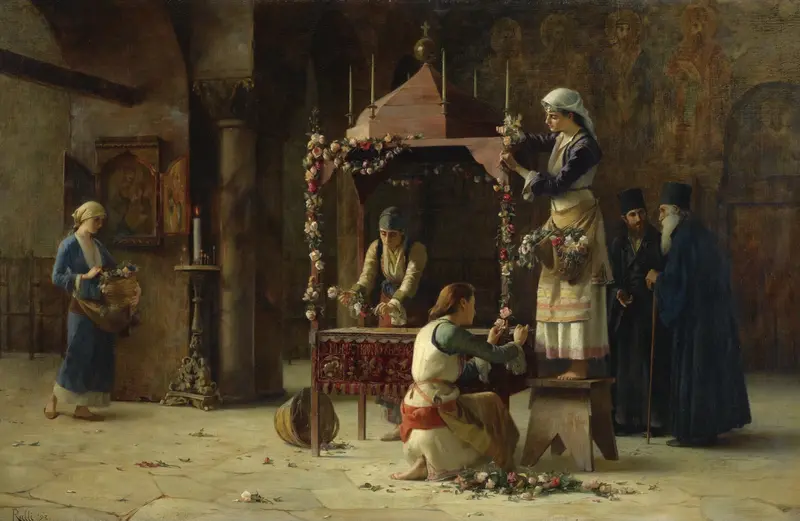
Holy Friday, Greece
Theodoros Ralli
A Moment's Rest
Theodoros Ralli
More Genre Scene Art

Banquet of the Officers of the St George Civic Guard
Frans Hals

Rembrandt and Saskia in the Scene of the Prodigal Son
Rembrandt van Rijn

Bal du moulin de la Galette
Pierre-Auguste Renoir

Quadrille at the Moulin Rouge
Henri de Toulouse-Lautrec

A Burial at Ornans
Gustave Courbet

When Will You Marry?
Paul Gauguin