
To Nina for Christmas — History & Facts
A midnight stage is set with a handful of luminous shapes, each one carefully placed against a field of darkness. The eye is drawn first to the tall, tree-like form on the left, its trunk a deep, glowing red, crowned by arcs and orbs that echo the celestial. Beside it, a cross and circle rise from a golden triangle, suggesting a figure or a symbol, its geometry both playful and mysterious.
The palette is rich but restrained—ochres, reds, and greens flicker like embers, their intensity heightened by the surrounding black. Every element feels intentional, as if each angle and curve is a gesture in a private language, inviting the viewer to decipher a hidden message or ritual. Created in 1926, this work belongs to a world where artists like Wassily Kandinsky were redefining what painting could be. Abstraction had become a new frontier, a way to express the spiritual and emotional through pure form and color.
At the Bauhaus, where Kandinsky was teaching at the time, such experiments were encouraged, and geometry became a tool for invention and discovery. The title, To Nina for Christmas, hints at a personal dedication, but history has kept few traces of its specific story. What remains is the sense of a gift—an image that feels both intimate and universal, a coded greeting from one world to another.
Let your gaze linger and see what shapes begin to speak.
More Artworks by Wassily Kandinsky

Improvisation 35
Wassily Kandinsky
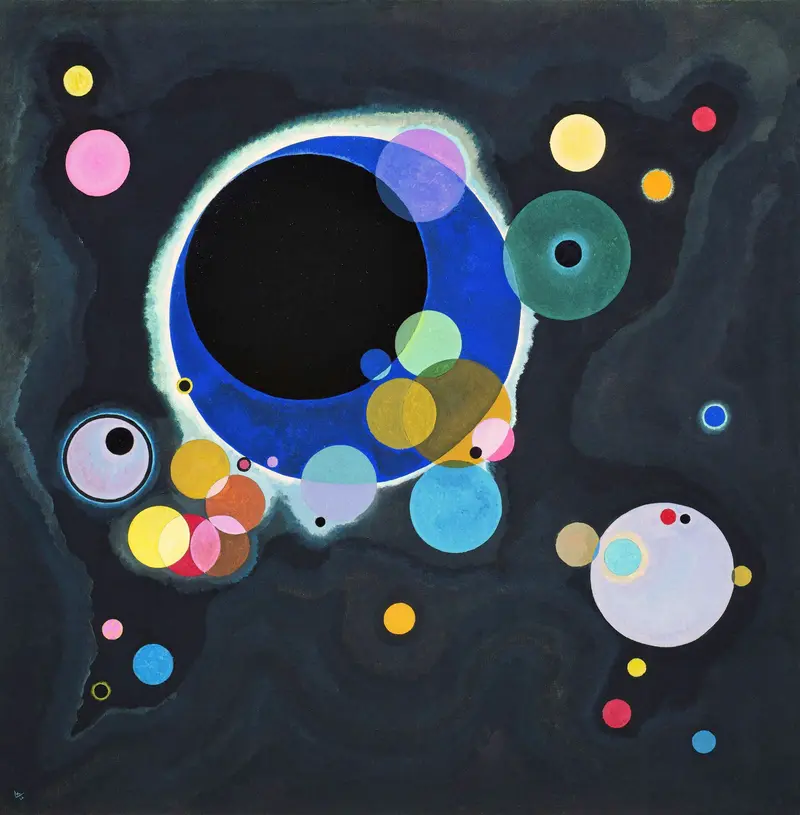
Several Circles
Wassily Kandinsky
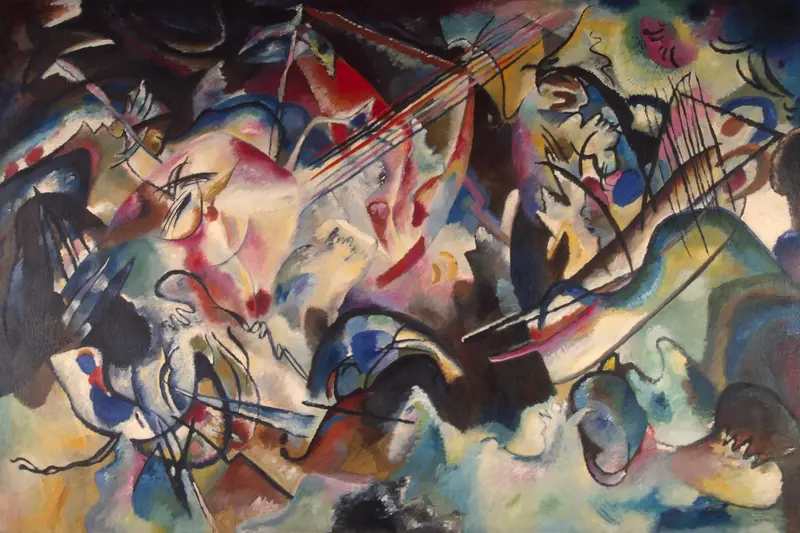
Composition VI
Wassily Kandinsky
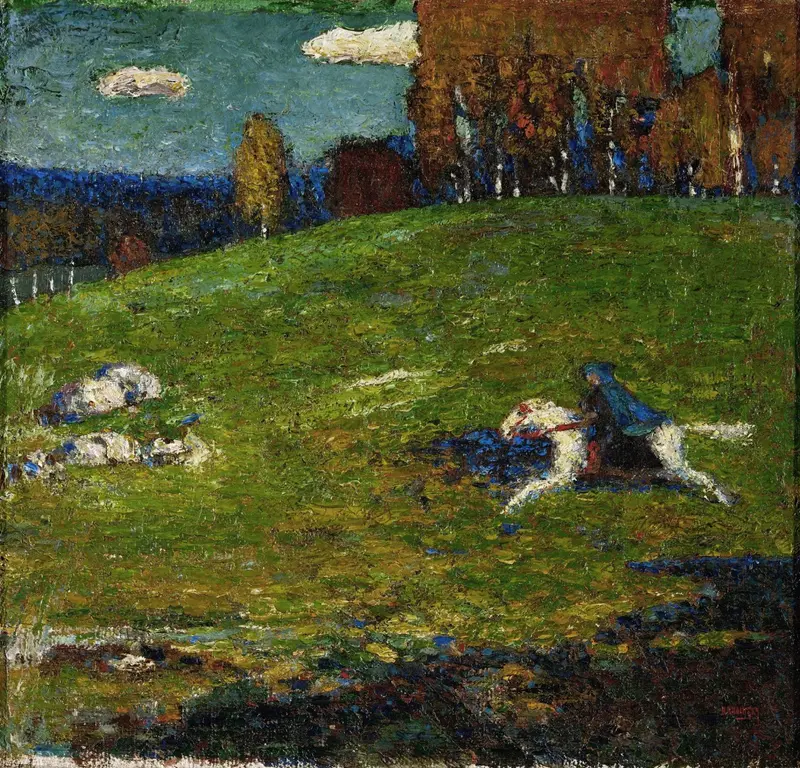
The Blue Rider
Wassily Kandinsky

Murnau
Wassily Kandinsky
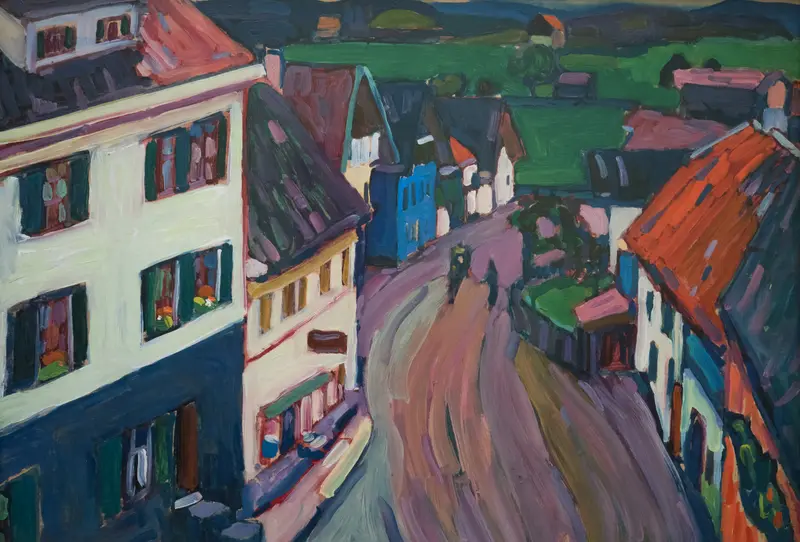
Murnau – View from the window of the Griesbräu
Wassily Kandinsky
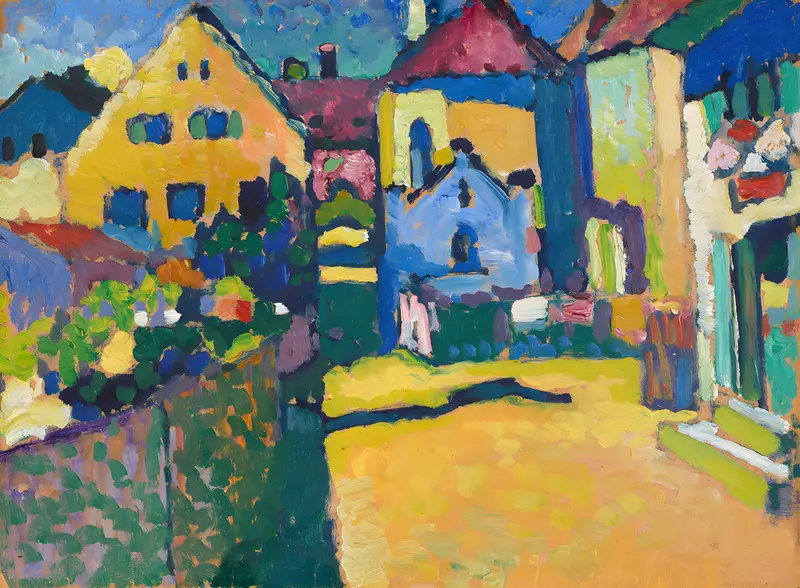
Green Lane in Murnau
Wassily Kandinsky
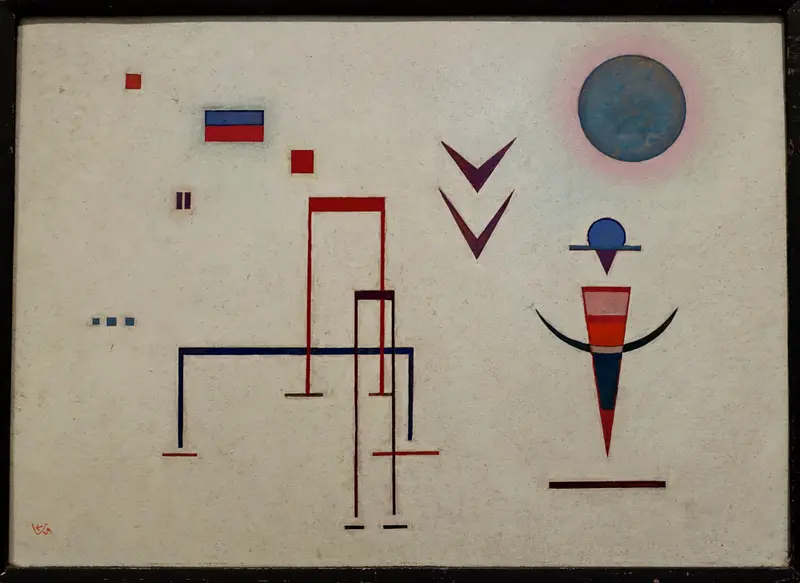
Jocular Sounds
Wassily Kandinsky

Zubovsky Platz
Wassily Kandinsky

Landscape with a yellow field
Wassily Kandinsky




