
Town Crier with Stick and Gong (Hearing) — History & Facts
What draws the eye first is the town crier’s face, caught mid-announcement, his mouth open in a half-shout, half-grimace that speaks of daily urgency and fatigue. The stick and gong he brandishes are not mere props but tools of his trade—one for striking, the other for summoning the ears of a distracted village. The roughness of his clothes, the sturdy blue stockings, and the battered hat root him firmly in the world of the working poor, while the slant of afternoon light carves his figure out from the dusty street and the looming tree behind.
A bench, tipped at an angle, and a woman with a dog in the shadows hint at an audience, but the crier’s message is lost to us, suspended in the moment before sound. Painted in the 1650s by Adriaen van Ostade, this scene belongs to a long tradition of Dutch genre painting, where everyday life was elevated to art and the humblest professions became worthy of close study. The world that produced such images was one of bustling towns and rising middle classes, where pictures like this might hang in a merchant’s home, a reminder of both civic order and the comic trials of ordinary folk. Van Ostade was known for his keen observation of rural and village life, and here, as in many of his works, history has kept few traces of the specific sitter or event—only the universal drama of work, noise, and fleeting attention remains.
The painting now resides in the collection of the National Gallery in Prague, inviting us to listen with our eyes to a world where news traveled on foot and every announcement was an event.
More Artworks by Adriaen van Ostade

Dans in de herberg
Adriaen van Ostade
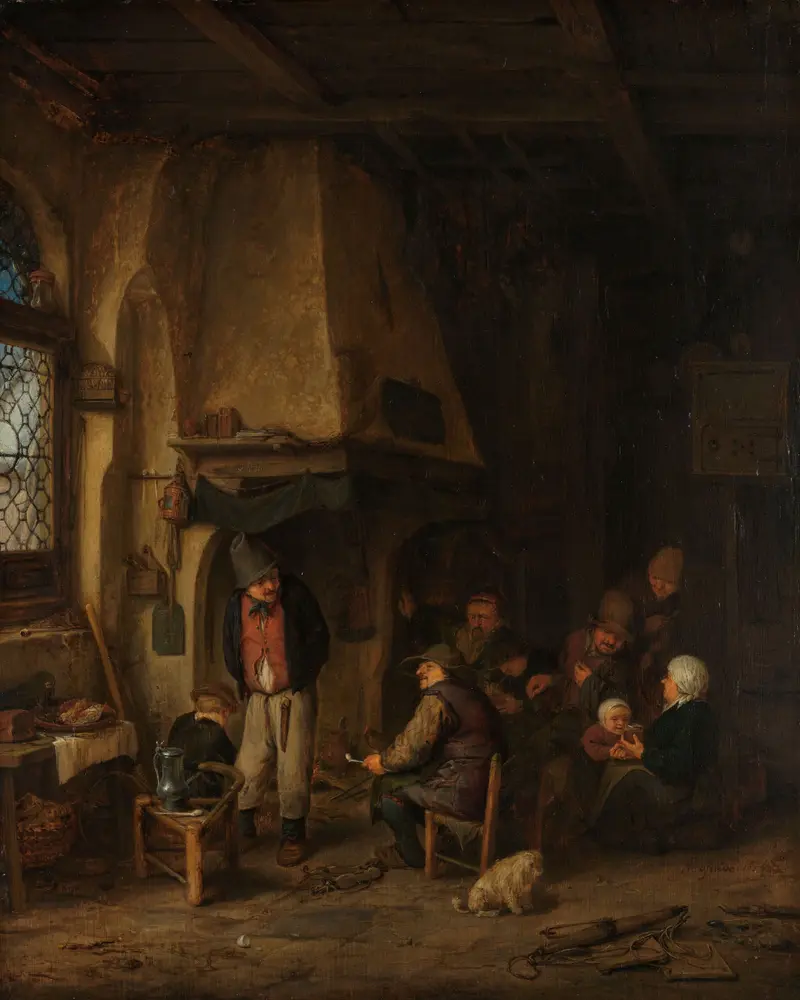
‘The Skaters’: Peasants in an Interior
Adriaen van Ostade
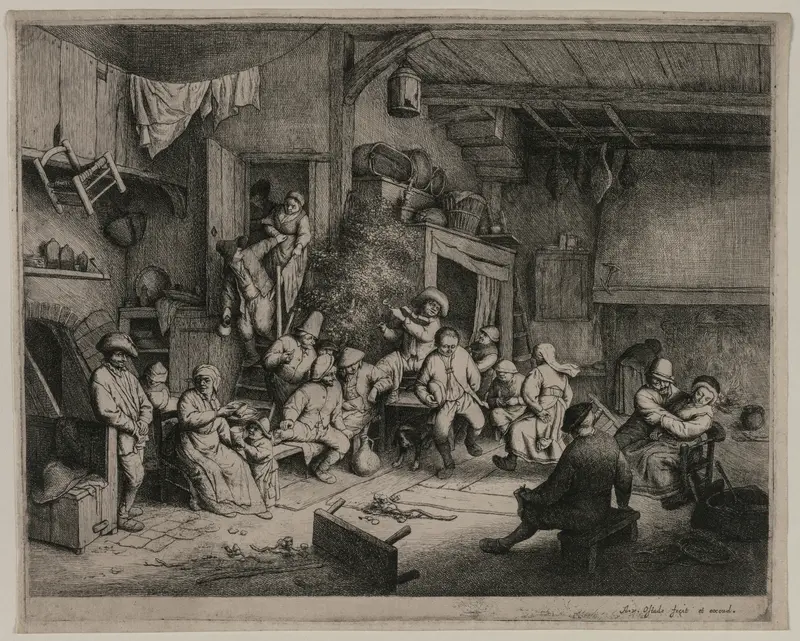
Dance at the Inn
Adriaen van Ostade
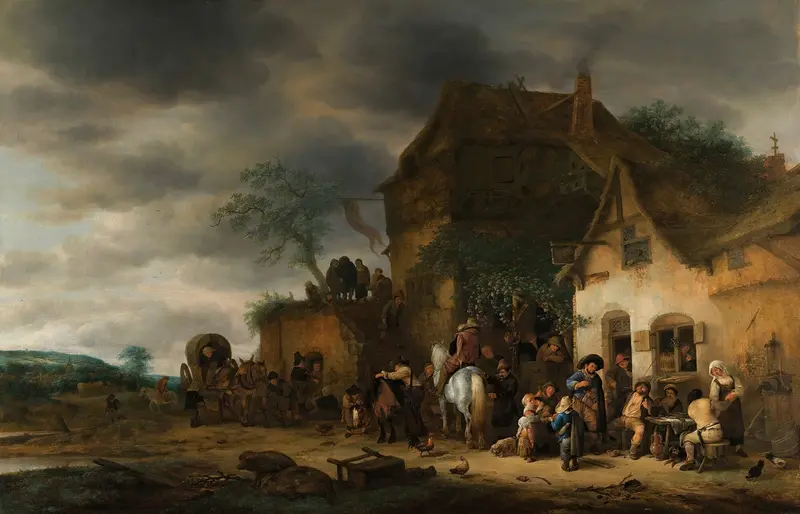
Travellers Halted At A Country Inn
Adriaen van Ostade
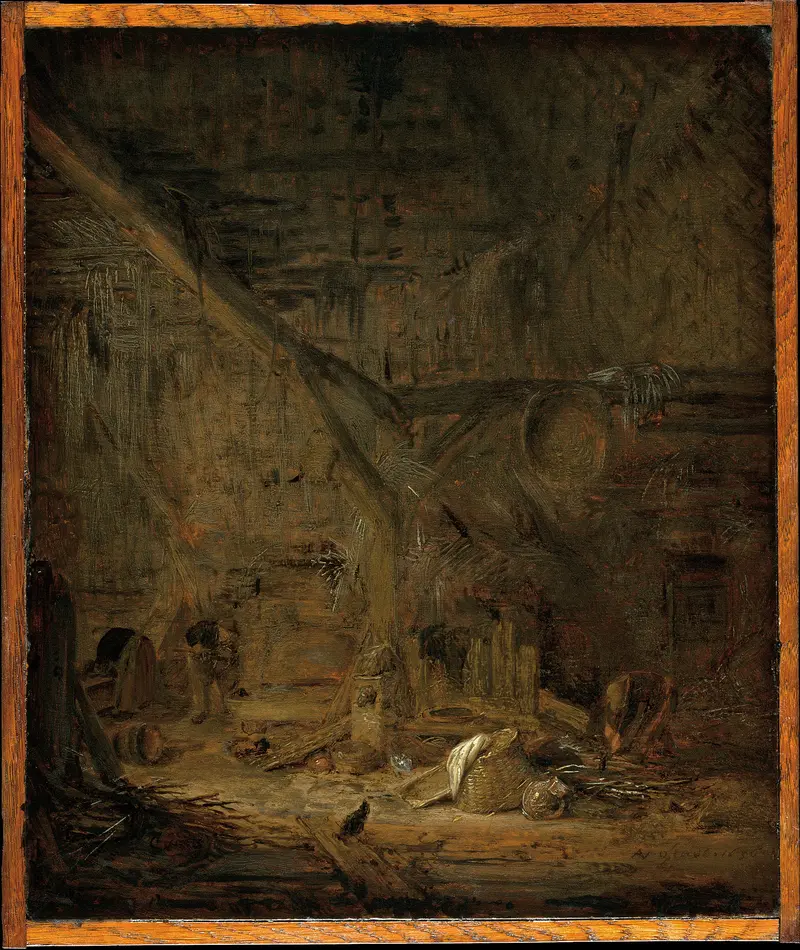
Interior of a Barn
Adriaen van Ostade
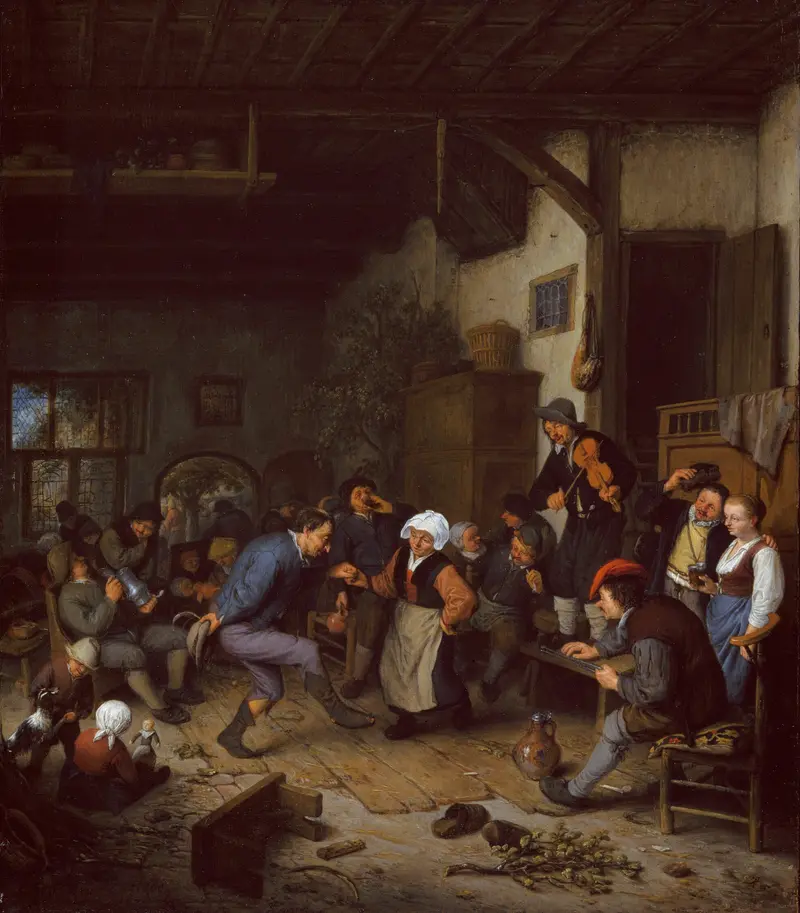
Merrymakers in an Inn
Adriaen van Ostade
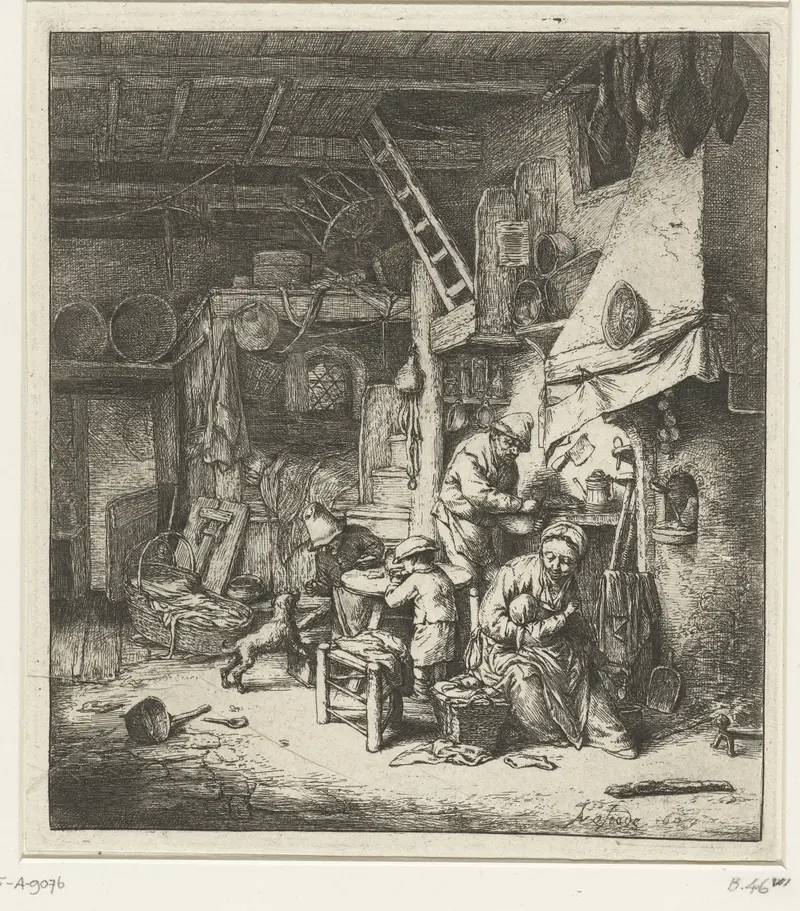
Boerengezin in interieur
Adriaen van Ostade
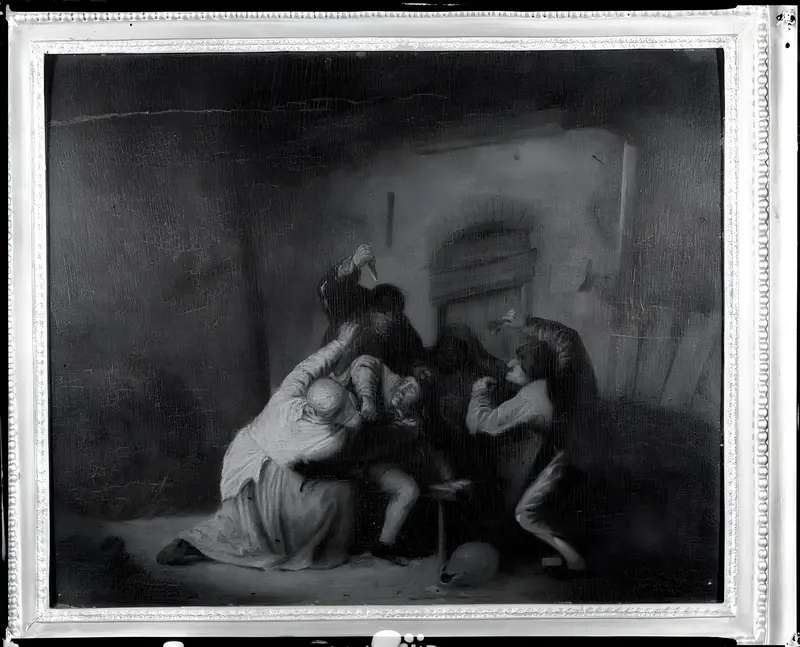
Peasants Brawling in a Tavern
Adriaen van Ostade
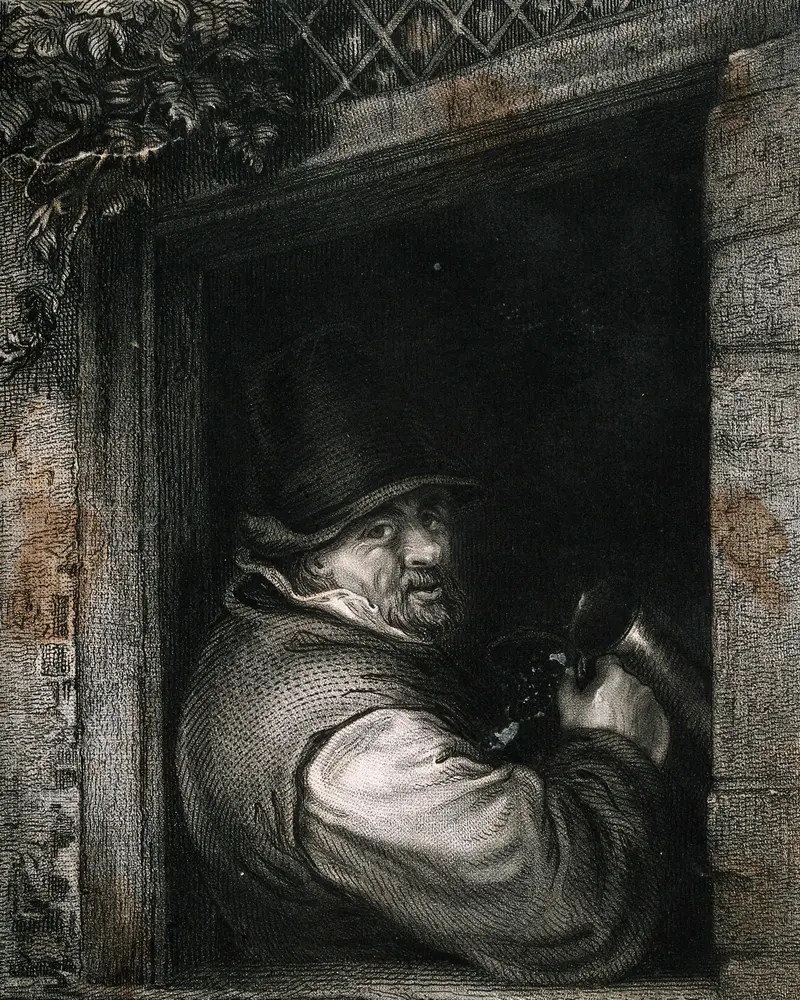
Man with a Tankard at a Window
Adriaen van Ostade
Dans in de herberg
Adriaen van Ostade
More Genre Scene Art

Banquet of the Officers of the St George Civic Guard
Frans Hals

Rembrandt and Saskia in the Scene of the Prodigal Son
Rembrandt van Rijn

Bal du moulin de la Galette
Pierre-Auguste Renoir

Quadrille at the Moulin Rouge
Henri de Toulouse-Lautrec

A Burial at Ornans
Gustave Courbet

When Will You Marry?
Paul Gauguin