
Travellers at Rest — History & Facts
What draws the eye first in Travellers at Rest is the easy camaraderie of the figures gathered beneath the broad, sheltering tree. The painter, Adriaen van Ostade, has chosen a moment of shared pause: two men, one mid-drink and the other with a pipe, lean in with the relaxed posture of those who have set their burdens down for a while. The light, filtered through summer leaves, lands on their faces and hands, making their laughter and gestures the quiet center of the scene.
A third figure, perhaps the innkeeper, hovers between them, pouring more drink—a gesture of welcome and hospitality that anchors the mood. Every object here is purposeful: the traveler's musket propped against the bench, the worn hat and satchel, the scattered clay pipes and tankards, all speak to journeys interrupted and stories exchanged. This is the world of the Dutch Golden Age, when painters like van Ostade found poetry in the ordinary. In the bustling towns and rural inns of the seventeenth century, such scenes of rest and sociability were both familiar and aspirational—images to hang in homes as reminders of comfort, community, and the pleasures of daily life.
Works like Travellers at Rest, painted in 1671 and preserved today through collections such as The Yorck Project, were rarely grand commissions but rather made for a growing middle class eager to see itself reflected in art. Little is recorded of this specific painting’s early history, but its spirit is unmistakable: an invitation to linger, to watch, and to imagine the stories that begin when the journey pauses.
More Artworks by Adriaen van Ostade

Dans in de herberg
Adriaen van Ostade
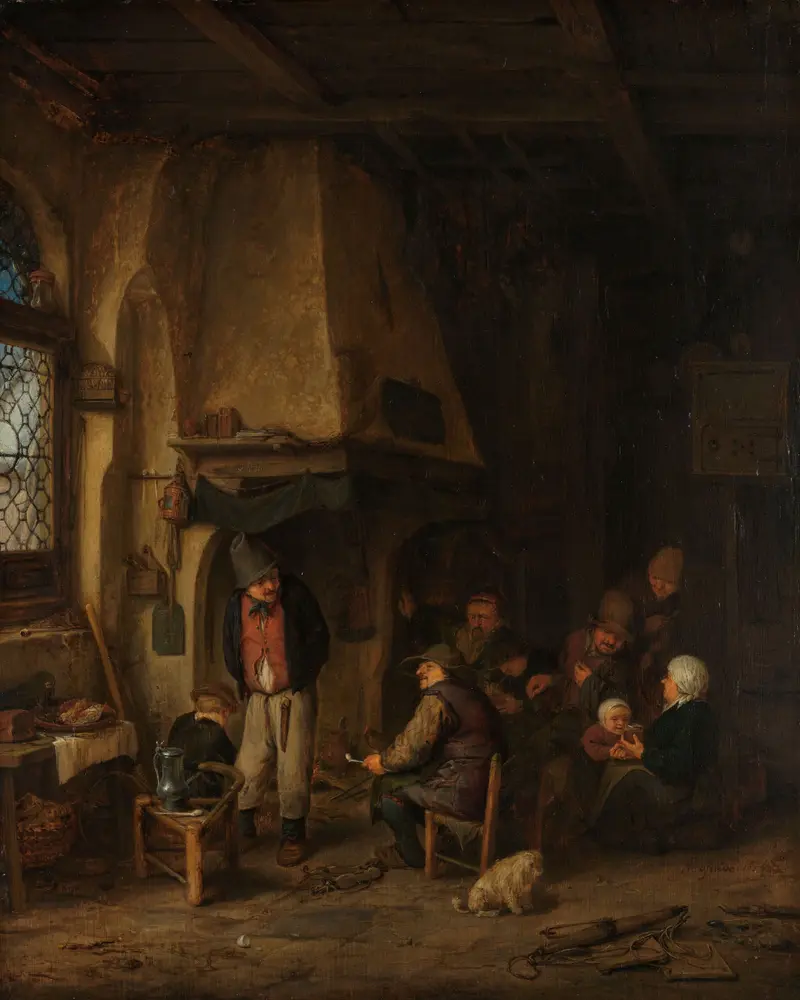
‘The Skaters’: Peasants in an Interior
Adriaen van Ostade
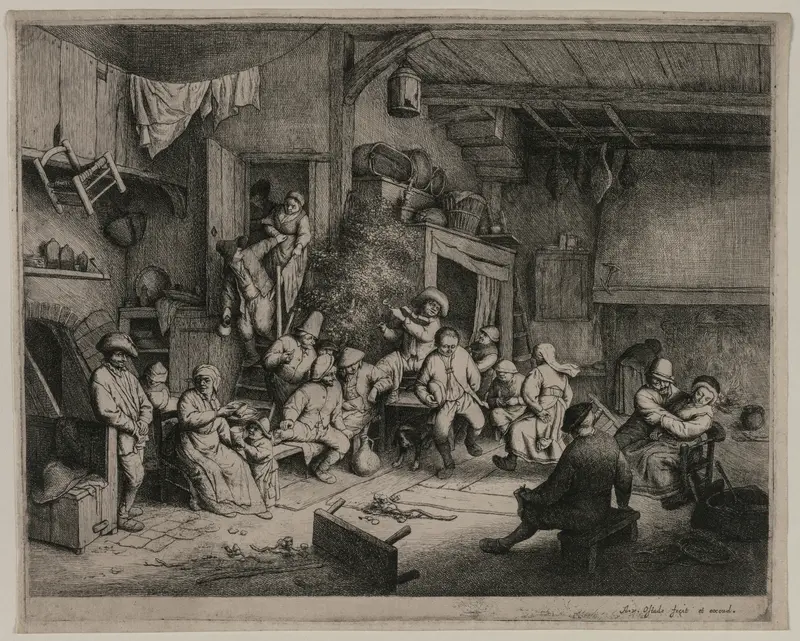
Dance at the Inn
Adriaen van Ostade
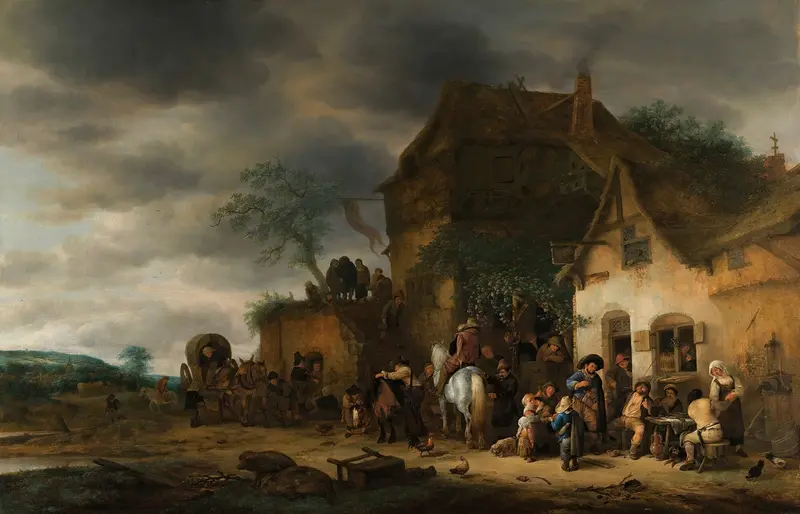
Travellers Halted At A Country Inn
Adriaen van Ostade
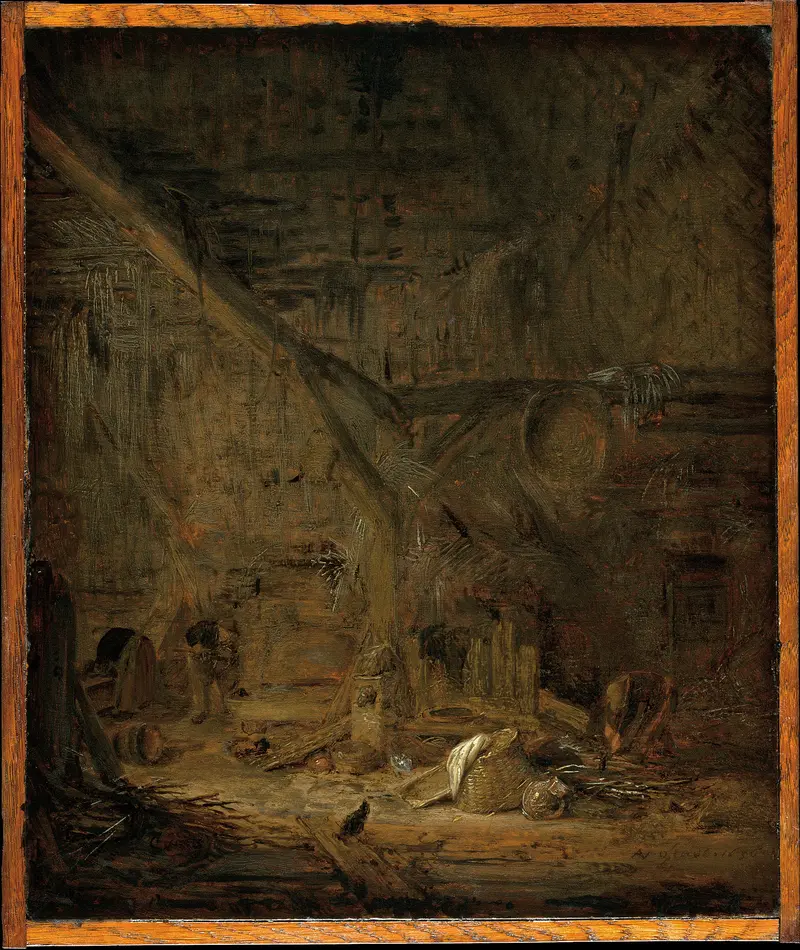
Interior of a Barn
Adriaen van Ostade
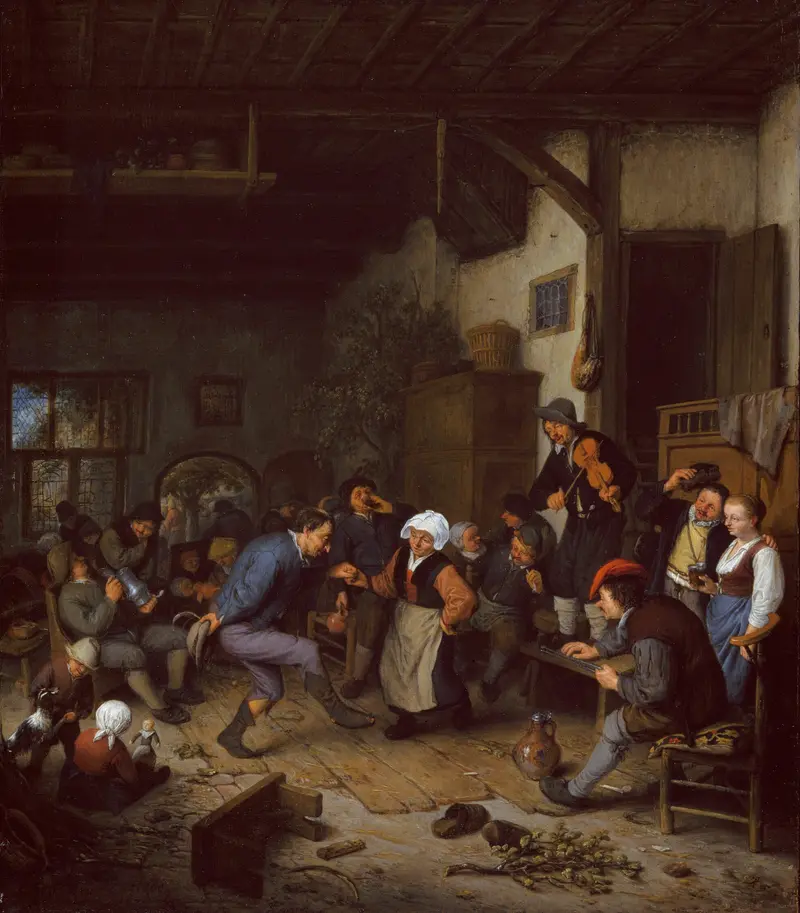
Merrymakers in an Inn
Adriaen van Ostade
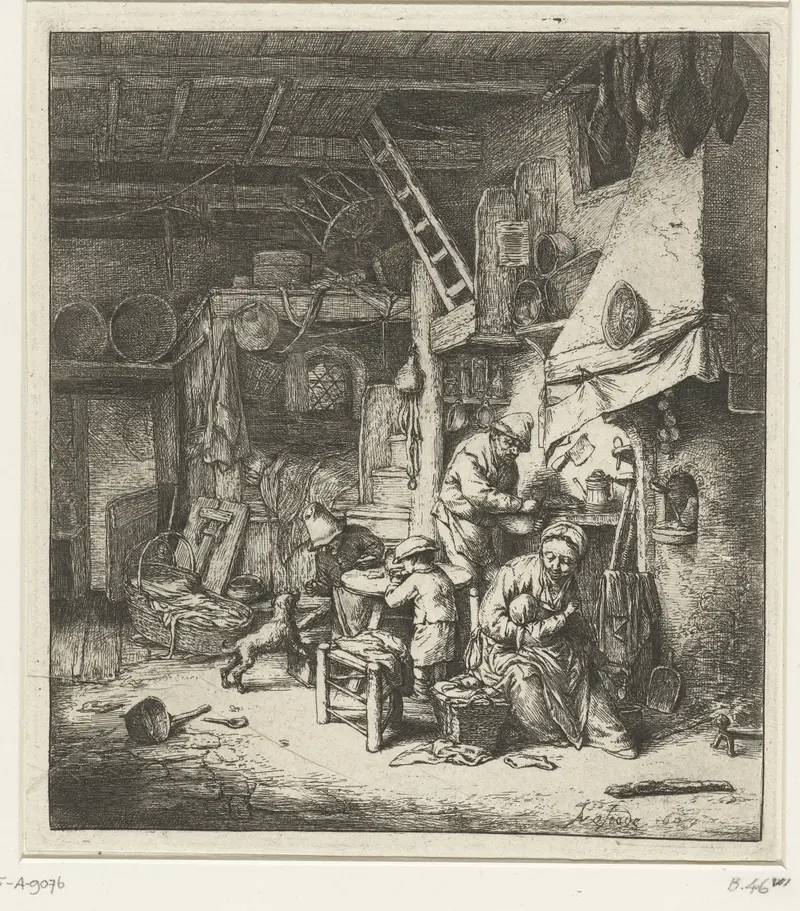
Boerengezin in interieur
Adriaen van Ostade
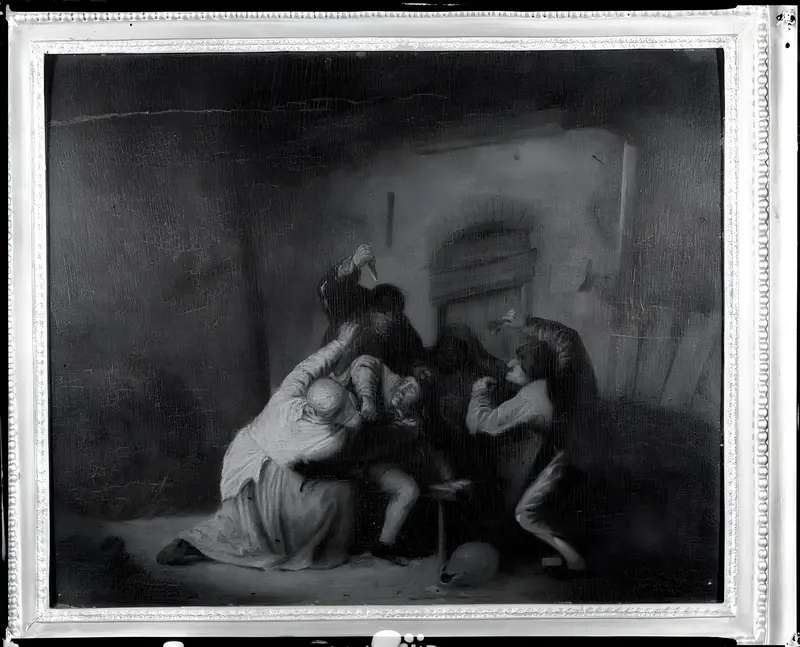
Peasants Brawling in a Tavern
Adriaen van Ostade
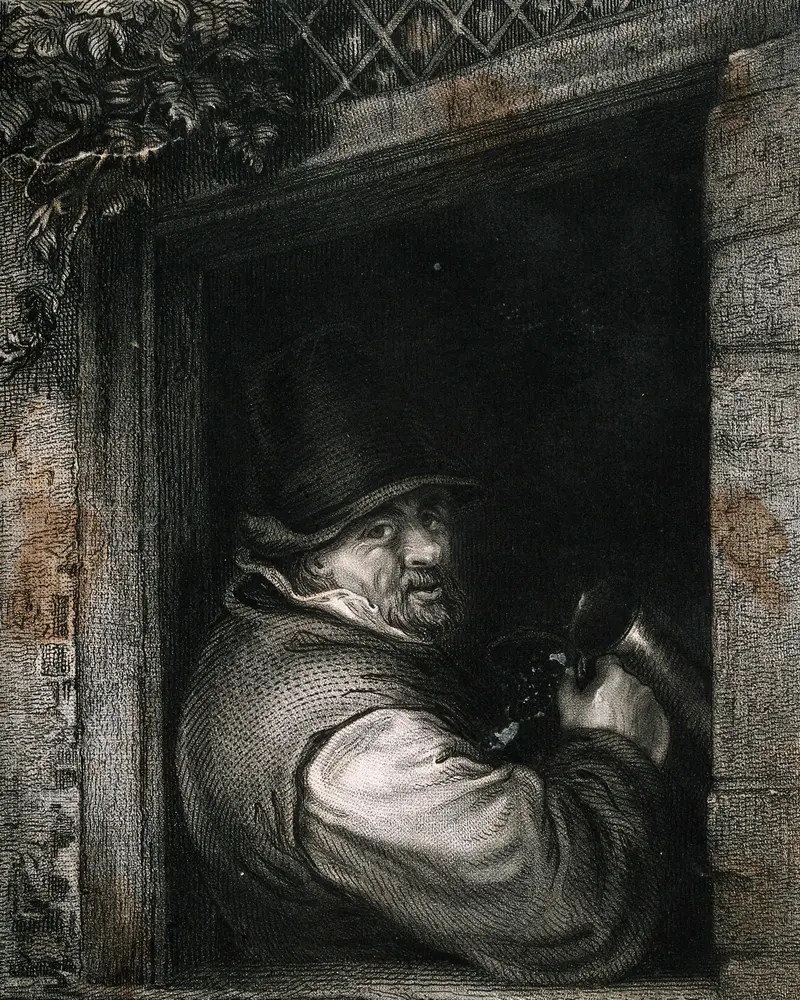
Man with a Tankard at a Window
Adriaen van Ostade
Dans in de herberg
Adriaen van Ostade
More Genre Scene Art

Banquet of the Officers of the St George Civic Guard
Frans Hals

Rembrandt and Saskia in the Scene of the Prodigal Son
Rembrandt van Rijn

Bal du moulin de la Galette
Pierre-Auguste Renoir

Quadrille at the Moulin Rouge
Henri de Toulouse-Lautrec

A Burial at Ornans
Gustave Courbet

When Will You Marry?
Paul Gauguin